European Commission Delegation Visits VILNIUS TECH Faculty of Transport Engineering

January 30, 2026

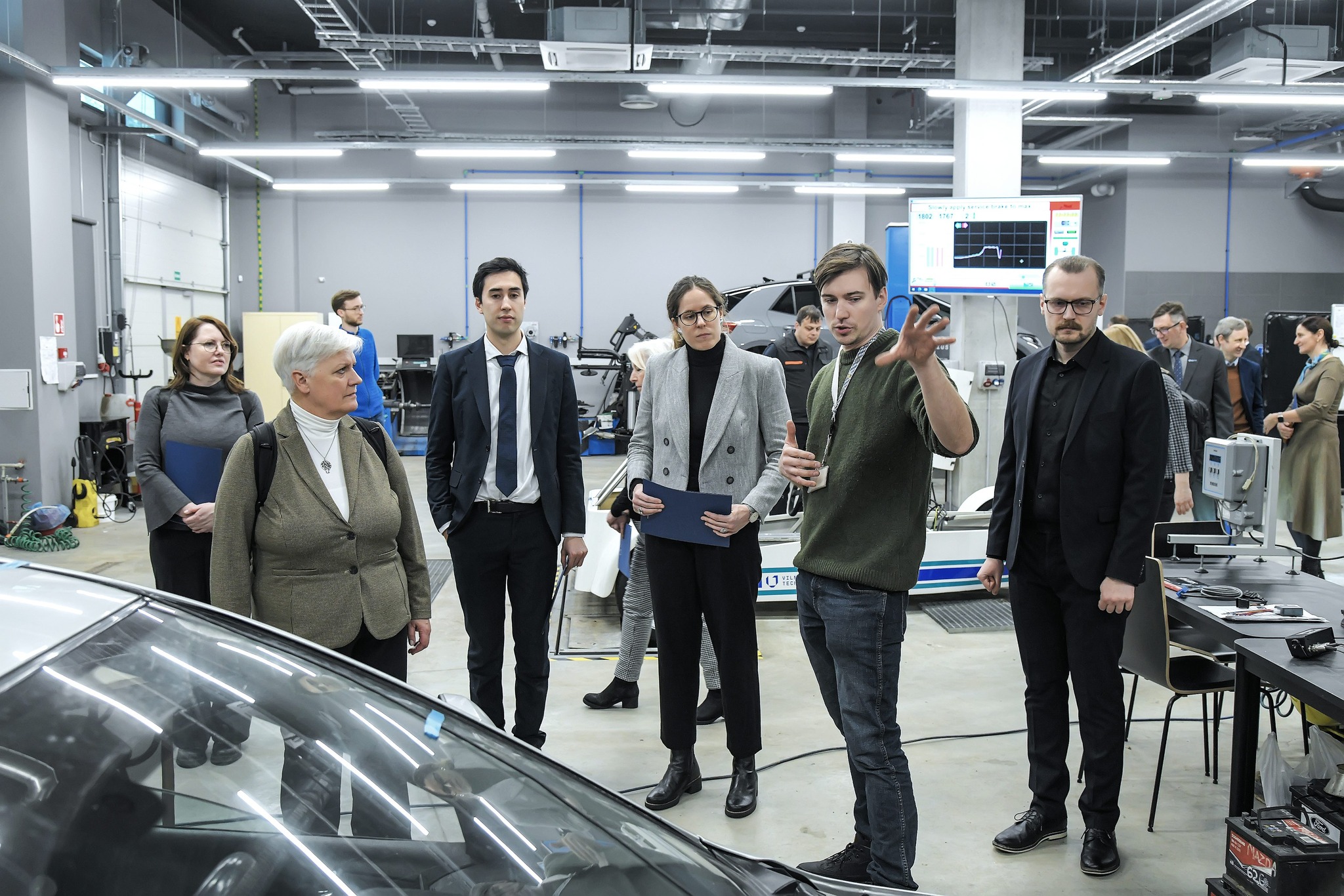
On the 28th of January, representatives of the European Commission (EC) and the Ministry of Education, Science and Sport of the Republic of Lithuania visited VILNIUS TECH Plytinė‘s Campus and the Faculty of Transport Engineering. The purpose of the visit was to gain first-hand insight into the results of European Union investments, their added value for research, studies and innovation, and to assess their impact on the development of science and technology in Lithuania.

The delegation included representatives from the European Commission’s Directorates-General for Research and Innovation, Structural Reform Support and Investments, and the Recovery and Resilience Facility. Among them was Eugenija Pučiūtė, European Commission Representative in Lithuania from the “European Semester and Country Analysis” Unit.

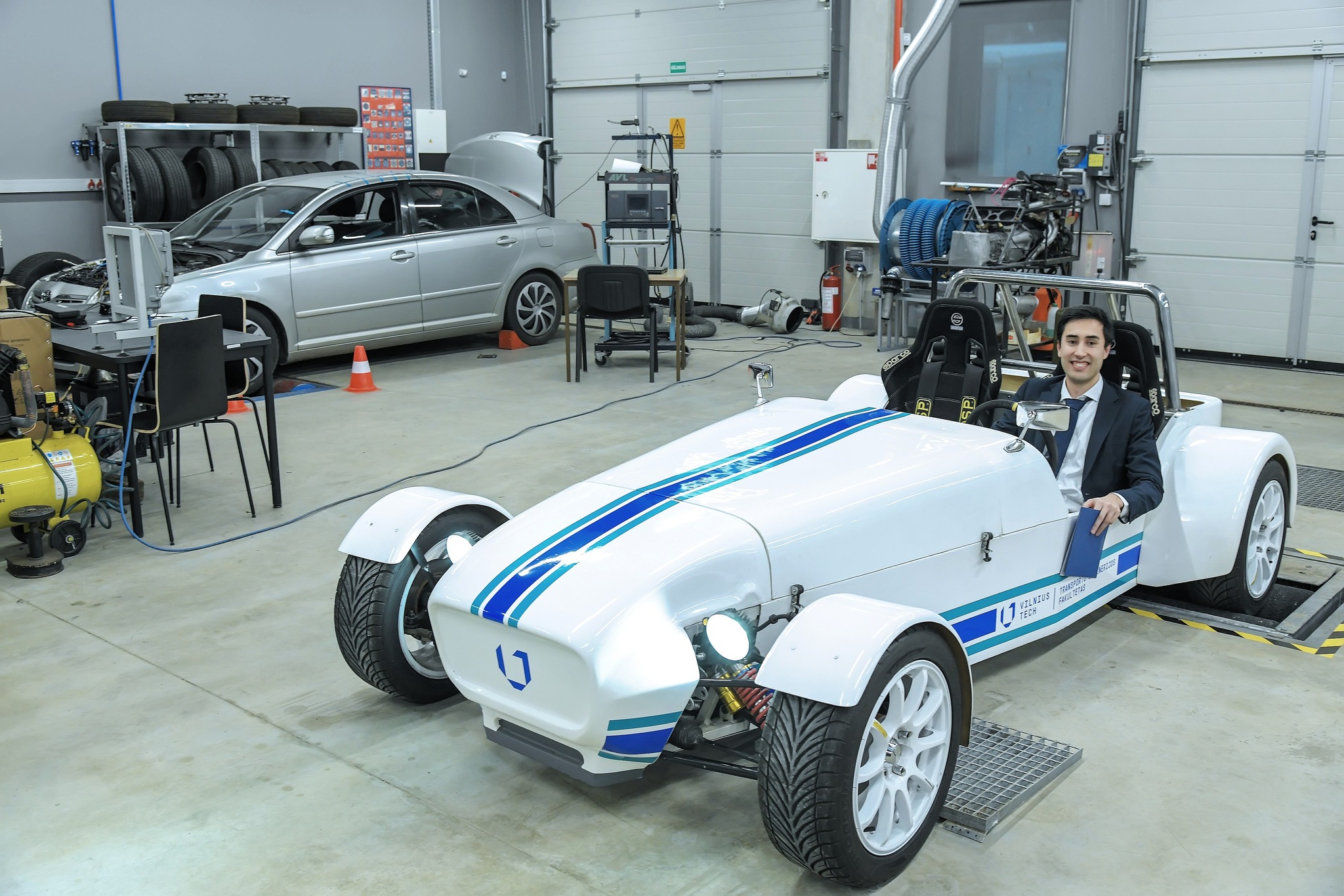
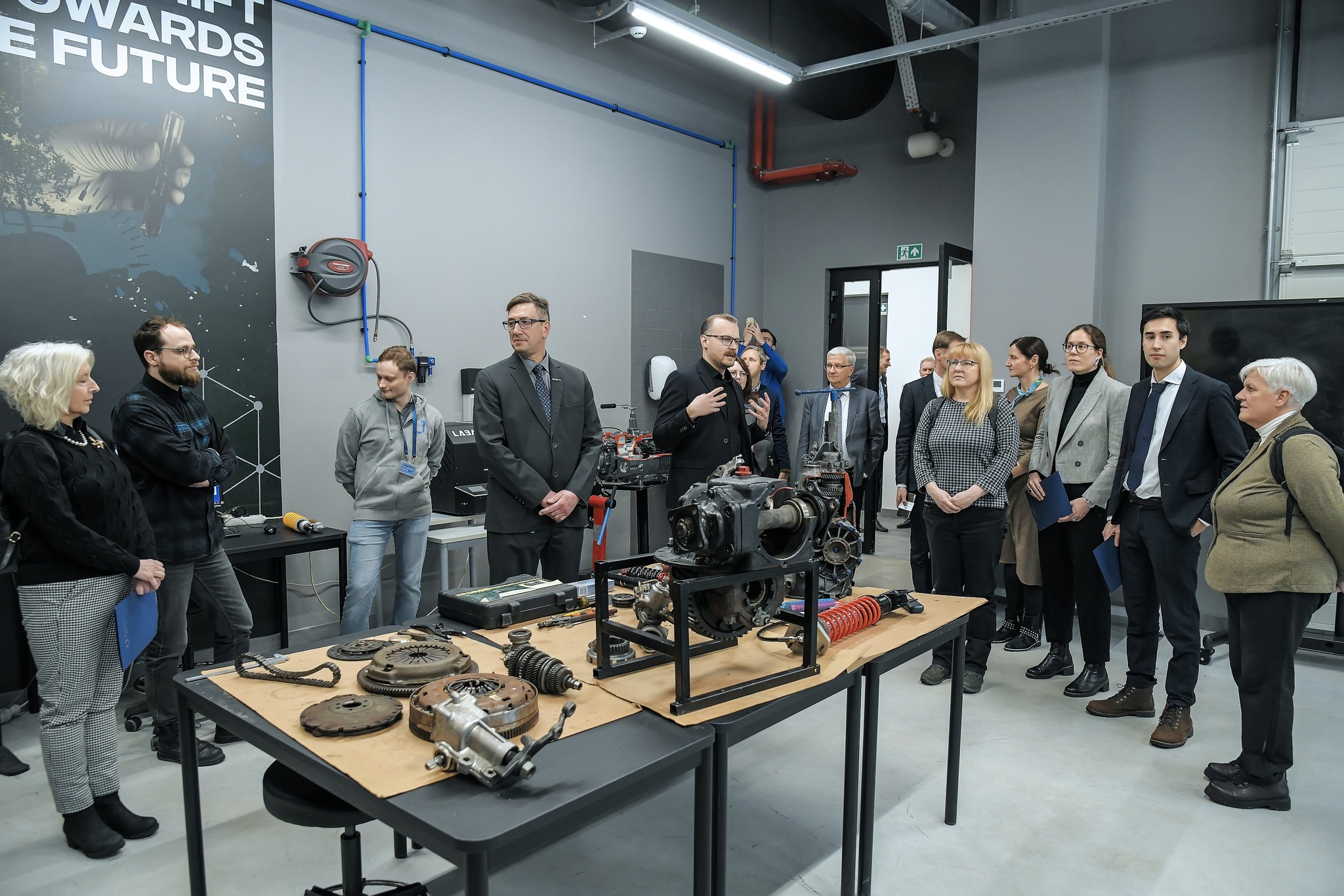
During the visit, guests were introduced to the modern research and study infrastructure of the Faculty of Transport Engineering, its laboratories and the units of the Transport Engineering and Logistics Laboratory. EC representatives were presented with international and national research and applied research projects implemented at the Faculty and funded under the “Horizon Europe”, “Horizon 2020”, “Shift2Rail”, Research Council of Lithuania, and the Recovery and Resilience Plan “New Generation Lithuania” programmes.

Among the showcased projects were highly regarded studies focusing on advanced transport systems, traffic management, comfort and safety solutions, electromobility, the circular economy, and the integration of green hydrogen in the transport sector. These projects not only strengthen the Faculty’s international competitiveness but also create direct benefits for industry and society.

The visit took place in the new buildings of the Faculties of Mechanics, Electronics and Transport Engineering on Plytinė‘s campus. Guests were introduced to one of the largest infrastructure projects at VILNIUS TECH – the relocation of three faculties to a modern student campus complex. The project, first planned back in 2007, was implemented using funding from European Union Structural Funds, as well as state and university resources. Two new buildings were constructed – the Laboratory Building and the Teaching Building – with a total investment value of nearly EUR 37 million, of which EUR 15.6 million was financed by EU funds.

These investments made it possible to establish a top-level research and study base, which is already demonstrating tangible results: a significant increase in contract research volumes with industry, more than 50 newly launched projects – including prestigious Horizon programme research initiatives – and strengthened scientific capacity in the fields of sustainable transport, mechatronics and advanced technologies. By 2025, VILNIUS TECH researchers have published more than 140 high-level scientific publications.

“The visit of European Commission representatives to the Faculty of Transport Engineering is a significant recognition of VILNIUS TECH’s achievements and a confirmation that targeted use of EU investments enables the university to successfully strengthen its position as a leading technology university and contribute to building a sustainable future for Lithuania,” says Prof. Dr. Olegas Prentkovskis, Dean of the Faculty of Transport Engineering.

International and national projects implemented at the Faculty of Transport Engineering in the new Plytinė Campus:

  • 2025–2028 (Horizon Europe): Motion Control Systems of Multi-Actuated Ground Vehicles (MOCO) (MSCA SE)
  • 2025–2026 (Horizon Europe): Circular Design and Manufacturing Techniques for Next-Generation Highly-Efficient Integrated Axial Flux Motor Drives for Electric Vehicles-Hop-On (CLIMAFLUX)
  • 2024–2027 (Horizon Europe): PhDs EU-Rail – Extending the rail network of PhDs in Europe’s Rail Joint Undertaking
  • 2023–2027 (Horizon Europe): Building a Community of Railway Scientific Researchers and Academia for ERJU and Enabling a Network of PhDs (Academia Teaming with Industry) (Academics4Rail)
  • 2024–2026 (Economic Revitalization and Resilience Enhancement Plan “New Generation Lithuania”): Mission-Driven Implementation of Science and Innovation Programmes (No 02-002-P-0001). Title of R&D project “Implementation of Green Hydrogen in the Transport Sector”
  • 2023–2026 (Research Council of Lithuania): Novel Preview and Control Allocation Algorithms for Vehicle-Integrated Chassis Control Targeting Ride Comfort and Handling Improvement (conTROLL)
  • 2024–2025 (Ministry of Transport and Communications): Development of a Digital-Technological Solution Based on 5G Communication for Personalized Real-Time Driver Training
  • 2021–2023 (2014-2020 Operational Programme for the European Union Funds Investments in Lithuania) Innovative Transport: Development of a Three-Wheel Tilting Vehicle

Galerija
Related news

New doctoral dissertation
VILNIUS TECH Library invites you to follow the published new dissertations. The dissertation „Research and application of machine learning methods for migraine attack prediction“ prepared at VILNIUS TECH by Viroslava Kapustynska. The dissertation was prepared in 2021–2026. Scientific consultant – Prof. Dr Šarūnas Paulikas. The dissertation was defended at the public meeting of the Dissertation Defense Council of the Scientific Field of Electrical and Electronic Engineering in the Aula Doctoralis Meeting Hall of Vilnius Gediminas Technical University at 2 p.m. on 9 June 2026. Migraine is a complex neurological disorder characterized by strong inter- and intra-individual variability, which makes early forecasting difficult using only clinical observations. Wearable biosensors combined with machine learning offer new opportunities to detect subtle physiological changes that may precede migraine attacks and to develop individualized prediction models. This dissertation investigates migraine analysis and next-day prediction using physiological recordings collected under real-life monitoring conditions. Data were obtained with the Empatica Embrace Plus wearable device and include electrodermal activity, pulse rate, skin temperature, and movement-related signals. The analysis focuses on nocturnal recordings, since the night period provides a more stable physiological context with fewer external disturbances. Nights were standardized using sleep-based contextual selection and consistent night-level rules. The experimental framework is organized in two stages. In the first stage, a window-level binary classification task is used as an exploratory methodological analysis to examine how design choices influence model performance. Night recordings are segmented into analysis frames ranging from 5 to 120 minutes, statistical features are extracted, and the influence of signal preprocessing and feature representation is evaluated across several classifier families, including Random Forest, XGBoost, histogram-based gradient boosting, support vector machines, and k-nearest neighbors. In the second stage, the research evaluates next-day migraine prediction based on whole-night recordings. This stage refines the experimental methodology to obtain more reliable estimates of predictive performance under a stricter validation framework. The analysis focuses on the effect of temporal aggregation while comparing the same classifier families under consistent evaluation conditions. The results demonstrate considerable variability across participants in achievable prediction performance and optimal modeling configurations. Shorter analysis frames generally preserve informative short-term physiological changes, whereas longer windows tend to smooth these variations. Signal preprocessing shows a window-dependent effect and does not consistently improve performance. Overall, the results highlight the importance of temporal resolution, rigorous validation, and individualized modeling for wearable-based migraine prediction systems. Doctoral dissertation readers can search via VILNIUS TECH Virtual Library.
More
Expert Evaluation: VILNIUS TECH’s Progress Exceeded Expectations
VILNIUS TECH has received a highly positive assessment from international experts. In their recently published conclusions, it is noted that since the 2022 institutional evaluation, the university has achieved significant, evidence-based progress across all four evaluation areas: governance, quality assurance, studies and research activities, and impact on regional and national development. In 2022, VILNIUS TECH was granted a seven-year accreditation. At that time, the expert panel provided the university with 19 recommendations for further improvement. The latest progress review concludes that the university responded to these recommendations responsibly, systematically, and constructively, and that the implemented changes have become part of long-term institutional development. „We are pleased that external experts have highly evaluated the progress achieved by VILNIUS TECH across all four assessment areas. It was noted that the university demonstrates a mature quality culture, a strategic vision, and the ability to consistently sustain growth and increase its impact on society. This ensures that we are entering the next institutional evaluation period with a strong position,“ says Nora Skaburskienė, Director of the Studies Directorate. International experts particularly highlighted the consistently strengthened system of strategic management, the quality culture, active collaboration with business and alumni, leadership within the ATHENA European Universities Alliance, the development of new interdisciplinary study programmes, and significant progress in innovation and technology transfer. The rapid expansion of lifelong learning activities was also noted — VILNIUS TECH has broadened its micro-credential offerings, strengthened partnerships with social and business partners, and is creating favourable conditions for knowledge commercialization and startup development. According to the expert panel, the university has already moved beyond the stage of merely responding to recommendations and is now ready to purposefully leverage its accumulated potential to achieve even higher performance results. In summarizing the evaluation, the experts concluded that VILNIUS TECH is entering the next phase of institutional assessment with a solid foundation for continued successful development.
More