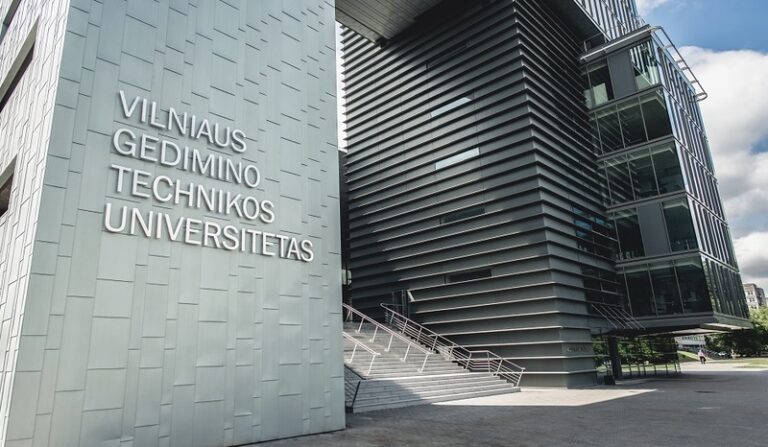
Implementing the development strategy, Vilnius Gediminas Technical University plans to increase the share of electronic publications in the library fund and organize their distribution without borders. The library information resource fund formed according to the recommendations of researchers and lecturers. The library aims to provide the research and study process with appropriate sources of information, and the latest printed and electronic publications are purchased every year. Researchers and lecturers can submit proposals for publications by filling out the electronic book order form.
The library fund consists of more than 531 thousand titles of electronic and printed documents. More than 95 thousand titles (almost 441 thousand copies) are print publications. The library provides access to more than 409 thousand e-books, standards, and more than 26 thousand titles of e-journals. University researchers and students read more than 1.8 million different documents a year.
The library uses the international ExLibris integrated library information system software Aleph. To open printed and electronic information resources for scientific and study purposes on a “one-stop-shop” basis, users are offered to use the VGTU virtual library search function. The Primo search tool provides integrated search capabilities between print and electronic resources.
To meet the science and study needs of the VGTU community, VGTU library subscribes to 29 databases of electronic journals and electronic books, electronic dictionaries and reference books in various fields of science, electronic dictionaries and reference books and bibliographic information management tools and provides access to more than 50,000 names of electronic LST and STR standards and patents.
The library not only subscribes to databases but also permanently searches for new databases corresponding to the University's fields of science and studies. To assess the relevance of new databases, the library regularly organizes database testing. Currently, the university community has the opportunity to try free this database. Access Engineering (here you will find electronic books of scientific and engineering sciences, calculators, interactive graphics). Harvard Business Review Press Collection (over 600 emails books on business communication, economics, finance, entrepreneurship, management, marketing, organizational behavior, career development, human resource management, leadership, strategic planning). The MIT Press Direct (e-books by the prestigious Massachusetts Institute of Technology on the topics of art, architecture and design, biomedical sciences, business, economics and finance, informatics, engineering, humanities, information sciences, philosophy, psychology), and Taylor&Francis (electronic book collections in technology, engineering, medicine, humanities, and social sciences).
University researchers and students can also access the e-book collection Science and Engineering, one of the largest and most prestigious academic publishers in the world, Cambridge University Press. The collection currently consists of more than 10,300 e-books on engineering, mathematics, economics, law, computing, physics, chemistry, life sciences, earth and environment, philosophy, and astronomy. The publishing house permanently updates the collection with newly published e-books, which will also be available to VGTU researchers and students.
All electronic resources, scientific journals, e-books, patent databases subscribed by the library are accessible not only from the computers of the university network but also from home using the remote access VPN service.
The library provides remote access to more than just electronic resources in the English language; you can also read publications in the Lithuanian language. In the VGTU publishing house "Technika" electronic publications platform www.ebooks.vgtu.lt, you can currently find over 600 electronic textbooks. The library also subscribes to the electronic books of KTU publishing house "Technologija". Here you can find eBooks on these topics: environmental, chemical, economic, electrical and electronic engineering, energy and thermal engineering, physics, informatics, engineering graphics, mathematics, mechanical engineering, materials engineering, sociology, construction, law, management, and administration, scientific conferences, and presentations. EBooks on the humanities and social sciences are available on the MRU eBook open-access platform.
In response to the challenges posed by the global COVID-19 public health crisis, academic and commercial publishers on various platforms are temporarily opening up their accumulated scientific content. Many higher education institutions have started to provide services in an online environment, which facilitates easy access to reliable, multidisciplinary research from a variety of well-known universities, societies, and non-profit publishers. These initiatives aim to support training, learning, and knowledge discovery for consumers around the world. The library, in response to the initiatives of publishers, permanently analyzes the open electronic sources, selects the sources corresponding to the fields of science and studies of the university. The library provides concentrated information about the availability in the library website section, Free electronic resources during the COVID-19 period.
The library permanently improves the accessibility and visibility of the literature recommended for studies (based on module cards) to students. The electronic services platform Biblioteka-Universitetas-Studentas (BUS) provides information with links to the almost 13,000 recommended publications within and outside the library. On the electronic services platform, you will find access to 95% of the publications recommended for lecturers for studies, 68 % of these resources are available in the university library, and 15% are electronic information sources.
After the Government of the Republic of Lithuania softening the quarantine conditions, from the April 27 of 2020 VGTU Library has started to provide home borrowing and self-service printing, copying, and scanning of printed publications services to the university community. The library issues only pre-ordered publications in the VGTU virtual library. Publications are returned only through the return box on the outside of the building. During the quarantine period is prohibited use of other library spaces and reading rooms.
If you have any questions about library services or working hours please contact us via phone (8-5) 274 49 00 or via e-mail biblioteka@vgtu.lt