Trial databases and AI tool

October 14, 2024
Currently, the VILNIUS TECH community has been granted temporary access to The MIT Press Direct e-books, Clarivate's AI tool Research Assistant, and thirteen EBSCO databases.

We remind you that access to trial and subscribed databases is available from  VILNIUS TECH computer network or via VPN. As a security measure, two-factor authentication is additionally required (i.e. verification from mobile device app or by call).

We invite you to try out:

Until 08.11.2024
The MIT Press Direct ebooks 
The collection consists of more than 3,000 e-books on various topics: arts, architecture and design, biomedical sciences, business, economics and finance, informatics, engineering, humanities, information sciences, philosophy, psychology, etc.
 
 
Until 20.10.2024  
Web of Science Research Assistant 
Clarivate‘s AI tool Web of Science Research Assistant was developed in order to help scientists conduct research activities more efficiently and facilitate various tasks, such as: collecting information about a particular science topic, searching for relevant literature, identifying experts in a particular scientific field, finding a suitable journal to publishing research results, exploring new or yet unexplored, trending research fields, etc.
One of the main advantages of Research Assistant lies in the reliability of the data it uses. The tool utilizes data only from Web of Science Core Collection indexed expert selected and validated scientific resources (the earliest of which date back to 1900).
 
Until 08.11.2024
Art & Architecture Source – a full-text research database covering architecture and architectural design, as well as fine, decorative and commercial art. Subjects include: architecture and architectural history, interior design, landscape architecture, advertising art, antiques, archaeology, art history, contemporary art, costume design, crafts, decorative arts, folk art, graphic arts, industrial design, motion pictures, painting, photography, pottery, printmaking, sculpture, television, textiles.
Content Includes: 380 active full-text, non-open access journals; 180 full-text books and a collection of over 63 000 images provided by Picture Desk and other sources.
CAB Abstracts with Full Text – produced in collaboration with the experts at CABI, provides access to the world’s applied life sciences literature: agriculture, the environment, applied economics, leisure, tourism, nutrition, human health, mycology, plant sciences and veterinary sciences. Content includes 1 200 active full-text journals.
Central & Eastern European Academic Source – a multilingual resource includes peer-reviewed academic journals from Central and Eastern European countries. The multidisciplinary database covers many subjects: business, economics, history, law, education, humanities, international relations, literature, medicine, politics, social sciences, STEM. The content includes over 2 100 full-text titles (with more than 1 450 newly added full-text publications), including over 100 Lithuanian journals. Content is available in 60 languages.
Communication Source – an extensive full-text database containing a collection of journals in the field of social communication and mass media and other related fields such as linguistics, rhetoric, speech pathology, media studies, communication theory, communication in the organization. The database includes indexes and abstracts of articles from over 1 000 scientific journals.
eBook EngineeringCore – Subscription Collection helps researchers broaden their knowledge of the engineering industry to help support decision-making, facilitate product design and implement industry best practices. Collection includes eBooks across many engineering topics: chemical and biochemical engineering, civil engineering and construction, earth sciences and agriculture, electrical engineering, environmental engineering, industrial management, manufacturing, materials, mechanical engineering, medical, biomedical engineering, pharmacology, mining engineering, metallurgy, physics.
EconLit with Full Text – a full-text database for economic research. It offers hundreds of journals, including the American Economic Association journals with no embargo. It also contains all of the indexing in EconLit, which adheres to the high-quality JEL classification system for economics literature. Content includes: more than 370 active full-text,; 15 full-text books, including The Handbook of World Trade. Subjects include: capital markets, country studies, econometrics, economic forecasting, environmental economics, government regulations, labor economics, monetary theory, urban economics.
Engineering Source – the leading full-text resource for engineering research. It provides indexing to over 3 000 publications, including journals, trade papers, monographs, books, conference proceedings and other publications. Engineering Source is intended for professionals at all levels, including research, planning, product development, management, and delivery.
Energy and Power Source – a full-text database of energy industry content that includes academic journals, books, monographs, trade publications, and other valuable sources. Topics: coal, electricity, natural gas, nuclear, oil, renewable energy (including hydro, wind, solar, and alternative fuels).
This resource is very useful for anyone working at any level of the energy and electrical industry, including distribution, exploration, production, marketing, processing, production, research and sales.
Food Science Source – an extensive full-text database for food industry research. It contains hundreds of full-text journals, monographs and trade publications, as well as numerous food industry and market reports. Topics include nutrition, food processing, safety, service, transportation and innovation.
LitBase – database includes literary research on authors, poetry, fiction, plays and non-fiction from around the world, providing resources such as author interviews, bibliographies, biographies, book reviews, classic books, encyclopedias and dictionaries, non-fiction, full-text journals, literature criticism, short stories, plays, poems, short stories from antiquity to the 21st century, including works of high culture that were not created in the West. Among 1.5 million entries, readers can find historical and contemporary texts from around the world, including Africa, Australia, Canada, the Caribbean, Europe, Ireland, Latin America, New Zealand, Scandinavia, Slavic countries, the United Kingdom, and the United States of America.

Additionally, LitBase has a complementary Literary Reference eBook Collection, containing reference works covering a wide range of literature-related topics, including literary criticism and guides to the study of classic literature. Link

MEDLINE Ultimate – database provides access to over 2 800 full texts of journals that medical professionals, students and researchers will find information about medicine, health, pharmacology, neurology, molecular biology, genetics, genomics, histology, microbiology and many other areas of medical science. The medical thesaurus MeSH (Medical Subject Headings) is used in the database.
Sustainability Reference Center – database in the fields of sustainable development, environmental protection and social responsibility. The database contains indexes and abstracts from more than 1 000 publications and 500 full-text publications such as scientific journals, monographs, industry publications, etc. The subject of the database includes information on environmental care, corporate social responsibility, problems and initiatives related to broadly understood environmental protection, the ISO 14000 standard defining the basic requirements of the environmental management system, LEED (The Leadership in Energy & Environmental Design).
The Belt and Road Initiative Reference Source – database provides research and information in medical studies, trade policy, architecture, sustainability, environmental engineering, economics, and global communication journals from around the world.

Related news

New electric trains in Lithuania: will travel now be faster, more comfortable, and more reliable?
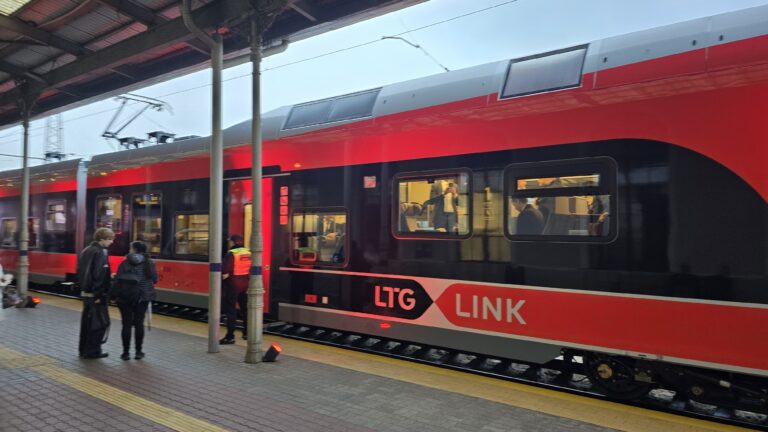
The new electric "Stadler FLIRT" train has already launched regular services on Lithuanian railways. On October 22, the first train made its debut on the Vilnius–Kaunas–Vilnius route. This is not merely the introduction of a new vehicle—it marks the beginning of a significant renewal of the passenger train fleet, the benefits of which will gradually be felt by more and more residents of Lithuania. However, does a new train necessarily mean we will travel faster? Will ticket prices drop and delays decrease? Will the modernization benefit only the residents of major cities, or the regions as well? According to researchers from the Department of Mobile Machinery and Railway Transport at VILNIUS TECH, the most significant change is not just higher speed or more modern equipment. It is an opportunity to travel more comfortably, make more efficient use of railway infrastructure, reduce operating costs, and systematically build a modern Lithuanian railway system. Nonetheless, the actual benefit will depend on how well the trains, the infrastructure, and passenger needs are harmonized. A Faster Train Does Not Yet Mean a Shorter Journey One of the first questions passengers ask is whether the new trains will get them to other cities faster. Technically, the potential is there. For instance, the PESA 730ML diesel trains previously used on the Vilnius–Klaipėda route have a maximum design speed of 140 km/h, while the new electric "Stadler FLIRT" trains reach 160 km/h. However, it is crucial to understand that maximum train speed and actual travel duration are not the same thing. Even if capable of traveling at 160 km/h, the train cannot maintain that speed along the entire route. Factors influencing this include railway infrastructure, speed limits on specific sections, the number of stops, traffic density, and scheduling. "If the infrastructure allowed a speed of 160 km/h along the entire 300-kilometer route, the journey could theoretically be shortened by about 16 minutes purely due to the higher top speed. Taking into account the superior acceleration of electric trains, a simplified model shows the difference could reach approximately 18 minutes. However, this is not a forecast for an actual scheduled run—real-world results depend on many other circumstances," explains Laurynas Meilus, a PhD student at the VILNIUS TECH Department of Mobile Machinery and Railway Transport. Electric trains offer another distinct advantage: faster acceleration. This is particularly crucial on routes with multiple intermediate stops. In other words, the superiority of electric traction is demonstrated not only at high speeds, but also during frequent braking and restarting. Nevertheless, according to Assoc. Prof. Dr. Gediminas Vaičiūnas from the same department, evaluating travel speed requires considering the layout of the railway itself. For example, the Vilnius–Klaipėda railway winds through Radviliškis, Šiauliai, and Plungė, making its length and route different from the more direct highway. "We often want trains to run faster and faster, but we forget that technical capability is not the only factor. We must decide what role a specific route serves: is it intended to connect major cities as quickly as possible, or must it also provide connectivity for smaller settlements? If a train stops every 40–50 kilometers, 160 km/h is a rational choice. If we want express connectivity, we must also consider fewer stops," says Assoc. Prof. Dr. G. Vaičiūnas. Therefore, the benefits of the new trains should not be judged by journey time alone. Reliability is just as essential. Newer technology, modern control systems, and early fault detection capabilities create the prerequisites for minimizing technical malfunctions. Do New Trains Mean Cheaper Tickets? While electric traction can help the operator cut costs, this does not automatically translate into immediately lower ticket prices for passengers. Fares are influenced not only by energy and maintenance costs, but also by passenger traffic, train occupancy, trip frequency, discount schemes, and state funding decisions. Scientific research indicates that maintaining electric trains can be significantly more cost-effective. In a 2025 study titled "Economical Comparison of Passenger Rail Traction Rolling Stock Alternatives" by L. Meilus and co-authors, the maintenance and repair costs per passenger seat per 100 kilometers under analyzed conditions were found to average €0.197 for electric trains, €0.434 for battery trains, and €0.498 for diesel trains. Thus, maintenance costs for electric trains were approximately 60% lower than those for diesel trains. This is primarily due to the simpler design of electric traction drives, fewer mechanically wearing parts, and the absence of many routine maintenance tasks inherent to internal combustion engines. "When assessing the economic viability of rolling stock, it is vital to calculate not just the purchase price, but the entire life-cycle cost—energy, maintenance, repairs, and service life. A more expensive vehicle upfront can often be economically advantageous in the long run because it costs less to maintain," the doctoral researcher highlights. According to data released by "LTG Link," the operating costs of the new electric and battery trains can be up to 25% lower than those of diesel units. The carrier has also confirmed that traveling on the new trains will incur no extra charges—regular ticket pricing for the chosen route will apply. Assoc. Prof. Dr. G. Vaičiūnas also points out that the advantages of electrification extend beyond passenger transport. The electrified Vilnius–Klaipėda section is critical for freight traffic, especially for trains heading to the Port of Klaipėda. [caption id="attachment_115071" align="alignnone" width="683"] Assoc. Prof. Dr. Gediminas Vaičiūnas[/caption] "Electric traction is exceptionally beneficial for hauling heavy freight trains weighing thousands of tons. In these scenarios, energy can be utilized far more efficiently, reducing reliance on diesel. The benefits of electrification should therefore be viewed in the context of the entire transport and logistics network, not merely by the number of passenger services," he notes. Regional Areas Should Also Benefit from Modernization While high-profile intercity routes often capture the headlines, a core mission of railway modernization is enhancing connectivity across regional areas. Battery-electric multiple units (BEMUs) will play a pivotal role here. They draw power from the overhead contact line on electrified sections and switch to onboard battery reserves where catenary is absent. This enables zero-emission electric travel on non-electrified routes without requiring massive infrastructure investments across the entire line. Battery trains are scheduled to operate on the Kaunas–Šiauliai, Radviliškis–Klaipėda, and Vilnius–Varėna–Marcinkonys routes. This opens the door to modernized rail travel in corridors previously dominated by diesel power. Another vital shift involves the redeployment of rolling stock. As the new trains take over services on main lines, the relatively modern PESA trains previously assigned to those routes can replace older rolling stock elsewhere, such as on the Vilnius–Turmantas line. Still, Assoc. Prof. Dr. G. Vaičiūnas notes an ongoing dilemma: should trains run as fast as possible, or stop more frequently in smaller towns? "The railway network must serve more than just metropolitan hubs. For someone living in a region, shaving a few minutes off the total trip time is often secondary to having a dependable, convenient schedule to reach work, schools, or medical facilities. One practical approach is combining faster express trains with more frequent regional stopping services. Naturally, this requires adequate passenger demand and well-synchronized timetables," the researcher remarks. A More Comfortable Journey – Not Just Speed One of the most immediate upgrades passengers will notice is travel comfort. The new "Stadler FLIRT" trains were designed around diverse passenger needs: they offer more spacious layouts, ergonomic seating, onboard device charging points, a bistro area, and dedicated bicycle spaces. Crucially, the interiors accommodate passengers with reduced mobility, seniors, families with strollers, and travelers with bulky luggage. Low-floor entrances, wider aisles, and integrated spaces for wheelchairs foster greater independence and comfort during transit. For cycling enthusiasts, bicycle capacity can be flexibly adjusted from four up to 30 spaces depending on seasonality and passenger demand. This caters not only to daily commuters but also to cycle tourists and active travelers. Quieter electric propulsion is another distinct advantage. Because electric trains lack internal combustion engines, interior noise and vibrations are drastically reduced. Moreover, electric traction reduces local air pollution, as trains running on electric power emit no diesel exhaust. The overall environmental footprint will depend on how sustainably the supplied electricity is generated. New Trains: An Opportunity to Transform Maintenance Culture A train’s operational reliability is shaped by more than just manufacturing quality; how it is maintained and whether faults can be intercepted before causing disruptions is equally important. Modern rolling stock comes equipped with onboard diagnostic systems that continuously monitor components, log operating metrics, and track deviations. This lays the groundwork for predictive maintenance—servicing or replacing parts based on their actual wear and condition rather than rigid, pre-set time intervals. "A brand-new fleet gives us the opportunity to apply advanced maintenance methodologies from day one. Condition-based servicing optimizes maintenance planning, maximizes resource utilization, and catches issues early. However, such a system requires not only modern hardware, but also qualified specialists, data analytics, and a properly organized maintenance workflow," explains PhD student L. Meilus. [caption id="attachment_135583" align="alignnone" width="1024"] Laurynas Meilus[/caption] Conversely, the overall resilience of the railway network depends on retaining strategic alternatives. Assoc. Prof. Dr. Gediminas Vaičiūnas suggests considering whether a portion of the existing diesel fleet should be preserved as a strategic reserve against potential power outages or emergency scenarios. However, mothballing old trains is not enough on its own—they must be regularly operated, maintained, and backed by suitable maintenance facilities and technicians. Otherwise, they may prove unserviceable when an emergency strikes. The Real Transformation Will Depend on the Entire Railway System The debut of electric and battery trains represents a major leap forward, but it is not the final chapter in the modernization of Lithuania’s railways. Higher travel speeds in the future will depend heavily on wider infrastructure upgrades, and the "Rail Baltica" project will introduce entirely new possibilities for European standard-gauge high-speed passenger travel, with design speeds up to 249 km/h. However, operating at those speeds requires purpose-built high-speed rolling stock; the current "Stadler FLIRT" units are not designed to leverage that infrastructure's full speed limit. "We should not assume that every train unable to reach 250 or 300 km/h is technologically outdated. A train's operating speed must match its service purpose, station stop frequency, passenger demand, and track infrastructure capabilities. The priority is to build a harmonized network where every train serves a defined role—some providing swift express links between major hubs, others facilitating accessible regional mobility," emphasizes Assoc. Prof. Dr. Gediminas Vaičiūnas. According to the researchers, the new trains are already poised to offer passengers a more modern, comfortable, and inclusive travel experience. Over time, these benefits will be augmented by lower operating expenses, higher technical reliability, and expanded electric rail coverage. Ultimately, the true success of railway modernization will not be judged by the top speeds shown on paper, but by how many people can reach their destinations comfortably, reliably, and affordably. Text prepared by Assoc. Prof. Dr. Kamilė Taujanskaitė, Vice-Dean for Communication at the VILNIUS TECH Faculty of Transport Engineering.
More
New Dean Prof. Dr. D. Jasaitis: “My goal is to preserve what AGAI has already built while seeking new opportunities for growth”
In November, Prof. Dr. Dainius Jasaitis assumed the position of Dean of the Antanas Gustaitis Aviation Institute (AGAI). His vision includes plans to continue the work already underway, implement new yet long-matured ideas, and contribute to the continued growth of AGAI: “For me, it is important not only to maintain what has already been created, but also to bring people together, encourage their initiatives, provide opportunities for professional growth, and achieve new results together.” – How many years have you been part of the university? I have been a member of the VILNIUS TECH community for 25 years. After completing my bachelor's degree in physics, I decided that I wanted to pursue engineering further, so I enrolled in a master's program at the VILNIUS TECH Department of Physics, Faculty of Fundamental Sciences. Right at the start of my master's studies, two professors noticed me and actively encouraged me to pursue an academic path, enter doctoral studies, and launch a scientific career. I won’t deny that I considered it for a long time—it was a major decision—but I felt this direction was truly close to my heart. I also loved the university itself: its academic environment, its people, and its community. In my very first year as a PhD student, I began working as an assistant lecturer at the Department of Physics. That marked the beginning of a new chapter in my life, which continues to this day. – What roles did you hold at AGAI and the university prior to becoming Dean? After defending my doctoral dissertation, I spent several years teaching physics to students at the Faculty of Civil Engineering. Later, the Head of the Department of Physics at the time, Prof. Habil. Dr. Antanas Čenys, suggested that I start teaching physics to students at the Antanas Gustaitis Aviation Institute. Since then, my professional career has been closely linked with AGAI for nearly 15 years. During this time, I became an associate professor and later a full professor. Alongside my teaching activities, I conducted scientific research at the Radiation Research Laboratory, which I later went on to lead. Subsequently, I was appointed Head of the Department of Physics and was also elected to the University Senate. Five years ago, when the new Rector took office, I was invited to join the newly formed AGAI administrative team as Vice-Dean for Academic Affairs. The AGAI environment was already very familiar to me: I had taught here for many years—first at the Rodūnios Street facility and later at the Linkmenų Street campus—and I knew many of the lecturers and administrative staff. Therefore, it wasn't an unfamiliar environment, but rather a natural step forward in my career. Studies have always been one of the areas closest to my heart. I chair the Studies and Students Committee of the University Senate and serve as a member of the Study Evaluation Commission at the Centre for Quality Assessment in Higher Education (SKVC). This experience has allowed me to view educational processes not only from the perspective of an educator or faculty administration, but from the vantage point of the university as a whole. – What is your area of specialization? Why did you choose it? My research field is environmental physics. During my doctoral studies, I investigated ionizing radiation in living environments. My dissertation supervisor was Prof. Dr. Aloyzas Girgždys—one of Lithuania’s leading specialists in atmospheric physics, who worked at and led the Institute of Physics for many years. Working alongside him showed me just how vast and interdisciplinary environmental physics is, bridging diverse disciplines such as physics, chemistry, engineering, environmental science, and information technology. Moreover, this field has strong intersections with aviation, its technologies, and operational processes. When I joined AGAI, I began supervising master’s theses, and currently, I am also advising a PhD student whose research is distinctly practical and interdisciplinary, connecting environmental physics and aviation. The dissertation investigates the possibilities of monitoring ionizing radiation using unmanned aerial vehicles (UAVs / drones). I believe such interdisciplinary topics capture the true essence of modern science, combining knowledge and technology from different sectors to solve real-world problems. – What motivated you to accept the challenge and take on the role of Dean? I originally joined the Institute as a team with the then-Dean of AGAI, Assoc. Prof. Dr. Linas Juknevičius. I am very glad that from the very beginning, we shared a common work ethic, values, and vision for where the Institute needed to head. We routinely consulted each other before making decisions, exchanged ideas, celebrated successes, and, of course, worked very hard. The former Dean accomplished a great deal of goals and oversaw significant initiatives. His work was recognized and valued by the university leadership, leading to an invitation to join the Rector’s team. In turn, I was offered the opportunity to take the helm of the Institute. I accepted this invitation as an opportunity to carry forward the work that had been started, implement ideas that had been maturing over time, and contribute to the further growth of AGAI. For me, it is not just about sustaining what has already been built, but about bringing people together, fostering their initiatives, supporting professional advancement, and reaching new milestones together. It is a great responsibility, but also an expression of trust. AGAI is more than just a workplace to me—nearly 15 years of my professional life are tied to this Institute, so its future is something I care about deeply. – Having stepped into the Dean’s role, what are your main goals and objectives? How will you pursue them? I believe AGAI is currently moving in the right direction. Over the past few years, the Institute has grown stronger in many areas: the student body is expanding, all study programs are accredited for the maximum term, academic and research infrastructure is expanding, and our numbers of PhD holders and doctoral candidates are rising. We have active international cooperation, ongoing scientific and academic projects, commercial research contracts, and specialized training programs for aviation professionals. Therefore, one of my primary goals is to ensure the smooth continuation of the work already underway and to help the Institute keep growing stronger. However, maintaining the current standard alone is not enough. We must continually seek new opportunities to remain competitive in a rapidly evolving aviation industry. I believe great results are achieved when people share a common purpose, trust one another, and feel that their work matters. I would like AGAI employees to remain proactive, feel encouraged to share ideas, take initiative, and work together toward improving the Institute. My goal is to foster an environment where staff feel appreciated and young specialists have ample room to grow professionally. Another area I want to focus on is establishing a tighter link between studies and scientific research. I want research to be more deeply integrated into the curriculum, offering students greater opportunities to engage in scientific projects. This is beneficial to both students and lecturers, as it brings the coursework into closer alignment with cutting-edge trends in science and aviation technology. – What will be your first priorities as you begin your term? What are your immediate tasks? First of all, I want to assemble a strong team with whom we can work in unison, guided by a clear vision and mutual trust. Another critical task is ensuring the smooth continuity of the academic process. The study year is already well underway, so it is vital to keep all operations running smoothly and ensure students do not experience any disruptions due to administrative changes. There is also a lot of practical work ahead regarding AGAI's new infrastructure. Construction of the new annex to the Linkmenų building was completed this year, and the facility has been officially certified for use. The focus now is on bringing it to life—furnishing classrooms, the library, and dedicated spaces for student work and leisure. I am very keen to see AGAI students utilizing these new spaces as early as the spring semester. Another specific and vital aspect of AGAI's operations is flight training for the Aircraft Piloting program at our Kyviškės base. We already need to start preparing for the spring flight season: reviewing lessons learned from the previous season, scheduling operations, inspecting aircraft maintenance and airworthiness, and preparing for smooth flight training operations. What makes AGAI distinctive is that we are not merely a traditional university faculty. We operate ten aircraft and flight simulators, and we conduct practical flight and air traffic control training; this requires harmonizing academic activities with stringent aviation safety, technical maintenance, and regulatory requirements. Managing all of this calls for immense coordination, planning, and accountability. Consequently, another key priority of mine is to ensure that the academic and practical aviation components are properly coordinated and function as a unified, seamless system. – Are there any changes ahead for the faculty? I believe that change is essential for any organization seeking growth. Even when results are strong, you cannot afford to stand still and assume everything has already been accomplished. The aviation sector is changing at a rapid pace—new technologies are emerging, market demands are evolving, and expectations for specialist competencies are constantly rising. The university must not merely respond to these shifts, but anticipate them. However, change should never be pursued merely for the sake of the process. For me, every decision must serve a clear purpose and bring value to students, staff, and the Institute itself. I see great purpose in continuing to bridge science and studies, expanding international partnerships, exploring new project opportunities, and involving industry partners more actively in our study programs. It is equally important to provide good working conditions for proactive staff, support their professional development, and help students feel like an integral, valued part of the Institute's community. My goal is to preserve and strengthen what AGAI has already built, while continuously seeking new pathways for growth and development. I firmly believe the Institute has tremendous potential, and we will best unlock it by working together.
More