

Architecture
Faculty of Architecture
Latest news
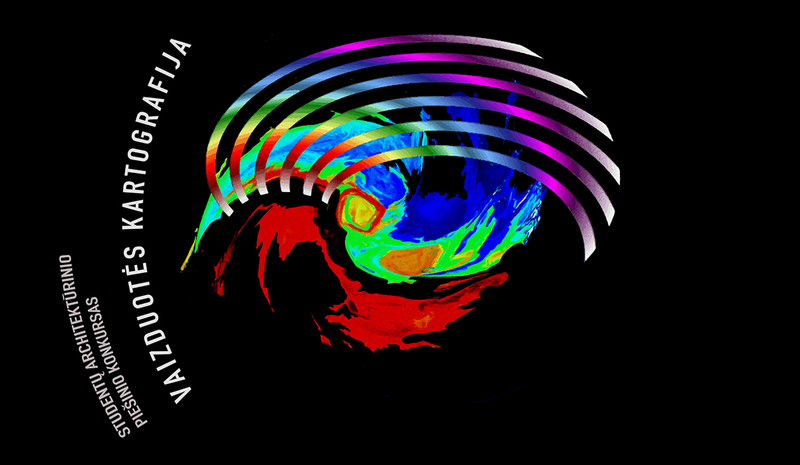
Architectural Drawing Competition announced "Cartography of Imagination"
2026-02-13
Architectural Drawing Competition announced "Cartography of Imagination"
The Department of Architectural Fundamentals, Theory, and Art at Vilnius Gediminas Technical University (VILNIUS TECH) invites students and 2025 graduates of Lithuanian higher architectural education institutions to participate in the annual drawing competition. The theme of the 2026 competition is: IMAGINATION CARTOGRAPHY. Drawing must be submitted by March 25.
The theme of the 2026 architectural drawing competition is urban, architectural, and landscape maps and plans of the imagination.
Maps help us to understand our surroundings, navigate, and act within them. They are tools used to make discoveries and important decisions, and are therefore understood as documents confirming facts. However, maps can also be called mock(doc)uments, combining what is real and what is fictional and imaginary. Even when striving for maximum objectivity, maps inevitably reflect the subjectivity of their creators, the fragmentary nature of the data presented, the selective means of graphic expression, the illusory nature of images, and perspective distortions.
Plans and maps are an integral part of architectural, urban, and landscape design theory, practice and communication. They are used both to visualize future ideas and to document projects that have already been implemented. However, architects' inerest in maps is motivated not only by professional necessity, but also by a purposeless enjoyment of visual aesthetics of cartographic material and the possibilities of representation of speculative ideas. The drawing of the maps based on the imagination can be focused not only on the representation of objects, territories, places, and infrastructure, but also the nuancing of tonal and color spots, and the abstract composition of lines, dots, letters, numbers, and conventional signs.
Drawing imaginary maps encompasses a myriad of cartographic ideas and possibilities for expression, of which we will mention only a few possible directions for developing the theme:
- drawings that intertwine references to virtual environments such as imagined, dreamt, or seen in movies, computer games, with real urban, architectural, and landscape sites;
- maps that layer the inner and outer worlds; the past/present/future of the city; micro and macro worlds; nature/geology and architecture;
- cartography of digital data landscapes;
- drawings revealing the changing effects of state borders, migration, population, and climate change;
- cartographic abstractions that do not signify anything specific, but only play with conventional symbols.
Cartographers of the imagination can also be guided by bringing up rhetorical questions such as: what worldview does the map convey? What is the scale of the map, and what does its change alter? Can errors of the map be important to the idea behind the drawing? Is the map intended for the eyes of a child, a woman, a man, an animal, a plant, a machine-robot-AI, or an alien?
Participants:
The competition is open to architecture students of all levels at Lithuanian higher education institutions and 2025 architecture graduates.
Evaluation of competition entries:
Entries submitted to the competition will be evaluated by a commission composed of professional artists and architects. The aim of this commission is to select three authors from among all competition participants who have submitted the most interesting and best drawings, who will be awarded prizes. The commission may also propose additional nominations of participants.
Competition evaluation criteria: relevance of drawings to the competition theme, originality of ideas, conceptuality and clarity, harmonious use of drawing tools and aesthetic quality of execution, harmony between artistic ideas and graphic image.
Drawing techniques and tools:
Works must be drawn on paper by hand or by combining hand drawing with other graphic representation techniques, such as collage or computer drawing.
Works may be created using various drawing tools – graphite, charcoal, ink, markers, rapitographs, brushes, feathers, etc.
Drawing size:
The maximum size of the drawing is 1x1m. This means that the drawing may also be smaller.
Organizers:
The curator of the competition is artist and VILNIUS TECH Department of Architectural Fundamentals, Theory and Art lecturer Prof. Dr. Audrius Novickas, assisted by artist and associate professor Lilija Puipienė, poster designer Kipras Dubauskas.
Selected resources, links for inspiration:
• https://lookingatcities.info/2021/04/15/mapping-abstract-concepts-for-urban-design-a-lecture-presented-to-htwg-konstanz-university-of-applied-science-faculty-of-architecture-and-design-constance-germany/
• https://drawingmatter.org/cartographies-of-the-imagination/
• Drawings by the architects Peter Cook, Zahos Hadid, Bernard Tschumi;
• Fei Fei Zhou piešiniai https://feifeizhou.com/
• Barbara Macaes Costacartography https://barbaramacaescosta.info/cartography
• Artist Matthew Rangel walking maps: https://www.rangelstudio.com/images/sierra-nevada-codex-exhibition-view
• Woks by visual artists Nicolaus Gansterer, Christopher Fink, Grayson Perry.
Still have questions?
crypt:YXVkcml1cy5ub3ZpY2thc0B2aWxuaXVzdGVjaC5sdA==:xx
+370 683 20159
The theme of the 2026 architectural drawing competition is urban, architectural, and landscape maps and plans of the imagination.
Maps help us to understand our surroundings, navigate, and act within them. They are tools used to make discoveries and important decisions, and are therefore understood as documents confirming facts. However, maps can also be called mock(doc)uments, combining what is real and what is fictional and imaginary. Even when striving for maximum objectivity, maps inevitably reflect the subjectivity of their creators, the fragmentary nature of the data presented, the selective means of graphic expression, the illusory nature of images, and perspective distortions.
Plans and maps are an integral part of architectural, urban, and landscape design theory, practice and communication. They are used both to visualize future ideas and to document projects that have already been implemented. However, architects' inerest in maps is motivated not only by professional necessity, but also by a purposeless enjoyment of visual aesthetics of cartographic material and the possibilities of representation of speculative ideas. The drawing of the maps based on the imagination can be focused not only on the representation of objects, territories, places, and infrastructure, but also the nuancing of tonal and color spots, and the abstract composition of lines, dots, letters, numbers, and conventional signs.
Drawing imaginary maps encompasses a myriad of cartographic ideas and possibilities for expression, of which we will mention only a few possible directions for developing the theme:
- drawings that intertwine references to virtual environments such as imagined, dreamt, or seen in movies, computer games, with real urban, architectural, and landscape sites;
- maps that layer the inner and outer worlds; the past/present/future of the city; micro and macro worlds; nature/geology and architecture;
- cartography of digital data landscapes;
- drawings revealing the changing effects of state borders, migration, population, and climate change;
- cartographic abstractions that do not signify anything specific, but only play with conventional symbols.
Cartographers of the imagination can also be guided by bringing up rhetorical questions such as: what worldview does the map convey? What is the scale of the map, and what does its change alter? Can errors of the map be important to the idea behind the drawing? Is the map intended for the eyes of a child, a woman, a man, an animal, a plant, a machine-robot-AI, or an alien?
Participants:
The competition is open to architecture students of all levels at Lithuanian higher education institutions and 2025 architecture graduates.
Evaluation of competition entries:
Entries submitted to the competition will be evaluated by a commission composed of professional artists and architects. The aim of this commission is to select three authors from among all competition participants who have submitted the most interesting and best drawings, who will be awarded prizes. The commission may also propose additional nominations of participants.
Competition evaluation criteria: relevance of drawings to the competition theme, originality of ideas, conceptuality and clarity, harmonious use of drawing tools and aesthetic quality of execution, harmony between artistic ideas and graphic image.
Drawing techniques and tools:
Works must be drawn on paper by hand or by combining hand drawing with other graphic representation techniques, such as collage or computer drawing.
Works may be created using various drawing tools – graphite, charcoal, ink, markers, rapitographs, brushes, feathers, etc.
Drawing size:
The maximum size of the drawing is 1x1m. This means that the drawing may also be smaller.
Organizers:
The curator of the competition is artist and VILNIUS TECH Department of Architectural Fundamentals, Theory and Art lecturer Prof. Dr. Audrius Novickas, assisted by artist and associate professor Lilija Puipienė, poster designer Kipras Dubauskas.
Selected resources, links for inspiration:
• https://lookingatcities.info/2021/04/15/mapping-abstract-concepts-for-urban-design-a-lecture-presented-to-htwg-konstanz-university-of-applied-science-faculty-of-architecture-and-design-constance-germany/
• https://drawingmatter.org/cartographies-of-the-imagination/
• Drawings by the architects Peter Cook, Zahos Hadid, Bernard Tschumi;
• Fei Fei Zhou piešiniai https://feifeizhou.com/
• Barbara Macaes Costacartography https://barbaramacaescosta.info/cartography
• Artist Matthew Rangel walking maps: https://www.rangelstudio.com/images/sierra-nevada-codex-exhibition-view
• Woks by visual artists Nicolaus Gansterer, Christopher Fink, Grayson Perry.
Still have questions?
crypt:YXVkcml1cy5ub3ZpY2thc0B2aWxuaXVzdGVjaC5sdA==:xx
+370 683 20159
-
- Page administrators:
- Agnė Vėtė
- Karolina Kardokaitė
- Ugnė Daraškevičiūtė