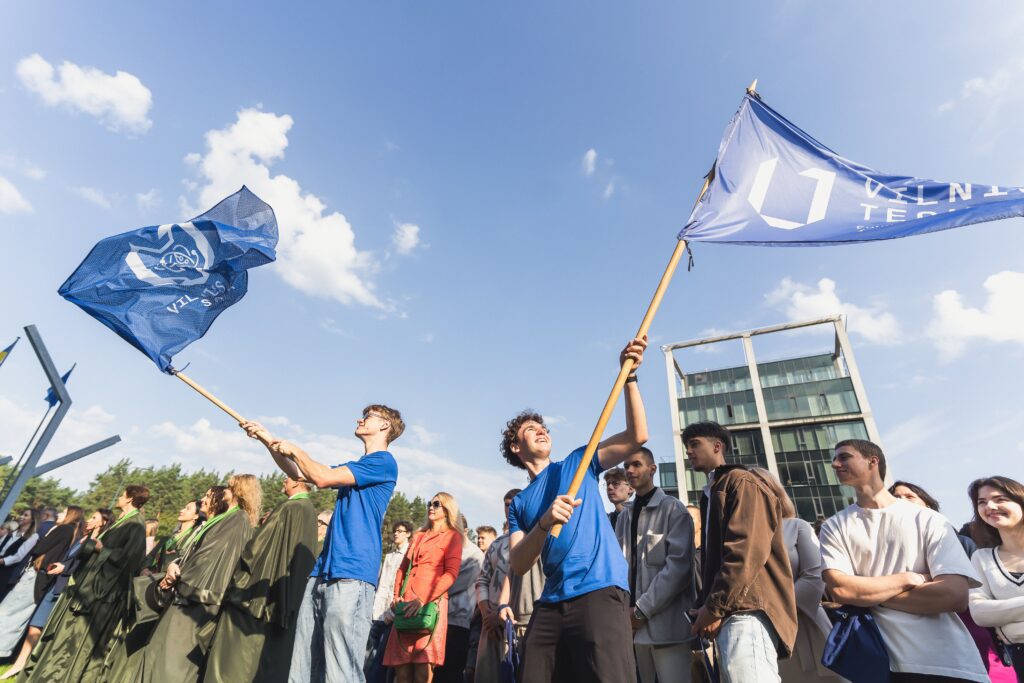
- Business
- Knowledge and Technology Transfer Centre
- Innovative Business
Innovative Business
„Idėjų bankas“
Create a prototype, challenge yourself and your skills, build a team, learn, gain experience, and lay a strong foundation for your future business. Make the most of all the opportunities the University offers. Remember, the success of your future business depends on you.
The competition will take place in several stages, and the winning teams will receive support for developing their ideas and producing prototypes.
Business idea registration
By clicking to submit the request, I agree that the Data Controller – Vilnius Gediminas Technical University – will process my personal data, including name, surname, phone number, and email address, for the purpose of sending notifications by phone and/or email. The data protection policy is available here: vilniustech.lt/en/privacy-policy/
VILNIUS TECH offers
Partner network
- Presentation of the idea to experienced market experts: Enterprise Lithuania, the Knowledge Economy Forum, representatives of various private businesses, acceleration centres, technology parks, and many others.
- Public relations policy and strategic communications
- Business office space in technology parks on highly favourable terms.
- Development of a client network expansion strategy
- Access to the Entrepreneurship Centre’s contact database.
Contacts
- Vilma PurienėDirector
- Lina BakšienėChief Specialist
- Margarita ProkopovičChief Specialist
Promotion and support of innovative business creation
- By promoting and supporting students and researchers in establishing such companies, the University contributes to the development of entrepreneurship and to increasing the overall level of entrepreneurship in the country.
- The Knowledge and Technology Transfer Centre, operating at the University since 2014, helps turn students’ ideas into innovations.
- Consultations are provided on business development, knowledge transfer, intellectual property management, and the commercialisation of research results.
- Meetings with mentors are organised for students, where they learn the fundamentals of entrepreneurship and receive guidance on how to secure funding, increase visibility, and find like-minded collaborators.
- The University continuously collaborates with partners providing innovation and business support infrastructure services to ensure that the ideas of its researchers and scientists are implemented through the establishment of spin-off companies.
- In 2016, three additional cooperation agreements were signed with clusters to strengthen collaboration with the Lithuanian Airports cluster, the 3D Printing Technologies cluster, and the Photonics cluster. Cooperation was also initiated with the Užupis Creative Industries cluster and the Cybersecurity cluster in preparing applications for the Horizon 2020 programme.
- VILNIUS TECH has implemented five Competence Centre projects aimed at carrying out R&D activities in the fields of smart buildings, biomechanics, virtual and augmented reality, smart materials, and devices, as well as commercialising the results.
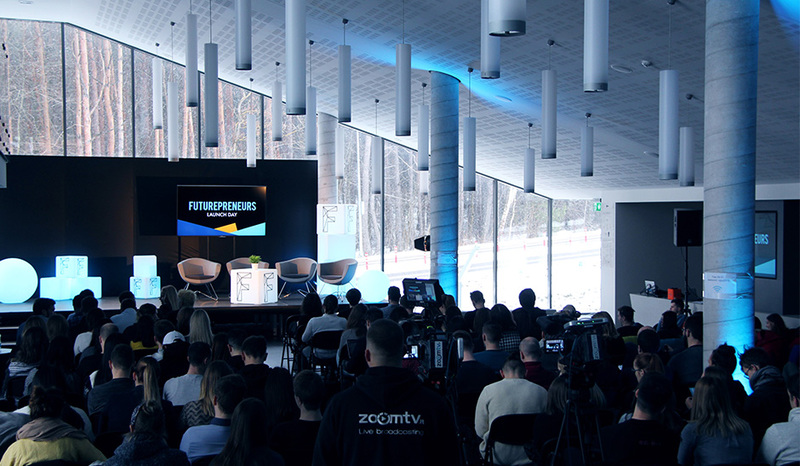
Entrepreneurship education and promotion initiatives
-
Panel made from recycled tyre textile fibres
Environmental Protection InstituteUnique featuresIts main distinguishing feature is not unique functional properties, but the fact that it is made from recycled materials and contributes to the promotion of the circular economy.Designed to improve sound and thermal insulation in buildings, the product is made from recycled tyres. The R&D result under development is a board produced from nylon textile material obtained during tyre recycling. At this stage, research has already confirmed good sound insulation properties, and further studies are planned to verify its thermal insulation performance.
Such a board could be used for sound and thermal insulation in buildings, replacing widely used materials such as mineral wool and glass wool. The board is expected to be thicker than some existing solutions on the market and may therefore be less suitable for residential spaces where maximising usable area is important.
-
3D printer attachment
Department of Metal and Composite Structures, Innovative Building Structures LaboratoryUnique featuresThe uniqueness of this R&D result lies in process innovation, as a method has been developed to improve 3D printing technology. By introducing reinforcement into plastic, its performance properties are enhanced while the weight remains relatively unchanged. Reinforced plastic can serve as an alternative to aluminium profiles, enabling solutions for profile-based assembly joints. In this case, temporary structures with distinctive designs could be assembled quickly using modular construction.Designed for reinforcing printed polymer structures, this solution includes a 3D printer attachment that improves the printing of polymer panels by integrating reinforcement into the printed structure. Reinforced panels and spatial elements are more resistant to damage and more durable, while maintaining their lightweight properties.
Such reinforced polymer products and panels can be used to construct greenhouses, shelters, and outdoor stages. The printer also enables research with other composite materials, exploring applications in the defence and aviation industries.
-
Neuromarketing solution
Construction Management and Real Estate DepartmentUnique featuresThe main distinguishing feature of the software under development is the use of affective computing technology, which enables algorithms to recognise human emotions.A tool for analysing the emotional impact of visual content on users. The developed software enables the analysis of viewers’ reactions to displayed visual content. While a viewer is watching visual material (e.g. advertisements, films), a camera captures facial expressions, and an AI-based algorithm identifies the emotions experienced by the viewer (such as happiness, sadness, anger, boredom, interest, etc.).
This type of analysis helps content creators verify and compare whether viewers’ reactions match the intended emotional response, and provides opportunities to edit and improve content based on identified discrepancies.
The software can be used by creators of advertising, film, television, and other visual content to test their material before public release.
-
Modular wireless communication chip
Department of Computer and Communication TechnologiesUnique featuresThe main distinguishing features of this chip are its wide frequency range and open accessibility. Existing alternatives on the market are typically developed by electronics manufacturers and integrated only into their own devices (e.g. Samsung, Huawei, Sony). Even when such chips are available for purchase, they are usually fully closed systems (black boxes), meaning that users cannot modify their functionality, adjust parameters, or adapt them to the specific needs of their own devices.A programmable, open-access communication electronics component. The team is developing a modular, programmable, open-access wireless communication chip that can be used to create wireless access points, enable device-to-device communication, and, with further development, support base station functionality.
This chip could be used as a component in electronic devices that require network connectivity, such as mobile phones, mobile communication infrastructure elements, and other smart devices.
-
Gamified augmented reality modelling solution
Department of Urban PlanningUnique featuresCurrent methods of public engagement are limited to project communication and open discussions, whereas the uniqueness of this tool lies in its methodological approach and an engaging, user-friendly testing experience.A tool for enhancing the social, economic, and environmental sustainability of real estate projects. The gamified augmented reality modelling solution is designed to transparently and accessibly involve a wider range of stakeholders—citizens, communities, and building users—in the development and planning of public spaces and commercial real estate.
The solution consists of two components: software and a research methodology. Its operation is based on the following stages:
- Stage 1: A research methodology is developed (target groups are selected, e.g. residents, business representatives; evaluation parameters are defined, e.g. ease of navigation, perceived safety; game scenarios are created; and the object model is transferred into a virtual environment).
- Stage 2: Representatives of the target groups complete assigned tasks in an augmented reality environment using a gamified approach, while the system collects and analyses behavioural data.
- Stage 3: The results are summarised, and recommendations are prepared on how to improve the object so that it better meets user expectations and is more sustainably integrated into its environment.
-
Smart Scanning Electrochemical Microscope (SMART-SECM)
Department of Electrical EngineeringUnique featuresThe improved microscope will be distinguished by its automatic positioning and image recognition systems, which will enable it to automatically locate, identify, and classify analysed objects, thereby saving researchers’ time.Based on image recognition and machine learning. During R&D activities, an electrochemical microscope produced by a German manufacturer is being comprehensively upgraded—both its hardware and software—to enhance its functionality and expand its measurement capabilities.
The improved microscope will feature automatic positioning and image recognition systems, enabling it to autonomously identify and classify scanned objects based on characteristics such as size, shape, and electrochemical properties, without human intervention.
SMART-SECM could be used by laboratories and research centres in chemistry, biology, and materials science to automate electrochemical microscopy processes and save researchers’ time.
Assoc prof dr Inga Morkvėnaitė-Vilkončienė -
Biofilter - ADSORBERIS
Institute of Environmental ProtectionUnique featuresThe main distinguishing feature of this biofilter–adsorber is its durability. The biofilter can be used for up to 10 years or even longer. Another important advantage of the product is its sustainability and climate neutrality. As air is purified by microorganisms present in bioactive carbon, no waste is generated—all substances are fully processed.Designed for the removal of organic compounds and odours from air, the product under development is a biofilter–adsorber with a biologically activated filling made from biochar. The biofilter is used to purify air from volatile organic compounds such as acetone, xylene, toluene, butanol, styrene, butyl acetate, and others.
It can be applied in the chemical, food, wood processing, and oil industries, as well as in printing facilities and other sectors where volatile organic solvents are emitted. The biofilter can also be installed in facilities where various thinners and solvents are used for cleaning parts or equipment.
In addition to removing volatile organic compounds, the biofilter eliminates unpleasant odours. It can also be used in agriculture (e.g. slaughterhouses and farms) and at landfill sites, where hydrogen sulphide emissions occur.
-
Method for individual indoor microclimate control and its implementation system
Department of Construction Management and Real EstateUnique featuresExisting solutions on the market analyse only physiological parameters. They do not provide integrated analysis of the user’s emotional (e.g. happiness, sadness, anger, fear), affective (e.g. boredom, interest), and physiological states, nor do they assess valence, arousal, productivity (learning efficiency), or engagement (AFFECT data). Therefore, this invention enables a significantly more accurate assessment of the user’s condition. In comparable solutions, indoor climate control does not incorporate neuro decision-making models or neurocorrelation matrices, nor does it evaluate and analyse all possible combinations of smart building environment parameters (such as lighting intensity and colour, scents, visual elements, information, knowledge, data, tasks, learning materials, games, music, video, temperature, humidity, air quality, etc.). As a result, this invention allows for a significantly more precise management of personalised smart indoor environments, including indoor microclimate.Designed to improve people’s well-being and productivity, this solution introduces a personalised, smart indoor microclimate control system for work and living spaces. It enables the adjustment of parameters such as temperature, humidity, and other environmental factors—including background music and scents—based on monitoring users’ emotional state to maintain optimal productivity.
All monitoring and control equipment is integrated into a single unit that can be installed in indoor spaces.
-
Noise-reducing asphalt mixture
Institute of Road ResearchUnique featuresAlthough this type of asphalt pavement is already used worldwide, it remains a relatively new product in Lithuania and other Baltic countries. The key advantage of this R&D result is an environmentally friendly solution that reduces noise pollution while maintaining current market price levels. For this reason, the product has strong potential to become a widely demanded alternative.Designed to reduce traffic noise in or near residential areas, this R&D result is a noise-reducing asphalt pavement. The asphalt is produced from a patented mixture developed in Lithuania.
This type of asphalt can be applied to road sections within or near residential areas where it is important to ensure that traffic noise does not exceed permitted limits. The installation costs of this pavement are comparable to those of currently used alternatives.
-
Cement concrete modules
Institute of Road ResearchUnique featuresThe use of this type of material for pathways is still limited globally. In Lithuania, cement concrete blocks are currently used mainly for temporary surfaces. The key innovation of this R&D result is its high quality. Cement concrete modules provide a longer service life and improved visual appearance. Their durability makes them a cost-effective solution, reducing long-term expenses for the construction and maintenance of pedestrian and cycling paths.Designed for higher-quality construction of pedestrian and cycling paths, the developed cement concrete modules are suitable for such applications and are stronger and more durable than currently used alternatives, such as paving stones or other concrete blocks.
This material reduces the risk of deformation and subsidence of pavements and cycle paths, ensuring long-term durability.
-
Sound-absorbing panel
Institute of Environmental ProtectionUnique featuresThere are many well-established solutions worldwide for reducing noise and reverberation in various indoor environments. The distinctiveness of this R&D result lies not in the product itself, but in its composition, as 50% of the panel is made from sludge waste generated in paper production. For this reason, the product contributes to the promotion of the circular economy by reducing waste generated in the paper manufacturing sector.Designed to improve the acoustic properties of indoor spaces, this patented sound-absorbing panel is made from sludge generated during paper production. The material offers effective acoustic performance, enhancing indoor sound environments.
Its primary function is to reduce reverberation, making it particularly suitable for use in industrial and administrative spaces.
-
Concrete facade panel
Department of Metal and Composite Structures, Innovative Building Structures LaboratoryUnique featuresThe main distinguishing feature of this solution, compared to other “living wall” systems, is its cost—it is significantly cheaper to install and maintain than other alternatives available on the market.Designed for vertical greening of buildings, the product under development is a concrete panel for “living” facade systems. The outer layer of the panel is adapted to support natural vegetation growth, allowing the “living wall” to require minimal maintenance (no need for planting or watering).
Vegetated building facades provide thermoregulatory benefits—helping to keep interiors cooler in summer and warmer in winter—thereby reducing building operating costs (heating and ventilation). They also contribute to noise reduction and create an attractive visual appearance.
Due to these properties, the R&D product is suitable for both new construction and renovation projects, aiming to improve sustainability and reduce heating and ventilation costs.
-
Hemp waste-based thermal insulation material
Department of Chemistry and BioengineeringUnique featuresThe main distinguishing feature of this material is that it is fully environmentally friendly (both in terms of raw materials and production process) and non-allergenic.Resistant to microbial degradation. This R&D result is a thermal insulation material made from hemp shives (i.e. waste generated during hemp processing). The material is additionally treated with natural substances to enhance its resistance to moisture and microorganisms.
Structural or decorative panels made from this material can be used in construction (as thermal insulation) and in furniture manufacturing (as structural boards). Although it is difficult to predict at this stage of development, the product is not expected to differ significantly in price from existing alternatives on the market.
Computer vision algorithm and dataset for pedestrian detection -
Computer vision algorithm and dataset for pedestrian detection
Department of Electronic Systems, Department of Computing and Communication TechnologiesUnique featuresThe main distinguishing feature of this solution is its exceptionally high level of accuracy.It can be used in traffic management systems. The product under development is an artificial intelligence-based image recognition algorithm designed for pedestrian detection in traffic. To ensure efficient performance and high accuracy, a unique dataset has been developed.
This algorithm, together with the dataset, can be applied in traffic management systems to detect road users—primarily pedestrians—under various and particularly challenging traffic conditions (e.g. sunrise, sunset, heavy rain, snowstorms, etc.).
The algorithm has currently reached TRL 4. Further development is currently paused, as the implementation of a full traffic management system based on this solution would require long-wave infrared cameras. These are restricted or classified as military-use equipment in some countries, and therefore, it is necessary to assess the feasibility of their use in traffic systems.
-
Non-invasive pressure sensor
Department of Mechatronics, Robotics and Digital ManufacturingUnique featuresThe distinguishing feature of this device is that it enables bone density and joint load measurements to be performed non-invasively. Currently available alternatives for such assessments rely on invasive methods.Designed for medical assessment of bone density and joint load, this R&D result is a non-invasive pressure sensor developed using thin-film systems modified with electrically conductive polymers.
The sensor is a medical device intended for bone density and joint load analysis. It is a compact, patch-type sensor that can be used both for single-use diagnostics (e.g. in a doctor’s office) and for continuous monitoring during a patient’s daily activities.