Neurodiversity at University: what both lecturers and students should know
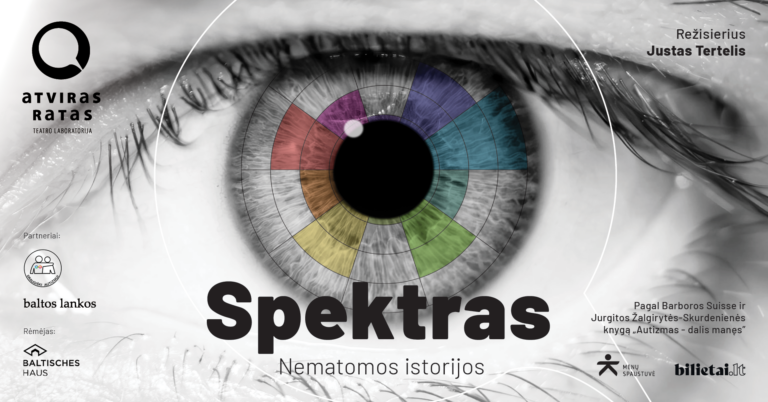
Different people, different experiences. And all of them matter. At VILNIUS TECH, we want not only to talk about inclusion, but also to learn how to better understand one another. That is why throughout October, the university paid greater attention to neurodiversity: yesterday, our community had the opportunity to see the performance "Spectrum. Invisible Stories" (read more), and the exhibition "Autism – A Part of Me", provided by the organization "Draugiški autizmui" (Autism Friendly), is currently on display at the Saulėtekis building. We sincerely thank Barbora Suisse for making this possible.
These initiatives are carried out on the initiative of the Vice-Rector for Studies, Živilė Sederevičiūtė-Pačiauskienė, and are organized by the Academic Support Centre (APC).
We invite you to learn more about neurodiversity and learning challenges in this interview with VILNIUS TECH psychologist Miglė Rudytė.
First of all, it is essential to understand and distinguish the concepts.
Neurodiversity is the concept that people's brains and nervous systems naturally function in diverse ways. This term is closely associated with autistic sociologist Judy Singer, and it later sparked the neurodiversity human rights movement.
Neurodiversity includes everyone—both neurotypical and neurodivergent individuals. Neurodivergent is a term used for people whose neurological development or functioning differs from what society considers typical. This group most commonly includes autistic people, individuals with Attention Deficit Hyperactivity Disorder (ADHD), dyslexia (and other learning difficulties), Tourette syndrome, etc.
The common denominator of these conditions is a differently wired brain. The neurodiversity movement emphasizes that many difficulties do not stem from who neurodivergent individuals are, but rather from the fact that the world is constructed around neurotypical people and their needs.
Furthermore, it is important to understand that a person is born neurodivergent (often influenced by genetics) rather than becoming so, and that this is not an intellectual disability: "Intellectual disabilities are a separate category that may or may not be present in neurodivergent individuals, just as neurotypical individuals may or may not have an intellectual disability," explains the psychologist.
– A myth has taken root that the number of autistic/neurodivergent people is rising nowadays simply because young people are self-diagnosing. What is the reality? Why does it seem like there are more such people today?
– Diagnostics for these conditions are improving—it is finally recognized that they are not exclusive to childhood. Autism and ADHD are neurodevelopmental traits that begin in early childhood and continue throughout life, simply presenting differently depending on age, gender, and other factors.
Additionally, while the number of individuals requiring significant support is believed to remain stable, the recognition of milder forms is increasing.
When discussing the percentage of such individuals in the general population, it largely depends on whether we are referring to formal diagnoses or traits. Autism is not called a spectrum for nothing: its presentation is highly varied, with differing strengths and support needs.
A person may exhibit pronounced autistic traits without reaching the diagnostic threshold—that is, without meeting all the formal criteria required for a clinical diagnosis. Therefore, if we were to count not only diagnosed individuals but also those with distinct neurodivergent traits, their presence in society would be considerably higher.
In terms of formal diagnoses, autistic individuals make up about 1–2% (over 2–3% in some countries), while ADHD affects approximately 5%. It is important to remember that a diagnosis indicates someone sought medical evaluation; however, many never do, so the actual numbers may be even higher.
– What are the learning characteristics of a neurodivergent person: what challenges might such a student face? On the flip side, can they excel in certain areas, as often depicted in films?
– When we talk about neurodivergence, we must first understand that it represents a rather broad and heterogeneous group. The fundamental characteristic is a different way of processing information: the world perceived through the senses feels different. For example, autistic individuals may have hyper-sensitive senses, while with others, they might experience hypo-sensitivity and even seek out stronger sensory input.
Special interests and hobbies are vital to neurodivergent individuals, but their brains can easily become overloaded due to an abundance of information. For instance, being on the autism spectrum means processing a vast amount of environmental details thoroughly. As a result, it might seem as though the person thinks more slowly, when in reality, they simply need more time to "digest" the input. However, once the brain learns and recognizes a specific pattern of behavior or a phenomenon, it can deliver answers remarkably fast.
Meanwhile, individuals with ADHD have an exceptionally high need for novelty and can become bored quite quickly. Typically, their minds are flooded with numerous ideas and thoughts simultaneously. But if something truly captures their interest, they can enter a state of hyperfocus—a phase of intense, deep concentration that lasts until their interest runs its course.
– What myths about autistic individuals and ADHD prevail in academic environments?
– One myth is that a person "doesn't look autistic," as if autism has a specific physical appearance. Every individual is unique, and there is no standard look.
Another is "we are all a little bit autistic." Such remarks can be invalidating to autistic individuals because they diminish the real struggles they experience.
"You can't have ADHD because you handle everything so well." Again, this overlooks internal challenges that an outside observer may never see.
– How should a lecturer act and communicate when recognizing an autistic student? How should this be reflected in teaching, assessment, and during lectures or seminars? What should be avoided, and what should be done instead?
– First, one should never attempt to "diagnose" or label someone. If a person is neurodivergent, it is entirely their choice whether to disclose it or not. If a student chooses to open up and speak honestly about their challenges, respect their right to share their own experiences and never gossip about them—such actions can be deeply hurtful.
If a lecturer is teaching a neurodivergent student who has established study accommodations, special attention should be given to communication and course materials. Both should be clear, structured, and free of unnecessary surprises—if changes occur, inform students as early as possible.
Lecturers should also avoid taking certain behaviors personally. For instance, if a student wears headphones during class (which reduces overwhelming environmental stimuli and helps them focus) or if they do not always respond immediately (they might be overloaded with information and need a moment to self-regulate).
In academia, we agree on certain norms—such as punctuality or bringing necessary materials—but if a slip-up happens, we shouldn't attach moral judgment to that behavior.
– How should a situation be assessed when a student masters the subject well, but struggles to demonstrate it through traditional assessment methods (e.g., oral examinations)? How can a lecturer help a student who finds it difficult to adapt to standard formats?
– If a student reaches out and shares their needs, the first step is to appreciate that trust—students genuinely sense which lecturers they can rely on.
When individualized study recommendations are established for a student, the format changes, but the learning outcomes remain the same: the student must still demonstrate the required knowledge and skills of the course.
Accommodations are not about making studies easier; they are about leveling the playing field so that a student with innate (or acquired) traits can study and earn an education on equal terms with others. Often, lecturers themselves, seeing general guidelines, creatively adapt their courses—for example, by designing alternative assignments.
– What learning environment conditions can be especially important for autistic/neurodivergent students?
– Because sensory sensitivity is common, the environment should be kept as free of unnecessary stimuli as possible, or at least kept as predictable and consistent as possible.
Autonomy is crucial for these students: where possible, allow them to choose their topics and structure their own plans. Neurodivergent students often have deep areas of interest; being able to apply that knowledge in their coursework significantly boosts their motivation.
– What is the best way for a lecturer or classmate to communicate with an autistic student—should anything be done differently at all?
– Clarity, precision, and structure: avoid ambiguity where the person is left guessing how or in what order things will unfold. Keep them informed of plans and announce any changes promptly. These practices benefit absolutely all students; it’s just that failing to adhere to them causes greater difficulties for neurodivergent individuals.
Additionally, never invalidate a person’s lived experience—do not question it or demand proof. If someone says an environment is too loud for them, then it is. From there, you can work together to figure out how to ensure suitable conditions.
– How can we ensure in group work that differing communication and working styles do not become a barrier for a student?
– It comes down to universal principles of respect, but we should pay special attention to our own judgments—asking ourselves whether someone doing things differently than we do is necessarily wrong. Empathy and tolerance often fall short when we evaluate others based solely on our own experiences. Everyone is different, and if you don't understand something, you can politely ask—without prying into personal matters and respecting their right to decline.
– Does a student need an official diagnosis to talk about their learning needs?
– Accessing psychological support services—individual counseling, group sessions, workshops—certainly does not require a diagnosis. However, formalizing academic accommodations does require official documentation.
– When is it worthwhile to contact a university psychologist or other specialist (and where should one reach out)?
– Students who feel that distressing emotions are lingering for too long, or who find it difficult to find solutions on their own, are encouraged to reach out and speak with a specialist.
Specialists can assess specific needs and guide the student accordingly. In some cases, this means psychological support; in others, academic accommodations; and at times, comprehensive support is needed.
Information regarding psychological support at VILNIUS TECH can be found [here].
More