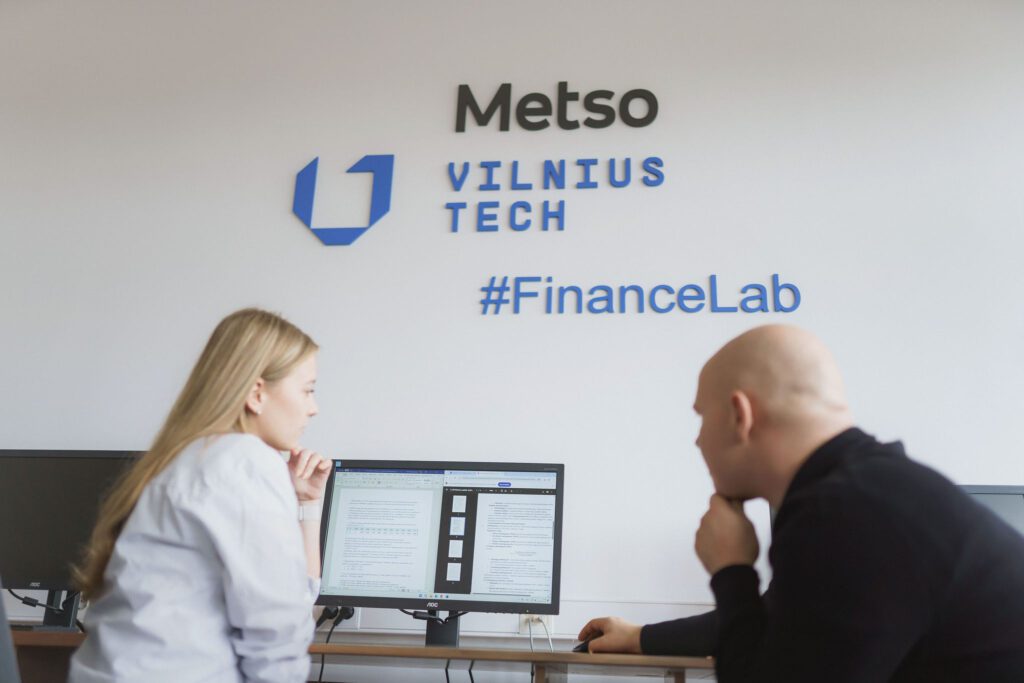
Department of Financial Engineering

The department prepares financial analysts and decision-making experts, conducts research in financial engineering, and organises the Finance Olympiad for school students.
Phone: +370 5 274 4861 Email: vvfi@vilniustech.lt
Ekranas

About the Department

Partners

The Department of Financial Engineering closely cooperates with many Lithuanian and international companies and organisations.


Show more

Department Staff

The academic staff of the Department of Financial Engineering are experts in financial engineering, risk management, sustainable finance, and fintech. They prepare financial analysts and decision-making professionals, conduct research, and engage younger students through the Finance Olympiad, encouraging interest in finance.

Administration
  • Administration
Show more

Thesis abstracts

Years
Qualification
Clear selections
Akslu Kraujelė — Assoc Prof Dr Kristina Garškaitė-Milvydienė
The Influence of Financial Technology Companies' Capital Structure on the Cost of Capital and Leverages
This master’s thesis analyzes the impact of capital structure on the cost of capital and corporate leverage, focusing on both financial and operational aspects. The theoretical part introduces...
2026 Masters
  • 2026
  • Masters
The Influence of Financial Technology Companies' Capital Structure on the Cost of Capital and Leverages
Student: Akslu Kraujelė
Supervisor: Assoc Prof Dr Kristina Garškaitė-Milvydienė
Department: Department of Financial Engineering
Thesis abstract (LT)
Magistro darbe nagrinėjama įmonių kapitalo struktūros įtaka kapitalo kaštams bei veiklos ir finansiniams svertams, atsižvelgiant į šiuolaikinę ekonominę aplinką. Teorinėje dalyje pristatomi pagrindiniai kapitalo struktūros formavimo modeliai – Modiglianio ir Millerio teorija, kompromiso ir prioritetinio finansavimo principai – bei aptariamas jų taikymas realiame versle. Empirinėje dalyje analizuojamos šešios Lietuvos įmonės: trys FinTech sektoriaus (Paysera LT, TransferGo Lithuania, Ondato) ir trys tradicinio verslo (Panevėžio statybos trestas, Vilniaus baldai, Ignitis grupė). Tyrimo laikotarpis – 2020–2024 m. Remiantis finansiniais rodikliais buvo apskaičiuoti WACC, kapitalo struktūros santykiai, veiklos ir finansiniai svertai. Taip pat atlikta koreliacinė analizė su makroekonominiais veiksniais (infliacija, palūkanų normomis). Rezultatai parodė aiškius skirtumus tarp FinTech ir tradicinių ne Fintech įmonių. FinTech įmonės pasižymėjo lankstesne struktūra ir mažesniu jautrumu makroekonominiams svyravimams, tuo tarpu tradicinės ne FinTech įmonės dažniau patirdavo didesnius finansavimo kaštus ir riziką. Darbas parodė, kad nėra vienos idealios kapitalo struktūros – ji turi būti formuojama atsižvelgiant į įmonės specifiką, sektorių bei ekonomines sąlygas.
ekonominę aplinką struktūros formavimo modeliai prioritetinio finansavimo principai kapitalo struktūros santykiai finansiniai svertai finansavimo kaštai ir riziką ekonomines sąlygos apskaičiuoti WACC
Thesis abstract (EN)
This master’s thesis analyzes the impact of capital structure on the cost of capital and corporate leverage, focusing on both financial and operational aspects. The theoretical part introduces the main concepts and models related to capital structure decisions, including the Modigliani–Miller theory, the trade-off theory, and the pecking order theory. These models are then linked to modern practices, emphasizing the increasing importance of flexible and risk-oriented financing strategies in a high interest rate environment. The empirical research was conducted by analyzing six Lithuanian companies – three representing the FinTech sector and three from traditional industries (construction, furniture manufacturing, and energy). For the period 2020–2024, key indicators were calculated: capital structure ratios, weighted average cost of capital (WACC), financial and operational leverage. Additionally, macroeconomic variables such as inflation and interest rates were examined to assess their correlation with changes in capital structure. The findings revealed significant differences between FinTech and traditional not FinTech companies. FinTech firms were more flexible in adapting to external shocks, used more innovative funding strategies, and showed lower sensitivity to macroeconomic fluctuations. Meanwhile, traditional not Fintech companies relied more on debt and were more exposed to rising financing costs. The research concludes that optimal capital structure is context-dependent and must align with company size, sector, risk tolerance, and macroeconomic conditions.
cost of capital corporate leverage operational aspects. including the Modigliani–Miller theory capital structure ratios weighted average cost of capital (WACC) FinTech and traditional not FinTech
Akvilė Bakaveckaitė — Prof Dr Indrė Lapinskaitė
The Impact of Investments on the Sustainable Development of Companies in the Aviation Sector
Civil aviation is one of the fastest-growing transport sectors and, at the same time, a significant source of greenhouse gas emissions. Therefore, the increasing passenger traffic and tightening...
2026 Masters
  • 2026
  • Masters
The Impact of Investments on the Sustainable Development of Companies in the Aviation Sector
Student: Akvilė Bakaveckaitė
Supervisor: Prof Dr Indrė Lapinskaitė
Department: Department of Financial Engineering
Thesis abstract (LT)
Civilinė aviacija yra vienas sparčiausiai augančių transporto sektorių ir kartu reikšmingas šiltnamio efektą sukeliančių dujų emisijų šaltinis, todėl augantis keleivių srautų mastas ir griežtėjanti klimato politika Europos Sąjungoje lemia būtinybę oro transporto įmonėms aktyviai investuoti į darnaus vystymosi sprendimus. Investicijos į tvarius aviacijos degalus, mažesnio energijos intensyvumo orlaivius, elektrifikacijos technologijas bei emisijų mažinimo programas tampa ne tik reguliacinių reikalavimų įgyvendinimo priemone, bet ir strateginiu veiksniu, leidžiančiu didinti veiklos efektyvumą, mažinti ilgalaikes sąnaudas, stiprinti įmonių reputaciją ir išlaikyti konkurencingumą globalioje aviacijos rinkoje. Baigiamajame magistro darbe analizuojama investicijų įtaka aviacijos sektoriaus įmonių darniam vystymuisi. Tyrimui pasirinktos Europos oro linijų bendrovės „Ryanair“ ir „Wizz Air“. Darbe atlikta teorinė tvarumo sampratos, investicijų rūšių ir jų poveikio įmonių darniam vystymuisi analizė. Parengta tyrimo metodika apima kiekybinę turinio analizę, COPRAS daugiakriterio vertinimo metodą ir daugialypę tiesinę regresiją. Atlikta empirinė rezultatų analizė, įvertintas investicijų poveikis pagrindiniams veiklos ir tvarumo rodikliams. Tyrimo rezultatai atskleidė, kad investicijos į tvarumą teigiamai koreliuoja su įmonių darnaus vystymosi rodikliais, didina veiklos efektyvumą, stiprina reputaciją ir prisideda prie ilgalaikio konkurencingumo. Pateiktos išvados leidžia įvertinti investicijų į tvarumą poveikį nagrinėjamų bendrovių veiklos ir darnaus vystymosi rodikliams bei išskirti galimas investicijų planavimo kryptis aviacijos sektoriaus kontekste. Darbą sudaro įvadas, teorinė, metodinė ir empirinė dalys, rezultatų analizė, išvados bei literatūros sąrašas. Darbo apimtis – 72 psl. teksto be priedų, 22 pav., 10 lent., 55 bibliografiniai šaltiniai. Darbo priedai pateikiami atskirai.
aviacijos sektorius darnus vystymasis tvarumas investicijos oro linijos
Thesis abstract (EN)
Civil aviation is one of the fastest-growing transport sectors and, at the same time, a significant source of greenhouse gas emissions. Therefore, the increasing passenger traffic and tightening climate policies in the European Union create a necessity for airlines to actively invest in sustainable development solutions. Investments in sustainable aviation fuels, lower energy-intensive aircraft, electrification technologies, and emission reduction programs are becoming not only a means of regulatory compliance but also a strategic factor that enhances operational efficiency, reduces long-term costs, strengthens corporate reputation, and maintains competitiveness in the global aviation market. This Master’s thesis analyzes the impact of investments on the sustainable development of companies in the aviation sector. The study focuses on the European airlines Ryanair and Wizz Air. The thesis includes a theoretical analysis of the concept of sustainability, types of investments, and their impact on companies’ sustainable development. The research methodology includes quantitative content analysis, the COPRAS multi-criteria evaluation method, and multiple linear regression. An empirical analysis of the results was conducted, assessing the impact of investments on key operational and sustainability indicators. The research findings revealed that investments in sustainability positively correlate with companies’ sustainable development indicators, increase operational efficiency, strengthen reputation, and contribute to long-term competitiveness. The conclusions allow for an assessment of the impact of sustainability investments on the operational and sustainable development indicators of the studied companies and highlight potential directions for investment planning in the aviation sector. The thesis consists of an introduction, theoretical, methodological, and empirical sections, results analysis, conclusions, and a list of references. The thesis comprises 72 pages of text excluding appendices, 22 figures, 10 tables, and 55 bibliographic sources, and appendices.
aviation sector sustainable development sustainability investments airlines.
Albert Aboagye — Assoc Prof Dr Algita Miečinskienė
Management of Cyber Risk in Fintech Enterprises
The financial services sector has witnessed a significant transformation due to the rapid development of financial technology, which presents both opportunities and challenges. This exponential growth offers services...
2026 Masters
  • 2026
  • Masters
Management of Cyber Risk in Fintech Enterprises
Student: Albert Aboagye
Supervisor: Assoc Prof Dr Algita Miečinskienė
Department: Department of Financial Engineering
Thesis abstract (LT)
Finansinių paslaugų sektorius patyrė reikšmingą transformaciją dėl sparčios finansinių technologijų plėtros, kuri suteikia tiek galimybių, tiek iššūkių. Šis eksponentinis augimas siūlo paslaugas, kurios didina efektyvumą, prieinamumą ir klientų pasitenkinimą. Tačiau ši sektoriaus pažanga taip pat padidino poveikį reikšmingoms rizikoms, įskaitant kibernetines grėsmes, duomenų apsaugos problemas, sukčiavimą, reguliavimo reikalavimų laikymosi iššūkius ir veiklos rizikas. Todėl tapo itin svarbu, kad finansinių technologijų (fintech) įmonės, reguliuotojai ir klientai veiksmingai valdytų šias kibernetines rizikas. Šiame tyrime nagrinėjama, kaip kibernetinės rizikos yra nustatomos, vertinamos ir valdomos praktikoje, taip pat vertinami esami požiūriai, taikomi Ganoje veikiančiose fintech įmonėse. Tyrime analizuojamos pagrindinės kibernetinės grėsmės, su kuriomis susiduria fintech įmonės, iššūkiai, kylantys diegiant veiksmingą kibernetinės rizikos valdymo sistemą, ir galimybės, kurias suteikia naujosios technologijos, tokios kaip dirbtinis intelektas, blokų grandinė ir pažangūs šifravimo metodai. Taip pat akcentuojama saugumo kultūros pokyčio svarba bei pramonės požiūrių į grėsmių informacijos mainus (žvalgybinės informacijos dalijimąsi) reikšmė. Be to, tyrime vertinamas esamų reguliavimo ir vyriausybinių struktūrų veiksmingumas mažinant kibernetinę riziką Ganos fintech ekosistemoje. Taikant tinkamą rizikos valdymo požiūrį, šio tyrimo tikslas – pateikti praktinių įžvalgų ir rekomendacijų, skirtų pagerinti fintech įmonių kibernetinį atsparumą Ganoje. Tikimasi, kad tyrimo rezultatai prisidės prie akademinės literatūros apie kibernetinės rizikos valdymą ir suteiks praktikams bei politikos formuotojams įrodymais pagrįstų strategijų, padedančių stiprinti kibernetinį saugumą ir išlaikyti pasitikėjimą besivystančioje skaitmeninėje finansų sistemoje.
Kibernetinės rizikos valdymas; Finansinės technologijos (fintech); Kibernetinis saugumas; Reguliavimo reikalavimų laikymasis; Skaitmeninės finansinės paslaugos; Gana
Thesis abstract (EN)
The financial services sector has witnessed a significant transformation due to the rapid development of financial technology, which presents both opportunities and challenges. This exponential growth offers services that improve efficiency, accessibility and customer satisfaction. However, this sectoral progression has also increased exposure to significant risks, including cyber threats, data protection issues, fraud, regulatory compliance challenges, and operational concerns. It has therefore become crucial for fintech enterprises, regulators and customers to effectively manage these cyber risks. This study thus examines how cyber risks are identified, assessed, and managed in practice and evaluating existing approaches within the fintech enterprises operating in Ghana. It examines the major cyber threats faced by fintech enterprises, the challenges encountered in implementing an effective cyber risk management framework and the opportunities offered by emerging technologies such as artificial intelligence, blockchain, and advanced encryption techniques. It also focuses on the essence of a shift in security culture and industry approaches to threat information exchange (intelligence sharing). The research also assesses the effectiveness of existing regulatory and government structures in mitigating of cyber risk in the Ghanaian fintech ecosystem. with the right risk management posture, the study aims to provide practical insight and recommendations to improve cyber resilience among fintech enterprises in Ghana. The findings are expected to contribute to the academic literature on cyber risk management and to provide practitioners and policymakers with evidence-based strategies for building cybersecurity resilience and sustaining trust in the evolving digital financial system.
Cyber risk management Financial technology (fintech) Cybersecurity Regulatory compliance Digital financial services Ghana.
Artūras Struca — Assoc Prof Dr Algita Miečinskienė
Research on Mergers and Acquisitions in the Financial Technology Sector
This Master’s thesis analyses mergers and acquisitions (M&A) within the financial technology (FinTech) sector, focusing on their strategic motives, regulatory context, market reaction, and financial impact on involved...
2026 Masters
  • 2026
  • Masters
Research on Mergers and Acquisitions in the Financial Technology Sector
Student: Artūras Struca
Supervisor: Assoc Prof Dr Algita Miečinskienė
Department: Department of Financial Engineering
Thesis abstract (LT)
Šiame magistro baigiamajame darbe analizuojami finansinių technologijų (FinTech) sektoriaus susijungimai ir įsigijimai (M&A), daugiausia dėmesio skiriant jų strateginiams motyvams, reguliaciniam kontekstui, rinkos reakcijai ir finansiniam poveikiui dalyvaujančioms įmonėms. Tyrimas jungia išsamią mokslinės literatūros analizę ir empirinį tyrimą, taikant du metodinius požiūrius: ANOVA modelį, kuriuo vertinama akcijų kainų reakcija į M&A paskelbimus aštuoniose FinTech kategorijose, ir aiškinamąjį atvejo tyrimą, analizuojantį dviejų susijungimų ir dviejų įsigijimų finansinius rodiklius (ROA, ROE, NIM, C/I, OPM, LDR, CAR, NPL). Empirinio tyrimo rezultatai leidžia daryti išvadą, kad įsigijimai ir susijungimai nedaro įtakos FinTech įmonių akcijų kainoms, o papildomų išteklių poreikis trumpuoju laikotarpiu neigiamai veikia finansinius rodiklius, kurie ilguoju laikotarpiu grįžta prie normos. Be to, tyrimas galėtų būti praplėstas, įtraukiant didesnius duomenų rinkinius, siekiant gauti tikslesnius rezultatus.
FinTech susijungimai įsigijimai ANOVA finansinė analizė reguliavimas rinkos reakcija atvejo tyrimas.
Thesis abstract (EN)
This Master’s thesis analyses mergers and acquisitions (M&A) within the financial technology (FinTech) sector, focusing on their strategic motives, regulatory context, market reaction, and financial impact on involved companies. The study combines an extensive literature review with empirical research, employing two complementary methodological approaches: an ANOVA model assessing stock price reactions to M&A announcements across eight FinTech categories, and an explanatory case study analyzing two mergers and two acquisitions through key financial indicators (ROA, ROE, NIM, C/I, OPM, LDR, CAR, NPL). The results of the empirical study suggest that acquisitions and mergers do not affect the stock prices of FinTech companies, while the need for additional resources negatively impacts financial indicators in the short term; however, these indicators return to normal levels in the long term. Furthermore, the study could be expanded by incorporating larger datasets in order to obtain more accurate results.
FinTech mergers acquisitions ANOVA financial analysis regulation market response case study.
Danielius Kalionov — Assoc Prof Dr Irena Danilevičienė
The Assessment of the Impact of Investments in Renewable Energy Resources on Economic Indicators
This master’s thesis assesses the impact of investments in renewable energy resources on economic indicators in European Union countries. The study analyzes how investments in renewable energy resources...
2026 Masters
  • 2026
  • Masters
The Assessment of the Impact of Investments in Renewable Energy Resources on Economic Indicators
Student: Danielius Kalionov
Supervisor: Assoc Prof Dr Irena Danilevičienė
Department: Department of Financial Engineering
Thesis abstract (LT)
Magistro darbe atliekamas investicijų į atsinaujinančius energijos išteklius poveikio ekonominiams rodikliams vertinimas Europos Sąjungos šalyse. Darbe analizuojama, kaip investicijos į atsinaujinančius energijos išteklius siejasi su pagrindiniais ekonominiais rodikliais, tokiais kaip bendrasis vidaus produktas, nedarbo lygis ir priklausomybė nuo energijos importo. Teorinėje dalyje apžvelgiama investicijų ir atsinaujinančių energijos išteklių samprata, jų rūšys bei ekonominio poveikio aspektai. Empirinėje darbo dalyje investicijų į atsinaujinančius energijos išteklius poveikis ekonominiams rodikliams vertinamas taikant statistinę analizę SPSS programine įranga ir COPRAS daugiakriterinį vertinimo metodą, lyginant Europos Sąjungos šalis. Tyrimo rezultatai parodė, kad investicijos į atsinaujinančius energijos išteklius yra susijusios su palankesniais ekonominiais rodikliais, tačiau šio poveikio stiprumas skirtingose šalyse nėra vienodas.
Investicijos atsinaujinantys energijos ištekliai ekonominiai rodikliai poveikio vertinimas Europos Sąjunga.
Thesis abstract (EN)
This master’s thesis assesses the impact of investments in renewable energy resources on economic indicators in European Union countries. The study analyzes how investments in renewable energy resources are related to key economic indicators such as gross domestic product, unemployment rate, and dependence on energy imports. The theoretical part reviews the concept of investments and renewable energy resources, their types, and aspects of economic impact. In the empirical part, the impact of investments in renewable energy resources on economic indicators is assessed using statistical analysis with SPSS software and the COPRAS multi-criteria evaluation method, comparing European Union countries. The results show that investments in renewable energy resources are associated with more favorable economic indicators, although the strength of this impact differs across countries.
Investments renewable energy resources economic indicators impact assessment European Union.
Diana Bieliauskaitė — Assoc Prof Dr Daiva Burkšaitienė
Research on Money Laundering Prevention in Commercial Banks
The Master’s thesis examines the effectiveness of anti-money laundering (AML) prevention measures in Lithuanian commercial banks, taking into account the increasing money laundering risks, challenges posed by digitalisation,...
2026 Masters
  • 2026
  • Masters
Research on Money Laundering Prevention in Commercial Banks
Student: Diana Bieliauskaitė
Supervisor: Assoc Prof Dr Daiva Burkšaitienė
Department: Department of Financial Engineering
Thesis abstract (LT)
Baigiamajame magistro darbe nagrinėjamas pinigų plovimo prevencijos priemonių efektyvumas Lietuvos komerciniuose bankuose, atsižvelgiant į didėjančią pinigų plovimo riziką, skaitmenizacijos keliamus iššūkius ir nuolat griežtėjančius teisės aktų reikalavimus. Tema aktuali dėl finansų sistemos stabilumo, bankų pažeidžiamumo ir būtinybės veiksmingai identifikuoti neteisėtas finansines operacijas. Tyrimo tikslas – ištirti pinigų plovimo prevencijos priemonių efektyvumą Lietuvos komerciniuose bankuose. Tyrime taikyta mišri metodika: koreliacinė analizė, kiekybinė ir kokybinė ekspertų apklausa bei TOPSIS metodas kiekybiniam vertinimui. Vertinamas STR skaičiaus ir AML mokymų ryšys su bankų finansiniais rodikliais, nustatomos efektyviausios prevencijos priemonės ir pagrindiniai praktiniai iššūkiai bei galimybės. Tyrimo rezultatai parodė, kad didžiausią praktinį poveikį daro darbuotojų mokymai, sandorių stebėsena ir STR analizė, o tradicinės KYC procedūros yra efektyvios tik derinant jas su pažangiomis technologijomis. Nustatyta, kad efektyvumą riboja klientų bendradarbiavimo stoka, ribotas tarpinstitucinis duomenų apsikeitimas, technologiniai ribotumai ir nepakankamos investicijos. Pateikiamos rekomendacijos orientuotos į integruoto AML modelio stiprinimą, pažangių technologijų diegimą, tarp-institucinio bendradarbiavimo plėtrą ir darbuotojų kompetencijų ugdymą, siekiant didinti prevencijos efektyvumą Lietuvos komerciniuose bankuose. Darbą sudaro: įvadas, literatūros analizė, tyrimo metodika, tiriamoji dalis, baigiamojo darbo išvados ir rekomendacijos, literatūros sąrašas. Darbo apimtis – 79 psl. teksto be priedų, 4 iliustracijos, 19 lentelių, 101 bibliografinis šaltinis. Atskirai pridedami darbo priedai.
AML ekspertų vertinimas komerciniai bankai koreliacinė analizė pinigų plovimas pinigų plovimo prevencija TOPSIS metodas.
Thesis abstract (EN)
The Master’s thesis examines the effectiveness of anti-money laundering (AML) prevention measures in Lithuanian commercial banks, taking into account the increasing money laundering risks, challenges posed by digitalisation, and continuously tightening regulatory requirements. The topic is relevant due to the importance of financial system stability, the vulnerability of banks, and the need to effectively identify illicit financial activities. The aim of the research is to evaluate the effectiveness of AML prevention measures in Lithuanian commercial banks. A mixed-methods approach was applied, including correlation analysis, quantitative and qualitative expert surveys, and the TOPSIS method for quantitative assessment. The study evaluates the relationship between the number of suspicious transaction reports (STRs), AML training, and banks’ financial indicators, identifies the most effective prevention measures, and outlines the main practical challenges and opportunities. The findings reveal that the greatest practical impact is made by employee training, transaction monitoring, and STR analysis, while traditional KYC procedures are effective only when combined with advanced technological solutions. The research identifies several limiting factors affecting AML effectiveness: insufficient customer cooperation, limited inter-institutional data exchange, technological constraints, and inadequate investment. The thesis provides recommendations focused on strengthening an integrated AML model, implementing advanced technologies, enhancing inter-institutional cooperation, and improving employee competencies to increase the overall effectiveness of AML prevention in Lithuanian commercial banks. The thesis consists of an introduction, literature review, research methodology, empirical analysis, conclusions and recommendations, and a list of references. The total volume of the thesis is 79 pages without appendices, including 4 figures, 19 tables, and 101 bibliographic sources. The appendices are provided separately.
Anti-Money Laundering (AML) commercial banks correlation analysis expert evaluation money laundering money laundering prevention TOPSIS method.
Ekaterina Veržbickienė — Assoc Prof Dr Kristina Garškaitė-Milvydienė
Assessment of the Impact of Financial Technologies on the Financial Results of Banks
The final Master’s thesis examines the assessment of the impact of financial technologies on the financial results of banks. Based on an analysis of the scientific literature the...
2026 Masters
  • 2026
  • Masters
Assessment of the Impact of Financial Technologies on the Financial Results of Banks
Student: Ekaterina Veržbickienė
Supervisor: Assoc Prof Dr Kristina Garškaitė-Milvydienė
Department: Department of Financial Engineering
Thesis abstract (LT)
Baigiamajame magistro darbe atliekamas finansinių technologijų įtakos bankų finansiniams rezultatams vertinimas. Remiantis mokslinės literatūros analize pateikiama finansinių technologijų samprata, klasifikacijos, aprašomos bankų veikloje dažniausiai naudojamos finansinės technologijos, tokios kaip skaitmeninė bankininkystė, mokėjimai, bankomatai ir kitos. Taip pat atskleidžiamas jų poveikis bankų veiklos rezultatams, identifikuojami tyrimui aktualūs bankų finansiniai rodikliai – turto grąža, nuosavo kapitalo grąža, grynoji palūkanų marža, grynasis pelnas. Pagal panašių tyrimų įžvalgas sudaroma empirinio tyrimo metodika. Taikant CRITIC metodą nustatomi Lietuvoje banko arba specializuoto banko licencijas turinčių bankų indėlių apimties, bendro kapitalo pakankamumo, didelių pozicijų, padengimo likvidžiuoju turtu, grynojo pastovaus finansavimo rodiklių objektyvūs svoriai, o COPRAS rangavimo metodu atrinktų AB „Swedbank“, AB SEB banko ir UAB „Revolut Bank“ finansiniai rodikliai naudojami vertinant finansinių technologijų įtaką bankų finansiniams rezultatams koreliacijos ir regresijos metodu. Gautos tyrimo išvados prisideda prie analitinio finansinių technologijų poveikio bankų finansiniams rezultatams supratimo, suteikia pagrindą tolesniems akademiniams tyrimams finansinių technologijų ir finansų sektoriaus tarpusavio sąveikos tematika. Darbo apimtis – 71 psl. be priedų, 6 paveikslai, 16 lentelių, 93 bibliografiniai šaltiniai. Darbo priedai pridedami atskirai.
finansinės technologijos įtaka bankai turto grąža nuosavo kapitalo grąža grynoji palūkanų marža grynasis pelnas.
Thesis abstract (EN)
The final Master’s thesis examines the assessment of the impact of financial technologies on the financial results of banks. Based on an analysis of the scientific literature the concept and classifications of financial technologies are presented, the most commonly used financial technologies in banking activities such as digital banking, payments, automated teller machines are described. Their impact on banks’ performance is examined and the bank financial indicators relevant to the study are identified. Based on insights from similar studies the methodology of the empirical research is developed. By applying the CRITIC method objective weights are determined for indicators of deposit volume, capital adequacy ratio, large exposures ratio, liquidity coverage ratio and net stable funding ratio for the banks in Lithuania. Furthermore, the financial indicators of AB “Swedbank”, AB "SEB bank" and UAB “Revolut Bank” selected using the COPRAS ranking method, are used to assess the impact of financial technologies on banks’ financial performance by applying correlation and regression analysis. The findings of the study contribute to an analytical understanding of the impact of financial technologies on the banks’ results and provide a foundation for further academic research on the interaction between financial technology and financial sector. Thesis consist of: 71 p. text without appendixes, 6 pictures, 16 tables, 93 bibliographical entries. Appendixes included.
financial technology impact banks return on assets return on equity net interest margin net profit.
Emilija Bertašiūtė — Assoc Prof Dr Algita Miečinskienė
Assessment of Factors Influencing Foreign Direct Investment in the Financial Technology Sector in Lithuania
Technological progress has had a significant impact on the development of fintech companies worldwide. A large amount of investment is being attracted, and new fintech companies are being...
2026 Masters
  • 2026
  • Masters
Assessment of Factors Influencing Foreign Direct Investment in the Financial Technology Sector in Lithuania
Student: Emilija Bertašiūtė
Supervisor: Assoc Prof Dr Algita Miečinskienė
Department: Department of Financial Engineering
Thesis abstract (LT)
Technologijų pažanga padarė didelę įtaką fintech įmonių plėtrai pasaulyje. Pritraukiama daug investicijų, steigiama naujų fintech įmonių. Vedami didesnės konkurencijos rinkoje, bankai tobulina paslaugų spektrą. Ši finansinių technologijų sklaida neaplenkė ir Lietuvos. 2024 metų pabaigoje Lietuvoje buvo įsteigtos 282 fintech įmonės ir pritraukta 48,8 mln. eurų investicijų per metus. Matant, kokią svarbią poziciją fintech plėtroje užima Lietuva, baigiamajame magistro darbe analizuojamas investavimas į fintech sektorių bei veiksniai, lemiantys investicijų pritraukimą. Mokslinės literatūros pagalba atrinkti šie veiksniai: rinkos dydis, talentų pasiūla, reguliacinė aplinka, bendras vidaus produktas, vidutinis darbo užmokestis, infliacijos dydis, fintech įmonių skaičius, nedarbo lygis, konkurencingumas, pelno mokestis. Darbe taikyti šie metodai: ekspertinio vertinimo metodas, TOPSIS metodas, porinė koreliacinė analizė, porinė regresinė analizė, daugianarė koreliacinė regresinė analizė. Ekspertinės apklausos rezultatai ir TOPSIS metodas parodė, kad reikšmingiausi veiksniai yra: rinkos dydis, talentų pasiūla, reguliacinė aplinka. Ekspertai pateikė ir savo įžvalgų, kurios yra: politinis stabilumas, geografinė padėtis, infrastruktūros sprendimai. Atlikus koreliacinę regresinę analizę, gauti rezultatai parodė, kad tiesioginėms užsienio investicijoms į fintech reikšmingą įtaką daro konkurencingumo lygis ir talentų pasiūla.
"Fintech" tiesioginės užsienio investicijos rinkos dydis talentų pasiūla reguliacinė aplinka bendras vidaus produktas vidutinis darbo užmokestis infliacija fintech įmonių skaičius nedarbo lygis konkurencingumas pelno mokestis ekspertinio vertinimo metodas TOPSIS metodas porinė koreliacinė analizė porinė regresinė analizė daugianarė koreliacinė regresinė analizė.
Thesis abstract (EN)
Technological progress has had a significant impact on the development of fintech companies worldwide. A large amount of investment is being attracted, and new fintech companies are being established. Driven by increased competition in the market, banks are improving the range of services they offer. The spread of financial technologies has also reached Lithuania. By the end of 2024, 282 fintech companies had been established in Lithuania, and €48.8 million in investments had been attracted over the year. Given the important position Lithuania occupies in fintech development, this master’s thesis analyzes investment in the fintech sector and the factors that determine the attraction of investment. Based on scientific literature, the following factors were selected: market size, talent supply, regulatory environment, gross domestic product, average wage, inflation rate, number of fintech companies, unemployment rate, competitiveness, and corporate income tax. The following methods were applied in the study: expert evaluation method, TOPSIS method, pairwise correlation analysis, pairwise regression analysis, and multiple correlation regression analysis. The results of the expert survey and the TOPSIS method showed that the most significant factors are market size, talent supply, and the regulatory environment. Experts also provided additional insights, namely political stability, geographical location, and infrastructure solutions. The results of the correlation regression analysis indicated that the level of competitiveness and the supply of talent have a significant impact on foreign direct investment in fintech.
Fintech foreign direct investment market size talent supply regulatory environment gross domestic product average wage inflation rate number of fintech companies unemployment rate competitiveness income tax expert evaluation method TOPSIS method pairwise correlation analysis pairwise regression analysis multiple correlation regression analysis.
Evelina Babilauskienė — Assoc Prof Dr Nijolė Maknickienė
Investigation of Social Media Users Sentiments about Money Laundering
This master’s thesis examines the issue of money laundering in the context of social networks, taking into account the growing influence of digital communication on the formation of...
2026 Masters
  • 2026
  • Masters
Investigation of Social Media Users Sentiments about Money Laundering
Student: Evelina Babilauskienė
Supervisor: Assoc Prof Dr Nijolė Maknickienė
Department: Department of Financial Engineering
Thesis abstract (LT)
Baigiamajame magistro darbe nagrinėjama pinigų plovimo problematika socialinių tinklų kontekste, atsižvelgiant į augančią skaitmeninės komunikacijos įtaką viešosios nuomonės formavimui ir finansinių nusikaltimų suvokimui. Nors pinigų plovimas yra plačiai analizuojamas teisiniame ir finansiniame kontekste, vis dar stinga tyrimų, atskleidžiančių, kaip šį reiškinį vertina socialinių tinklų vartotojai. Darbo tikslas – empiriškai įvertinti socialinių tinklų vartotojų nuomones apie pinigų plovimą ir nustatyti vyraujančias visuomenės nuostatas skaitmeninėje erdvėje. Tyrime taikyti socialinių tinklų duomenų gavybos, tekstinės analizės ir sentimentų analizės metodai, naudojant socialinių tinklų sentimentų vizualizacijos platformą, MATLAB ir Graphext įrankius. Atlikta analizė parodė, kad diskusijos apie pinigų plovimą socialiniuose tinkluose pasižymi dideliu aktyvumu, o vyraujantis emocinis tonas yra neigiamas, tačiau taip pat fiksuojami ir teigiami pasisakymai, susiję su stiprėjančiomis prevencijos priemonėmis bei institucijų veiksmais. Tyrimo rezultatai patvirtina, kad socialinių tinklų analizė yra reikšmingas informacijos šaltinis vertinant viešosios nuomonės dinamiką finansinių nusikaltimų kontekste. Darbą sudaro: įvadas, literatūros analizė, tyrimo metodika, tiriamoji dalis, baigiamojo darbo išvados, literatūros sąrašas. Darbo apimtis: 75 psl. teksto be priedų, 22 iliustracijos, 4 lentelės, 51 bibliografinis šaltinis. Atskirai pridedami darbo priedai.
pinigų plovimas pinigų plovimo prevencija viešoji nuomonė tekstinė analizė sentimentų analizė teksto gavyba socialinių tinklų analizė.
Thesis abstract (EN)
This master’s thesis examines the issue of money laundering in the context of social networks, taking into account the growing influence of digital communication on the formation of public opinion and the perception of financial crimes. Although money laundering has been widely analyzed in legal and financial contexts, there is still a lack of research revealing how this phenomenon is perceived by social media users. The aim of the thesis is to empirically assess social media users’ opinions on money laundering and to identify the prevailing public attitudes in the digital environment. The study applies social media data mining, textual analysis, and sentiment analysis methods, using social media sentiment visualization platforms as well as MATLAB and Graphext tools. The analysis revealed that discussions on money laundering in social networks are characterized by high activity and a predominantly negative emotional tone; however, positive attitudes related to the strengthening of preventive measures and institutional actions are also observed. The findings confirm that social media analysis is a significant source of information for assessing the dynamics of public opinion in the context of financial crimes. Thesis consist of 75 p. text without appendixes 22 pictures, 4 tables 51 bibliographical entries. Appendixes included.
money laundering money laundering prevention public opinion text analysis sentiment analysis text mining social network analysis.
Gediminas Stočkus — Assoc Prof Dr Daiva Burkšaitienė
Study of the Use of Financial Technologies for the Prevention of Money Laundering in Commercial Banks
This master’s thesis examines the role of financial technologies (FinTech) in strengthening anti-money laundering (AML) practices within the banking sector of European countries. Based on a theoretical analysis...
2026 Masters
  • 2026
  • Masters
Study of the Use of Financial Technologies for the Prevention of Money Laundering in Commercial Banks
Student: Gediminas Stočkus
Supervisor: Assoc Prof Dr Daiva Burkšaitienė
Department: Department of Financial Engineering
Thesis abstract (LT)
Baigiamajame magistro darbe nagrinėjamas finansinių technologijų (FinTech) vaidmuo stiprinant pinigų plovimo prevenciją (AML) Europos šalių bankų sektoriuje. Atlikus mokslinių šaltinių teorinę analizę, išnagrinėta FinTech samprata, pagrindiniai AML principai bei institucinės aplinkos reikšmė technologijų taikymo efektyvumui. Darbo tikslas – įvertinti, kaip skirtingi FinTech sprendimai prisideda prie pinigų plovimo prevencijos veiklos efektyvumo didinimo komerciniuose bankuose. Darbe analizuojami Europos šalių FinTech įsisavinimo, pinigų plovimo rizikos ir institucinės aplinkos rodikliai, taikant koreliacinę, regresinę ir panelinę analizę. Taip pat atliktas daugiakriteris vertinimas (COPRAS) ir SWOT analizė, leidžiantys kompleksiškai įvertinti FinTech sprendimų poveikį AML rizikos lygiui skirtingose šalyse. Įvertinus gautus rezultatus, nustatyti pagrindiniai dėsningumai tarp FinTech įsisavinimo, institucinės aplinkos brandos ir AML rizikos, bei pateiktos apibendrintos išvados. Išnagrinėjus mokslinius šaltinius ir atlikus kiekybinį šalių lygmens tyrimą, suformuluotos baigiamojo darbo išvados ir rekomendacijos. Darbą sudaro: įvadas, teorinė, metodologinė ir empirinė dalys, išvados ir rekomendacijos bei literatūros sąrašas. Darbo apimtis – 76 p. teksto be priedų, 24 lentelės, 4 paveikslai, 61 bibliografinis šaltinis. Atskirai pateikiami darbo priedai.
finansinės technologijos (FinTech) pinigų plovimo prevencija (AML) institucinė aplinka AML rizika bankų sektorius Europos šalys regresinė analizė panelinė analizė daugiakriteris vertinimas reguliacinė kokybė.
Thesis abstract (EN)
This master’s thesis examines the role of financial technologies (FinTech) in strengthening anti-money laundering (AML) practices within the banking sector of European countries. Based on a theoretical analysis of scientific literature, the concept of FinTech, key AML principles, and the importance of the institutional environment for the effectiveness of technological solutions are analysed. The aim of the thesis is to evaluate how different FinTech solutions contribute to increasing the effectiveness of anti-money laundering activities in commercial banks. The study analyses indicators of FinTech adoption, money laundering risk, and institutional environment across European countries using correlation, regression, and panel data analysis. In addition, a multi-criteria evaluation (COPRAS) and SWOT analysis are conducted to comprehensively assess the impact of FinTech solutions on AML risk levels in different countries. Based on the obtained results, key patterns between FinTech adoption, institutional environment maturity, and AML risk are identified, and generalised conclusions are presented. Following the analysis of scientific literature and the quantitative country-level study, the conclusions and recommendations of the master’s thesis are formulated. The thesis consists of an introduction, theoretical, methodological, and empirical sections, conclusions and recommendations, and a list of references. The volume of the thesis is 76 pages of text excluding appendices, 24 tables, 4 figures, and 61 bibliographic sources. Appendices are provided separately.
financial technologies (FinTech) anti-money laundering (AML) institutional environment AML risk banking sector European countries regression analysis panel data analysis multi-criteria evaluation regulatory quality.

Useful links