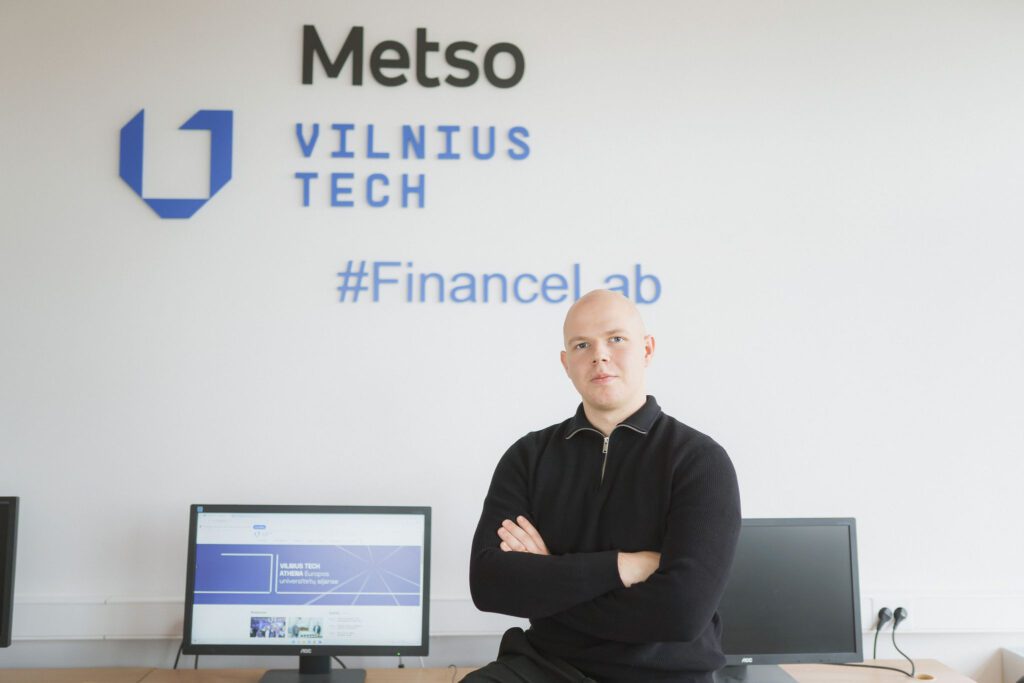
Department of Economics Engineering

The department prepares specialists who are able to apply an engineering approach to economic decision-making. It conducts research in circular economy, economic behaviour, and other areas of economics.
Phone: +370 5 274 4873, Email: vvei@vilniustech.lt
Studentai prie išmaniojo ekrano

About the Department

Double Degree

The department cooperates with Kyungpook National University (South Korea) and Dnipro University of Technology (Ukraine), offering dual degree opportunities.

Students who spend one year studying at one of these universities have the opportunity to receive two final diplomas: one from VILNIUS TECH and one from the partner university. This is a valuable opportunity to broaden their horizons, gain international experience, explore a new environment, and strengthen their CV.

Partners

The Department of Economics Engineering actively cooperates with social and business partners.

Department Staff

The staff of the Department of Economics Engineering are experts in their fields. They prepare specialists who are able to apply an engineering approach to economic decision-making, conduct research in circular economy, economic behaviour, and other areas, and engage younger students through the economics game “Bosas ne basas”, encouraging interest in economics.

Administration
  • Administration
Show more

Thesis abstracts

Years
Qualification
Clear selections
Anastasija Tučina — Assoc Prof Dr Daiva Andriušaitienė
Assessment of Consequences of Money Laundering
This master’s thesis examines the phenomenon of money laundering and its consequences in European Union countries. The research problem focuses on how the effects of money laundering manifest...
2026 Masters
  • 2026
  • Masters
Assessment of Consequences of Money Laundering
Student: Anastasija Tučina
Supervisor: Assoc Prof Dr Daiva Andriušaitienė
Department: Department of Economics Engineering
Thesis abstract (LT)
Šiame magistriniame darbe nagrinėjamas pinigų plovimo reiškinys ir jo pasekmės Europos Sąjungos šalyse. Tyrimo problema – kaip pinigų plovimo pasekmės pasireiškia skirtingose Europos Sąjungos šalyse? Tyrimo tikslas - įvertinti pinigų plovimo pasekmes Europos Sąjungos šalyse ir išskirti valstybes, kurios yra labiausiai paveiktos pagal atrinktus rodiklius. Teorinėje dalyje apžvelgiama pinigų plovimo sąvoka, tikslai, prielaidos, taikomi metodai ir schemos, analizuojamos pinigų plovimo pasekmės bei jų įtaka makroekonominiams rodikliams, taip pat nagrinėjama prevencijos sistema ir jos vertinimas. Empirinėje dalyje taikomi daugiakriteriniai CRITIC ir COPRAS metodai. CRITIC metodas leidžia nustatyti pasirinktų rodiklių svorius, t. y. kiek kiekvienas rodiklis prisideda prie galutinio šalių pasekmių vertinimo, o COPRAS metodas įvertina šalių padėtį, integruodamas tiek rodiklių svorius, tiek pačių rodiklių reikšmes, ir pagal tai surikiuoja šalis nuo labiausiai iki mažiausiai paveiktų pinigų plovimo pasekmių požiūriu. Papildomai taikoma Klasterinė ir koreliacinė analizė, siekiant atskleisti šalių panašumus pagal atrinktus rodiklius bei ryšius tarp pinigų plovimo indekso ir pasirinktų makroekonominių veiksnių.
Pinigų plovimas pasekmės prevencija metodai schemos vertinimas makroekonominiai rodikliai Europos Sąjungos šalys CRITIC metodas COPRAS metodas klasterinė analizė koreliacinė analizė
Thesis abstract (EN)
This master’s thesis examines the phenomenon of money laundering and its consequences in European Union countries. The research problem focuses on how the effects of money laundering manifest differently across EU member states. This study aims to assess the consequences of money laundering in EU countries and to identify the states most affected, as measured by selected indicators. The theoretical part reviews the concept of money laundering, its objectives, assumptions, applied methods and schemes, analyses the consequences of money laundering and their impact on macroeconomic indicators, and examines the prevention system and its evaluation. The empirical part applies the multi-criteria CRITIC and COPRAS methods. The CRITIC method determines the weights of the selected indicators, i.e., how much each indicator contributes to the overall assessment of the countries’ vulnerabilities. In contrast, the COPRAS method evaluates the position of countries by integrating both the indicator weights and the actual indicator values, ranking the countries from the most to the least affected in terms of money laundering consequences. Additionally, cluster and correlation analysis are applied to reveal similarities between countries based on the selected indicators and to examine the relationships between the money laundering index and selected macroeconomic factors.
Money laundering consequences prevention methods schemes assessment macroeconomic indicators European Union countries CRITIC method COPRAS method cluster analysis correlation analysis
Arnas Endriukaitis — Prof Dr Daiva Jurevičienė
The Consequences of Financial Fraud on the National Economy
This master’s thesis examines the trends of financial fraud and its impact on the economy in the context of a rapidly evolving digital environment and technological advancement. The...
2026 Masters
  • 2026
  • Masters
The Consequences of Financial Fraud on the National Economy
Student: Arnas Endriukaitis
Supervisor: Prof Dr Daiva Jurevičienė
Department: Department of Economics Engineering
Thesis abstract (LT)
Magistro baigiamajame darbe analizuojamos finansinio sukčiavimo tendencijos ir jų daroma žala ekonomikai, atsižvelgiant į sparčiai kintančią skaitmeninę aplinką ir technologijų pažangą. Tyrimo aktualumą lemia nuosekliai augantis finansinio sukčiavimo mastas, didėjantys gyventojų ir verslo patiriami nuostoliai bei visuomenės pasitikėjimo finansų sistema silpnėjimas. Darbe pabrėžiama, kad modernios technologijos, ypač dirbtinio intelekto sprendimai, sudaro prielaidas sudėtingesnių ir personalizuotų sukčiavimo schemų atsiradimui, o gyventojų finansinis neraštingumas ir nepakankamas budrumas didina pažeidžiamumą. Tyrimo objektas – finansinio sukčiavimo pasekmės. Tyrimo tikslas – nustatyti skirtingų finansinio sukčiavimo tipų daromą žalą ekonomikai ir įvertinti taikomas prevencines priemones. Siekiant šio tikslo, darbe susisteminami finansinio sukčiavimo tipai, analizuojama jų dinamika Lietuvoje, atliekamas sukčiavimo tipų rangavimas taikant CRITIC, COPRAS ir AHP metodus bei vykdomas ekspertinis vertinimas. Tyrime taikoma mokslinės literatūros analizė, statistinių duomenų sisteminimas ir daugiakriteriai vertinimo metodai. CRITIC metodu nustatomi kriterijų svoriai, COPRAS ir AHP metodais atliekamas finansinio sukčiavimo tipų rangavimas pagal daromą žalą ekonomikai. Ekspertinis vertinimas leidžia identifikuoti reikšmingiausias sukčiavimo formas, jų pasekmes bei efektyviausias prevencines priemones. Tyrimo rezultatai atskleidžia finansinio sukčiavimo masto augimo tendencijas, išryškina didžiausią žalą darančius sukčiavimo tipus ir įvertina prevencijos priemonių veiksmingumą. Darbo išvados gali būti taikomos tolesniuose tyrimuose, analizuojant ne tik finansinę, bet ir reputacinę, psichologinę bei institucinių resursų žalą, taip pat vertinant prevencinių priemonių efektyvumą.
Finansinis sukčiavimas sukčiavimo tipai prevencinės priemonės finansinio sukčiavimo pasekmės CRITIC COPRAS AHP ekspertinis vertinimas
Thesis abstract (EN)
This master’s thesis examines the trends of financial fraud and its impact on the economy in the context of a rapidly evolving digital environment and technological advancement. The relevance of the research is driven by the continuous growth of financial fraud, increasing losses incurred by individuals and businesses, and the declining public trust in the financial system. The study highlights that modern technologies, particularly artificial intelligence solutions, enable the emergence of more sophisticated and personalized fraud schemes, while low financial literacy and insufficient vigilance increase consumer vulnerability. The object of the research is the consequences of financial fraud. The aim of the study is to determine the impact of different types of financial fraud on the economy and to evaluate the effectiveness of applied preventive measures. To achieve this aim, the thesis systematizes financial fraud types, analyses their dynamics in Lithuania, ranks fraud types using CRITIC, COPRAS, and AHP methods, and conducts an expert evaluation. The research employs scientific literature analysis, statistical data systematization, and multi‑criteria assessment methods. The CRITIC method is used to determine the weights of statistical criteria, while COPRAS and AHP methods are applied to rank financial fraud types based on their economic impact. Expert evaluation enables the identification of the most harmful fraud types, the nature of the damage they cause, and the most effective preventive measures. The results reveal the growing scale of financial fraud, highlight the fraud types causing the greatest economic harm, and assess the effectiveness of prevention measures. The findings can be applied in further research examining not only financial but also reputational, psychological, and institutional resource-related damage, as well as in evaluating the effectiveness of preventive strategies.
Financial fraud types of fraud preventive measures consequences of financial fraud CRITIC COPRAS AHP expert evaluation
Arnas Žukauskas — Dr Tomas Baležentis
Assessment of Financial Innovativeness of States
The final master's thesis assesses the factors influencing online banking and the financial innovation of European Union countries in 2015–2023. It discusses the concept of financial innovation, its...
2026 Masters
  • 2026
  • Masters
Assessment of Financial Innovativeness of States
Student: Arnas Žukauskas
Supervisor: Dr Tomas Baležentis
Department: Department of Economics Engineering
Thesis abstract (LT)
Baigiamajame magistro darbe vertinami internetinei bankininkystei darantys įtaką veiksniai ir Europos Sąjungos šalių finansinis inovatyvumas 2015-2023 m. Aptariama finansinių inovacijų samprata, rūšys ir jų svarba ekonomikai. Analizuojami veiksniai, susiję su inovacijų plėtra (mokslinių tyrimų ir eksperimentinės plėtros išlaidos, informacinių ryšių ir technologijų specialistai, patentai, privataus sektoriaus kredito srautas, bendra valstybės skola), o finansinis inovatyvumas matuojamas internetinės bankininkystės naudojimu. Taikoma regresinė analizė, CRITIC metodas rodiklių svoriams nustatyti ir COPRAS metodas ES šalių reitingui sudaryti. Išnagrinėjus teorinius ir praktinius valstybių finansinio inovatyvumo aspektus, pateikiamos baigiamojo darbo išvados ir siūlymai. Darbą sudaro: įvadas, teorinė dalis, empirinė analizė, išvados, literatūros sąrašas. Darbo apimtis - 72 p. teksto be priedų, 14 iliustr. 21 lent., 74 bibliografiniai šaltiniai. Atskirai pridedami darbo priedai.
finansinis inovatyvumas internetinė bankininkystė Europos Sąjunga regresinė analizė CRITIC metodas COPRAS metodas mokslinių tyrimų ir eksperimentinės plėtros išlaidos informacinių ryšių ir technologijų specialistai patentai privataus sektoriaus kredito srautas bendra valstybės skola.
Thesis abstract (EN)
The final master's thesis assesses the factors influencing online banking and the financial innovation of European Union countries in 2015–2023. It discusses the concept of financial innovation, its types, and its importance to the economy. It analyzes factors related to the development of innovation (research and experimental development expenditure, information and communication technology specialists, patents, private sector credit flow, and total public debt), while financial innovation is measured by the use of online banking. Regression analysis, the CRITIC method for determining indicator weights, and the COPRAS method for ranking EU countries are applied. After examining the theoretical and practical aspects of countries' financial innovation, the conclusions and recommendations of the thesis are presented. The work consists of: introduction, theoretical part, empirical analysis, conclusions, list of references. Scope of work – 72 p. of text without appendices, 14 illustrations, 21 tables, 74 bibliographic sources. Work accessories are included separately.
financial innovation online banking European Union regression analysis CRITIC method COPRAS method research and experimental development expenditure information and communication technology specialists patents private sector credit flow total public debt.
Augustė Buivydaitė — Assoc Prof Dr Žaneta Karazijienė
Evaluation of Circular Economy in European Union States
The master’s thesis examines the main principles of the circular economy. It presents the development of the circular economy and highlights its economic, social, and environmental impact on...
2026 Masters
  • 2026
  • Masters
Evaluation of Circular Economy in European Union States
Student: Augustė Buivydaitė
Supervisor: Assoc Prof Dr Žaneta Karazijienė
Department: Department of Economics Engineering
Thesis abstract (LT)
Baigiamajame magistro darbe nagrinėjami pagrindiniai žiedinės ekonomikos principai. Pateikta žiedinės ekonomikos raida, išskirtas ekonominis, socialinis ir aplinkosauginis žiedinės ekonomikos poveikis valstybei ir jos gyventojams. Pateikiami pagrindiniai Europos Sąjungos keliami reikalavimai šalių vyriausybėms ir įmonėms, siekiant skatinti žiedinės ekonomikos vystymą. Baigiamajame magistro darbe yra analizuojami pagrindiniai žiedinės ekonomikos rodikliai, kuriais remiantis yra įvertinamas Europos Sąjungos šalių žiedinės ekonomikos lygis 2020–2023 m. laikotarpiu. Darbe atliktas Europos Sąjungos šalių reitingavimas pagal žiedinės ekonomikos rodiklius ir palyginamoji pozicijų pokyčių analizė nagrinėjamu laikotarpiu. Darbo pabaigoje pateikiamos baigiamojo magistro darbo išvados ir rekomendacijos. Darbą sudaro tokios dalys: įvadas, literatūros analizė apie žiedinės ekonomikos principus ir rodiklius, žiedinės ekonomikos vertinimo metodika, žiedinės ekonomikos vertinimo Europos Sąjungos šalyse empirinis tyrimas, išvados ir siūlymai, literatūros sąrašas. Darbo apimtis – 84 p. teksto, 9 pav., 22 lent., 99 bibliografiniai šaltiniai.
žiedinė ekonomika žiedinės ekonomikos rodikliai linijinė ekonomika tvaraus vystymosi tikslai 9R principas TOPSIS daugiakriteris vertinimo metodas.
Thesis abstract (EN)
The master’s thesis examines the main principles of the circular economy. It presents the development of the circular economy and highlights its economic, social, and environmental impact on the state and its population. The main requirements set by the European Union for national governments and companies in order to promote the development of the circular economy are discussed. The thesis analyzes key circular economy indicators used to evaluate the level of circular economy development in European Union countries over the period 2020–2023. The study includes a ranking of European Union countries based on circular economy indicators and a comparative analysis of changes in their positions during the analyzed period. The conclusions and recommendations of the master’s thesis are presented at the end of the paper. Structure: introduction, literature analysis on circular economy principles and indicators, methodology for circular economy evaluation, an empirical study of circular economy evaluation in European Union countries, conclusions and recommendations, references. Thesis consist of: 84 p. of text, 9 figures, 22 tables, 99 bibliographic sources.
Circular economy circular economy indicators linear economy Sustainable Development Goals 9R principle TOPSIS multi-criteria decision-making method.
Dominyka Černiavskaja — Assoc Prof Dr Eglė Kazlauskienė
Assessment of Credit Institutions' Financial Services Coverage and Impact on the Economy
The master's thesis theoretically substantiates the impact of financial services of credit institutions on the economy, highlighting their role, identification and specifics. Based on the established methodology and...
2026 Masters
  • 2026
  • Masters
Assessment of Credit Institutions' Financial Services Coverage and Impact on the Economy
Student: Dominyka Černiavskaja
Supervisor: Assoc Prof Dr Eglė Kazlauskienė
Department: Department of Economics Engineering
Thesis abstract (LT)
Baigiamajame magistro darbe yra teoriškai pagrindžiamas kredito įstaigų finansinių paslaugų poveikis ekonomikai, išryškinant jų vaidmenį, identifikavimą ir specifiką. Remiantis nustatyta metodika bei tyrimo modeliu, yra atliekamas tyrimas, norint įvertinti kredito įstaigų finansinių paslaugų vartojimo aprėptį ir pokyčius Estijos, Latvijos ir Lietuvos atveju. Taip pat atlikus informacinių ir ryšių technologijų sektoriaus dalies bendroje pridėtinėje vertėje pokyčių prognozę, nustatyti kredito įstaigų finansinių paslaugų sąsajas su šio sektoriaus kuriama pridėtine verte bei bendruoju vidaus produktu Estijos, Latvijos ir Lietuvos atveju. Išnagrinėjus teorinius bei praktinius tyrimo rezultatus, pateikiamos baigiamojo magistro darbo išvados. Darbą sudaro 6 dalys: įvadas, teorinė dalis, metodinė dalis, praktinė dalis, išvados, literatūros sąrašas. Darbo apimtis – 92 p. teksto be priedų, 13 paveikslų, 20 lentelių, 108 bibliografiniai šaltiniai. Atskirai pridedami darbo priedai.
Kredito įstaigų finansinės paslaugos bendrasis vidaus produktas informacinių ir ryšių technologijų sektorius bendroje pridėtinėje vertėje.
Thesis abstract (EN)
The master's thesis theoretically substantiates the impact of financial services of credit institutions on the economy, highlighting their role, identification and specifics. Based on the established methodology and research model, a study is conducted to assess the coverage and changes in the use of financial services by credit institutions in the case of Estonia, Latvia and Lithuania. Also, after making a forecast of changes in the total added value of the information and communication technology sector, determine the links of financial services of credit institutions with the added value created by this sector and the gross domestic product in the case of Estonia, Latvia and Lithuania. After analyzing the theoretical and practical results of the research, the conclusions of the master's thesis are presented. The work consists of 6 parts: introduction, theoretical part, methodological part, practical part, conclusions, bibliography. The volume of work - 92 p. text without appendices, 13 figures, 20 tables, 108 bibliographic sources. Work accessories are attached separately.
Financial services of credit institutions gross domestic product information and communication technology sector in total added value.
Edvin Volodkovič — Assoc Prof Dr Liucija Birškytė
Assessment of the Influence of Macroeconomic Indicators on the Share Price
This master’s thesis examines the impact of macroeconomic indicators on stock market index prices by comparing the financial markets of the United States and Japan. The relevance of...
2026 Masters
  • 2026
  • Masters
Assessment of the Influence of Macroeconomic Indicators on the Share Price
Student: Edvin Volodkovič
Supervisor: Assoc Prof Dr Liucija Birškytė
Department: Department of Economics Engineering
Thesis abstract (LT)
Šiame magistriniame darbe analizuojamas makroekonominių rodiklių poveikis akcijų indeksų kainoms, lyginant Jungtinių Amerikos Valstijų ir Japonijos finansų rinkas. Tyrimo aktualumą lemia didėjantis finansų rinkų jautrumas makroekonominiams pokyčiams, ypač po 2020 m. pandemijos, kai pinigų politikos sprendimai ir ekonominis neapibrėžtumas reikšmingai paveikė investuotojų elgseną ir kapitalo srautus. Darbo tikslas – įvertinti, kaip pagrindiniai makroekonominiai rodikliai veikia pasirinktų akcijų indeksų kainas skirtingose ekonominėse ir monetarinėse aplinkose. Tyrimo objektas – JAV ir Japonijos akcijų rinkos, atitinkamai analizuojant S&P 500 ir Nikkei 225 indeksus. Darbe nagrinėjami penki pagrindiniai makroekonominiai rodikliai: infliacija, palūkanų normos, nedarbo lygis, bendrojo vidaus produkto augimas ir 10 metų trukmės vyriausybės obligacijų pajamingumas. Tyrime taikomi statistinės analizės metodai: koreliacinė analizė ir daugianarė regresinė analizė, leidžianti įvertinti tiek atskirų rodiklių, tiek jų bendros sąveikos poveikį akcijų indeksų dinamikai 2015–2024 m. laikotarpiu. Empiriniai rezultatai parodė, kad makroekonominių rodiklių poveikis akcijų rinkoms nėra vienodas: JAV rinkoje didesnį vaidmenį atlieka palūkanų normos ir infliacijos lūkesčiai, o Japonijoje statistiškai reikšmingu veiksniu išsiskiria ilgalaikių obligacijų pajamingumas, kuris investuotojų vertinamas kaip ekonomikos normalizavimo signalas. Gauti rezultatai leidžia daryti išvadą, kad tų pačių makroekonominių rodiklių poveikis akcijų kainoms priklauso nuo šalies ekonominės struktūros, pinigų politikos režimo ir investuotojų lūkesčių. Darbo rezultatai gali būti naudingi investuotojams, finansų analitikams ir ekonomikos politikos formuotojams, siekiantiems geriau suprasti makroekonominių veiksnių perdavimo mechanizmus finansų rinkose.
Makroekonominiai rodikliai akcijų indeksai koreliacinė analizė daugianarė regresinė analizė pinigų politika obligacijų pajamingumas JAV finansų rinka Japonijos finansų rinka
Thesis abstract (EN)
This master’s thesis examines the impact of macroeconomic indicators on stock market index prices by comparing the financial markets of the United States and Japan. The relevance of the study is driven by the increasing sensitivity of financial markets to macroeconomic developments, particularly after the 2020 pandemic, when monetary policy decisions and heightened economic uncertainty significantly influenced investor behavior and global capital flows. The aim of the thesis is to assess how key macroeconomic indicators affect stock index prices under different economic and monetary conditions. The object of the research is the stock markets of the United States and Japan, represented by the S&P 500 and Nikkei 225 indices, respectively. The analysis focuses on five main macroeconomic indicators: inflation, interest rates, unemployment rate, gross domestic product (GDP) growth, and the yield on 10-year government bonds. The study applies statistical methods, including correlation analysis and multiple regression analysis, which allow for the evaluation of both individual effects and the combined influence of macroeconomic variables on stock index dynamics over the period 2015–2024. The empirical results indicate that the impact of macroeconomic indicators on stock markets is not uniform across countries. In the U.S. market, interest rates and inflation expectations play a more prominent role, whereas in Japan the yield on long-term government bonds emerges as a statistically significant factor, interpreted by investors as a signal of economic normalization. The findings suggest that the effect of identical macroeconomic indicators on stock prices depends on a country’s economic structure, monetary policy regime, and investor expectations. The results of this thesis may be valuable for investors, financial analysts, and economic policymakers seeking to better understand the transmission mechanisms of macroeconomic factors in financial markets.
Macroeconomic indicators stock market indices correlation analysis multiple regression analysis monetary policy government bond yields U.S. financial market Japanese financial market
Ema Karneckaitė — Assoc Prof Dr Viktorija Skvarciany
Business Development in the Digital Economy
This master’s thesis analyses the impact of digital technologies on business development in payment and trade matching processes under the conditions of the digital economy. The theoretical part...
2026 Masters
  • 2026
  • Masters
Business Development in the Digital Economy
Student: Ema Karneckaitė
Supervisor: Assoc Prof Dr Viktorija Skvarciany
Department: Department of Economics Engineering
Thesis abstract (LT)
Šiame magistro darbe analizuojama, kaip skaitmeninių technologijų taikymas veikia verslo plėtrą mokėjimų ir prekybos sandorių suderinimo procesuose skaitmeninės ekonomikos sąlygomis. Teorinėje darbo dalyje nagrinėjama skaitmeninės ekonomikos samprata, skaitmeninių technologijų vaidmuo verslo plėtroje, mokėjimų sistemų transformacija ir prekybos sandorių suderinimo reikšmė finansų infrastruktūros procesuose. Empirinėje dalyje parengta verslo plėtros mokėjimų ir prekybos sandorių suderinimo procesuose analizės metodika, pagrįsta koreliacine ir daugybine regresine analize bei laiko eilučių vertinimu. Tyrimas atliktas naudojant oficialius statistinius duomenis, apimančius skaitmeninių technologijų plėtros, mokėjimų apimčių ir prekybos sandorių suderinimo rodiklius. Gauti rezultatai parodė, kad skaitmeninių technologijų taikymas teigiamai prisideda prie verslo plėtros, tačiau šis poveikis skirtinguose procesuose pasireiškia nevienodai ir dažnai turi laiko vėlavimo efektą. Darbo išvados atskleidžia, kad skaitmeninė ekonomika sudaro prielaidas verslo plėtrai tik toms organizacijoms, kurios geba nuosekliai integruoti skaitmenines technologijas į mokėjimų ir po sandorinius procesus.
skaitmeninė ekonomika verslo plėtra skaitmeniniai mokėjimai prekybos sandorių suderinimas finansų infrastruktūra.
Thesis abstract (EN)
This master’s thesis analyses the impact of digital technologies on business development in payment and trade matching processes under the conditions of the digital economy. The theoretical part examines the concept of the digital economy, the role of digital technologies in business development, the transformation of payment systems, and the importance of trade matching within financial infrastructure processes. The empirical part develops a methodological framework based on correlation analysis, multiple regression, and time-series methods, using official statistical data on digital technology development, payment volumes, and trade matching indicators. The results show that digital technologies positively contribute to business development; however, their impact differs across processes and often exhibits a time-lag effect. The findings indicate that the digital economy creates favorable conditions for business development only when digital technologies are consistently integrated into payment and post-trade processes.
Digital economy business development digital payments trade matching financial infrastructure.
Enrika Jauraitė — Assoc Prof Dr Eglė Kazlauskienė
Study of Household Consumption Expenditure and its Linkage with Income Inequality in European Union Countries
The aim of the Master’s thesis is to theoretically substantiate and empirically assess the relationships and changes between household consumption expenditure and income inequality in the European Union....
2026 Masters
  • 2026
  • Masters
Study of Household Consumption Expenditure and its Linkage with Income Inequality in European Union Countries
Student: Enrika Jauraitė
Supervisor: Assoc Prof Dr Eglė Kazlauskienė
Department: Department of Economics Engineering
Thesis abstract (LT)
Baigiamajame magistro darbe siekiama teoriškai pagrįsti ir empiriškai įvertinti Europos Sąjungos namų ūkių vartojimo išlaidų ir pajamų nelygybės sąsajas bei pokyčius. Pirmoje darbo dalyje atskleidžiami namų ūkių vartojimo išlaidų, pajamų ir jų nelygybės teoriniai aspektai ekonomikos teorijų plotmėje, išryškinant šių išlaidų struktūrą, pajamų įvairovę bei nelygybės priežastis ir pasekmes. Antroje dalyje suformuojant tyrimo modelį, pagrįsta namų ūkių vartojimo išlaidų ir pajamų nelygybės bei jų priklausomybės šalyse vertinimo metodika. Trečioje darbo dalyje atliktas namų ūkių vartojimo išlaidų ir pajamų nelygybės empirinis tyrimas Europos Sąjungoje ir atskiruose šalių klasteriuose, palyginant kaip rodikliai skiriasi bei koreliuoja šalyse ir regione. Atlikus empirinį tyrimą yrа pateikiamos baigiamojo darbo išvados ir pasiūlymai. Darbą sudaro 6 dalys: įvadas, teorinė dalis, metodinė dalis, praktinė dalis, išvados ir siūlymai, literatūros sąrašas. Darbo apimtis - 107 p. teksto be priedų, 16 iliustr.,18 lent., 108 bibliografiniai šaltiniai. Atskirai pridedami 2 darbo priedai.
Namų ūkiai vartojimo išlaidos pajamų nelygybė Europos Sajunga.
Thesis abstract (EN)
The aim of the Master’s thesis is to theoretically substantiate and empirically assess the relationships and changes between household consumption expenditure and income inequality in the European Union. The first part of the thesis presents the theoretical aspects of household consumption expenditure, income, and their inequality within the framework of economic theories, highlighting the structure of expenditures, income diversity, as well as the causes and consequences of inequality. The second part develops the research model and substantiates the methodology for assessing household consumption expenditure and income inequality and their interdependence across countries. The third part presents an empirical analysis of household consumption expenditure and income inequality in the European Union and in individual country clusters, comparing differences and correlations of indicators across countries and the region. Based on the empirical research, the conclusions and recommendations of the thesis are provided. The thesis consists of six parts: introduction, theoretical part, methodological part, practical part, conclusions and recommendations, and references. The volume of the thesis is 107 pages of text excluding appendices, including 16 figures, 18 tables, and 108 bibliographic sources. Two appendices are included separately.
Household Consumption Expenditure Income Inequality European Union.
Gabija Naujokaitė — Prof Dr Laima Okunevičiūtė Neverauskienė
The Impact of Fiscal Policy on the Economy: the Case of the Baltic States
The master's thesis analyzes the impact of fiscal policy on the economy in the Baltic States. The aim of the work is to assess the impact of fiscal...
2026 Masters
  • 2026
  • Masters
The Impact of Fiscal Policy on the Economy: the Case of the Baltic States
Student: Gabija Naujokaitė
Supervisor: Prof Dr Laima Okunevičiūtė Neverauskienė
Department: Department of Economics Engineering
Thesis abstract (LT)
Magistro darbe analizuojamas fiskalinės politikos poveikis ekonomikai Baltijos šalyse. Darbo tikslas – įvertinti fiskalinės politikos priemonių poveikį ekonomikai Lietuvoje, Latvijoje ir Estijoje. Tyrime taikyta vektorinė autoregresija (VAR), „Granger" priežastingumo testas ir atsako į impulsus analizė. Tyrimo rezultatai parodė, kad fiskalinės politikos poveikis ekonomikai Baltijos šalyse yra nevienodas ir daugeliu atvejų trumpalaikis. Nustatyta, jog Latvijoje fiskaliniai kintamieji yra labiausiai susiję su BVP augimu, Estijoje pastebimas netipinis darbo rinkos ir ekonomikos ciklo ryšys, o Lietuvoje fiskalinės politikos poveikis pagrindiniams fiskalinės politikos tikslus atspindintiems rodikliams yra silpniausias. Gauti rezultatai pabrėžia subalansuotos ir ilgalaikės fiskalinės politikos svarbą mažose, atvirose ekonomikose. Darbą sudaro: įvadas, teorinė, metodologinė ir empirinė dalys, išvados ir rekomendacijos, literatūros sąrašas. Darbo apimtis - 61 p. teksto be priedų, 26 pav., 10 lent., 72 bibliografinių šaltinių. Atskirai pridedami darbo priedai.
Fiskalinė politika fiskalinės priemonės ekonomikos augimas ekonomikos stabilumas Baltijos šalys vektorinė autoregresinė analizė.
Thesis abstract (EN)
The master's thesis analyzes the impact of fiscal policy on the economy in the Baltic States. The aim of the work is to assess the impact of fiscal policy measures on the economy in Lithuania, Latvia and Estonia. The study used vector autoregression (VAR), Granger causality test and impulse response analysis. The results of the study showed that the impact of fiscal policy on the economy in the Baltic States is uneven and in most cases short-term. It was found that in Latvia, fiscal variables are most closely related to GDP growth, in Estonia an atypical relationship between the labor market and the economic cycle is observed, and in Lithuania the impact of fiscal policy on the main indicators reflecting the goals of fiscal policy is the weakest. The results obtained emphasize the importance of balanced and long-term fiscal policy in small, open economies. The work consists of: introduction, theoretical, methodological and empirical parts, conclusions and recommendations, list of references. The work volume - 61 p. of text without appendices, 26 figures, 10 tables, 72 bibliographical sources. The work appendices are attached separately.
Fiscal policy fiscal measures economic growth economic stability Baltic countries vector autoregression.
Indrė Kuodė — Prof Dr Laima Okunevičiūtė Neverauskienė
Economic Benefits Evaluation of Corporate Social Responsibility: the Case of Lietuvos Geležinkeliai
This thesis evaluates the economic benefit of Corporate Social Responsibility (CSR) for "Lietuvos Geležinkeliai" (LTG) group during the 2020–2024 period. The study examines how the integration of sustainability...
2026 Masters
  • 2026
  • Masters
Economic Benefits Evaluation of Corporate Social Responsibility: the Case of Lietuvos Geležinkeliai
Student: Indrė Kuodė
Supervisor: Prof Dr Laima Okunevičiūtė Neverauskienė
Department: Department of Economics Engineering
Thesis abstract (LT)
Šiame darbe vertinama įmonių socialinės atsakomybės (ĮSA) ekonominė nauda Lietuvos geležinkeliuose 2020–2024 m. laikotarpiu. Tyrime nagrinėjama, kaip tvarumo principų integravimas į pagrindinę veiklą prisideda prie finansinio atsparumo ir konkurencinio pranašumo. Tyrime derinama Pearsono koreliacijos analizė, siekiant nustatyti ryšius tarp ĮSA rodiklių ir finansinių rodiklių, su COPRAS metodu, skirtu tarptautinei lyginamajai analizei su „Deutsche Bahn“, PKP ir VR grupėmis. Empiriniai rezultatai atskleidžia stiprią teigiamą koreliaciją tarp darbuotojų pasitenkinimo ir EBITDA maržos, ir išskirtinai didelį atvirkštinį ryšį tarp anglies dioksido išmetimo ir finansinių rezultatų. COPRAS vertinimas patvirtina LTG lyderystę, pranokdama tarptautinius konkurentus dėl optimalaus aukšto veiklos efektyvumo ir brandžių tvarumo protokolų balanso. Tyrimo išvados: ĮSA yra strateginis LTG stabilizatorius, kai investicijos į žmogiškąjį kapitalą ir dekarbonizaciją tiesiogiai didina veiklos svertą ir ilgalaikį ekonominį naudingumą pagal ES žaliojo kurso programą.
Įmonių socialinė atsakomybė (ĮSA) aplinkosauga ESG kriterijai ekonominė nauda veiklos efektyvumas darnus vystymasis strateginis valdymas
Thesis abstract (EN)
This thesis evaluates the economic benefit of Corporate Social Responsibility (CSR) for "Lietuvos Geležinkeliai" (LTG) group during the 2020–2024 period. The study examines how the integration of sustainability principles into core operations contributes to financial resilience and competitive advantage. The research combines a Pearson correlation analysis to identify internal links between ESG metrics and profitability with the COPRAS method for international benchmarking against Deutsche Bahn, PKP, and VR Group. The empirical results reveal a strong positive correlation between employee satisfaction and EBITDA margin, and an exceptionally high inverse relationship between carbon emissions and financial performance. The COPRAS evaluation confirms LTG’s leadership, outperforming international peers through an optimal balance of high operational efficiency and mature sustainability protocols. The study concludes that CSR serves as a strategic stabilizer for LTG, where investments in human capital and decarbonization directly enhance operational leverage and long-term economic utility within the EU Green Deal framework.
Corporate Social Responsibility economic utility strategic management sustainable development ESG criteria corporate performance evaluation operational efficiency social investment green deal

Useful links