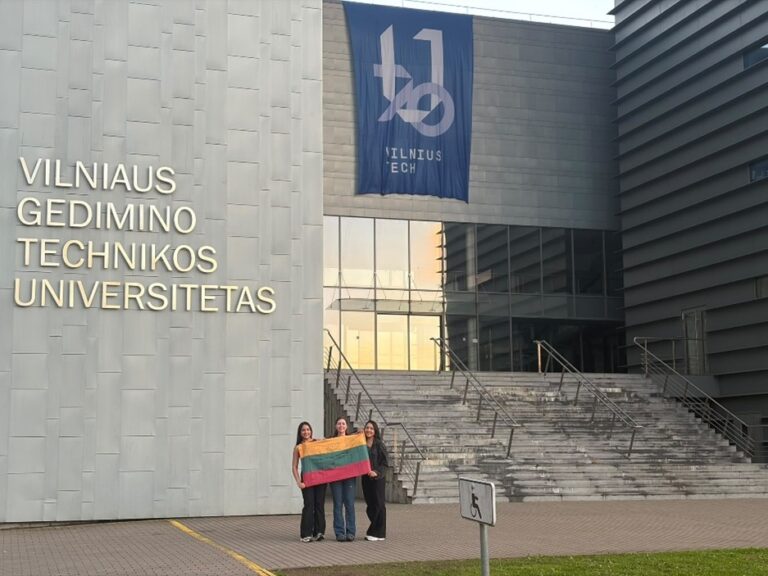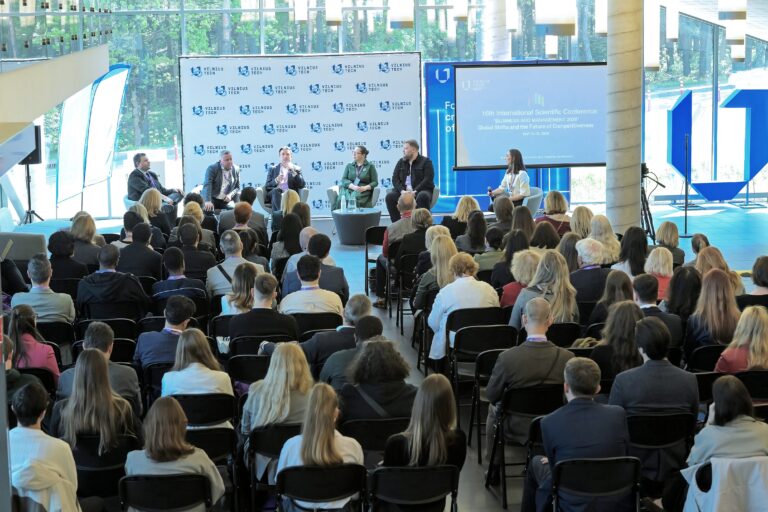
This September will mark a remarkable milestone for Arūnas Speičys—his 60th year of coming to the university every morning. For the first five years, he arrived as a student, and in 1971 he officially joined the university as a staff member. Four generations of the Speičys family have been connected with VILNIUS TECH: Arūnas’ father began working here in 1956, Arūnas followed in his footsteps, later both of his sons studied at the university, and most recently his granddaughter graduated from it.
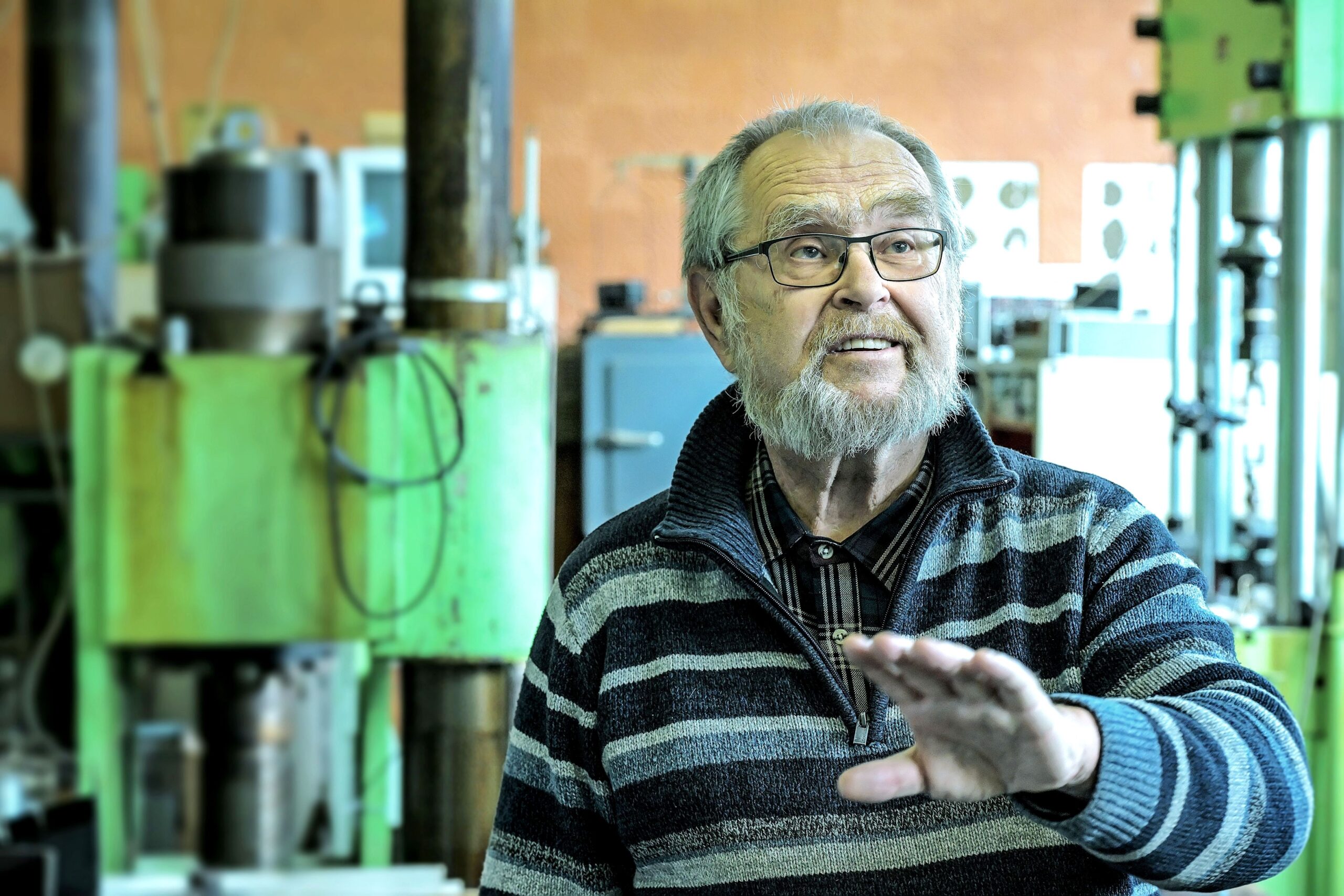
Arūnas Speičys
“I often joke that four generations of our family have been connected to the same university, but each of us knew it by a different name. My father taught for several years at the Vilnius Division of the Evening Faculty of Kaunas Polytechnic Institute (KPI). A few years later, I enrolled at the Vilnius Branch of KPI, and during my third year it became the Vilnius Civil Engineering Institute (VISI). Later, one of my sons graduated from Vilnius Technical University, another graduated from Gediminas Technical University, and my granddaughter graduated from VILNIUS TECH. We all studied at the same institution—it just kept changing its name,” Arūnas says with a smile.
Researching metal fatigue
Speičys studied at the Faculty of Mechanics before being offered a position at the newly established Machine Dynamics Laboratory, where researchers investigated metal fatigue—the gradual deterioration of metal under repeated stress.
“At first, we built the testing equipment ourselves, and later we were able to purchase it. The laboratory flourished, employing around 20 people. We studied the fatigue of metals and construction materials, carried out numerous tests, had plenty of research contracts, and worked with impressive equipment.
I remember when our laboratory moved from Vilnius Old Town to Saulėtekis. Back then, this was practically the edge of the city. We had to install our equipment before the walls of the new building were even built; otherwise, there would have been no way to fit it inside. Later, we had to demolish walls several times to bring in newly acquired testing machines weighing more than ten tonnes. Eventually, we got tired of knocking down walls, so we installed large doors instead—and they’re still there today,” the technician recalls.
The laboratory tested metals and equipment used in nuclear power plants, nuclear submarines, aviation, shipping, and industry. After Lithuania regained its independence, a Lithuanian-American working in the mining industry approached the university’s researchers. Together with his colleagues, Speičys tested metals intended for heavy-duty mining machinery.
Witness to a historic moment
Outside working hours, Speičys also devoted time to his hobbies. He was an active rally competitor, becoming Lithuanian champion several times and Baltic champion once. Later, after the university received a sailing yacht named Ragana (“The Witch”) as a gift, he developed a passion for sailing and unexpectedly became part of a historic event.
In August 1989, he sailed the Lithuanian delegation to the Swedish island of Gotland, where the European Lithuanian Studies Week was held.
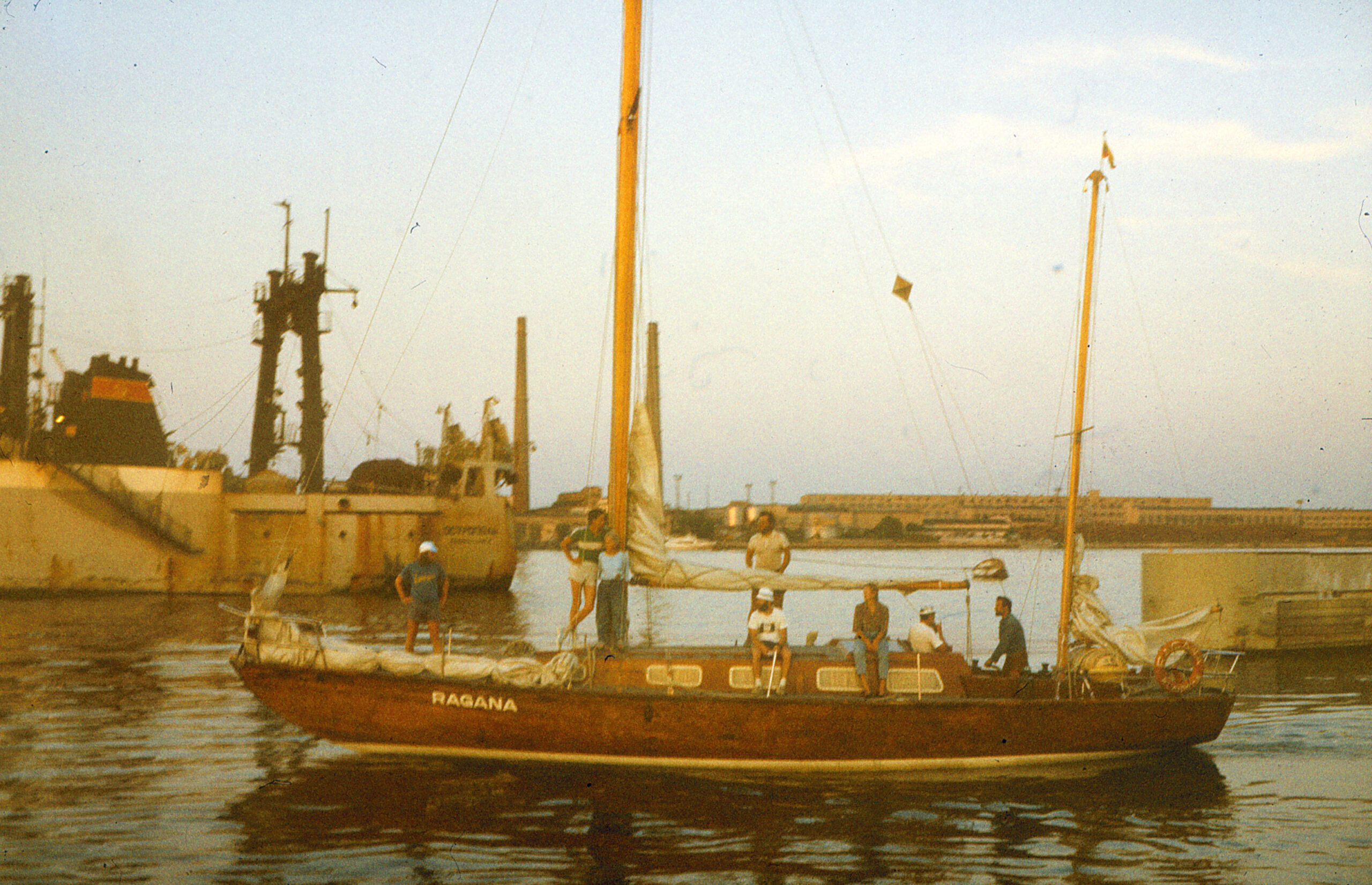
„Ragana“
During the event, the Gotland Communiqué was signed—a document that became an important step toward Lithuania’s independence. Signed by Lithuanian politicians and members of the diaspora, it declared that “the vital goal of Lithuanians throughout the world is the restoration of an independent Lithuanian state.” The communiqué demonstrated an unprecedented agreement among Lithuania’s opposing political forces.
“It was the first time everyone agreed on Lithuania’s future. People were amazed that such different figures as Antanas Terleckas, leader of the Lithuanian Freedom League, Justas Vincas Paleckis, head of the Communist Party’s Ideology Department, and many other public figures with opposing views all signed the same document.
I only truly realized that I had witnessed a historic event after I returned home,” Speičys admits.
Work that carries great responsibility
Asked how the university has changed over the decades, Speičys says it has always kept pace with innovation and technological progress. What saddens him, however, is that today’s students often prefer searching for information online instead of discovering it in laboratories.
Showing visitors around his workplace, he points to a massive bolt.
“This is a bolt from Mindaugas Bridge. The entire bridge is fastened with bolts like this. I was responsible for calculating the tension force required for every single one of them.
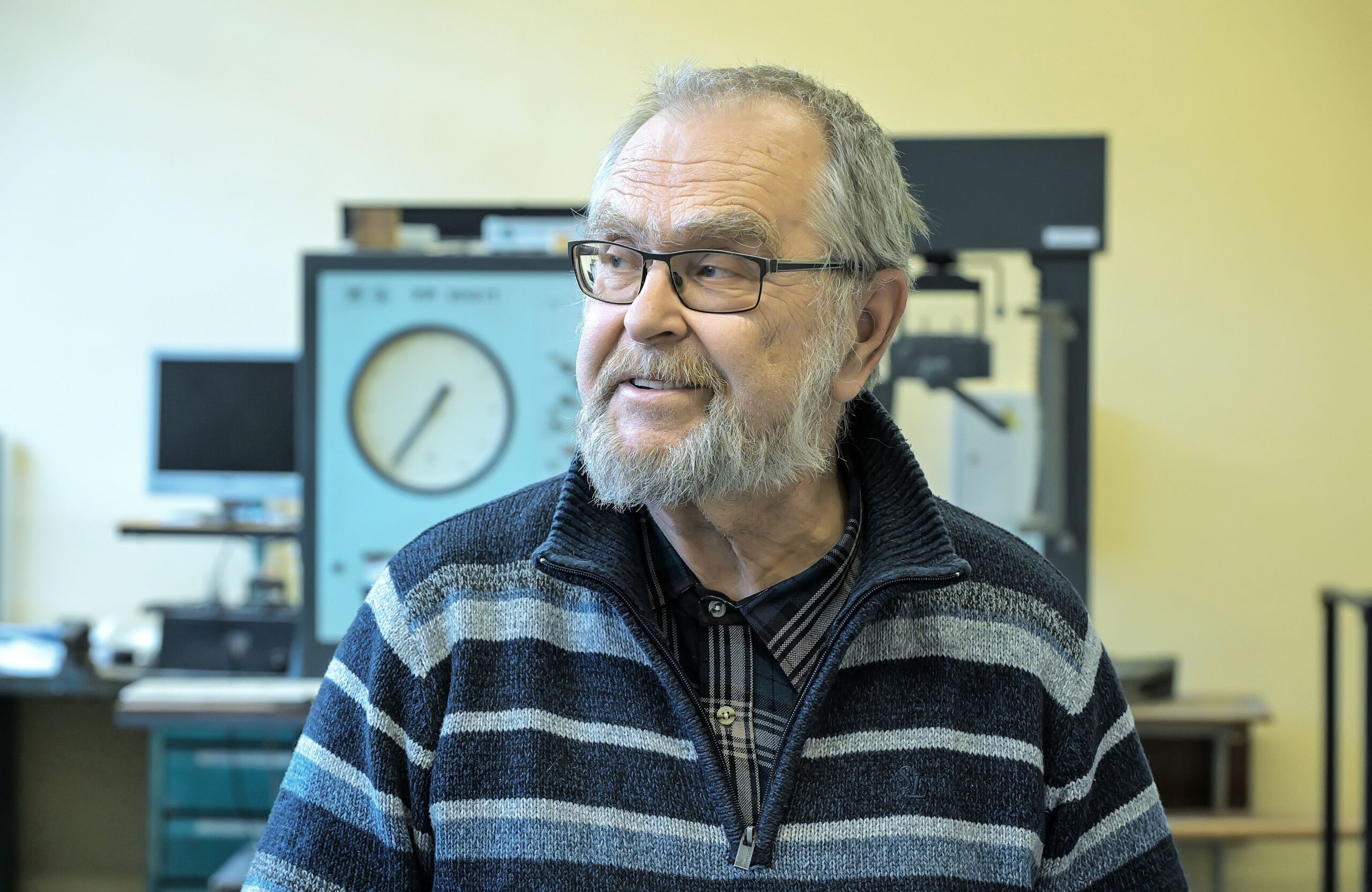
Arūnas Speičys
We also tested the structural durability of the Lyduvėnai Bridge—the longest and tallest railway bridge in Lithuania. Our research showed that the steel used during its construction is exceptionally durable and will serve for many years to come.
When the roof of an ice arena in Vilnius collapsed under heavy snowfall, we investigated what had gone wrong and provided recommendations to prevent such an accident from happening again,” he says, listing some of the projects he has worked on.
From quail eggs to human bones
Speičys also remembers several particularly unusual research requests.
“Once, a school student came to us wanting to test the strength of quail eggshells. We carried out compression tests, crushed eggs, and calculated their strength.
On another occasion, two students—one from our university and another studying medicine—came to me with pig tendons. They were working on a joint project about tendon suturing. They stitched the tendons together, and I tested their strength by stretching them,” Speičys recalls with a laugh.
Equipment originally designed for testing metals was also used to examine the strength and flexibility of human bones.
“The bones of a living person and those of a deceased person are very different. Once, we tested a bone taken from someone who had passed away only the day before—it most closely resembled the properties of a living bone. We also tested the strength of human vertebrae. These experiments were needed by medical students and researchers specialising in traumatology,” he explains.
Speičys’ loyalty and decades of dedicated service have also been recognised by the university community. In 2022, by order of the Rector, he was awarded the First-Class Badge of Honour for his outstanding contribution to Vilnius Gediminas Technical University.