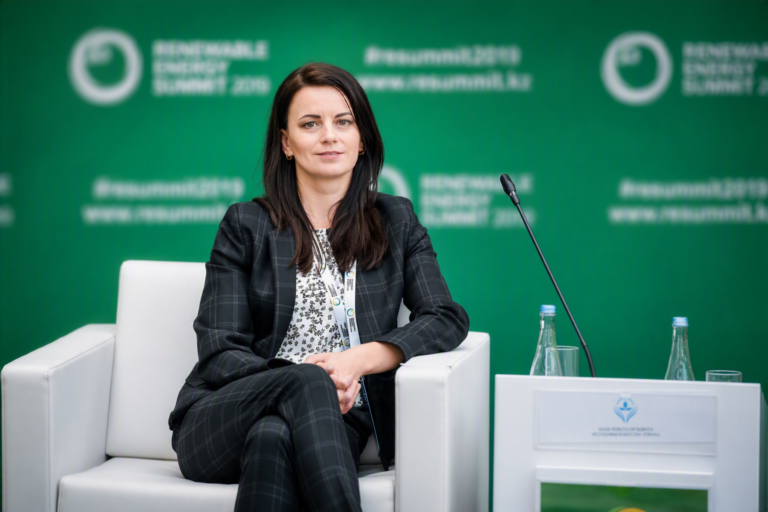
A. Dailidaitė: "the Situation of Landscape Architecture in Lithuania is improving"

June 4, 2024
Today, the First bachelor's degree in Landscape Architecture at Vilnius Gediminas Technical University (VILNIUS TECH) is being defended, and from this year the Faculty of Architecture also offers a Master's degree in Landscape Architecture.
We talk to Agnė Dailidaitė, Landscape Architect, lecturer at VILNIUS TECH, about the peculiarities of the specialty of landscape architecture and the situation in Lithuania. 

 
– Can an architect play the role of a landscape architect? Why do we need a landscape architect specialisation?

– An architect can play some of the roles of a landscape architect, especially if he or she is interested in landscape design, but there are important differences between the specialisations of an architect and a landscape architect:

  • Landscape architects specialise in creative and sustainable landscape design, taking into account nature, human needs and social and ecological factors. They have in-depth knowledge of plants, soils, water management and other landscape elements;
  • Landscape architects are often involved in urban planning processes that require a broader approach to the organisation of public spaces and sustainable urban development. They can design parks, squares, pedestrian paths and other public spaces;
  • Landscape architects are often oriented towards the principles of sustainable development and can integrate environmental solutions into projects to reduce ecological impacts and promote sustainable use of natural resources;
  • Landscape architects create distinctive, aesthetic and functional landscapes that combine natural and man-made elements. They can create unique environments that are tailored to the local context and the needs of the inhabitants.

– Is the practice of Lithuanian landscape architects different compared to other countries?
 
– From my personal experience, I could compare the situations in Lithuania and Belgium. Probably the biggest difference is that in Belgium there is a very clear division between architects, landscape architects and urban planners and designers. Everybody knows the boundaries of their speciality and does not try to do the work for others; on the contrary, they are willing to cooperate with each other. I am pleased that this practice is also emerging in Lithuania, but there is still room for improvement.

At least in Belgium, a landscape architect has more responsibilities than in Lithuania. He or she is not only responsible for the landscape part of the project, but also for the whole site plan, the vertical plan and so on. Landscape architects in Belgium are also involved in urban planning processes, where they can contribute to long-term urban strategies for urban development and growth, and can carry out urban studies to understand the urban structure, quality of life and sustainable development, which is rare in Lithuania.

– What trends and challenges do you see in Lithuania related to landscape architecture?

– First of all, it should be welcomed that the situation of landscape architecture in Lithuania is really improving, especially in Vilnius. In Lithuania, as in many other countries, there are several challenges in several areas of landscape architecture:
 

  • Many cities and towns in Lithuania face urban problems such as: poor quality public spaces, pedestrian vs. car traffic and insufficient green space. Landscape architects strive to create environments that are attractive, functional and sustainable;
  • Landscape architects need to balance new development projects with conservation and restoration requirements when protecting and preserving Lithuania's cultural and historical heritage;
  • It is important that landscape architecture projects take into account the needs and interests of all inhabitants, promoting social inclusion and community participation in the design and management of public spaces;
  • Climate change can have significant impacts on the Lithuanian landscape, such as increased flood risk, increased frequency of droughts or changes in temperature. Landscape architects need to find solutions to adapt to these changing conditions and promote sustainability;
  • One of the main challenges is to promote sustainable landscape development: integrating environmental principles, conserving natural resources and minimising negative impacts on nature;
  • Often, when new neighbourhoods are designed, building densities increase and green spaces are cleared, but developers are reluctant to compensate for the damage or to create high quality public spaces at their own expense. 

These challenges require a continuous creative approach and cooperation between different professionals and stakeholders to create vibrant, sustainable and life-enhancing environments.

Agnė Dailidaitė is a landscape architect with extensive academic and professional experience. After completing her Bachelor's degree in Architecture at VILNIUS TECH and her Master's degree at KU Leuven in Belgium, she has worked for prestigious landscape architecture and urban design firms, including Bureau Bas Smets and Omgeving, gaining valuable international and practical experience. Since mid-2019, she is a partner at the urban and landscape architecture firm Bauland, currently teaching Landscape Architecture students at VILNIUS TECH and is a full member of Lithuanian Association of Landscape Architects and Lithuanian urban innovation network 

News photo: Ugnė Petrauskaitė.
 

Related news

€75,000 Funding Opportunity for Women-Led Deep Tech Startups
Women-led deep tech startups are invited to apply for the European Union-funded "Women TechEU 2" program. This initiative aims to strengthen women's entrepreneurship in the technology sector, foster innovation, and help promising startups prepare for further growth and attract additional funding. Selected participants will receive a €75,000 grant and the opportunity to take part in a six-month tailored business development program. During this period, startups will be provided with mentoring, consulting, and training services designed to accelerate business growth and enhance competitiveness in the international market. The total budget for the "Women TechEU 2" program is €12 million. The plan is to fund 160 women-led startups from across Europe. Application Process The application process for the new call consists of two stages. First, applicants must submit an application for the Eligibility Strand to verify whether the startup meets the program's requirements. Applicants deemed eligible will then be invited to submit a Full Proposal. The eligibility assessment stage began on June 1, 2026. Applications are accepted on a rolling basis, with evaluations conducted weekly – the weekly submission deadline is every Tuesday by 18:00 (17:00 CEST). The first deadline is June 30, 2026, and the final deadline is July 13, 2027. Applicants will receive their eligibility assessment results no later than one week after the respective submission deadline. Who Can Apply? The program is designed for women-led, early-stage deep tech startups. To be eligible for funding, the following conditions must be met: At least one founder or co-founder of the startup is a woman; A woman holds a top-level executive position (CEO, CTO, or equivalent); Women hold at least 25% of the company's shares. Program Objectives The "Women TechEU 2" program aims to: Promote women's entrepreneurship in the deep tech sector; Help innovative startups scale up and attract additional European Union funding; Strengthen European innovation ecosystems; Support the development and commercialization of new technologies. Potential applicants are encouraged to review the application guidelines in advance and avoid waiting until the final deadline to submit their proposals. More information can be found here: https://womentecheurope.eu/active-calls/
More
New doctoral dissertation
VILNIUS TECH Library invites you to follow the published new dissertations. The dissertation „Performance investigation of a hybrid car engine fuelled with gasoline and gaseous mixtures“ („Benziną ir dujų mišinius naudojančio hibridinio automobilio variklio efektyvumo tyrimas“) prepared at VILNIUS TECH by Tadas Vipartas. The dissertation was prepared in 2021–2026. Scientific consultant – Prof. Dr Alfredas Rimkus. The dissertation was defended at the public meeting of the Dissertation Defence Council of the Scientific Field of Transport Engineering in the Aula Doctoralis Meeting Hall of Vilnius Gediminas Technical University at 9 a.m. on 12 June 2026. This dissertation investigates the use of alternative fuels (natural gas and hydrogen) to increase the efficiency of a spark-ignition engine. The impact of different fuels and engine control algorithms on the combustion process and on energy and ecological indicators was determined and evaluated by analysing the emerging technological constraints within the context of a power-split (series-parallel) hybrid powertrain. The dissertation presents a review of scientific literature, analysing the directions for internal combustion engine improvement, the properties of gaseous fuels and the challenges of their application, along with the operating principles of automotive hybrid powertrains. Bench tests were conducted to investigate the effect of late intake valve closing timing on an engine operating on natural gas, and the influence of hydrogen additives on the combustion process and knock control. The numerical analysis of the engine’s combustion process was performed using AVL BOOST™ software, while the energy and ecological indicators of the hybrid vehicle were evaluated through experimental research and numerical simulation in the AVL CRUISE™ software. The following main results were obtained in the dissertation: retarding the intake valve closing timing increased the brake thermal efficiency and NOx emissions while reducing carbon dioxide emissions when the engine operates on natural gas. It was determined that a hydrogen additive in the fuel improves the engine’s energy indicators, but increases nitrogen oxides emissions and the risk of engine knock. Engine knock is effectively managed by retarding the ignition advance angle. Numerical simulation results confirmed that these trends persist during the Worldwide Harmonized Light-duty Vehicles Test Cycle: the use of hydrogen reduces fuel consumption and carbon dioxide emissions, but increases nitrogen oxides emissions. The dissertation results revealed the potential of these technologies and strategies for their application. The obtained data can be applied in the development and selection of advanced engine control algorithms and in the formulation of technologically sound environmental standards. Nine scientific articles have been published on the topic of the dissertation: six in scientific journals indexed in the Clarivate Analytics Web of Science database with an impact factor, one in a scientific journal indexed in the Clarivate Analytics Web of Science database without an impact factor, one in conference proceedings indexed in the Clarivate Analytics Web of Science Conference Proceedings Citation Index, and one in peer-reviewed conference proceedings not indexed in international databases. The research results were presented at three scientific conferences in Lithuania and Poland. Doctoral dissertation readers can search via VILNIUS TECH Virtual Library.
More