A Hollywood-level Studio in Vilnius will open up new possibilities for the creation of video content

January 25, 2024
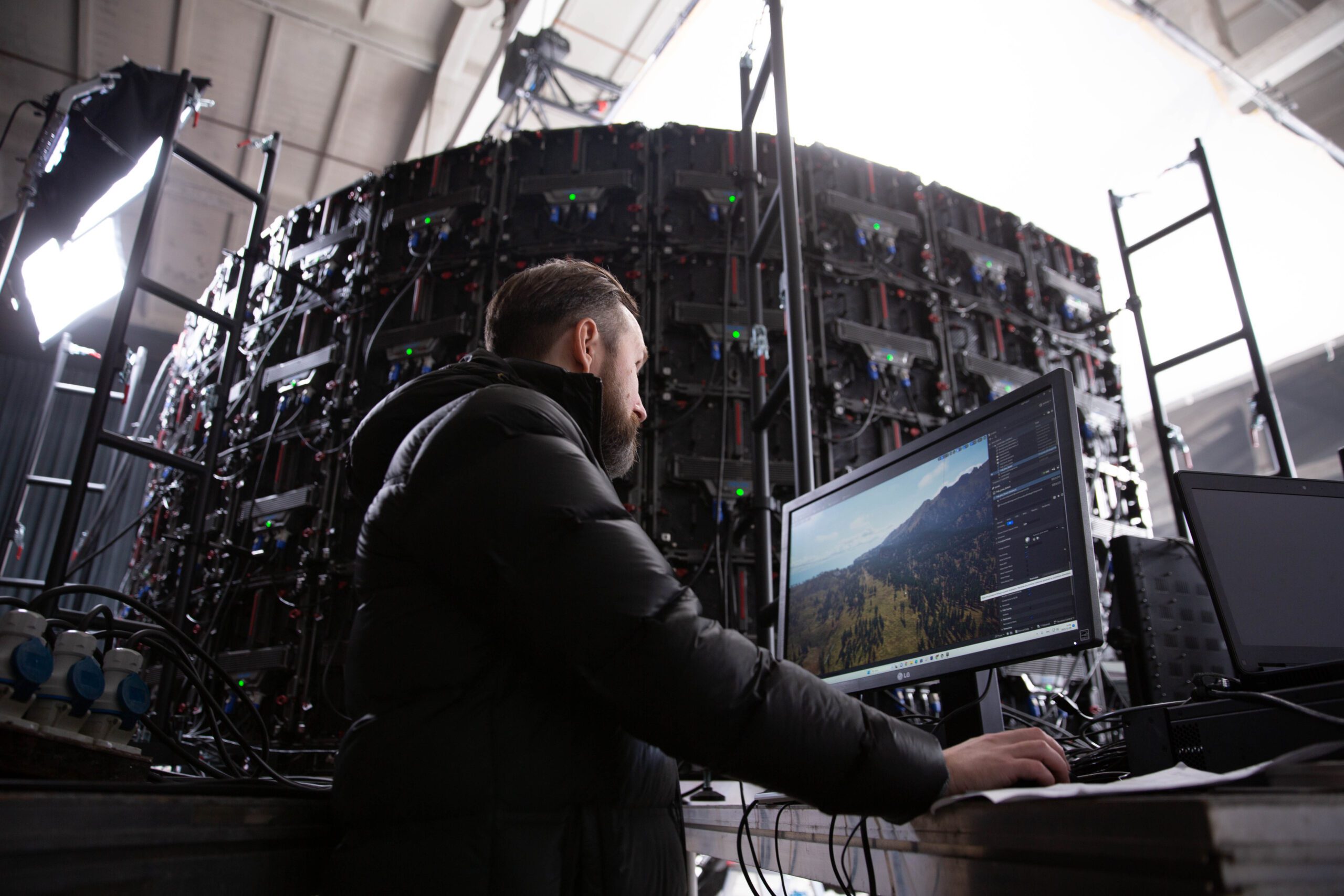
This week, under the slogan "First, virtual," Vilnius Gediminas Technical University (VILNIUS TECH) introduces a new virtual production studio called "Faux Real Studio" to the Lithuanian film, advertising, and video content industries.

This studio represents an unprecedented opportunity in Lithuania, offering video creation technology that has already gained popularity in Hollywood. "Faux Real Studio" is established in the premises of the VILNIUS TECH Creativity and Innovation Center "LinkMenu fabrikas" – a 650 sq.m. hangar. It is expected that the studio and its technology will open up an entirely different experience in film and video content creation in Lithuania.

"In the technology of virtual production, digital environments transport creators into new realities. And all of this without stepping out of the film set," introduces the new possibilities Mantas Tamulionis, Head of the Digital Laboratory at VILNIUS TECH "LinkMenu fabrikas."

"Faux Real Studio" is situated in the premises of the VILNIUS TECH Creativity and Innovation Center "LinkMenų fabrikas" – a 650 sq.m. hangar. It is anticipated that the studio and its technology will revolutionize country’s film and video content creation experience.

According to M. Tamulionis, the boundary between real and artificial realities is reflected in the studio's name.

"The word 'faux' comes from the French language and describes something fake but striving to appear real. Combined with the word 'real,' the name removes that separation between the real and the imagined, and so does the virtual production studio," explains M. Tamulionis, the significance of the studio's name.

What is virtual production technology?

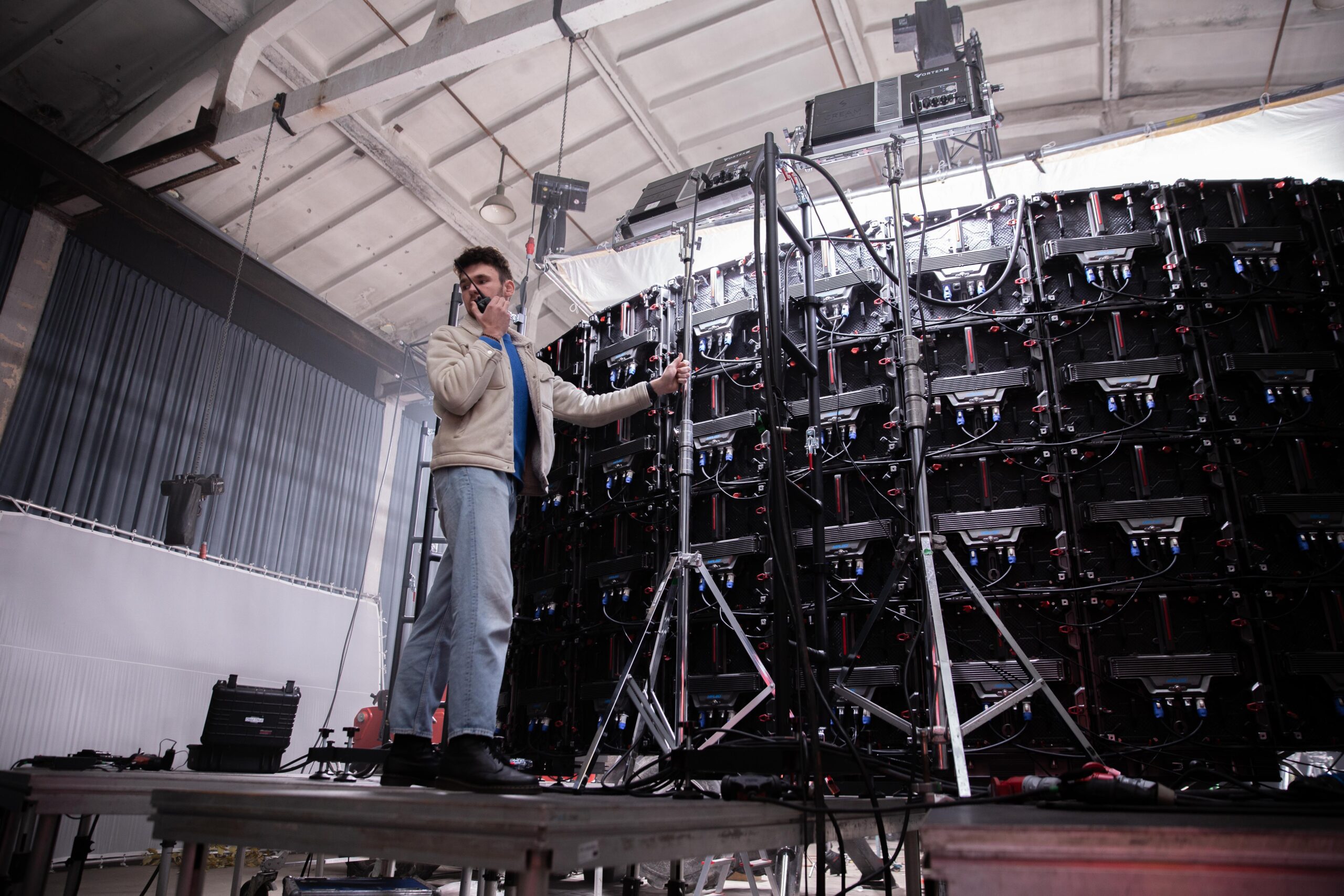
According to specialists from VILNIUS TECH "Faux Real Studio," virtual production encompasses a set of advanced technologies. This includes high-resolution LED screens, software for creating virtual environments (commonly using the "Unreal Engine" engine), virtual reality glasses, motion capture, camera tracking, and other technologies.

"All these technological components working harmoniously create a possibility to integrate physical and digital elements in real-time. This reduces travel, transportation, post-production costs, saves time, and reduces the carbon footprint," says the Head of the Digital Laboratory at VILNIUS TECH "LinkMenu fabrikas."

Origins of the technology trace back to Hollywood

According to Leonardas Zilinskas, a virtual production expert at VILNIUS TECH "Faux Real Studio," the first signs of virtual production in Hollywood began to develop in the mid-20th century, with perhaps the most recognizable examples appearing in later James Bond films.

"Dedicated Bond fans will remember the early films and scenes where James Bond drives a car, and the view through his windows changes. It was the projection of real (but pre-recorded) environments using projectors. This was done to avoid complex filming in real traffic conditions," says L. Zilinskas.

The essence of modern virtual production technology is similar but much more innovative. By combining real-time computer graphics with traditional film production technologies, immersive and realistic video content is created in various environments without having to leave the film set.

According to L. Zilinskas, today's technology enables generating a virtual environment entirely from scratch. Furthermore, the computer-generated graphics can be manipulated by changing its perspective, trajectory, lighting, other details – all the visuals within it.

"This allows video creators to produce a product that is not limited by time or space," says L. Zilinskas.

Possibilities of VILNIUS TECH "Faux Real Studio"

According to the studio's team, the premises at VILNIUS TECH "LinkMenu fabrikas" provide the necessary space, lighting, and the place able to facilitate the technical and creative teams.

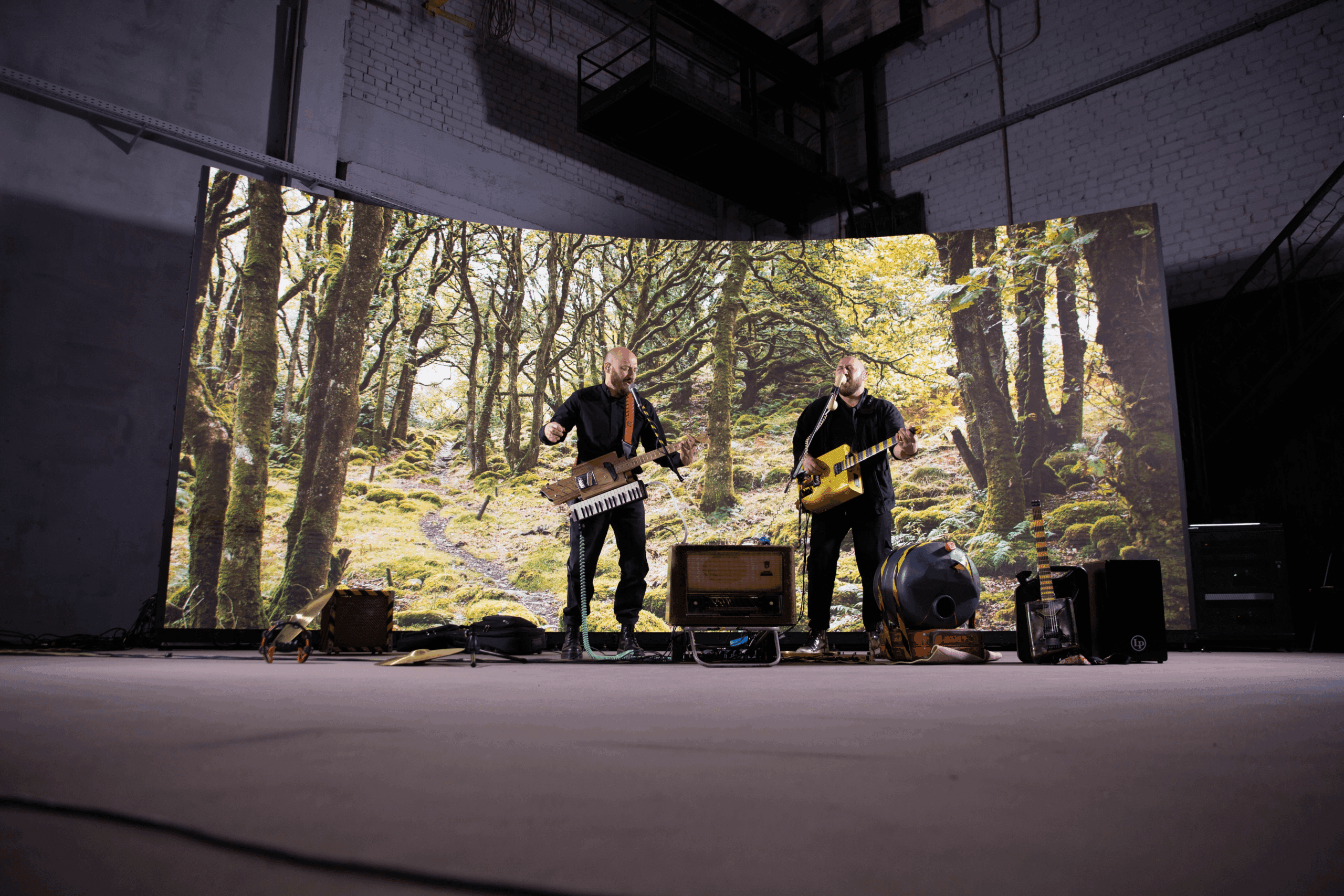
However, M. Tamulionis, the Head of the Digital Laboratory at VILNIUS TECH "LinkMenu fabrikas," is convinced that the advantage of "Faux Real Studio" is not only its spacious premises but also the technology as well as specialists working in the studio. The studio's facilities have already been tested – it was recently used for filming a part of the series by Swedish production. The studio's technology and the creation of virtual environments were utilized in the filming of the music video for the song "Viskas bus gerai" performed by the band "Antikvariniai Kaspirovskio dantys."

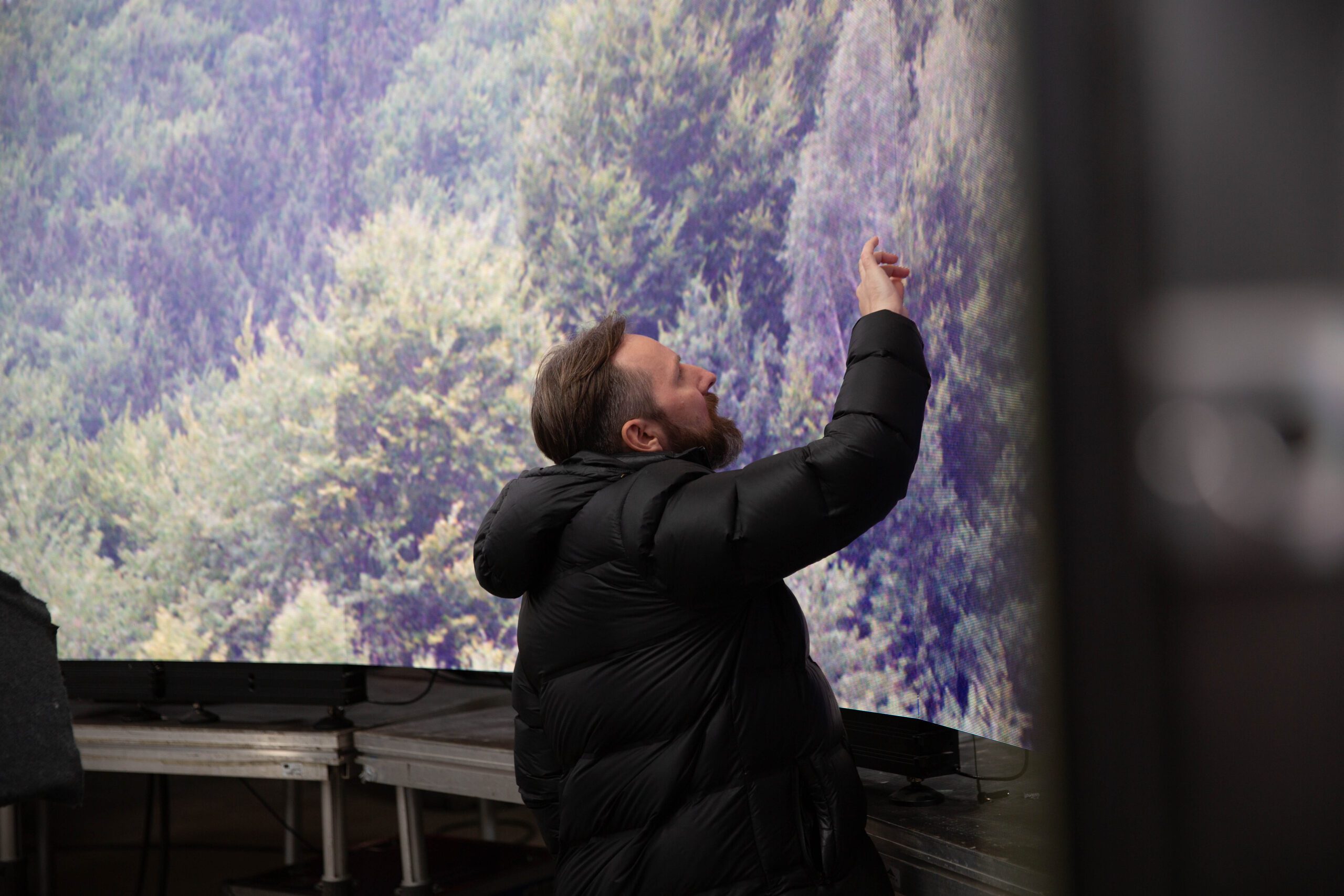
"The studio stands out with its state-of-the-art technologies – a high-resolution LED screen, innovative camera tracking technology, intuitive lighting, and other aspects. When combined, these technologies are used to create limitless and infinite worlds that could be used in movies, advertisements, tv series, music videos, and television," says M. Tamulionis.

New learning experience

VILNIUS TECH "Faux Real Studio" was established not only to provide virtual production services to national and international creators but also to train future specialists.

"Europe is rapidly challenging Hollywood – many of the world's largest film studio creators, such as HBO and Netflix, come to Europe solely to take advantage of virtual production services," says M. Tamulionis. According to Dr. Lina Peciure, the director of VILNIUS TECH "LinkMenu fabrikas," in a few years with the constant growth of the virtual production industry, the demand for specialists capable of working with these technologies will be even greater.

"At VILNIUS TECH, we aim to create a new learning experience where students not only practically learn to work in a virtual production studio but also have the opportunity to practice when professional filming takes place in the studio. This will ensure not only invaluable experience for students but also help them make new contacts and professional connections," says Dr. Lina Peciure.

For more information about the new virtual production studio, visit here.

The text was prepared by VILNIUS TECH "LinkMenu fabrikas."

The acquisition of studio equipment is financed by the European Regional Development Funds under "Digital Innovation Centres" call No. 01.2.1-LVPA-K-857-01.

Galerija
Related news

The life journey of emeritus Prof. Dr. Marija Burinskiene at the university: experiences, different generations, and cherished values
For several decades in VILNIUS TECH lecture halls and the scientific community, Emeritus Prof. Dr. Marija Burinskiene from the Department of Roads at the Faculty of Environmental Engineering has been one of the most prominent representatives of urban planning and city development in Lithuania.  Today she is a professor at the Department of Roads, Faculty of Environmental Engineering, but her academic path is inseparably linked with the formation and development of urban planning throughout Lithuania. Recalling the time when she herself was a student, Prof. Dr. M. Burinskiene says that her study years are first and foremost associated with an especially strong sense of community, which at that time was a natural part of student life. Those were years when togetherness, daily shared activities, and simply being together created strong interpersonal bonds that lasted for a long time. "One of the most vivid memories I have is participation in volunteer work trips. Although from today's perspective it may seem like practical training, at that time it was also a social and cultural phenomenon. Work itself was often only part of the experience - evenings spent together around campfires and interactive communication were just as important. Another memorable experience was counting urban traffic flows. We stood at intersections and manually recorded vehicle movement in different directions. These were long studies, sometimes lasting an entire day or even around the clock, involving the whole group. This activity not only provided practical knowledge about urban planning, but also allowed us to directly observe how the city system functions in real life. It was a kind of science in reality - without digital tools, relying on observation, patience, and teamwork," the emeritus professor recalls. Cultural activities such as participation in the choir "Gabija’ also played an important role. According to the professor, this was not only a musical experience but also an important social space. Trips to concerts, shared performances, and just traveling to another city in general had special value at that time because travel opportunities were rarer and more eagerly awaited. Having worked at the university for several decades, the emeritus professor notes that her academic and personal path was most strongly shaped by the lecturers working at the university, especially representatives of the Department of Urban Construction: department head Prof. Habil. Dr. Vaclovas Vytautas Sestokas and Associate Professor Pranciskus Juskevicius. They stood out not only because of their professionalism but also their broad thinking, scientific intuition, and ability to inspire students. "Their attitude toward students was respectful and motivating - they taught and encouraged independent thinking, asking questions, and searching for answers. This became an important impulse in choosing the academic path and remaining at the university," says the professor. According to her, all of this shaped not only knowledge but also the structure of thinking - the ability to analyze, argue, and present ideas. Even unexpected situations, such as choosing the wrong conference date, turned into valuable life lessons. "In striving for goals in life, the most important things were determination, a sense of responsibility, consistent work, the ability to stay on your chosen path, and not giving up in the face of difficulties. Personal motivation related to family was also very important. The desire to justify my parents' expectations became a strong internal driving force. This gave additional meaning to the chosen academic path and encouraged me to strive for more. Opportunities within the academic system were also an important factor - the possibility to continue scientific work, return to doctoral studies, and work at the university," explains Prof. Dr. M. Burinskiene. Speaking about her experience working in the field of engineering, where the majority of representatives are men, the emeritus professor openly shares that she never felt fear or discomfort in such an environment. Nevertheless, the beginning was not easy - at that time there were only a few women in the department: two were doctoral students, one worked as a secretary, while all lecturers were men. Since after graduation she began working in the same department she had previously attended as a student, at first she was viewed rather cautiously - as a young and still inexperienced specialist. However, consistent work, good results, and effort gradually changed her colleagues' attitude. According to her, diligence and professionalism helped prove her value and earn the trust of colleagues. "The greatest challenge awaited me when I became head of the department. At first there was no shortage of tension - meetings caused stress, and colleagues often compared me to the previous head, emphasizing 'how things were done before.' Nevertheless, over time the situation improved. I am convinced that the most important thing in such situations is not to give up, to work consistently, and to see yourself as an equal partner. This is how authority and recognition emerge," the emeritus professor notes. Speaking about changes, she points out that today the situation is already different - in some departments there are even more women than men. In her opinion, balance is the ideal situation, although it is not always easy to achieve. As the environment changes the most important thing is the ability to accept it and remain open-minded. "Although until now the university has only been led by men, the situation may change in the future. In my opinion, the first female rector should come from the field of engineering, considering the university's identity. True, this may require generational change or an exceptional personality who earns broad recognition through her achievements. Although the university is expanding and various study fields are becoming stronger, engineering still remains the central axis, so changes may take time. I believe that in the future a person will emerge who surprises the community and becomes a symbol of significant change," shares the professor. Evaluating today's student generation, the professor openly states that this generation is highly dynamic and strongly influenced by the technological environment. These are young, brave people focused on goals, naturally living in the digital world, quickly mastering new tools, confidently using technology, and easily integrating artificial intelligence and other digital solutions into their learning process. According to her, this mobility has two sides. On one hand, it means great freedom and opportunities; on the other hand, weaker attachment to organizations and sometimes a weaker sense of long-term responsibility. Nevertheless, she emphasizes that students remain very different from one another. Master's students stand out because of their higher motivation. They usually return to university already having a clearer understanding of what they want, their questions are more precise and more focused on practical or scientific results. These are people who consciously choose their academic path rather than simply finding themselves in it. Speaking about developing courage in presenting ideas, the emeritus professor emphasizes that courage is developed through consistent work and confidence in one's knowledge. By spending a long time deepening expertise in a field, analyzing, gaining experience, and relying on science, internal confidence is naturally formed. In such a case, presenting ideas becomes not an emotional challenge but a natural and logical part of the work process. If a person truly believes in what they are doing, additional courage is no longer necessary - they simply present their point of view confidently and with arguments. "To today’s students I wish courage, creativity, and openness to new ideas. It is especially important not to fear unconventional or even crazy ideas, because very often they become the beginning of innovation and progress. Also nurture a sense of community - learn to work together, trust one another, share ideas, and create a strong academic environment. Finally, do not forget the university, your Alma Mater, which is not only a place of study but also an important part of life and professional identity," wishes Prof. Dr. M. Burinskiene.
More
Doctoral Studies – More Than Just a Dissertation: What Skills Do Young Researchers Need Today?
This year marked the fourth VILNIUS TECH PhD Summer School (PhD School), bringing together 30 students from ten countries around the world. During the week-long school, experienced experts in their fields delivered presentations teaching the principles of academic writing, communication, research ethics, and many other topics highly relevant to young scientists during their doctoral studies. However, academic knowledge alone is not enough. Having worked with PhD students for many years, VILNIUS TECH Professor Dr. Simona Ramanauskaitė, Lecturer Angelė Tamulevičiūtė-Šekštelienė, and Professor Dr. Konstantinos Petridis from the Hellenic Mediterranean University (Greece) emphasize that the ability to overcome challenges, collaborate, and build international connections is highly valuable for a successful research career. [caption id="attachment_122453" align="alignnone" width="1024"] Moments of the event[/caption] What challenges do PhD students face today? During doctoral studies, conducting research, drafting articles, and writing a dissertation are not the only challenges encountered. Based on his experience, Prof. Dr. K. Petridis highlights three common problems faced by PhD students. The first is time management, particularly when trying to balance research demands with other academic and personal responsibilities. Lecturer A. Tamulevičiūtė-Šekštelienė from the Faculty of Creative Industries agrees with this notion. According to her, during such summer schools, it often becomes evident that PhD students are challenged not only by theoretical questions but also by how to balance dissertation writing with a job, family, and other commitments. "The community and the surrounding academic environment help overcome this. When a PhD student has someone to talk to, discuss a doubt with, hear a question from, or receive honest feedback, the problem often becomes clearer and easier to solve. Sometimes a colleague, even if not an expert in your topic, can become the best 'mirror' and show which part of the research sounds clear and which needs to be rephrased more simply. So let's talk, ask, communicate, share, and build connections," advises the lecturer. [caption id="attachment_122459" align="alignnone" width="1024"] Moments of the event[/caption] The second problem noted by the event's guest is the PhD student's self-confidence when presenting their work to both the academic community and the general public. Prof. Dr. S. Ramanauskaitė, Dean of the Faculty of Fundamental Sciences, echoes this sentiment: "Confidence is built not only by existing knowledge and skills but also by the experience of communicating within a team of different disciplines, experiences, and cultures, as well as the courage to express one's thoughts and openly accept the opinions of others. That is why PhD Summer School events are essential for every doctoral student to develop international and collaborative competencies and expand their network of contacts among other researchers," says the scientist. The third challenge, according to Dr. K. Petridis, involves developing competencies to use artificial intelligence (AI) tools responsibly and effectively in scientific communication. "Ultimately, many students face uncertainty regarding their professional prospects outside academia. Overcoming these challenges requires structured support, such as targeted training in research and communication skills, developing AI literacy in an academic context, and closer engagement in career planning opportunities both within and outside the academic environment," explains the professor. [caption id="attachment_122457" align="alignnone" width="1024"] Prof. Dr K. Petridis[/caption] Meanwhile, Dr. S. Ramanauskaitė highlights the challenges arising during the research process as the most prominent: "PhD students and scientists conduct research and seek new knowledge. They are always on the borderline between the known and the new. Therefore, research planning, data privacy, and ethical issues are usually specific, unique, and require additional in-depth study. And what worked in a previous study will not necessarily apply in this one," says the professor. "Another important point is that researchers always face the need for continuous improvement and deeper understanding. Therefore, new researchers and PhD students must be creative and rely on collaboration with other researchers who can share their experience and help find the most suitable solution together." From new acquaintances to significant discoveries Today, it is difficult to imagine a scientist's work without international collaboration. International connections open up opportunities to participate in conferences, co-author publications, initiate projects, exchange methods, and look at one's research from a different academic or cultural perspective, lists A. Tamulevičiūtė-Šekštelienė. "It is equally useful to sometimes simply change your environment—travel to another country, participate in an internship, or work at another university or research center. Interacting with people of different cultures, experiences, and viewpoints broadens your thinking, nurtures ideas, and allows you to see even what previously seemed completely clear in a new light. In a new environment, our knowledge, experiences, and creativity can flourish—and these are exactly what is highly needed throughout the dissertation drafting journey. And, to say it humorously, sometimes for the research and work to move forward, it is highly beneficial to get moving yourself," smiles the lecturer. [caption id="attachment_122449" align="alignnone" width="1024"] A. Tamulevičiūtė-Šekštelienė[/caption] Meanwhile, Prof. Dr. K. Petridis sees two highly practical reasons why international collaboration is so essential: "First, it allows researchers to establish meaningful professional connections with colleagues and other PhD students from different academic and cultural backgrounds, thereby fostering long-term collaborative relationships. Second, it broadens researchers' awareness of the professional opportunities available to them when planning their next career steps—introducing them to diverse research environments, institutional practices, and career paths." Scientist S. Ramanauskaitė, when speaking about international collaboration, emphasizes its importance for the research being conducted. According to her, research results are not limited to one institution or country. Their goal is to acquire new knowledge in a global context, so collaborating with the international community helps to more clearly understand what has already been researched and what new ideas can be tested. Also, sooner or later, results reach society and businesses, so it is necessary to evaluate their impact on different cultures and communities already during the research phase. Furthermore, when conducting scientific research, personal international experience and an understanding of diversity can increase the applicability of research results across various societies, explains the professor. [caption id="attachment_122463" align="alignnone" width="1024"] Prof. Dr S. Ramanauskaitė[/caption] Why is it important to participate in PhD schools? By participating in the VILNIUS TECH PhD Summer School, attendees had the opportunity to acquire new knowledge, learn how to solve discussed challenges, and meet researchers from other countries in similar fields. However, this is not the only benefit participants gain. According to the speakers, the value of such schools lies in what the PhD student themselves accomplishes during them. "I believe that the greatest value of international events like the PhD School is that they provide a platform for students to share their research experiences, discuss common challenges, and collectively seek solutions with colleagues from various academic disciplines. In addition, such events offer valuable opportunities to practice English as the primary language of scientific communication (lingua franca), thereby strengthening students' ability to operate effectively in international research contexts," says the professor from Greece. Meanwhile, VILNIUS TECH Lecturer A. Tamulevičiūtė-Šekštelienė states that the long-term result of such events is precisely the people met and the new connections made. A single conversation can spark a new research idea, help discover a necessary method, a future co-author for a publication, or a colleague to turn to for advice later, she says. [caption id="attachment_122461" align="alignnone" width="1024"] Moments of the event[/caption] "PhD schools create a special space where you can not only learn but also safely talk about your research, challenges, and ideas that are not yet fully refined. Here, PhD students see that many of them face similar issues, regardless of their country, university, or field of science. This sense of community provides more confidence," the lecturer points out. The professor from the Faculty of Fundamental Sciences notices another benefit—during PhD schools, young researchers actively share their experiences on social media, which helps them become more visible not only in the scientific space but also in society. "Science shouldn't be intended solely for the scientist themselves; it must be as public as possible and encourage new discoveries or research. Therefore, seeing that PhD students are shifting the traditional way of reaching the scientific community from purely conference- and personal-interaction-based methods to the use of social networks gives hope that science, its results, and the scientists conducting it will become more visible not only to other scientists but also to the general public," says Dr. S. Ramanauskaitė. Three tips for future researchers Prof. Dr. S. Ramanauskaitė: You are already on the right track because you have chosen to conduct scientific research and gain experience at international events. Do not stop on this path and believe in yourself, because the path of scientific research is often bumpy; however, every experience and every additional member of your community makes the upcoming "bumps" less noticeable and less burdensome for you. Prof. Dr. K. Petridis: "Stay hungry, stay foolish." A. Tamulevičiūtė-Šekštelienė: Let's build connections, communicate, and never stop talking about our research. Let's present it at a conference, to a colleague, a friend, someone from another scientific field, or even at a bar—sometimes it is exactly in an informal setting that we receive the most unexpected and useful question. [caption id="attachment_121859" align="alignnone" width="1024"] Team of VILNIUS TECH PhD Summer School[/caption]
More