Vilnius Gediminas Technical University (VILNIUS TECH) and Japan's Keio University participate in the Erasmus+ project "Include disaster education". This is a joint research project funded by the Erasmus+ program of the European Union (EU). This two-year research initiative aims to reimagine online distance learning education so that it better supports the diverse Disaster Risk Reduction (DRR) community.
VILNIUS TECH experts have created the INCLUDE project, which aims to reimagine distance learning to better support the diverse disaster risk reduction (DRR) community. INCLUDE has created a digital learning platform for universities and industry to deliver high-quality inclusive digital education in the field of DRR.
The main objectives of the project are:
• To understand online, distance learning strategies currently used in DRR education and their effectiveness, by taking into consideration in promoting gender equality and sensitivity and also in addressing differences in relation to the access and use by underrepresented groups;
• To develop a framework to reimagine online distance learning education so that it better supports the diverse DRR community, also in addressing both natural and biological hazards and their integration;
• To design an innovative University-Industry digital learning platform to provide high quality inclusive digital education to DRR community;
• To explore the opportunities of the use of disruptive technologies in online distance learning education in DRR;
• To propose a digital competence framework for educators in building capacity to implement online and distance teaching and learning in DRR.
All planned goals of the project have already been achieved, as the end of the project is in 2023 June 30.
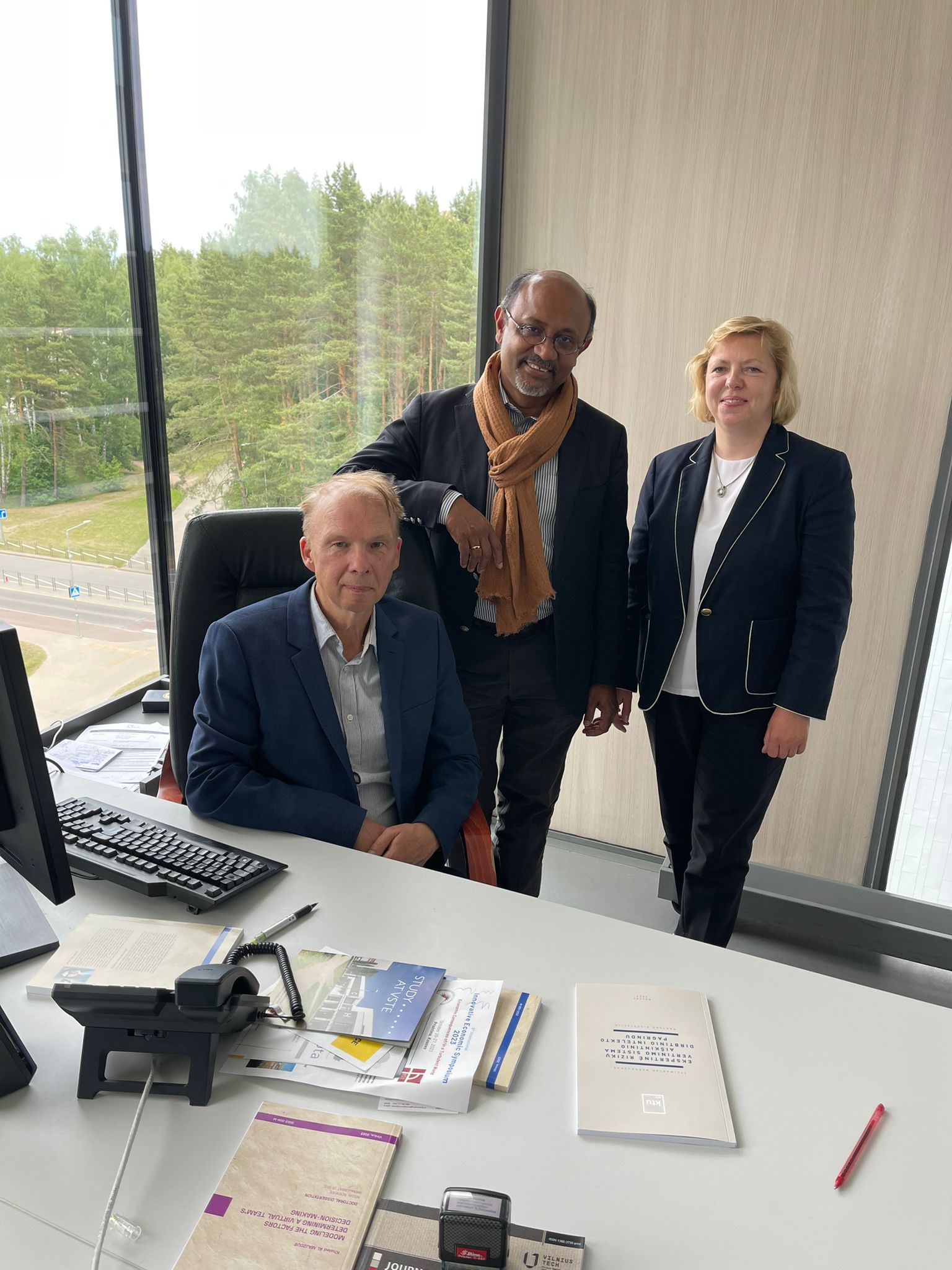
In 2023 June 14-15 there was a seminar for project participants and interested parties and a meeting of project participants in VILNIUS TECH, Lithuania.
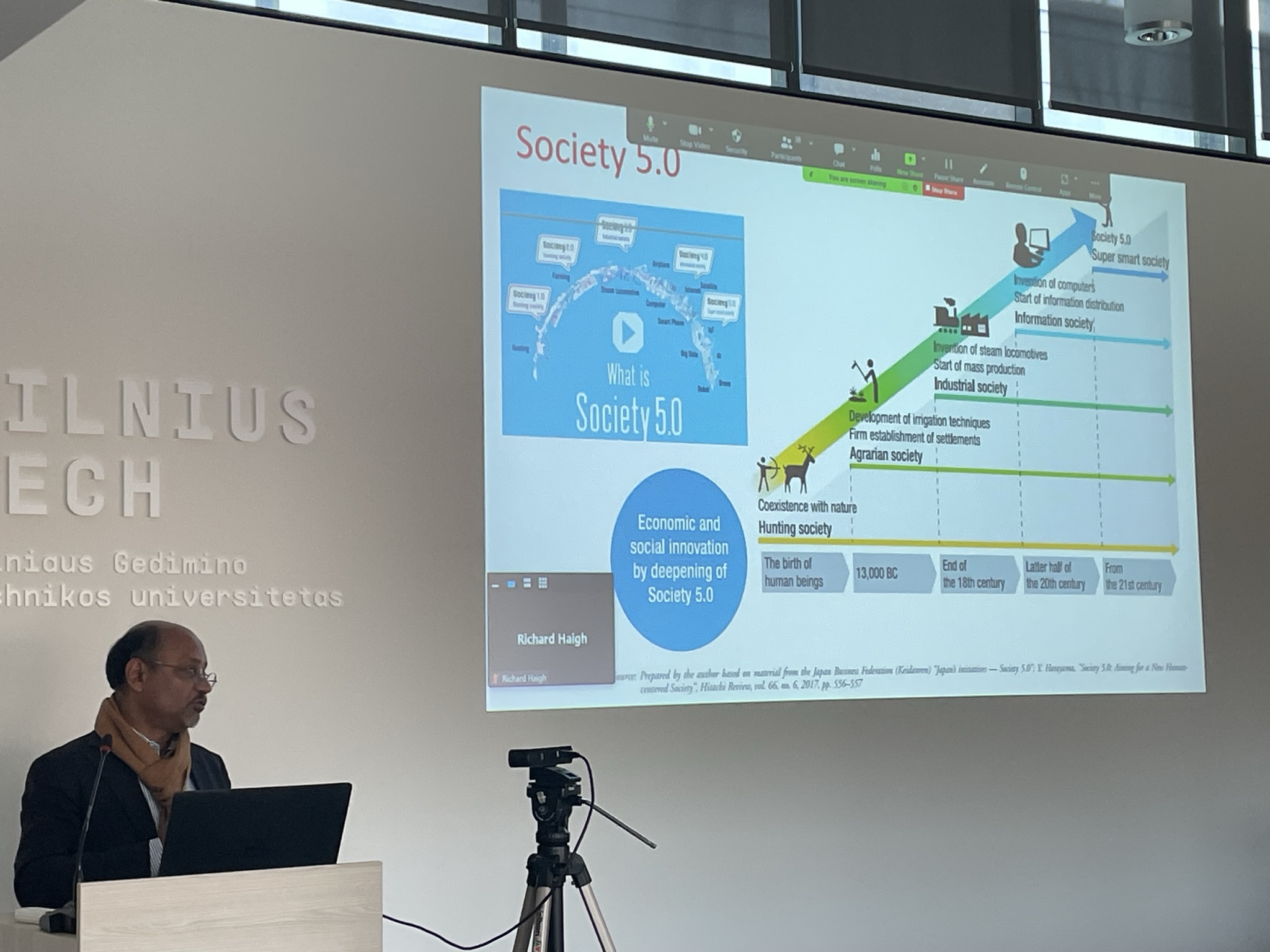
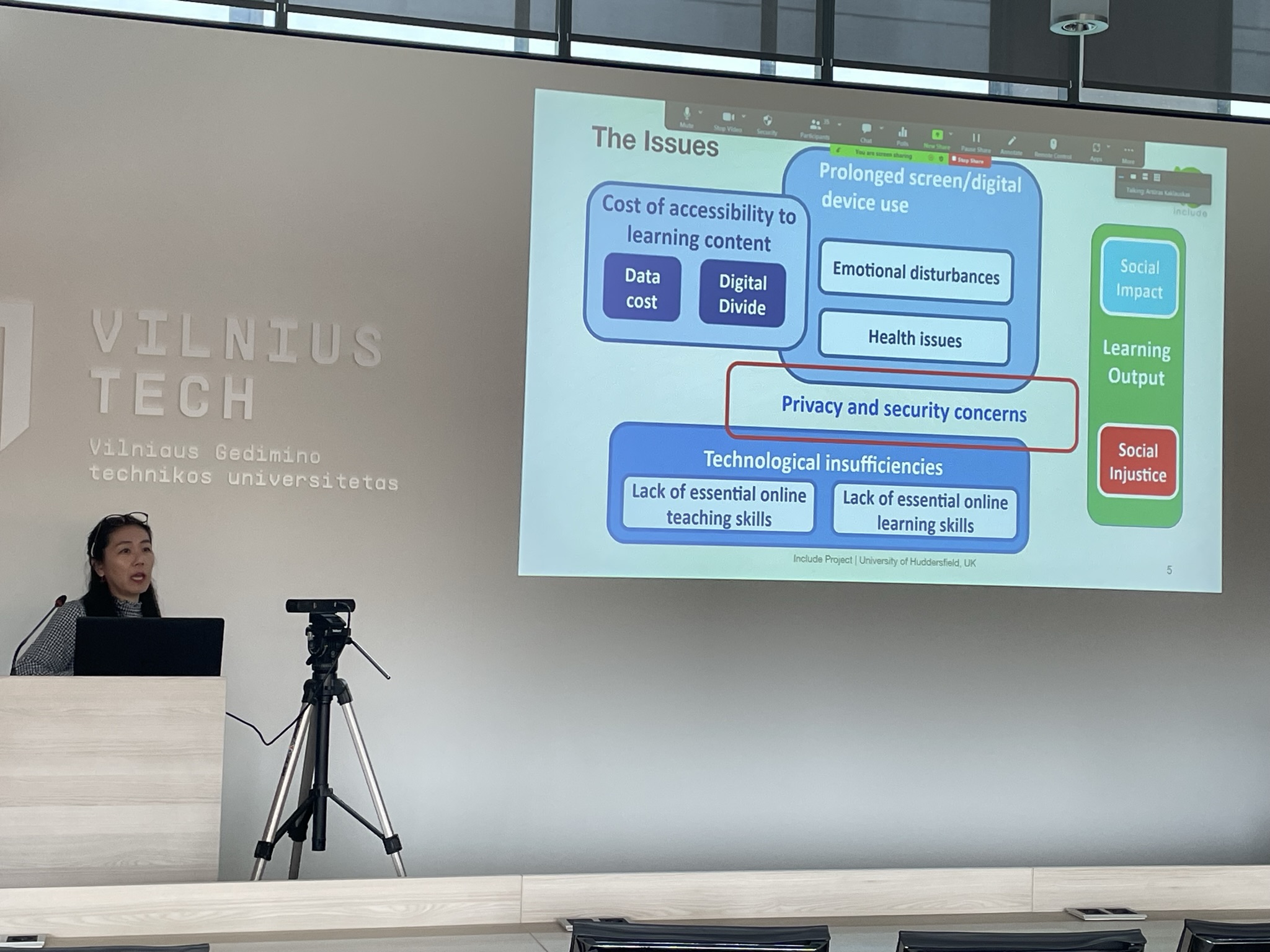
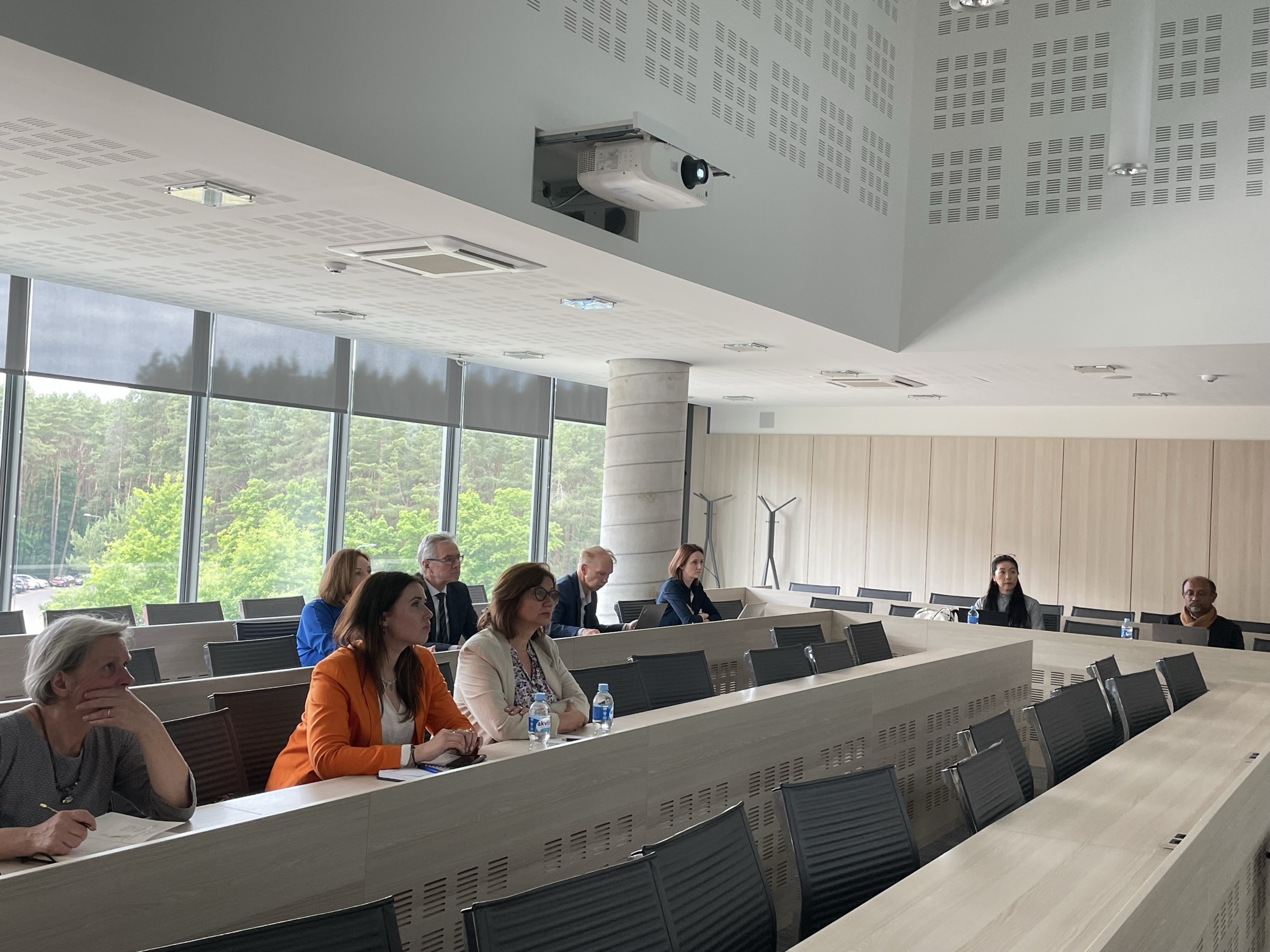
In 2023 June 14 a hybrid seminar was held on the topic "Training in extreme situations using the latest technologies". The seminar was attended by project participants and listeners from the Fire Rescue School, the Fire Protection and Rescue Department under the Ministry of Internal Affairs, the Logistics Department under the Ministry of National Defense, from the municipal administrations of various Lithuanian districts, VILNIUS TECH. The following reports were read during the seminar:
• The Midterm Review of the Sendai Framework for Disaster Risk Reduction 2015 – 30: Progress, Challenges, and Opportunities (Richard Haigh and Dilanthi Amaratunga, University of Huddersfield, UK);
• Society 5.0, digital transformation and its implication to disaster risk reduction (Rajib Shaw, Keio University, Japan);
• Reimagining a Framework for Disaster Risk Management Digital Education (Spilios Iliopoulos, Lund University, Sweden);
• Digital competence framework for DRR educators to develop digital pedagogical competences (Aravindi Samarakkody and Anuradha Senanayake, University of Huddersfield, UK);
• Disruptive technologies and DRR: Implication to higher education (Tomo Kawane, Keio University, Japan);
• Groundbreaking educational DRR methods and tools (Arturas Kaklauskas, Vilnius Gediminas Technical University, Lithuania)
During the meeting, the work of the project participants during the project was discussed, the already achieved results were presented. Each institution participating in the project presented the results of their work and the dissemination of project activities.
INCLUDE VILNIUS TECH coordinator prof. habil. dr. Arturas Kaklauskas made the presentation on innovative disaster risk reduction (DRR) approach and tools for students, teachers, teaching and assessment. The concepts of smart university, smart study infrastructure, smart classroom, micro-learning using modern technologies and concepts such as: Industry 5.0, Society 5.0, Study 5.0, blockchain, IoT, augmented and virtual reality, cognitive and emotional computing, digital twin, robotics, games, text analytics technology, and more were presented. Analogous smart study technologies developed by VILNIUS TECH were demonstrated.
Project coordinator: The University of Huddersfield (HUD), UK.
Project partners: University of Central Lancashire (UCLan), UK; Lund University, Sweden; Vilnius Gediminas technical university (VILNIUS TECH), Lithuania; Keio University, Japan.
INCLUDE VILNIUS TECH coordinator prof. habil. dr. Arturas Kaklauskas.
More information about the project can be found here: http://includeresearchproject.org/

Galerija