
AI is changing the IT market: what specialists will be needed in the future?

May 12, 2026

Artificial intelligence (AI) is rapidly transforming the information technology (IT) sector. The world’s largest companies have announced layoffs affecting tens of thousands of programmers. Several Lithuanian companies have also reported reductions in their IT workforce. Does this mean that AI will replace what was until recently considered one of the most promising and highly paid professions? Experts agree: it is not the demand for programmers that is changing, but rather their role, responsibilities, and required skills.

The market is slowing down — but only temporarily

Aurimas Cholomskis, Head of Department at the applied AI and advanced engineering company Twoday, says he is constantly looking for IT specialists because the company is growing, although he acknowledges that AI is significantly reshaping the labor market. Tools such as Codex and Claude Code allow code to be generated quickly, so employers are increasingly focusing not only on employees’ technical foundations and ability to solve complex problems, but also on their ability to use AI tools effectively in daily work.

„Economic uncertainty is also contributing to these changes. At the moment, demand for IT specialists is lower than it was a few years ago, but in the long term another problem may arise — there could be a shortage of experienced specialists. If fewer beginners enter the market today, in several years this may turn into a deficit of experienced engineers,“ says A. Cholomskis.

Žmogus rašo kompiuteriu

According to him, students and young professionals who manage to establish themselves in the market today and learn how to work effectively with AI will have a unique advantage in the future.

Those who adapt to change will succeed

The nature of IT specialists’ work is also changing. Programmers are writing code themselves less frequently — their focus is shifting toward managing AI tools and ensuring the quality of results.

„AI can help achieve more, but responsibility still lies with humans — ensuring that the result is correct, safe, and meaningful,“ says A. Cholomskis.

The pace of learning is also accelerating — technologies and methodologies are changing almost every week, so the ability to continuously learn is becoming more important than expertise in a single technology.

The expert also highlights the growing demand for data engineers. The quality of AI solutions directly depends on data infrastructure, making specialists in this field increasingly important. In addition, the boundaries between different programming technologies are disappearing — versatility and adaptability are becoming more highly valued.

Companies are not lowering their expectations

Martynas Kulvietis, Head of the Lithuanian branch of the software development company Trimble Reality Capture Platform, notes that demand for IT specialists is not decreasing.

„We are hiring just as before. The number of projects is not shrinking; only expectations for programmers are increasing, both in terms of quality and productivity. The biggest challenge is how to manage the quality of AI-generated code, while also continuously improving skills related to rapidly evolving AI applications.

AI automates various processes, and we try to implement and use it everywhere: for coding, file administration, translations, and document completion. AI helps automate or accelerate work. Figuratively speaking, we are replacing a shovel with a tractor — or even several tractors at once. Modern IT engineers must move from the shovel to the tractor and learn to use it effectively,“ says M. Kulvietis.

Universities are also adapting to the changes

Higher education institutions are also having to adapt. Computer science studies are increasingly focusing not only on programming, but also on AI, data engineering, ethics, and collaboration between humans and AI.

Professor Dalius Mažeika, Dean of the Faculty of Fundamental Sciences at Vilnius Gediminas Technical University, notes that the most important thing today is developing strong foundational knowledge so future IT specialists understand algorithms, data structures, system design, cybersecurity, and possess logical thinking skills.
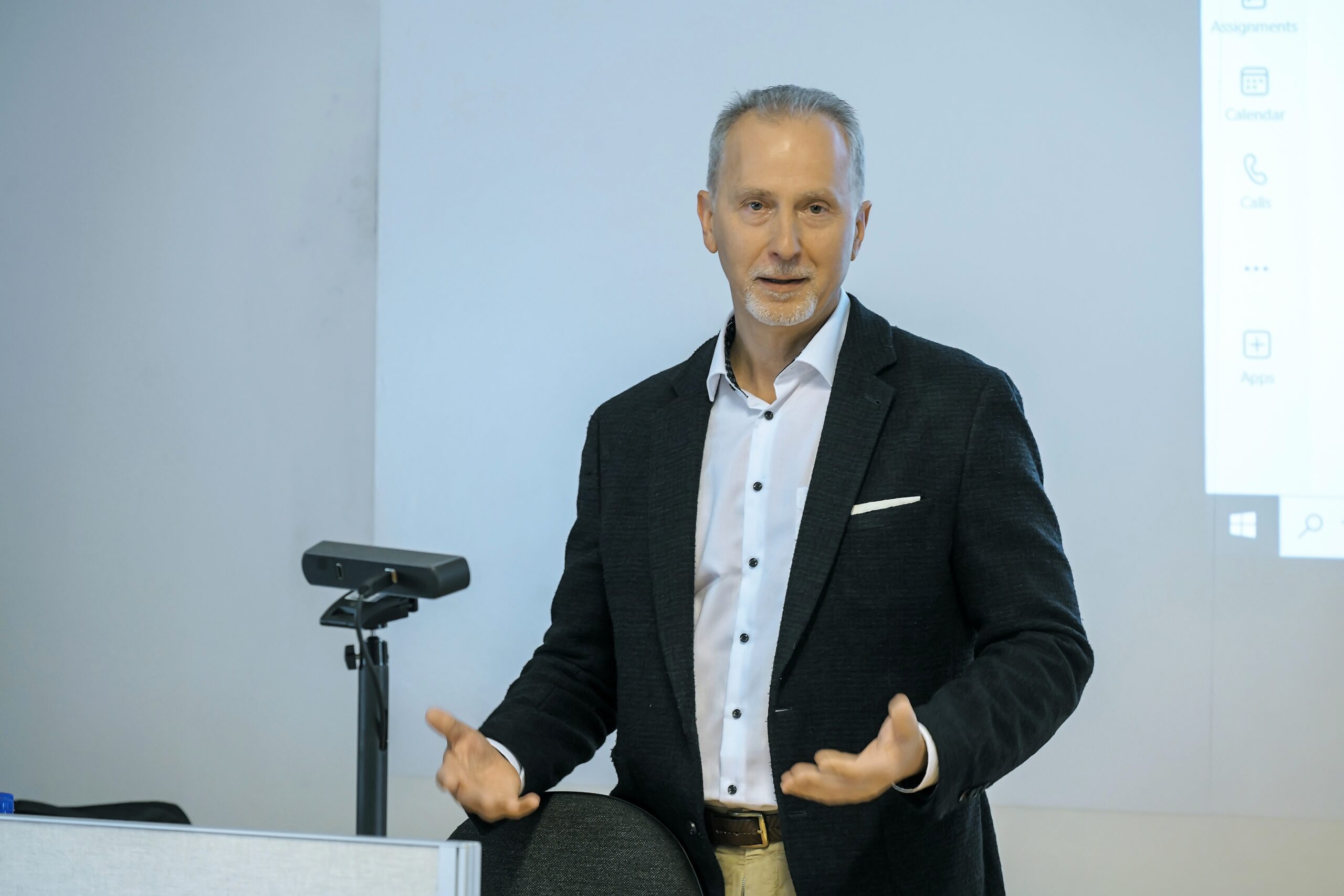
Dalius Mažeika

Dalius Mažeika

„AI can write a function, but it cannot replace a person who understands why that function is needed. This means programmers spend less time on mechanical coding and more on architecture, business logic, and decision-making. A programmer is becoming an engineer rather than simply a code writer. The ability to understand systems, analyze problems, and evaluate AI-generated code is becoming increasingly important.

AI is excellent at generating, but it does not take responsibility. And in business, responsibility is essential,“ emphasizes the professor.

The future programmer — a versatile creator

According to D. Mažeika, future IT specialists will need to be not only programmers, but also architects, business analysts, and product creators.

The most important skills will become:

  • problem-solving,
  • critical thinking,
  • systems integration,
  • communication with teams and businesses.

Experts agree that AI will not eliminate programmers, but rather change the nature of their work. Just as calculators did not eliminate mathematicians, AI will raise the bar for all IT specialists — those who survive and thrive will be the ones who can adapt, learn continuously, and create greater value.
Related news

Vice-Rector explains what really determines academic success
The end of spring is one of the most challenging periods for students: the beginning of the exam and assessment session becomes a mirror reflecting how much has truly been learned throughout the semester. When results are disappointing, many students ask themselves: if I did everything required, what else was missing? What contributes most to the final grade and, later on, to a successful career? According to the Vice-Rector for Studies at Vilnius Gediminas Technical University, the answers lie not only in study methods and the amount of time devoted to learning, but also in the student’s engagement in the study process. The impact of class attendance on academic performance is far greater than commonly believed. How effective is independent learning? Although society — especially young people — often assumes that university studies occupy all of a student’s time, reality is quite the opposite. VILNIUS TECH Vice-Rector for Studies, Professor Dr. Živilė Sederevičiūtė-Pačiauskienė, notes that the established balance of learning often surprises students, as time spent in university classrooms is merely the tip of the iceberg. “Contact hours at the university should make up only 30–35% of the total study time, while independent learning accounts for nearly 70%. This means that study programs and the educational process are designed so that most of the learning time and outcomes depend on the effort students put in outside lectures. However, there is a paradox here: those remaining 30% of hours spent at the university form the foundation without which independent learning becomes ineffective or is reduced merely to memorizing and reproducing knowledge — and knowledge alone is only one part of higher education outcomes,” says the professor. [caption id="attachment_116865" align="alignnone" width="2560"] VILNIUS TECH Vice-Rector for Studies, Professor Dr. Živilė Sederevičiūtė-Pačiauskienė[/caption] In addition to knowledge, universities develop analytical and creative competencies, responsibility, leadership, communication, decision-making and negotiation skills, as well as the ability to work in both local and international teams. Without direct interaction with lecturers and peers, students often remain trapped within the framework of reproductive learning — simply reading material and repeating it back without learning how to argue professionally, solve problems, search for solutions, or ultimately “sell” what they know or have created. “Strong students may do this very well. However, if they can successfully pass exams having prepared entirely on their own, this indicates that the course itself is insufficiently designed and does not include tasks that develop students’ social and communication skills,” the professor adds. A shift toward problem-based learning According to her, more and more engineering universities around the world are transitioning to a problem-based learning (PBL) model that requires strong student engagement and critical thinking. At the beginning of the semester, students receive a task or problem from a lecturer or business representative and are expected to create a solution or prototype. “Using existing or independently acquired competencies, students create, make mistakes, and — most importantly — realize what they do not know and what they still lack in order to apply their abilities in the workplace. In such cases, students no longer view lectures as simply new information, but as potential answers to the questions they already have or will soon encounter, because they have a clear goal: completing the task. Attendance therefore takes on a completely different meaning. When speaking only about theoretical material that students claim they can read independently, we see that complex concepts learned without professional explanation often lead to cognitive distortions and misunderstandings. Yet until students attempt to apply this knowledge in real tasks — not laboratory exercises where instructions are carefully described step by step — they do not realize they have learned it incorrectly. A university is not merely a ‘reading room for study materials’; it is a workshop for critical thinking. Studies are no longer, and can no longer be, just about absorbing and applying information,” states Prof. Dr. Ž. Sederevičiūtė-Pačiauskienė. What cannot be learned alone? Scientific research shows that certain essential competencies — such as the ability to analyze and solve complex problems in real time, justify decisions, work in teams, and reflect critically — are developed only in a social environment, meaning through participation in lectures and practical sessions. These are mandatory learning outcomes included in nearly all study programs. “When studying independently at home, students usually do not move beyond the boundaries where they feel safe and capable. Real progress occurs when stepping outside the comfort zone, through dialogue and discussion. Questions from peers and explanations from lecturers help reveal aspects that an independently studying individual simply does not notice,” says the professor. Studies by international educational researchers confirm a direct correlation between attendance and academic achievement — as the number of absences increases, the average grade decreases by at least one point. Regular attendance, on the other hand, has an “equalizing” effect. In 2022, Ramzan Nazim Khan found that students who graduated from school with lower grades often achieve excellent university results if their attendance is high, while exceptionally talented students admitted with top grades but rarely attending lectures demonstrate significantly poorer academic performance. Research conducted by VILNIUS TECH student Lukas Lukaševičius together with his thesis supervisor Associate Professor Dr. Tomas Rekašius, involving 12 study programs across five academic fields at the university, also showed that admission scores do not determine academic success at university. On the contrary, the first semester and first year of studies have the greatest influence on successful graduation. This is the period when engagement in studies must be at its highest. “Nowadays students often combine studies with work, but study methods focused on practical application of knowledge and prototype development force them to prioritize their studies. Yet even in traditional teaching models, attendance affects final results and also acts as a preventive measure against procrastination and delaying tasks,” adds Prof. Dr. Ž. Sederevičiūtė-Pačiauskienė. [caption id="attachment_116868" align="alignnone" width="2560"] VILNIUS TECH Vice-Rector for Studies, Professor Dr. Živilė Sederevičiūtė-Pačiauskienė[/caption] One of the largest meta-analyses in education, conducted in 2014 and covering 225 studies and more than 29,000 students, revealed the clear benefits of active learning methods — discussions, group work, and problem-solving activities in the classroom. These methods reduce the risk of failure by as much as 55%. “Methods based on discussion and collaborative problem-solving not only halve the risk of failure but also ensure much better knowledge retention than passive reading at home,” the Vice-Rector adds. “Universities implementing problem-based learning methods report that achievements previously reached only by fourth-year students are now being achieved already by second-year students.” Social connections prevent students from dropping out Although lecture attendance and involvement in university activities are important throughout all years of study, they are especially significant for first-year students. This is a critical factor for successful integration: the opportunity to build social connections and feel part of a new community helps prevent students from dropping out, particularly during the first year, when the dropout risk at universities worldwide is the highest. “Students who feel included have greater self-confidence and achieve better academic results. Social interaction with classmates and a connection with the institution create a sense of security that is especially important when facing complex engineering subjects,” notes the VILNIUS TECH Vice-Rector for Studies. While society often debates whether lecture attendance is truly necessary, Prof. Dr. Ž. Sederevičiūtė-Pačiauskienė emphasizes that at an engineering university, student responsibility and engagement in the study process are essential. This is part of the university’s commitment to society to prepare highly qualified professionals. “Engineering studies require consistent participation. Although theory is accessible with a single click in the digital age, the ability to think like a professional, solve crises, take responsibility, and maintain professional discipline is born only through live dialogue between lecturer and student,” says the Vice-Rector for Studies.
More
New doctoral dissertation
VILNIUS TECH Library invites you to follow the published new dissertations. The dissertation „Development and Property Studies of Structures with Acoustic Metamaterial Made from Recycled Plastic“ („Konstrukcijų su akustine metamedžiaga iš perdirbto plastiko kūrimas ir savybių tyrimai“) prepared at VILNIUS TECH by Andrej Naimušin. The dissertation was prepared in 2021–2026. Scientific consultant – Assoc. Prof. Dr Tomas Januševičius. The dissertation was defended at the public meeting of the Dissertation Defence Council of the Scientific Field of Environmental Engineering in the Aula Doctoralis Meeting Hall of Vilnius Gediminas Technical University at 9 a.m. on 15 May 2026. The dissertation examines plastic constructions and an acoustic metamaterial that is based on the Helmholtz resonator’s operating principle. The main object of the research is a structure made of a metamaterial from recyclable plastic, which has good sound insulation and sound absorption properties. The dissertation aims to create a structure made of metamaterial from recycled plastic to improve sound insulation for indoor partitions and room sound absorption. The following tasks are solved in the work: the first task concerns the development of metamaterials and the study of their non-acoustic and acoustic properties; the second task is related to theoretical calculations for individual metamaterial resonators using the transfer matrix method; the third and fourth tasks characterise acoustic properties using an interferometer and a sound transmission chamber, and the design of sound-absorbing panels made of recycled plastic metamaterial and sound-insulating systems with recycled plastic metamaterial; and the fifth task is the prediction of the sound insulation and sound absorption of the final engineering solution using modelling programmes. The dissertation consists of an introduction, three chapters, general conclusions, a list of used literature, and a list of the author’s publications on the topic of the dissertation. The introductory chapter describes the research problem and the work’s relevance, describes the object of the research, formulates the aim and tasks of the work, indicates the research methodologies, the scientific novelty of the work and the practical significance of the work results, and presents defended statements. The introduction closes by listing the author’s publications and conference presentations on the dissertation topic and by providing the dissertation’s structure. The First Chapter examines the possibilities of recycling plastic waste to improve indoor acoustics and analyses scientific research on sound insulation and sound absorption. The Second Chapter presents methodologies for sample calculation and preparation, determination of acoustic and non-acoustic properties, and modelling of sound insulation and absorption. The Third Chapter presents the results of theoretical, sound insulation, sound absorption, and static air resistance research and their analysis. Five scientific articles have been published on the dissertation topic: three in scientific journals included in the Web of Science database; one in the Scopus-referenced conference proceedings; and one in a conference proceedings publication referenced in other international databases. Five presentations on the dissertation topic were given at conferences in Lithuania and abroad. Doctoral dissertation readers can search via VILNIUS TECH Virtual Library.
More