Laurynas Marcinkus, an alumnus of Vilnius Gediminas Technical University (VILNIUS TECH), who currently works at "Modulina," a company producing straw panel houses, is an exceptional individual who spends every summer hiking through mountains in search of new discoveries and challenges. To some, this leisurely pursuit may seem highly dangerous, but according to Laurynas, once you venture into the mountains, it's impossible to stop – they help to reveal one's strengths and irresistibly beckon one to return.
Love for mountaineering instilled by parents
L. Marcinkus' parents are also VILNIUS TECH alumni who, during their studies, were members of the ALL Tourists Club active at the university at the time. Thus, since childhood the boy, along with his parents, travelled to the mountains and camped in the woods.
"My parents took me to the mountains for the first time when I was 12 years old; that time we were trekking in the Tatra Mountains in Slovakia. I was fascinated and amazed seeing it in reality; the mountains looked magnificent. At that very moment, the love for the mountains was born. From then until adulthood, every year my parents and I visited European mountains. The trips were not very difficult – we mostly camped in tents, followed specially designated trails, and adhered to the pre-planned route," recalls L. Marcinkus.
The alumnus also recalls that when he entered the university, it didn’t take him long to join the VILNIUS TECH Tourists Club. In his first years, he embarked on technically challenging expeditions lasting up to three weeks.
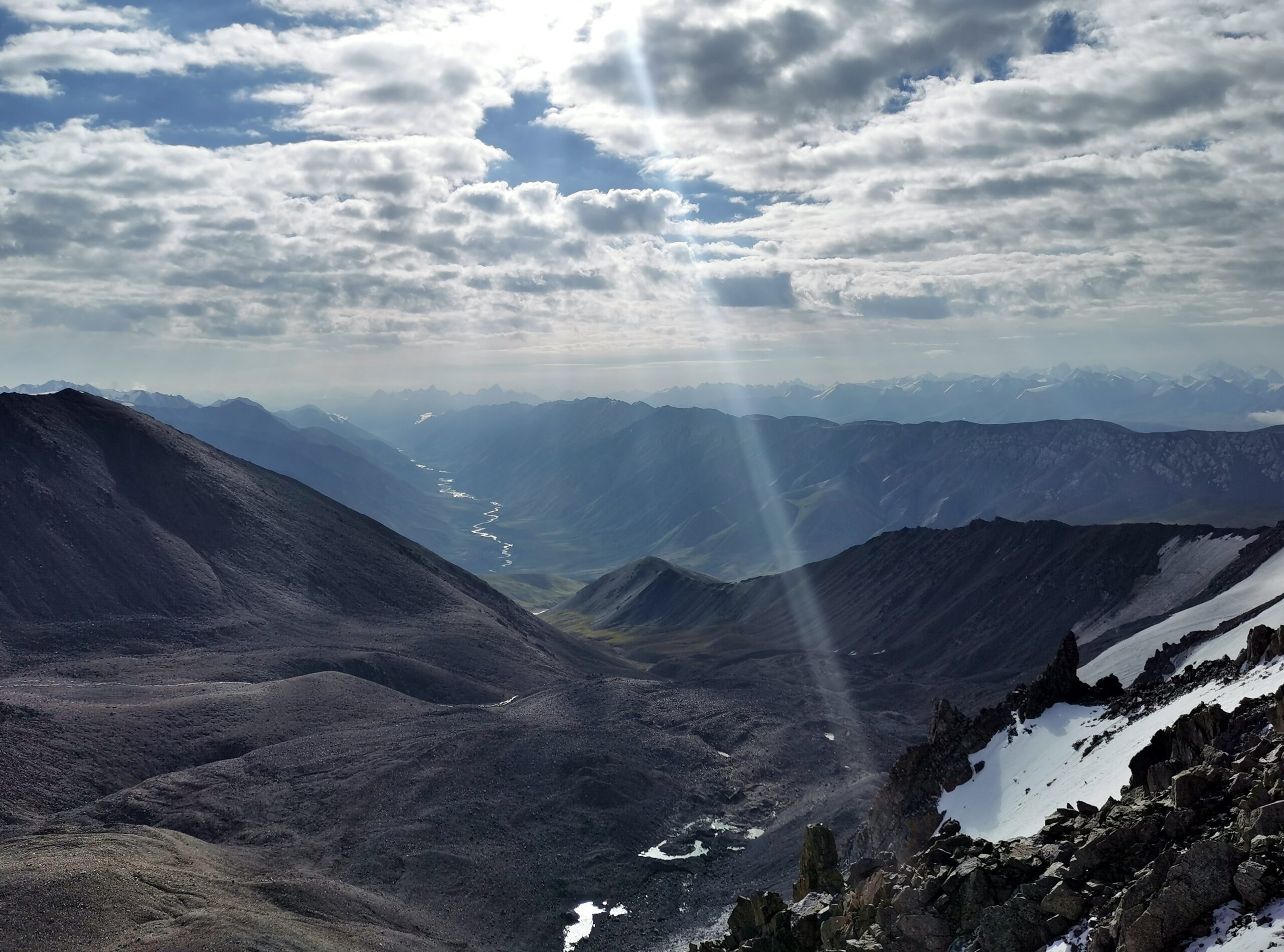
"Since my university days, I have been going on mountain hikes every summer. However, now my destination is the wild mountains of Asia, where there are no specially marked and maintained trails, and encountering people is rare. In contrast, European mountains are full of tourists as well as other signs of civilization," he emphasizes.
Mountain hikes require teamwork
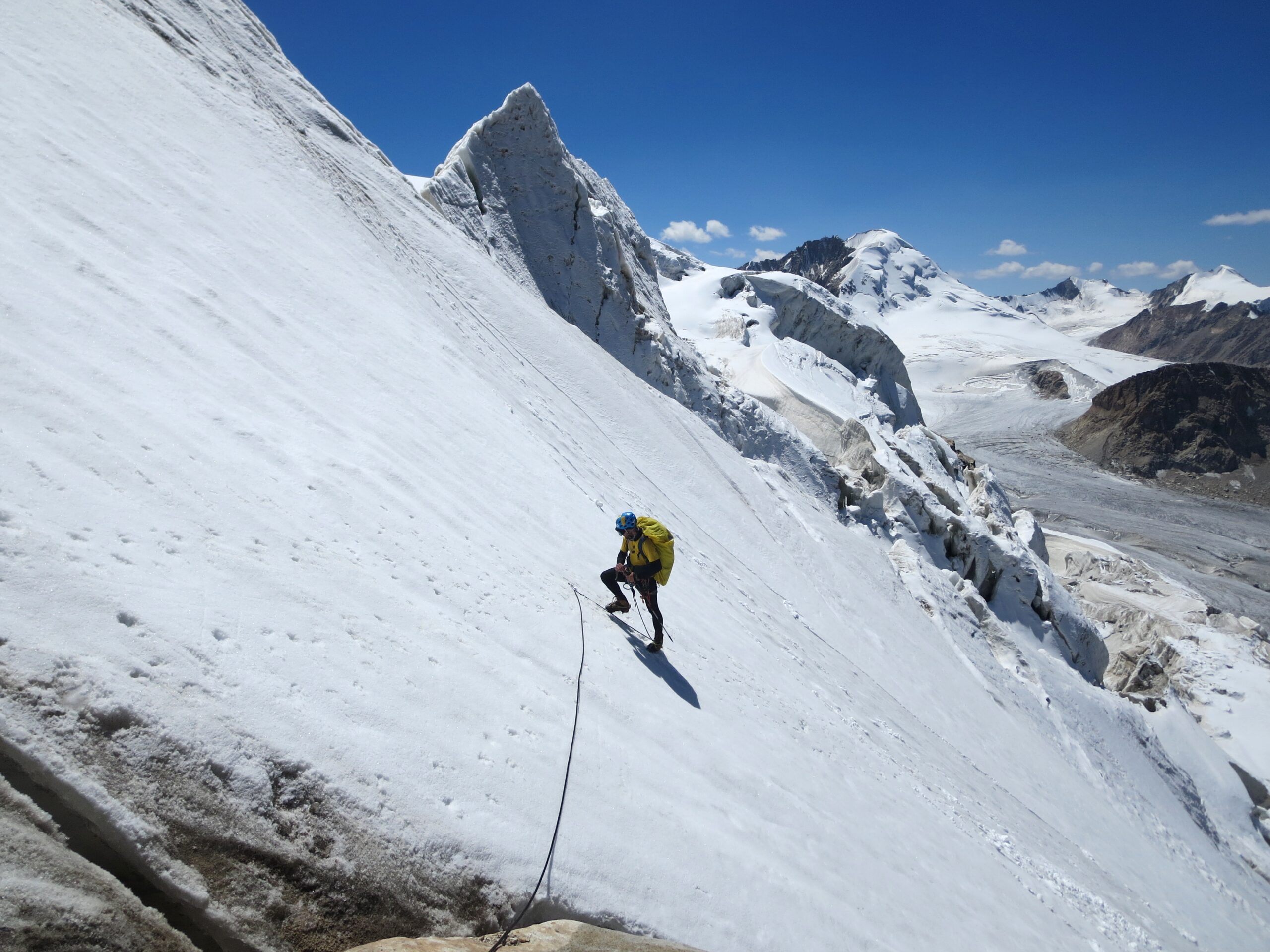
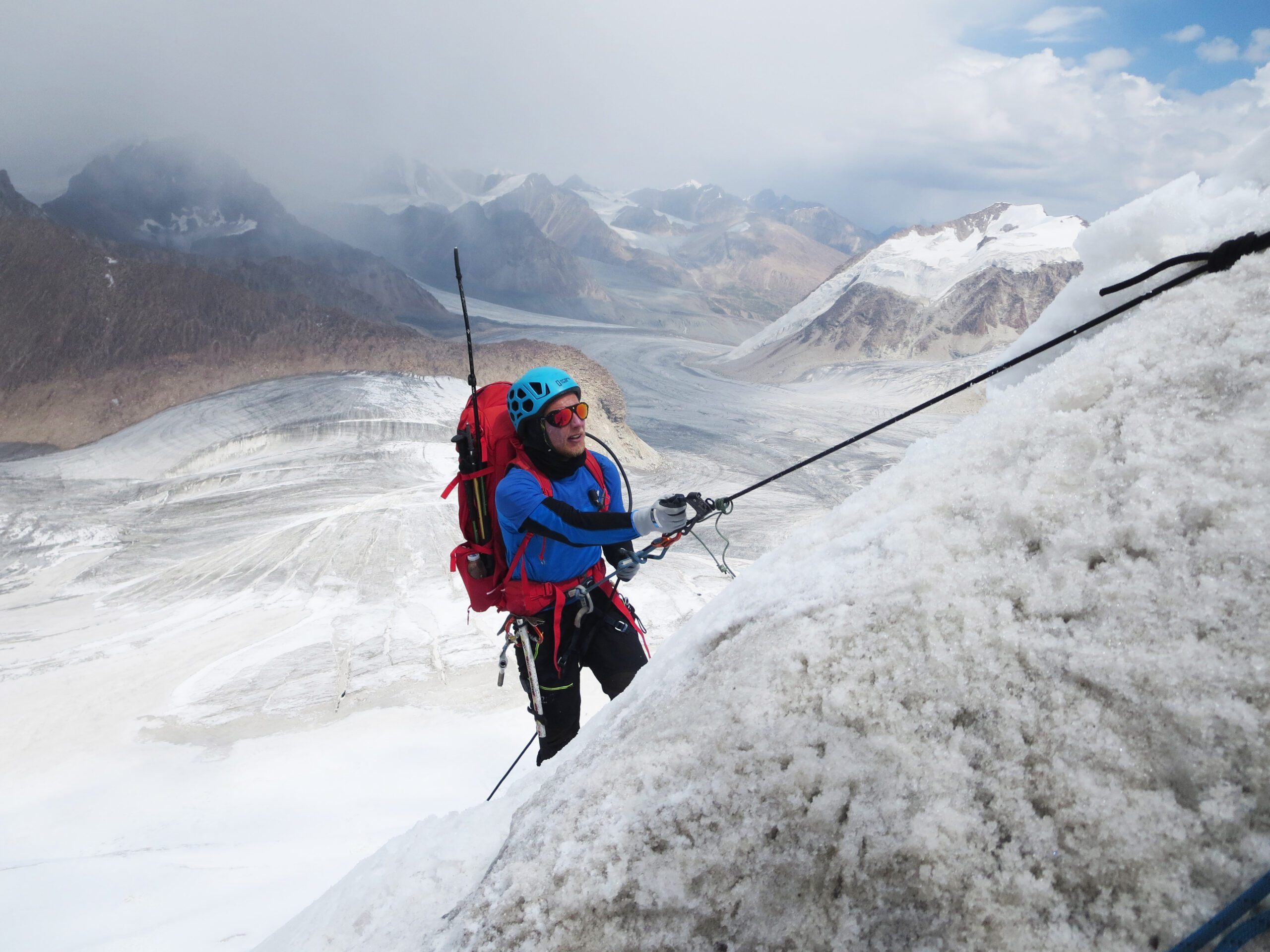
L. Marcinkus points out that he usually travels to the mountains with a group due to the usual dangers they may encounter. For example, when crossing glaciers, climbers tie themselves together with a rope. This helps to prevent a falling in case of an accident. In mountain hikes where there is no civilization, climbers spend more time, so when assembling a group, it is crucial to assess whether its potential members would get along.
"The optimal size for a group travelling to the mountains is 6 people. A group of this size moves faster and ensures safety. For example, during the hike, if one of the climbers is hit by a rock or cannot continue the journey for some other reasons, they need to be rescued, descended from the mountain, carried, or transported. This can be easily done by a group of 6 people," notes L. Marcinkus.
The VILNIUS TECH alumnus says that when travelling with his team, they bring necessary equipment to the mountains and cook warm meals every day – it is usually different types of porridge with cheese, meat, dried vegetables, and fruits. However, the amount of food consumed in the mountains decreases significantly. The daily ration is up to 650 grams of dry food, so after the trip, climbers return having lost 5-7 kg of body weight.
"One of the most important things when preparing for a mountain hike is physical fitness. After all, we carry mountaineering and other necessary equipment, and our backpacks usually weigh about 30 kg. We prepare for this for almost six months – strengthen our back, abdominal muscles, and legs. We train by running up hills, simulating what we will do in the mountains. However, our training is done without backpacks to protect our joints," says the alumnus.
According to him, many people don't even know that when climbing mountains, the body needs time to acclimatize to the changed environment. Travelling during the first few days is very difficult – it is accompanied by a headache, shortage of air, nausea, and insomnia. However, after a while, the body adapts, gets used to the altitude, which improves general well-being.
According to L. Marcinkus, the most interesting thing about climbing mountains is overcoming challenges – not personal ones, but those that arise for the whole team. After all, achieving the goal not for oneself but for the entire group is much more rewarding.
"During the last mountain trips, we climbed through completely unfamiliar trails. As a mountain traveller, I find it the most fascinating. In such cases, you have to use all your accumulated experience and rely on your colleagues. Having overcome all obstacles, I experience the joy of discovery. In the mountains, the hardest thing for me is when something doesn't go as planned. For example, two years ago, some team members got caught in a small avalanche and because of posssible dangers the hike came to a halt. It was quite frustrating. In such cases, it is essential to understand what could possibly put your life at risk," says the VILNIUS TECH alumnus.
In the mountains of Asia – a pass dedicated to VILNIUS TECH
According to L. Marcinkus, there is an unwritten rule in the mountains – climbers who first climb a pass can give it a name. However, this is extremely difficult to do. It is impossible to find all relevant information about passes, read reports of other climbers, or plan everything in advance. When climbing the passes for the first time, you are a discoverer and have to overcome challenges here and now.
The VILNIUS TECH alumnus also took advantage of the unwritten rule – he gave the name VILNIUS TECH to one of the five newly discovered passes.
"I can confidently say that our hike was exceptional. While travelling in the mountains, new passes are rarely found, but we managed to find and name five passes and five peaks. We had planned some names for the passes in advance, for example, the Summit of the Baltic Way. We decided to name one of the most challenging passes VILNIUS TECH – in honor of our university. When climbing, we had to use a lot of mountaineering techniques, choose a safe descent route, and rely on our engineering experience. Moreover, this name is also associated with the VILNIUS TECH Tourists Club. The experience gained there contributed a lot to me as a person. I can confidently say that it is precisely because of the club and its activities as well as the people I met there that I got involved in challenging mountain hikes," he notes.
During the 19-day hike in the V* difficulty category mountains through valleys and passes, the team carried 130 horizontal and 7 vertical kilometers with their 30 kg backpacks, hung 1.5 km of stationary rope ladders, and conquered 8 passes and 6 peaks.
On 5 passes and 5 peaks, as planned, no signs of civilization were found, so new Lithuanian names were given to them. Otherwise, it would be impossible to describe the route in the report.
During a 19-day mountain expedition of V* difficulty category through valleys and passes, the team carried their 30 kg backpacks across 130 horizontal and 7 vertical kilometers, hung 1.5 km of stationary rope ladders, and conquered 8 passes and 6 peaks.
On 5 passes and 5 peaks, as planned, no signs of civilization were found, so new Lithuanian names were given to them. Without naming them it would be impossible to describe the route in the report:
-
Snake Island Pass (2A, 4574m)
-
Dawn Pass (3A*, 4830m)
-
Oak Peak (3A alp., 4820m)
-
Baltic Way Summit (2B alp., 4910m)
-
Gabija's Peak (2A alp., 4755m)
-
VILNIUS TECH Pass (3A, 4665m)
-
White Bridge Pass (2A, 4672m)
-
Vilnius 700 Peak (2A alp., 4795m)
-
Thunder Peak (2A alp., 4760m)
- Žemyna's Pass (2A, 4610m)
Mountain expeditions are categorised from I to VI in terms of difficulty. Alpinists refer to category I-III expeditions as recreational or sightseeing. In these categories, climbing gear is often not required.
The difficulty of IV-VI category expeditions is impossible to overcome without alpine equipment.
Categories V and VI are referred to as sports’ expeditions by alpinists.
The complexity of the expedition is determined by its duration, route length, number of passes crossed, their technical difficulty, terrain features, slope steepness, lengths of technical sections and their traversal time, as well as common hazards.
Coordinates of VILNIUS TECH passes: N 41.886728; E 78.381201
Galerija