
• University
  • News and events

Announcing a new issue of the VILNIUS TECH Journal: ‘Journal of Environmental Engineering and Landscape Management’ (Vol. 31, No. 2)

September 13, 2023
The Journal of Environmental Engineering and Landscape Management is a peer-reviewed journal for the publication of original research on the environment with an emphasis on changes caused by human activities and international research towards sustainability.

Journal of Environmental Engineering and Landscape Management is a member of COPE (Committee on Publication Ethics). This is a prestigious membership that demonstrates that the University's journals adhere to the highest standards of publication ethics.

New issue of the VILNIUS TECH scientific journal, Journal of Environmental Engineering and Landscape Management (Vol. 31, No. 2), the editor-in-chief Assoc. Prof. Dr. Raimondas Grubliauskas presents the most prominent themes and the relevance of the research papers.

Effects of Different Types of Plants on Runoff Reduction and Suspended Solids Removal in Rain Garden
Researchers Chuan Li, Lingling Chen, Huan Li, Zimei Miao, Rui Yang, Lei Chu, Lingfeng Mao of Nanjing Forestry University, China, have conducted experimental studies on changes in garden vegetation and rainwater runoff rates in southern Jiangsu, China. The optimum sand-to-soil ratio is investigated, and different habitats of garden vegetation are observed. The method of simulating rainwater runoff was used to continuously monitor rain gardens. The results showed a reduction in rainwater runoff of up to 55% and average removal rates of 95% for drowning particles.
The article concludes with findings related not only to the selection of horticultural vegetation to reduce rainwater runoff in southern Jiangsu, but also to promote the effective development of the management and utilisation of rainwater resources in China.

Socio-economic and Ecological Adaptability Across South Asian Floodplains
Balakrishnan Thanga Gurusamy and Avinash Durgadas Vasudeo from Visvesvaraya National Institute of Technology (Nagpur, India) explore approaches to the Integrated Flood Management strategy of the World Meteorological Organization and look at the benefits of a balanced socio-economic and ecological transformation for the South Asian region. The impact of the distribution of flood hazards, Gross Domestic Product, flood risk, Net Primary Productivity, carbon dioxide emissions, and landscape heterogeneity on social, economic, and ecological adaptation is presented and analysed. Based on 500 years of flood topography, flood risk is projected considering different possible combinations of river floods, tidal waves, tsunami waves, storm surge and cyclonic rainfall, and climate-change-induced sea level rise. The projection results presented define different two-dimensional socio-environmental scenarios and allow the identification of the least adapted regions.

Optimal Germination Methods, Ornamental Plant Features, and Ex situ Conservation of Endemic Campanula grandis Fisch & C.A. Mey
In this study, Turkish researchers Gül Yücel and Kamil Erken aimed to investigate ornamental use, growth performance in natural habitats, generative production methods, and morphological and phenological characteristics of plants. The germination and growth performance of the seeds collected in the second year were compared with those of the seeds stored for one year. Seeds stored at 4 ° C for 3 months and then treated with 200 ppm GA3 showed the highest germination (76 %). GA3-treated seeds had the best germination rate, resulting in a shorter germination time. The ideal germination temperature was found to be 20 ° C. Campanula was found to be suitable for use as an ornamental plant in landscaping due to its long flowering period, vigorous second-year stem growth, and numerous large, flamboyant, blue-purple, and bell-shaped flowers.

Mesoclimatic Analysis of Non-precipitation Periods in Lithuania
In the paper, Vilnius University researchers Joana Ūselytė and Arūnas Bukantis present a climatic analysis of Lithuania's droughts, assessing their recurrence and trends from 1991 to 2020 using two criteria – when precipitation averaged <0.1 mm and <1 mm per day. The analysis shall focus on the typical atmospheric circulation in the mid-troposphere and at sea level. Between 1990 and 2020, the driest droughts occurred in the lowlands of central Lithuania, southern, and southern, south-western Lithuania (with daily precipitation <0.1 mm) and parts of eastern Lithuania (with daily precipitation <1 mm), while the least droughts occurred in the Samogitian uplands and parts of the Baltic uplands. Dry periods (without precipitation) were more frequent in the spring months, due to the larger number of days with anticyclonic circulation and strong anticyclones. In Lithuania, the increasing trend of rain-free periods of different durations, irrespective of the time of year, is mainly due to the Azores anticyclone ridge and anticyclones over northern, central, or eastern Europe.

Nitrogen Sequestration During Sewage Sludge Composting and Vermicomposting
VILNIUS TECH scientists Aušra Zigmontienė and Vaida Šerevičienė are studying the oldest and most natural form of recycling organic materials. Sewage sludge is a valuable material that accumulates a lot of nitrogen and phosphorus, which can contribute to improving soil quality. Optimal conditions for composting and vermicomposting are considered, such as the C / N ratio, pH, and moisture content of the medium. Experimental studies have shown that sewage sludge vermicomposting results in significantly lower ammonia emissions than conventional composting. Vermicomposting has a higher nutrient content, which is necessary to improve soil properties and microbiological processes and preserve a higher amount of total nitrogen compared to conventional composting.

VILNIUS TECH publishes 16 peer-reviewed University journals: eight journals are about physical sciences and technology fields, five in social sciences, and three are multidisciplinary. All journals are published using the Open Access model. As of 2018, all articles are published under the CC-BY 4.0 licence, allowing the academic community worldwide to access and use VILNIUS TECH's content for free.
 
Please note that when considering publishing in scientific journals, searching for a journal independently or receiving an invitation from a journal, it is essential to check the credibility of the journal, as the rise of open-access publishing has also led to the development of a form of fraud, known as predatory publishers or predatory journals. We invite readers and authors to remain vigilant. Authors are urged to be cautious and check the information before submitting their manuscripts, even to a well-known publication and publisher. Read here for more information on choosing a reliable journal to publish your articles and assessing the credibility and international recognition of the publisher and the journal.
 
For information on specific topics, we invite you to use the VILNIUS TECH subscription databases (e.g., environmental engineering). Currently, the VILNIUS TECH community has access to 34 licenced databases. Databases include e-books, scientific articles, conference proceedings, standards, statistical, analytical, and other relevant information for research and study. 
Access: The content of all databases can be accessed from a personal computer connected to the VILNIUS TECH computer network via VPN. When connecting to the VPN service, two-factor authentication (that is, confirmation via the mobile application or a call) is also required to ensure security.
Related news

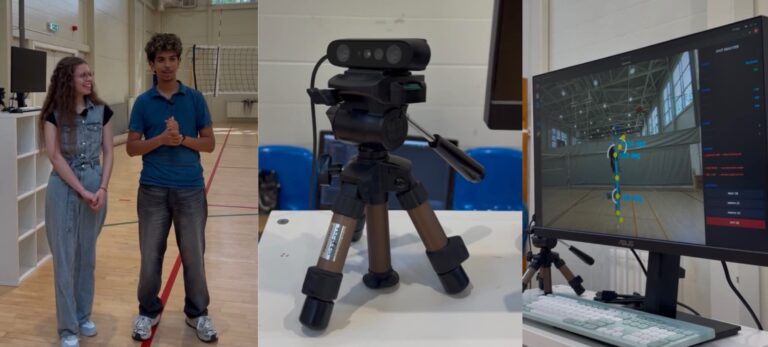
Interdisciplinarity in practice: how Electronics and Medical Engineering students developed a Human motion analysis system
Modern engineering solutions are increasingly created through collaboration between specialists from different fields. The university environment provides an opportunity to combine diverse competencies and develop solutions that would be difficult to achieve within the boundaries of a single discipline. Such collaboration was also at the heart of a bachelor’s thesis project in which VILNIUS TECH students Laura Venckutė (Faculty of Electronics) and Abderrazak El Aamrani (Faculty of Mechanics) combined expertise in electronics and medical engineering to develop a human motion recognition and evaluation system. From an Idea to Interdisciplinary Collaboration At the beginning of the project, students from the Medical Engineering and Electronics Engineering study programmes sought to address a problem relevant to both sports and rehabilitation: the lack of accessible systems capable of automatically evaluating human movements and providing immediate feedback. As the project authors point out, incorrect movements can reduce training effectiveness and increase the risk of injuries during rehabilitation, sports activities, or everyday tasks. For this reason, they decided to look for a technological solution that could help objectively assess movement quality. The idea emerged from previous projects and experience gained during their studies, while an important catalyst was the opportunity for collaboration proposed by their supervisors. From the outset, it was clear that the project would require expertise from different fields, as motion analysis involves not only developing a technical system but also defining meaningful criteria for evaluating human movement. [caption id="attachment_120707" align="alignnone" width="2048"] Electronics and Medical Engineering students developed a Human motion analysis system[/caption] The students brought different, yet closely interconnected and complementary competencies to the project. The Electronics Engineering student was responsible for computer vision, embedded systems, and system integration, while the Medical Engineering student contributed expertise in biomechanics and human movement assessment. Although responsibilities were divided according to individual areas of expertise, key decisions were made collaboratively. From the Initial Concept to a Functional System In the early stages, the team planned to develop a system capable of analysing a broader range of movement patterns and performing more advanced analytical functions. However, as the project progressed, technical limitations, available hardware resources, and the scope of the bachelor’s thesis had to be taken into account. As a result, some ideas had to be abandoned. According to the team members, no major disagreements arose during the project. Decisions were made by discussing possible alternatives, evaluating how well they aligned with the project objectives, and, whenever possible, testing different approaches in practice. When technical and medical requirements conflicted, the team sought solutions that best balanced project goals and implementation constraints. The final outcome of the project is a human motion recognition and feedback system based on a pose estimation algorithm designed for basketball shooting analysis. The system detects a person in real time, estimates body posture, evaluates shooting technique according to biomechanical criteria, and subsequently provides feedback to the user. The Value of Interdisciplinarity and Future Opportunities During testing, the system performed better than expected. It successfully analysed the movements of users of different heights and maintained reliable performance at distances of up to 12 metres. According to the students, not only did the technical results exceed expectations, but the collaboration process itself also proved highly successful. In their view, such a project could theoretically be completed by a specialist from a single field. In practice, however, this would be difficult and inefficient. The project required both expertise in electronics and an understanding of human movement analysis. Without competencies from both fields, considerably more time would have been needed for learning unfamiliar topics and identifying appropriate solutions. Looking ahead, the students see opportunities to further develop the project by improving system stability, optimising resource usage, expanding the range of supported movement patterns, and increasing motion recognition accuracy. Although they are not yet certain whether they will continue working in this specific area, they hope to further deepen their expertise in related fields of technology and engineering. Supervisors’ Insights: Interdisciplinarity as a Foundation of Future Engineering The thesis supervisors emphasise that the nature of the project itself required collaboration across disciplines. However, the greatest value of the project lies not only in the technical solution that was developed, but also in the students’ ability to work together effectively. Professor Kristina Daunoravičienė, lecturer in the Medical Engineering study programme, notes that developing a human posture recognition and evaluation system requires both an understanding of human movement and biomechanics, as well as the ability to create a technical system capable of collecting, processing, and presenting information to the user. „The need for different knowledge and competencies made this topic an excellent platform for collaboration between Medical Engineering and Electronics Engineering students. Such projects foster not only technical solutions but also the ability to understand the logic, limitations, and priorities of other disciplines,“ says Prof. Dr Kristina Daunoravičienė. Although the students were initially unfamiliar with one another and came from different engineering backgrounds, a shared goal quickly became the foundation of successful cooperation. According to the supervisor, Medical Engineering contributed the perspective of human movement assessment and result interpretation, while Electronics Engineering provided expertise in system architecture, prototyping, and optimisation. According to Prof. Dr K. Daunoravičienė, the most important outcome of the project is not only the developed prototype and its comparison with the Xsens motion analysis system: „Equally important are the competencies of collaboration, communication, trust, initiative, and the ability to learn from one another. These are the qualities that allow good ideas to become real, functioning solutions.“ Associate Professor Dr Vytautas Abromavičius of the Faculty of Electronics also points out that in the era of artificial intelligence, technical expertise alone is no longer sufficient. Clear communication, the ability to understand specialists from different fields, and working together towards a common goal are becoming increasingly important. „This bachelor’s thesis demonstrated that our students communicated exceptionally well and were able to explain specialised professional terminology in a simple and understandable way. This mutual understanding enabled them to effectively combine knowledge from different disciplines and achieve an excellent result,“ says Assoc. Prof. Dr Vytautas Abromavičius. According to him, the need for interdisciplinary projects in modern engineering continues to grow. Every real-world product developed for the market consists of multiple interconnected components; therefore, a broader understanding of the problem leads to better product applicability and a more complete final outcome.
More
VILNIUS TECH Professor A. Čenys Represents Baltic States at Google Leadership Summit
Prof. Antanas Čenys, a prominent researcher at VILNIUS TECH and the SustAInLivWork project, participated by personal invitation from Google in the exclusive Google for Education Higher Education Leader Series EMEA in London. Prof. Čenys was the only AI and cybersecurity expert from the Baltic countries to be personally invited to this high-level summit. The exclusive event brought together higher education leaders, technology pioneers, and innovation stakeholders from across Europe, the Middle East, and Africa. The summit focused on shaping the future of Artificial Intelligence, digital transformation, cybersecurity, and driving responsible innovation within the global academic and industrial landscapes. The insights and discussions from the London summit strongly resonate with the core mission of the SustAInLivWork project: strengthening Europe’s capacity to develop, deploy, and scale trustworthy AI solutions while simultaneously building the advanced skills, critical infrastructures, and innovation ecosystems required for a sustainable digital future. Through SustAInLivWork, VILNIUS TECH and its partners are actively delivering: An International AI Cluster: bridging the gap between research excellence, industry, and public sector stakeholders; Advanced Innovation Services: driving AI and data-driven solutions for various sectors; AI Skills Development: establishing lifelong learning opportunities and specialized training; Cross-Regional Collaboration: accelerating practical AI adoption and ensuring positive societal impact. The summit also underscored the rapidly growing importance of cybersecurity as a fundamental pillar for secure AI deployment. This focus perfectly aligns with ongoing initiatives led by VILNIUS TECH, including specialized cybersecurity skills development programmes supported by Google.org, aimed at strengthening digital resilience and cyber competence across Europe. As Europe accelerates its comprehensive AI transformation, structured collaboration between universities, industry leaders, policymakers, and major technology providers becomes increasingly paramount. SustAInLivWork and VILNIUS TECH remain committed to contributing to this evolutionary journey by building strong bridges between cutting-edge research, thriving innovation ecosystems, and sustainable societal progress.
More