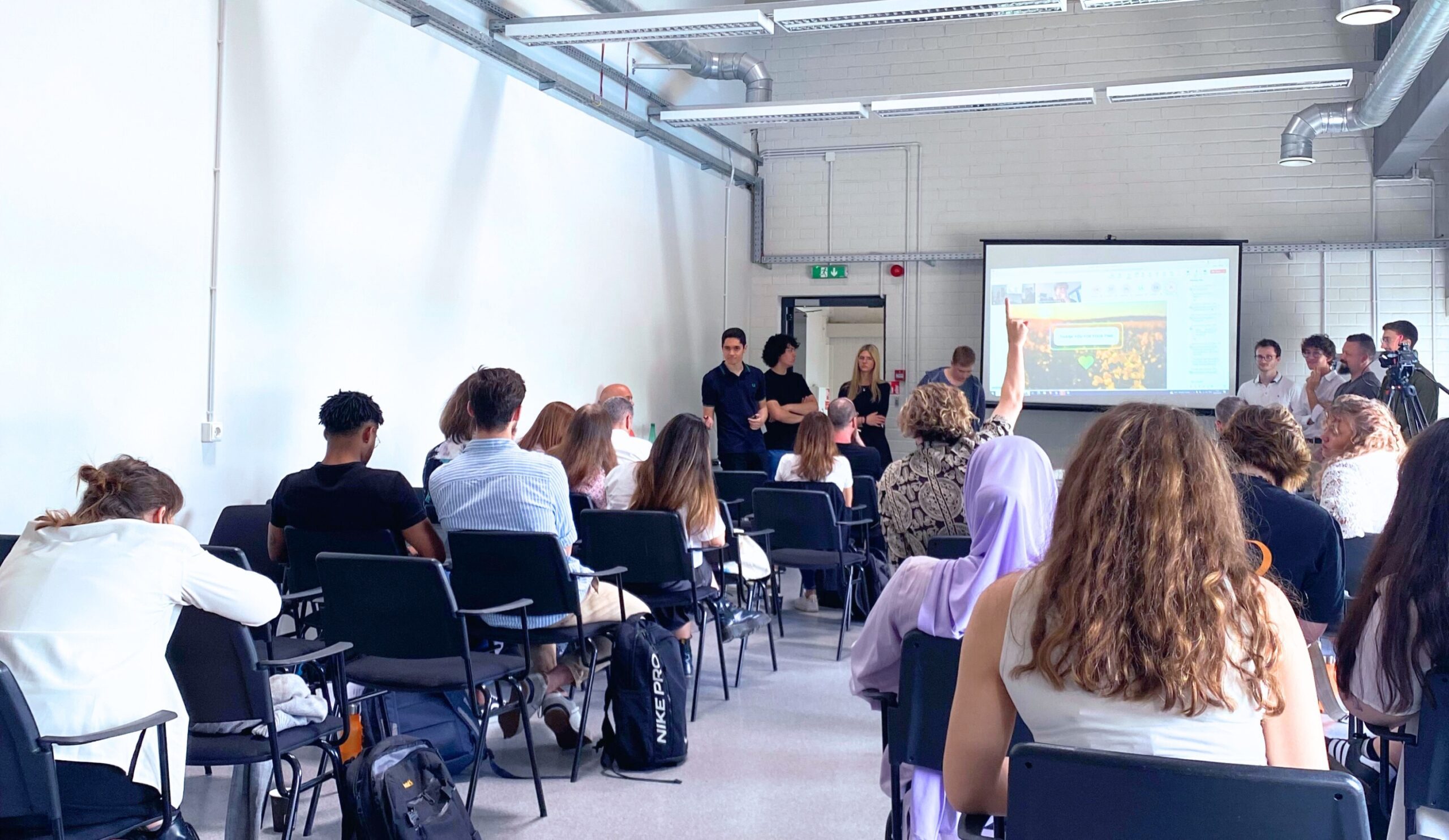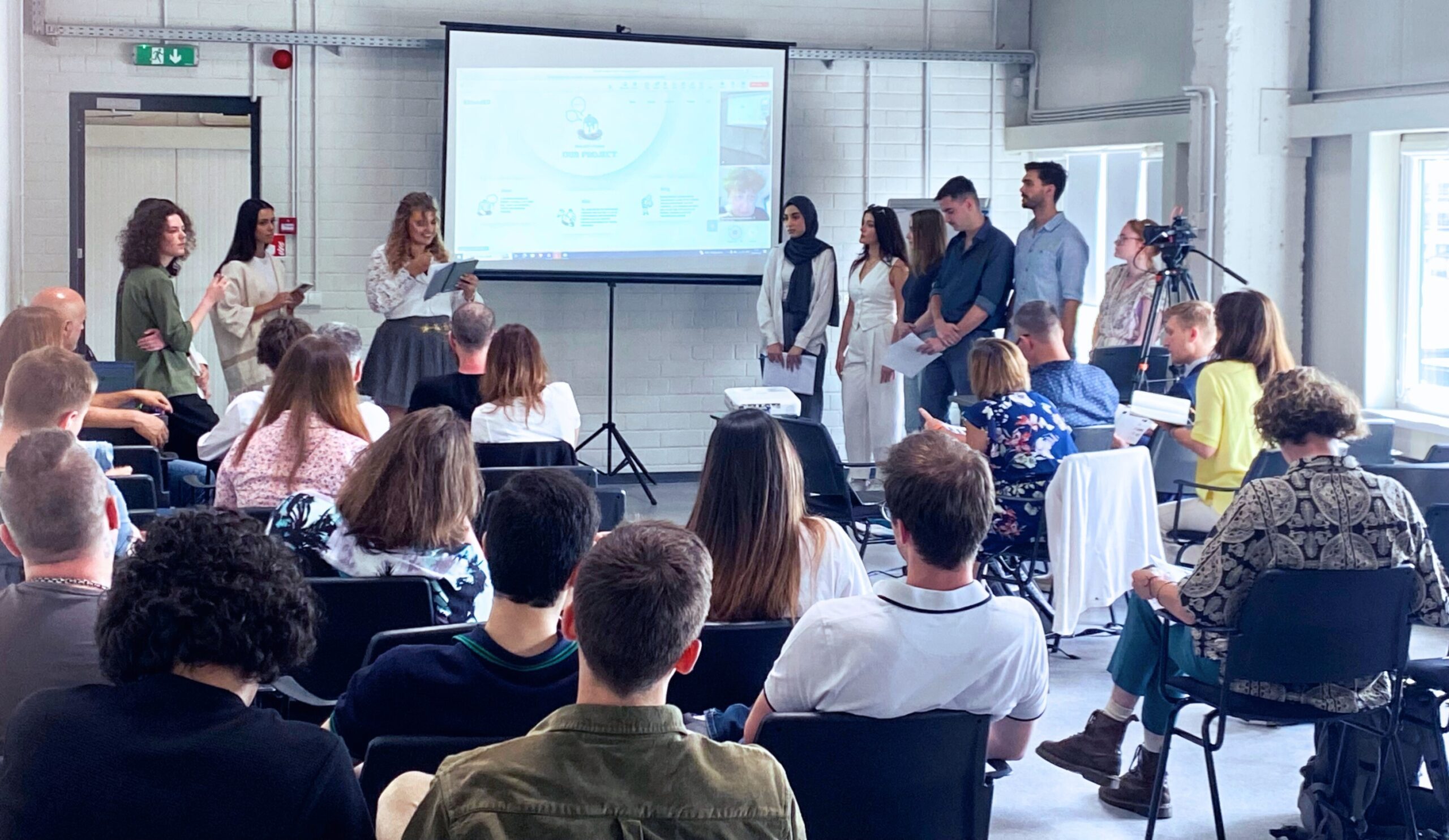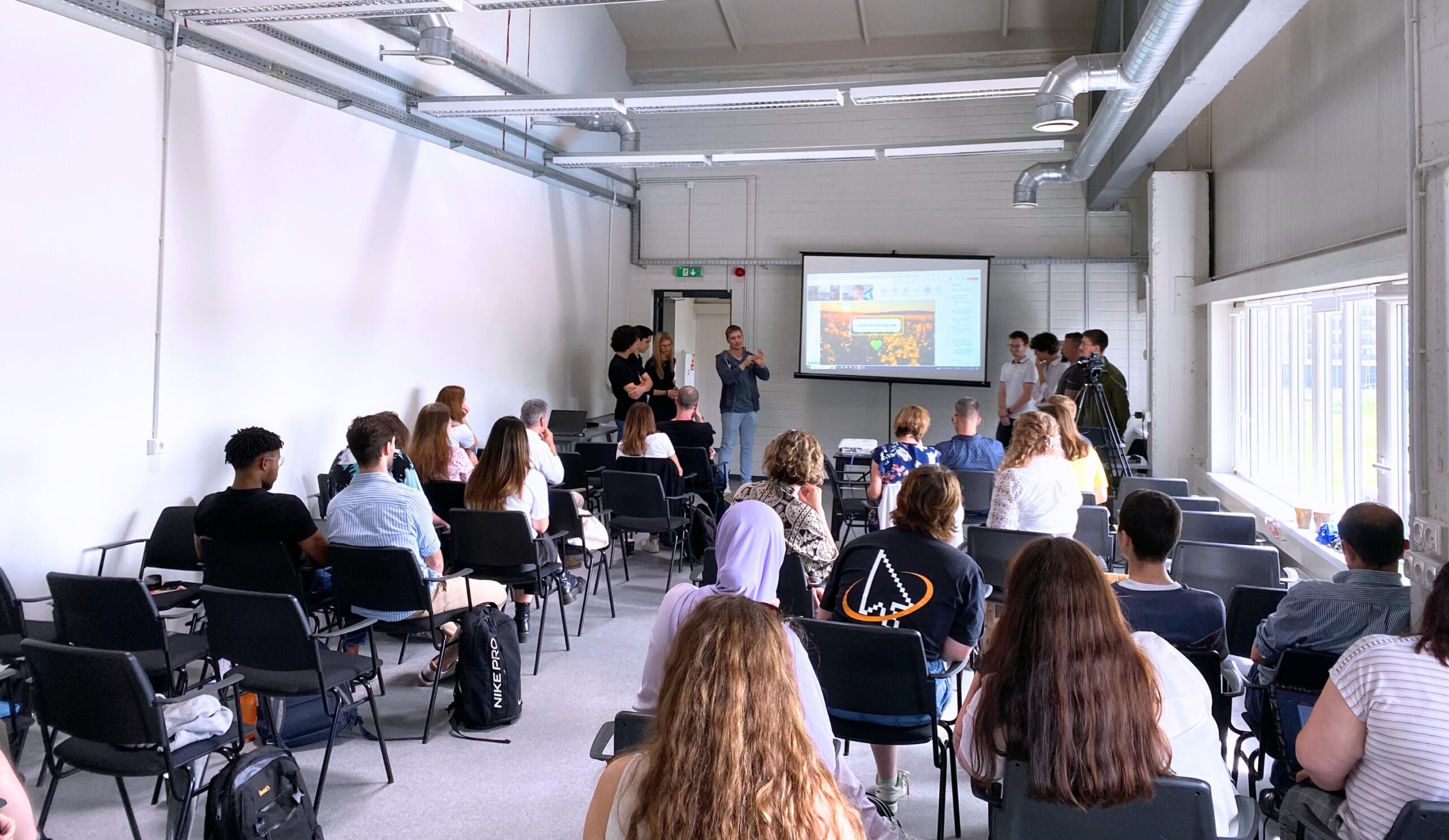
From June 17th, international BlendEd Teams converged at Vilnius Gediminas Technical University (VILNIUS TECH) for the final week of the programme, culminating in a showcase of innovative solutions.
Since February 2024, students from ATHENA partner universities, along with students from VILNIUS TECH, have formed international teams, each addressing unique challenges posed by their mentors and companies. The project began with a physical meeting at the University of Maribor, followed by remote collaboration, allowing each team to progress at their own pace. The teams later reconvened at VILNIUS TECH for final face-to-face sessions. During the concluding pitch event held at VILNIUS TECH “LinkMenų fabrikas,” these student teams presented their innovative solutions to their mentors.
The Final Pitch Event: Showcasing Innovative Solutions
During the final pitch event, three student teams from Lithuania, Austria, Belgium, Germany, Portugal, and the UK presented innovative solutions.
The “Creative Therapy team” developed interactive physiotherapy equipment to assist elderly individuals with mobility issues. They conducted extensive research and created games designed for elders with movement disorders and colour vision deterioration, which received positive feedback from mentors and professors. These designs and prototypes are set for further advancement by IT students.
The "BlendEd4Future team” aimed to structure and enhance the BlendEd Programme for future years. Their key deliverables included rebranding the BlendEd mobility programme and developing web and mobile applications to manage the programme. They focused on attracting projects and students, supporting documentation for host universities, building a reputation among partner universities, and enabling a platform to manage information for future editions. Additionally, they aimed to energise the alumni network of the 13-year-old BlendEd mobility programme.
The "FarmIT 2.0" team continued from last year's BlendEd mobility project "FarmIT." They aimed to develop a low-cost digital assistant for farmers focusing on sustainability and ethical practices. The team, comprising students from electrical engineering, IT, business, and design, created a minimal viable product (MVP) that integrates systems for water management, and fertigation and provides visual maps showing farm production, water, and fertiliser usage.
On the final day of the meeting, students and mentors participated in a reflection session to review and discuss the projects together.
The agenda for the BlendEd Closing Meeting also featured tutoring sessions, collaborative team activities, and extensive preparations for the final presentations. Students have also enjoyed a variety of social events in Vilnius, enriching the cultural experience of the programme.
Dr Vytautas Abromavičius, Vice-Dean of the Faculty of Electronics at VILNIUS TECH, underscores the broader impact of BlendEd on students, “The programme has far surpassed my expectations. It has provided students with critical skills for their future careers, when collaborating with international teams to provide solutions for companies, thereby enriching the learning process through diversity.”
What is BlendEd?
BlendEd is an innovative course that combines the best of online and offline education, offering students a unique, flexible, and comprehensive learning experience embedded in an international and multidisciplinary learning environment. It is a testament to ATHENA’s dedication to modernising education and equipping students with the skills needed to thrive in today’s dynamic world.
VILNIUS TECH is part of the ATHENA European University Alliance, which constantly offers mobility and development opportunities for students and staff. The ATHENA alliance partners are universities in ten European countries (Greece, Italy, Poland, Lithuania, Portugal, Slovenia, Spain, France, Germany, and Ukraine).
Stay in tune with ATHENA news – sign up for the newsletter, follow ATHENA on social media, and regularly check our website for more.
* Funded by the European Union. Views and opinions expressed are however those of the author(s) only and do not necessarily reflect those of the European Union or the European Education and Culture Executive Agency (EACEA). Neither the European Union nor EACEA can be held responsible for them.
Galerija