Building Sustainable Student Organisations: The ATHENA BIP Programme at VILNIUS TECH

November 7, 2025
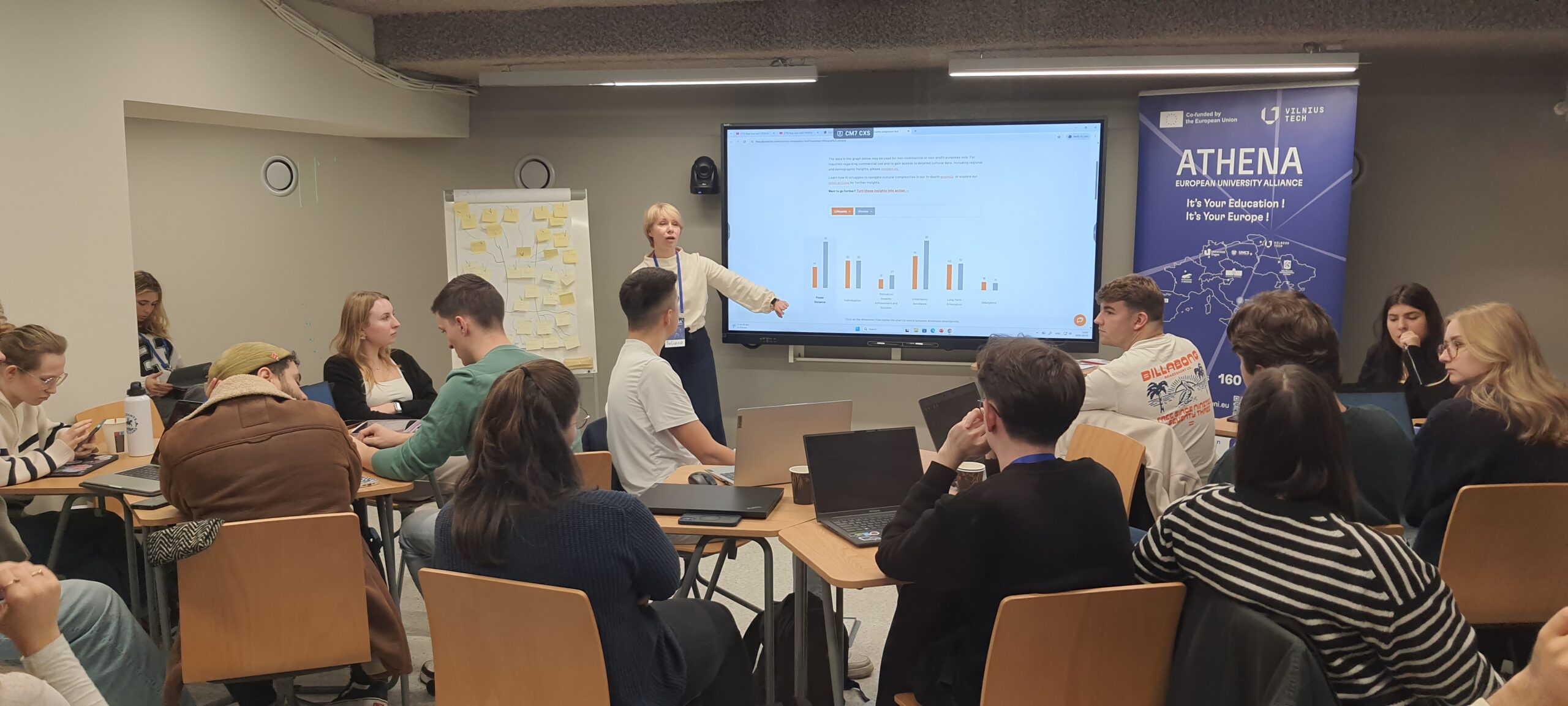
From October 13–24, VILNIUS TECH hosted the ATHENA European University Blended Intensive Programme (BIP), “Sustainable Student Organisations,” bringing together students and lecturers from 8 of the alliance’s partner countries. The programme’s goal was to provide participants with the knowledge and practical skills to help build sustainable, inclusive, and resilient student organisations in European universities, and to propose solutions that would enhance student activities within the ATHENA university alliance.
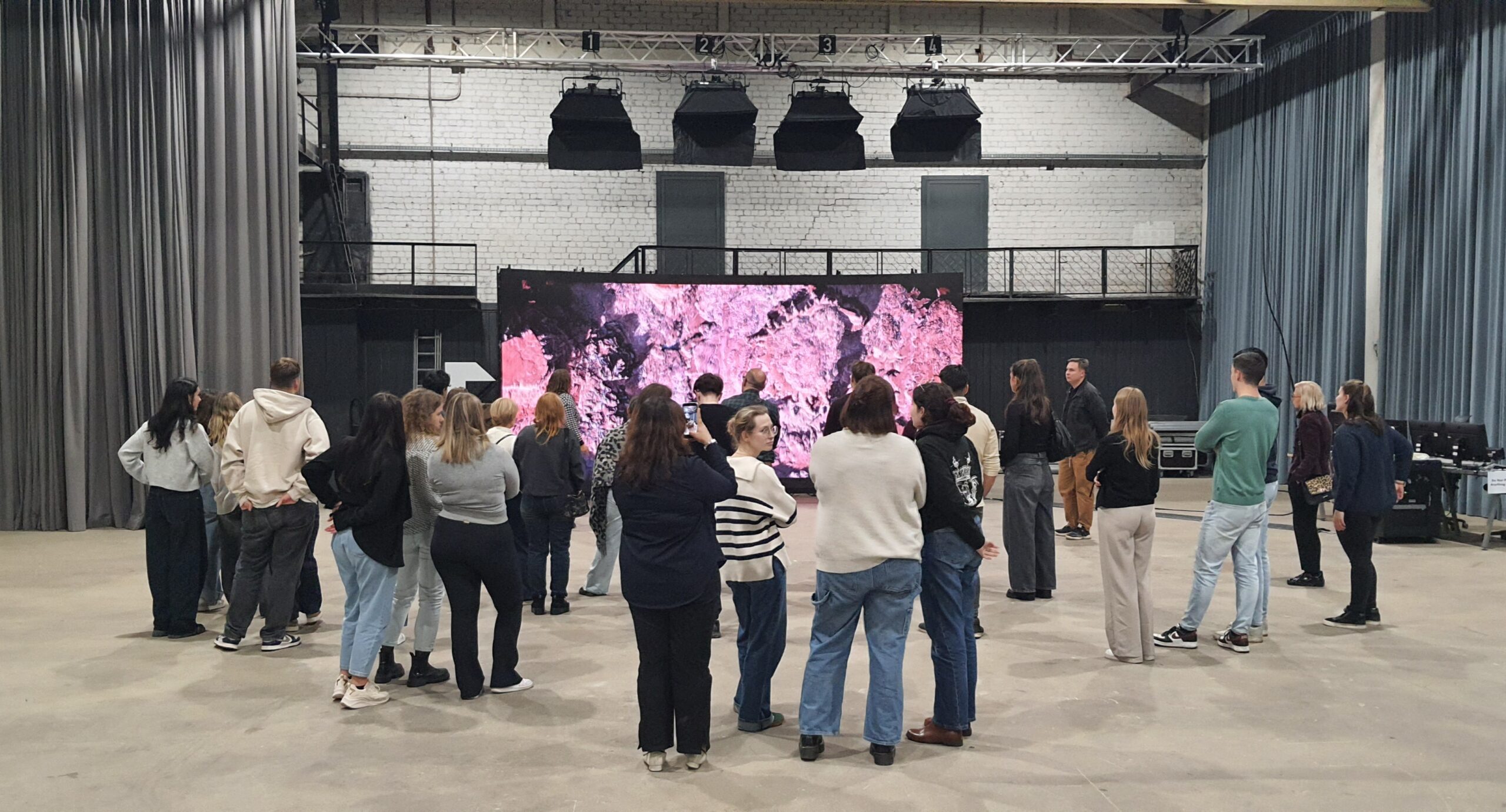
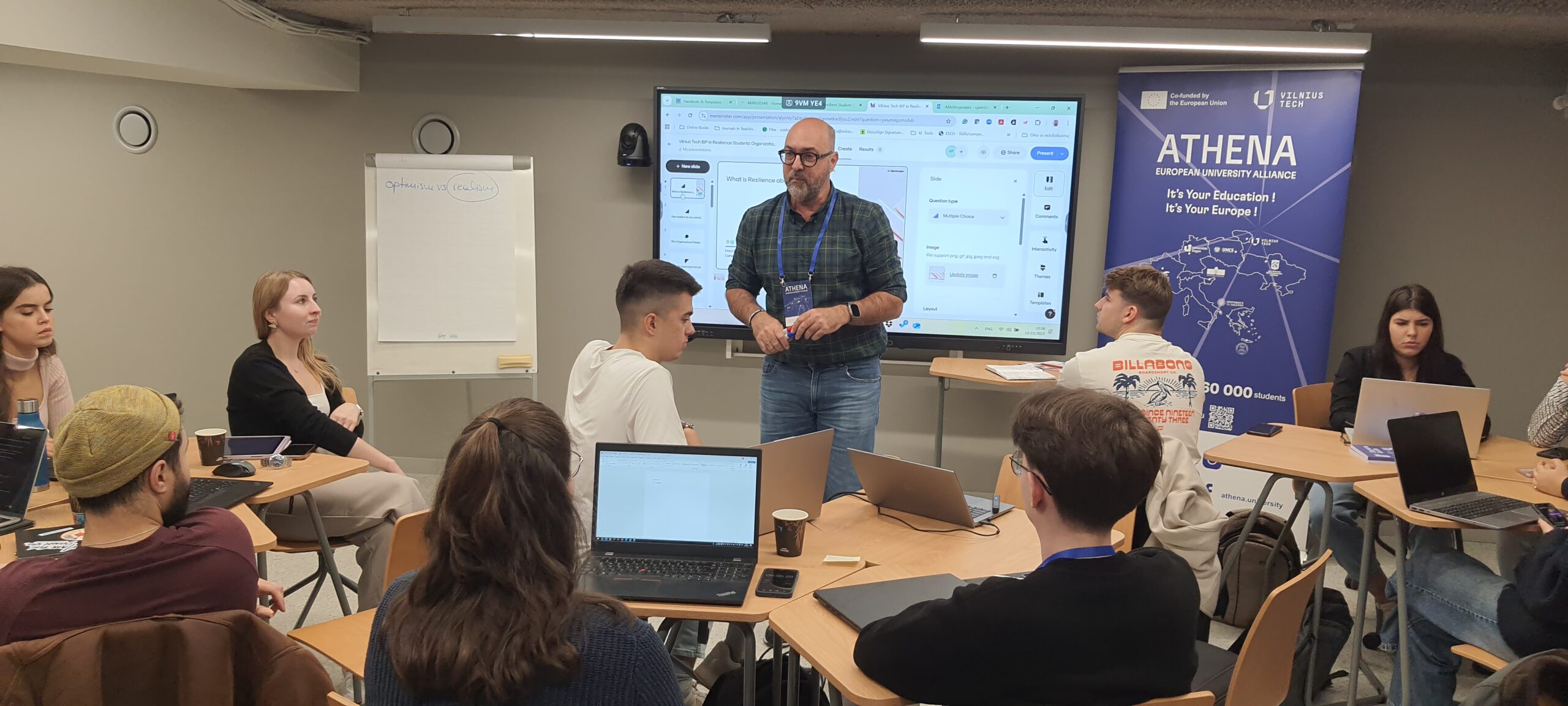
Throughout the two-week programme, students participated in lectures, team challenges, and cultural activities. The first week was held remotely, while the second took place in-person in Vilnius at the VILNIUS TECH Sustainability Hub.
Participants delved into key questions: how to ensure the motivation of organisation members and the continuity of leadership, what knowledge is essential for managing international and multicultural teams, and they honed their skills in collaboration and strategic planning.
“Together, we looked for solutions on how student organisations can evolve, and how to strengthen the engagement, continuity, and impact of the ATHENA alliance’s student organisations. The teams created action plans for the near future, and I am sure all participants will agree—this was a meeting where new ideas and meaningful connections were born, which are crucial for strengthening the ATHENA student community,” said ATHENA coordinator Dr. Asta Radzevičienė, sharing her impressions of the week.
The main challenge was coordinating teams from different cultural backgrounds and with varying levels of experience, which was successfully overcome through creative workshops, team challenges, and consistent support from mentors.
Several participants also shared their impressions: “The most memorable part was the collaboration with representatives from other countries’ student unions—it was interesting to compare how differently organisations operate in various universities”; “I realised that leadership is not about giving orders, but about the ability to help others make their own decisions. This experience has encouraged me to place more value on strengthening team bonds, so I plan to improve communication within my team. What surprised me the most were the cultural differences—they not only enriched our collaboration but also taught me to be more open to different ideas.”
Programmes like this provide students not only with academic knowledge but also with practical experience that fosters leadership, teamwork skills, and international cooperation. Participants learned to transform an idea into long-term organisational change. Many new ideas were generated, and meaningful collaborative relationships were established during the programme. The teams developed action plans for the future, which will be presented to the ATHENA Coordination Board.
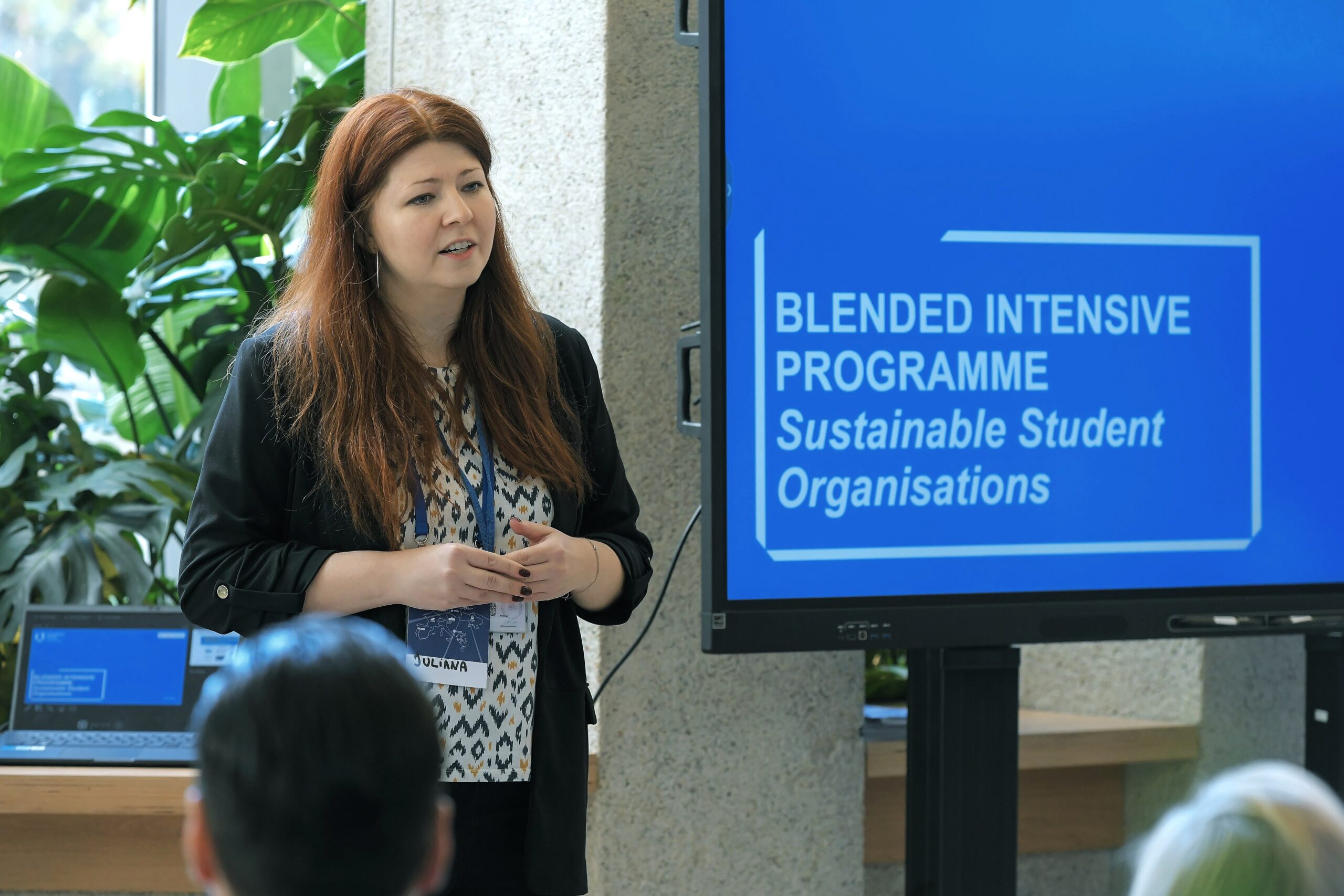
The programme’s lecturers and mentors included Prof. Dr. Renata Korsakienė, Assoc. Prof. Dr. Asta Radzevičienė, Dr. Juliana Smirnova, and Dr. Paulius Šūmakaris (VILNIUS TECH), as well as partners from the Université d’Orléans (France), Igor Sikorsky Kyiv Polytechnic Institute (Ukraine), and the Hellenic Mediterranean University (Greece). The programme was organised by the VILNIUS TECH Faculty of Business Management and the International Relations Office.

Galerija
Related news

New doctoral dissertation
VILNIUS TECH Library invites you to follow the published new dissertations. The dissertation „Research and application of biofiltration materials in the purification of biogas from hydrogen sulfide“ prepared at VILNIUS TECH by Kamyab Mohammadi. The dissertation was prepared in 2022–2026. Scientific consultant – Assoc. Prof. Dr Rasa Vaiškūnaitė. The dissertation was defended at the public meeting of the Dissertation Defense Council of the Scientific Field of Environmental Engineering in the Aula Doctoralis Meeting Hall of Vilnius Gediminas Technical University at 10 a.m. on 15 June 2026. This dissertation analyzes the removal of hydrogen sulfide (H₂S) from biogas via biofiltration. The study addresses one of the major challenges in biogas utilization, effective H₂S removal, since this compound is toxic and corrosive, and significantly reduces the operational efficiency and service life of biogas energy systems. The main object of the research is biofiltration materials intended for hydrogen sulfide removal from biogas: biochar produced from sewage sludge, cellular lightweight concrete (CLC) waste, and polyurethane foam (PUF). The doctoral dissertation aims to increase the efficiency of hydrogen sulfide removal from biogas and to enhance the operational stability of the biofilter by applying physically and chemically modified as well as unmodified waste-derived materials within the biofiltration process. The dissertation consists of an introduction, a literature review, chapters on methodology and results, general conclusions and recommendations, and lists of references and the author’s publications related to the dissertation topic. The Introduction presents the research problem and its relevance, describes the research object, formulates the aim and objectives, outlines the research methodology, scientific novelty, and practical significance of the results, and states the defended propositions. The First Chapter reviews biotechnologies for hydrogen sulfide removal from biogas, with particular emphasis on biofiltration mechanisms, the properties of biofilter packing materials, and the key factors determining process efficiency. The Second Chapter describes the experimental methodologies used to select biofiltration materials, determine their physicochemical and adsorption properties, inoculate and cultivate microorganisms, evaluate hydrogen sulfide removal efficiency, and the mathematically model the biofiltration process. The Third Chapter presents the results of theoretical and experimental investigations of innovative filtration materials, revealing the relationship between their properties and modification with microbial establishment, biofilm formation, and filter performance in hydrogen sulfide removal, and compares experimental results with mathematical modeling outcomes. Eight scientific papers related to the dissertation topic have been published: two in Web of Science-indexed journals with an impact factor, one in a Web of Science-indexed journal without an impact factor, four in other internationally indexed journals, and one in a conference proceedings volume indexed in the Scopus database. Seven presentations on the dissertation topic were given at national and international scientific conferences. Doctoral dissertation readers can search via VILNIUS TECH Virtual Library.  
More
€75,000 Funding Opportunity for Women-Led Deep Tech Startups
Women-led deep tech startups are invited to apply for the European Union-funded "Women TechEU 2" program. This initiative aims to strengthen women's entrepreneurship in the technology sector, foster innovation, and help promising startups prepare for further growth and attract additional funding. Selected participants will receive a €75,000 grant and the opportunity to take part in a six-month tailored business development program. During this period, startups will be provided with mentoring, consulting, and training services designed to accelerate business growth and enhance competitiveness in the international market. The total budget for the "Women TechEU 2" program is €12 million. The plan is to fund 160 women-led startups from across Europe. Application Process The application process for the new call consists of two stages. First, applicants must submit an application for the Eligibility Strand to verify whether the startup meets the program's requirements. Applicants deemed eligible will then be invited to submit a Full Proposal. The eligibility assessment stage began on June 1, 2026. Applications are accepted on a rolling basis, with evaluations conducted weekly – the weekly submission deadline is every Tuesday by 18:00 (17:00 CEST). The first deadline is June 30, 2026, and the final deadline is July 13, 2027. Applicants will receive their eligibility assessment results no later than one week after the respective submission deadline. Who Can Apply? The program is designed for women-led, early-stage deep tech startups. To be eligible for funding, the following conditions must be met: At least one founder or co-founder of the startup is a woman; A woman holds a top-level executive position (CEO, CTO, or equivalent); Women hold at least 25% of the company's shares. Program Objectives The "Women TechEU 2" program aims to: Promote women's entrepreneurship in the deep tech sector; Help innovative startups scale up and attract additional European Union funding; Strengthen European innovation ecosystems; Support the development and commercialization of new technologies. Potential applicants are encouraged to review the application guidelines in advance and avoid waiting until the final deadline to submit their proposals. More information can be found here: https://womentecheurope.eu/active-calls/
More