Scientists excel at collecting and publishing data. However, both in Lithuania and globally, the scientific community struggles to establish connections with other segments of society and build trust-based relationships. Therefore, citizen science and the inclusion of non-scientists in the research process are ways to bridge this gap.
Anyone can get involved
It might seem that only people with specific education participate in citizen science projects. However, the reality is quite the opposite: there are no age restrictions, and anyone with any level of knowledge or experience can participate. Schools, organizations, or individual science enthusiasts engage in various citizen science projects.
For example, the Citizen Science Center collaborates with the VILNIUS TECH Sustainability Center and monitors results in order to achieve sustainability development goals. Some projects require special tools or instruments, often simple ones that can be created by participants. Nevertheless, most projects only require a computer or smartphone.
This topic is also discussed by the ATHENA scientists from the European University Alliance. Public events such as "ATHENA Talks" bring together scientists from around the world for scientific discussions.
Like in any scientific project, all citizen science projects must adhere to certain scientific criteria; otherwise, it would not be considered scientific. This requires comprehensive methodological preparation, appropriate data collection techniques and strategy how they will be presented to the public. Project participants are usually trained through online tutorials, video materials, and live seminars.
Ordinary citizens even discover planets
What does it take for a citizen science project to be considered successful? Active and continuous communication between scientists and project participants is essential. This means that citizens inform the project team when they notice deviations from the parameters defined by scientists. This was greatly illustrated by the instance when a citizen-scientist discovered a new exoplanet.
Citizen-scientists examined publicly available data from NASA. Professional astronomers use algorithms to automatically scan tens of thousands of data points from stars. However, no matter how sophisticated the algorithms are, they cannot find everything. Therefore, citizen-scientists were enlisted to visually inspect data captured by a telescope.
In 2020, one of the citizen-scientists noticed changes in the brightness of stars, which led to the assumption of a new planet's discovery, which was then brought to the attention of the scientific team. To confirm the existence of the planet, scientists conducted long-term observations over the following years, which confirmed the hypothesis. The time and data analysis contributed by the citizen-scientist led professional scientists to new knowledge.
In the near future – even more extensive public involvement in science
Evaluating the situation in Lithuania, it is evident that the attitudes of both scientists and ordinary residents towards active participation in scientific activities are changing. The system of science financing and popularisation is also changing. Together with the team of scientists from Kaunas University of Technology, we explored the beginnings of citizen science and factors affecting it. This, in turn, prompted the search for ways to unite organizations and scientists who believe in citizen science ideas. As a result, the Citizen Science Association was established.
Of course, citizen science will never replace traditional science because conducting research requires not only specialized knowledge but also constant coordination and financial resources. However, the importance of citizen science is emphasized, as relying solely on the efforts of scientists and sophisticated algorithms will not be enough to solve widespread problems.
Citizen Science Centres either already exist in Lithuania and other EU countries or are in the process of being founded. The Citizen Science Center collaborates with the VILNIUS TECH Sustainability Center, which possesses the Integrated Sustainability Laboratory. The establishment of these centres is funded by the Economic Revitalization and Resilience Enhancement Plan 'New Generation Lithuania' and the state budget. It is expected that through collaborative activities, institutions will transition to more inclusive, open, and democratic science and innovation management.
Building resilience to 'misinformation'
Citizen science, in addition to assisting scientists, contributes to broader public education by actively involving residents in the demonstrations of the principles of scientific activity: how, when, and why data is collected. It also shows the procedures followed and the time it takes to reach various conclusions.
I particularly notice the significant benefit of citizen science in educating children. Adults are not easily swayed from their beliefs, but by showing scientific principles to children, they are likely to grow up more critical and resistant to pseudo facts.
A considerable amount of mistrust in science is caused by a lack of understanding of how scientific research works and how the quality of research is evaluated. Various interpretations presented in the public space also significantly contribute to this. Some media channels make great efforts to provide accurate and verified information to the public, while others manipulate research results or interpret them incorrectly. Therefore, the public should be educated in critical thinking and obtaining those skills, which participation in citizen science projects can contribute to.
Citizen science is not limited to involving citizens in ongoing research but also provides them with an opportunity to raise relevant questions themselves, formulate scientific problems and outline future research directions with scientists. This way, changes can be initiated by society itself. This does not mean that the process of scientific research is entirely handed over to citizens, but it is one way for science to respond to the needs of society.
A transformation is currently taking place. The vision is clear – in the future, science will be open and social. It will involve citizens and other interested groups – businesses, state, and non-governmental organizations. Science will be at the centre of public life.
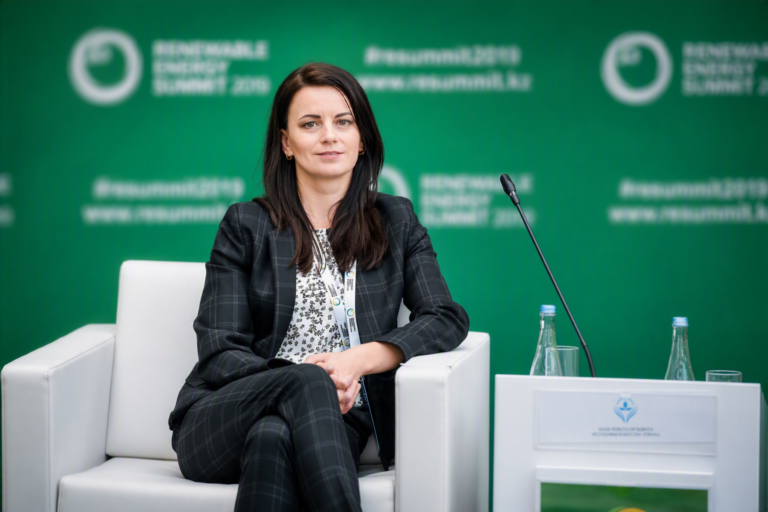
Commented by Dr. Monika Maciuliene, Head of the VILNIUS TECH Citizen Science Centre.
Learn more about Citizen Science in Lithuania in this ATHENA Talk ‘Citizen Science in Lithuania: Does our science and innovation ecosystem anticipate the input of citizens?’ by Dr. Monika Maciuliene, Head of the VILNIUS TECH Citizen Science Centre. See here
Photos by Aleksas Jaunius.
Funded by the Economic Revival and Resilience Plan "New Generation Lithuania“ and the state budget of the Republic of Lithuania.