
Dr. Juste Rozene: How to avoid the biggest mistakes when applying to university

April 26, 2024
Choosing where and what to study is an important decision, but the application process itself can be just as demanding. According to Dr. Juste Rozene, Director of the Admission and information centre at Vilnius Gediminas Technical University (VILNIUS TECH), applicants sometimes make mistakes that can lead to losing a chance of becoming part of their dream studies.
 
According to Dr. Rozene, the cost of such mistakes is huge, as both young people and their parents feel the consequences. To ensure that the university application process is successful and smooth, Dr. J. Rozene identifies the common mistakes made by prospective students and shares advice on how to avoid them.

Start researching in advance

Where do applicants most often go wrong? They fail to inquire about changes and news in the application process. Procedures change constantly, so it's essential to stay up-to-date with the latest information. This information is shared by the National education agency as well as the Ministry of education, science and sport, which also prepares a checklist for high school graduates with the most important information about graduation exams, admission conditions for vocational and higher education institutions, and innovations.

Useful information can be found not only on the internet – Dr. Rozene encourages using all opportunities: "If schools organise open door days – go. It would be a shame to miss them. Attend open lectures with students, look around, evaluate whether you like the classrooms, lecturers, and atmosphere."

You can learn a lot at study fairs, however, students often spend all day having fun or and perhaps only visiting the stands of institutions they are interested in. Dr. J. Rozene invites you to also look into institutions you do not plan to apply to. Major universities like VILNIUS TECH have many study programs, so it's likely that knowledge about them will expand your options, and you might unexpectedly choose a profession you've never heard of but find interesting.

Some students also make the mistake of limiting themselves to just one city.

"For example, students from Kaunas often choose institutions in their city. Don't do that – if you have the opportunity to travel, inquire about universities in other cities. It may happen that the competition at your city institution is huge, while elsewhere it's smaller, making it easier to get into the desired study program," says J. Rozene.

Insure yourself by signing a pre-admission agreement

It is essential to inquire about pre-admission possibilities. Although this may sound obliging, Dr. J. Rozene reassures that by signing a pre-admission agreement, you show that you intend to study at the chosen institution, which you haven't applied yet. This could be very useful in the final stage of admission.

"This is your insurance. Suppose you signed a pre-admission agreement because you are 100 percent sure that creative industries are your dream program. When filling out the LAMA BPO application, you will first apply for a state funded place, and in the second position, you will indicate a paid one. In this case, even if you fail to get into the funded place after two rounds, you can still get into the paid one. By signing the agreement, the university will see that you have fulfilled the conditions of the pre-admission agreement you signed, so they will compensate you for your studies 100 percent! If during your studies you maintain a grade point average above the group average, the compensation will continue in the second and third year. Pre-admission is your safety net," Dr. Juste Rozene points out.

How to choose a study program wisely?

Specialists from the Admission and information centre often receive the question – what is needed to get into one or another study program? It is advised not to think only about the program but rather to find out what is required for the chosen field of study. For example, all computer science study programs have the same requirements for exam results.

However, not all older school students have their direction of study worked out yet. Some level of uncertainty is related to a lack of confidence. The confusion when choosing is also caused by cleverly crafted study program names. For example, "Multimedia and computer design" may sound like an art-oriented study program to many, but choosing it requires both math and computer science. According to the director of the Admission and information centre, relying solely on the name of the study program is a big mistake.

"The names are created to attract and intrigue. You need to delve into the description of the study program. You will see online what you will study and whether it meets your expectations. It is also recommended to ask current students about what and how is taught," advises Dr. J. Rozene.

When choosing a study program, it is important to answer a few questions for yourself: what do I like, what are my values, what am I good at, and what do I want? And then find out what the job market trends are. Choosing an unpopular speciality can greatly hinder job search in the future. To avoid this, the specialist recommends paying attention to the dominant news in the media. They, as well as scholarships awarded by employers, indicate which specialities are prospective and in demand. It is also useful to evaluate employment indicators, average salaries after completing various programs; to find out which study programs are at the top of the list of state and world priority programs as well as which study programs have their funding reduced every year.

Take the final steps responsibly

Mistakes can also be made when approaching the finish line – the main admission stage. Many young people delay registering in the LAMA BPO system. According to Dr. J. Rozene, it is best to do this at the beginning of June.

"When you enter all your data, start marking the study programs that interest you. If you enrol in a program that requires additional tests or entry exams, the LAMA BPO system itself will send you reminders and updates. This way, you won't miss anything, and nothing will be late," advises the Director of VILNIUS TECH SPIC.

Filling out data in the LAMA BPO form is a highly responsible task. One careless mistake can cost you dearly. For example, if you enter your email address incorrectly, on the crucial day, you won't receive a letter about admission to the university.

Another significant mistake is to list only 1 or 2 out of 9 possible preferences and not have a backup plan. If the selected programs do not attract enough potential students and groups are not formed, young people don't get admitted anywhere that year. When filling in the empty spaces on the list of preferences, preliminary research on various institutions' study programs comes in handy.

The same sad scenario awaits if you forget to sign the contract after being admitted to the university. According to Dr. J. Rozene, it often happens that young people go on vacation without authorising anyone else to sign the contract or without setting up the option to sign the contract remotely. Take care of this in advance, and you will successfully overcome all stages of admission.

Related news

Interdisciplinarity in practice: how Electronics and Medical Engineering students developed a Human motion analysis system
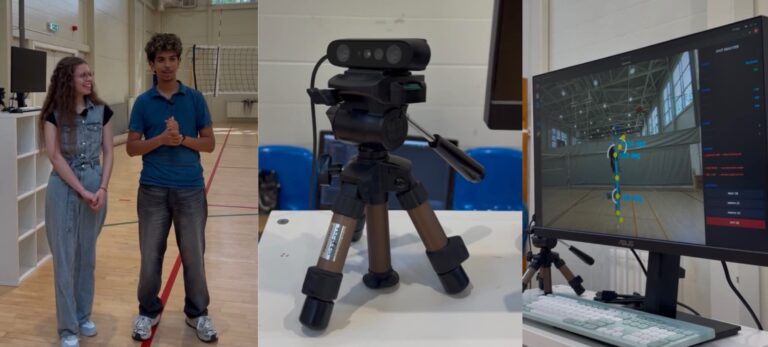
Modern engineering solutions are increasingly created through collaboration between specialists from different fields. The university environment provides an opportunity to combine diverse competencies and develop solutions that would be difficult to achieve within the boundaries of a single discipline. Such collaboration was also at the heart of a bachelor’s thesis project in which VILNIUS TECH students Laura Venckutė (Faculty of Electronics) and Abderrazak El Aamrani (Faculty of Mechanics) combined expertise in electronics and medical engineering to develop a human motion recognition and evaluation system. From an Idea to Interdisciplinary Collaboration At the beginning of the project, students from the Medical Engineering and Electronics Engineering study programmes sought to address a problem relevant to both sports and rehabilitation: the lack of accessible systems capable of automatically evaluating human movements and providing immediate feedback. As the project authors point out, incorrect movements can reduce training effectiveness and increase the risk of injuries during rehabilitation, sports activities, or everyday tasks. For this reason, they decided to look for a technological solution that could help objectively assess movement quality. The idea emerged from previous projects and experience gained during their studies, while an important catalyst was the opportunity for collaboration proposed by their supervisors. From the outset, it was clear that the project would require expertise from different fields, as motion analysis involves not only developing a technical system but also defining meaningful criteria for evaluating human movement. [caption id="attachment_120707" align="alignnone" width="2048"] Electronics and Medical Engineering students developed a Human motion analysis system[/caption] The students brought different, yet closely interconnected and complementary competencies to the project. The Electronics Engineering student was responsible for computer vision, embedded systems, and system integration, while the Medical Engineering student contributed expertise in biomechanics and human movement assessment. Although responsibilities were divided according to individual areas of expertise, key decisions were made collaboratively. From the Initial Concept to a Functional System In the early stages, the team planned to develop a system capable of analysing a broader range of movement patterns and performing more advanced analytical functions. However, as the project progressed, technical limitations, available hardware resources, and the scope of the bachelor’s thesis had to be taken into account. As a result, some ideas had to be abandoned. According to the team members, no major disagreements arose during the project. Decisions were made by discussing possible alternatives, evaluating how well they aligned with the project objectives, and, whenever possible, testing different approaches in practice. When technical and medical requirements conflicted, the team sought solutions that best balanced project goals and implementation constraints. The final outcome of the project is a human motion recognition and feedback system based on a pose estimation algorithm designed for basketball shooting analysis. The system detects a person in real time, estimates body posture, evaluates shooting technique according to biomechanical criteria, and subsequently provides feedback to the user. The Value of Interdisciplinarity and Future Opportunities During testing, the system performed better than expected. It successfully analysed the movements of users of different heights and maintained reliable performance at distances of up to 12 metres. According to the students, not only did the technical results exceed expectations, but the collaboration process itself also proved highly successful. In their view, such a project could theoretically be completed by a specialist from a single field. In practice, however, this would be difficult and inefficient. The project required both expertise in electronics and an understanding of human movement analysis. Without competencies from both fields, considerably more time would have been needed for learning unfamiliar topics and identifying appropriate solutions. Looking ahead, the students see opportunities to further develop the project by improving system stability, optimising resource usage, expanding the range of supported movement patterns, and increasing motion recognition accuracy. Although they are not yet certain whether they will continue working in this specific area, they hope to further deepen their expertise in related fields of technology and engineering. Supervisors’ Insights: Interdisciplinarity as a Foundation of Future Engineering The thesis supervisors emphasise that the nature of the project itself required collaboration across disciplines. However, the greatest value of the project lies not only in the technical solution that was developed, but also in the students’ ability to work together effectively. Professor Kristina Daunoravičienė, lecturer in the Medical Engineering study programme, notes that developing a human posture recognition and evaluation system requires both an understanding of human movement and biomechanics, as well as the ability to create a technical system capable of collecting, processing, and presenting information to the user. „The need for different knowledge and competencies made this topic an excellent platform for collaboration between Medical Engineering and Electronics Engineering students. Such projects foster not only technical solutions but also the ability to understand the logic, limitations, and priorities of other disciplines,“ says Prof. Dr Kristina Daunoravičienė. Although the students were initially unfamiliar with one another and came from different engineering backgrounds, a shared goal quickly became the foundation of successful cooperation. According to the supervisor, Medical Engineering contributed the perspective of human movement assessment and result interpretation, while Electronics Engineering provided expertise in system architecture, prototyping, and optimisation. According to Prof. Dr K. Daunoravičienė, the most important outcome of the project is not only the developed prototype and its comparison with the Xsens motion analysis system: „Equally important are the competencies of collaboration, communication, trust, initiative, and the ability to learn from one another. These are the qualities that allow good ideas to become real, functioning solutions.“ Associate Professor Dr Vytautas Abromavičius of the Faculty of Electronics also points out that in the era of artificial intelligence, technical expertise alone is no longer sufficient. Clear communication, the ability to understand specialists from different fields, and working together towards a common goal are becoming increasingly important. „This bachelor’s thesis demonstrated that our students communicated exceptionally well and were able to explain specialised professional terminology in a simple and understandable way. This mutual understanding enabled them to effectively combine knowledge from different disciplines and achieve an excellent result,“ says Assoc. Prof. Dr Vytautas Abromavičius. According to him, the need for interdisciplinary projects in modern engineering continues to grow. Every real-world product developed for the market consists of multiple interconnected components; therefore, a broader understanding of the problem leads to better product applicability and a more complete final outcome.
More
VILNIUS TECH Professor A. Čenys Represents Baltic States at Google Leadership Summit
Prof. Antanas Čenys, a prominent researcher at VILNIUS TECH and the SustAInLivWork project, participated by personal invitation from Google in the exclusive Google for Education Higher Education Leader Series EMEA in London. Prof. Čenys was the only AI and cybersecurity expert from the Baltic countries to be personally invited to this high-level summit. The exclusive event brought together higher education leaders, technology pioneers, and innovation stakeholders from across Europe, the Middle East, and Africa. The summit focused on shaping the future of Artificial Intelligence, digital transformation, cybersecurity, and driving responsible innovation within the global academic and industrial landscapes. The insights and discussions from the London summit strongly resonate with the core mission of the SustAInLivWork project: strengthening Europe’s capacity to develop, deploy, and scale trustworthy AI solutions while simultaneously building the advanced skills, critical infrastructures, and innovation ecosystems required for a sustainable digital future. Through SustAInLivWork, VILNIUS TECH and its partners are actively delivering: An International AI Cluster: bridging the gap between research excellence, industry, and public sector stakeholders; Advanced Innovation Services: driving AI and data-driven solutions for various sectors; AI Skills Development: establishing lifelong learning opportunities and specialized training; Cross-Regional Collaboration: accelerating practical AI adoption and ensuring positive societal impact. The summit also underscored the rapidly growing importance of cybersecurity as a fundamental pillar for secure AI deployment. This focus perfectly aligns with ongoing initiatives led by VILNIUS TECH, including specialized cybersecurity skills development programmes supported by Google.org, aimed at strengthening digital resilience and cyber competence across Europe. As Europe accelerates its comprehensive AI transformation, structured collaboration between universities, industry leaders, policymakers, and major technology providers becomes increasingly paramount. SustAInLivWork and VILNIUS TECH remain committed to contributing to this evolutionary journey by building strong bridges between cutting-edge research, thriving innovation ecosystems, and sustainable societal progress.
More