On 26–27 February, Vilnius will host the international wood architecture and engineering forum “Forum Wood Building Baltic”, bringing together architects, engineers, researchers, business representatives and urban planners from the Baltic, Nordic and Western European countries. The event is part of the international network Forum Holzbau, which unites leading European universities and operates as a platform for knowledge and technology transfer in the field of contemporary sustainable timber construction.
| Registration here |
The forum for the Baltic region is organised by Vilnius Gediminas Technical University (VILNIUS TECH), Riga Technical University (RTU), Tallinn University of Technology (TalTech) and Estonian Academy of Arts (EKA). This is the second time the forum is being held in Vilnius.
Timber as a response to climate challenges
In the Nordic and Baltic countries, timber – a traditional building material – has gained new significance in the context of sustainability. Renewable resources, advanced research and technological innovation are opening up new possibilities for high-quality, sustainable and aesthetically distinctive buildings.
“Today, timber is no longer merely a symbol of tradition. It is a strategic choice that helps address climate change, resource scarcity and the environmental impact of the construction sector. The forum becomes a meeting point for science, practice and business,” says Dr Liutauras Nekrošius, Associate Professor at VILNIUS TECH and Chair of the Scientific Committee.
According to him, the aim of the event is to bring together representatives from different fields for a common discussion: university researchers, practising architects and engineers, timber structure manufacturers, contractors, real estate developers, urban planners, public administrators and heritage specialists.
Two-day symposium and innovation exhibition
The forum will consist of a two-day symposium and an exhibition of manufacturing and construction companies. The conference programme includes six oral presentation sessions, and for the first time this year, a poster session will also be organised.
“We deliberately structure the sessions so that professionals from different disciplines and countries meet in the same room. Only interdisciplinary dialogue can lead to genuine innovation,” emphasises Dr Nekrošius. “This year, it is particularly important for us to actively involve students, doctoral candidates and young architects and engineers in the discussion.”
Experts from Estonia, Latvia, Lithuania, Denmark, Finland, Sweden, Austria, Spain and Germany will deliver presentations at the forum.
From biophilic schools to timber apartment buildings
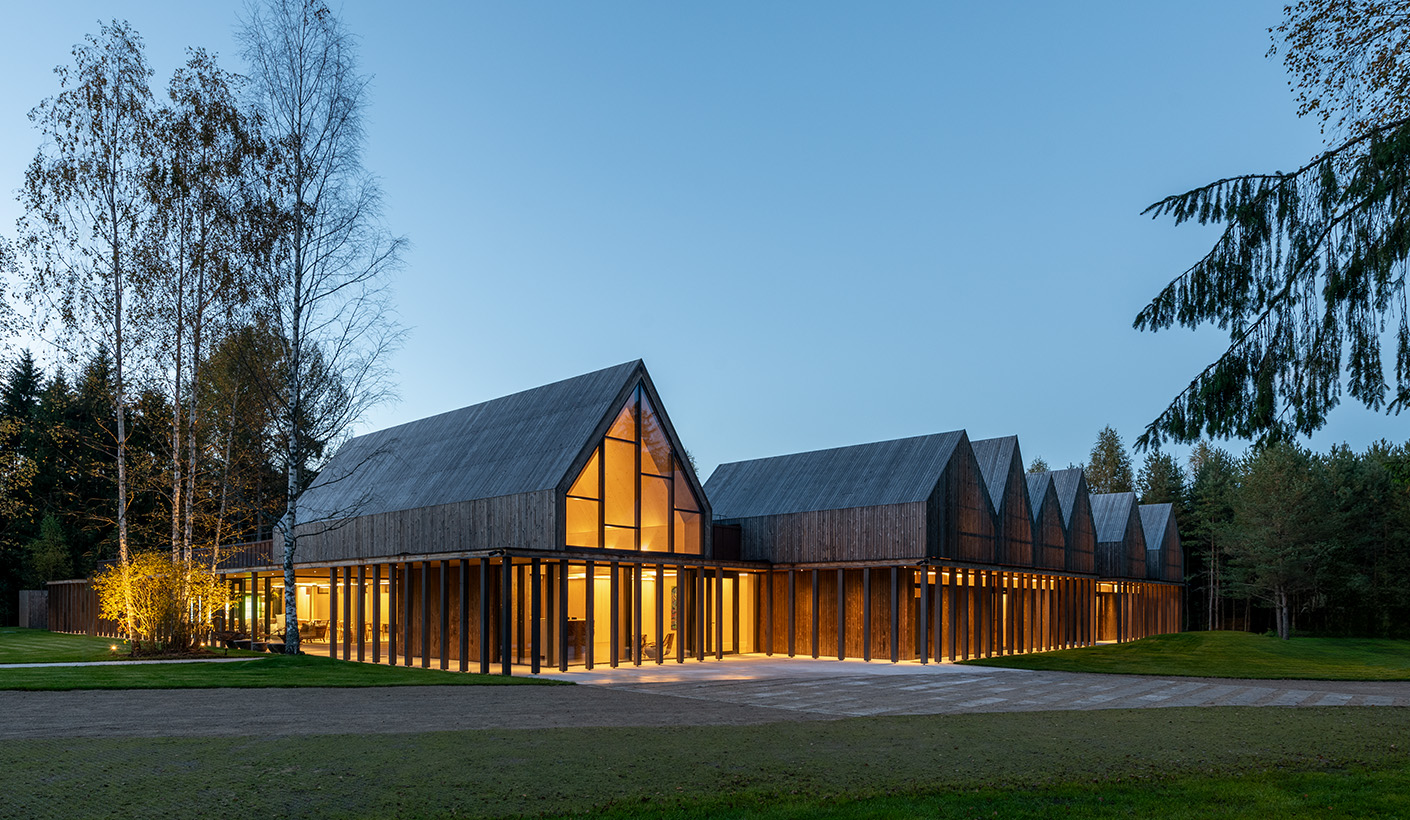
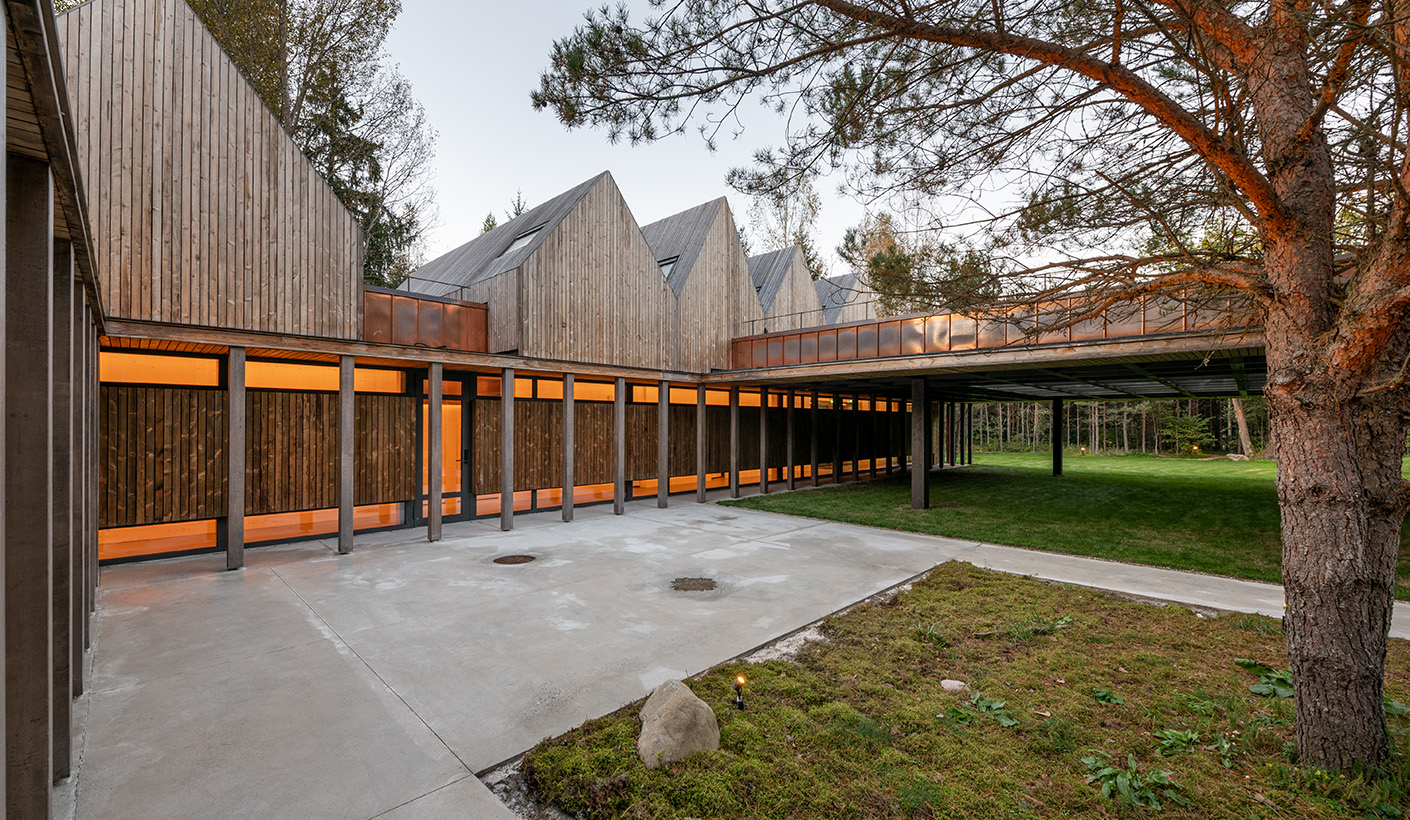
Among the speakers are renowned architects and engineers whose work transcends the boundaries of a single profession. Architect Arūnas Liola and structural engineer Žydrūnas Jurgelionis will present a joint lecture on the challenges of implementing the “Sanctum” centre, highlighting the importance of interdisciplinary collaboration.
Professor Pekka Heikkinen from Aalto University will discuss the links between university research, education and the construction market. Architects Thomas Jørgensen and Markus Kaasik will share their experience in designing biophilic and context-sensitive school buildings, while Rūdis Rubenis will present a community library project.
Among the social impact initiatives, architects Margarita Kaučikaitė and Evelina Vasiliauskaitė will introduce their travelling architecture workshops, which empower young people in smaller towns to participate in shaping their own environments. Architect Viktorija Blažienė will demonstrate how architecture can become a tool of humanitarian aid for war-affected Ukraine.
Architects Johannes Hübner and Tina Selami are conducting experimental research in renovation and new construction, while Joakim Kaminsky will present a 12-storey timber apartment building insulated with straw – an innovation that raises sustainability standards to a new level.
Engineering solutions and market perspectives
In the engineering section, Stefan Winter will forecast the future of timber structures in 2030, Professor Andreas Heinzmann from Rosenheim Technical University of Applied Sciences will analyze directions for improving timber production processes, and engineer Maarja Mirjam Rajasaar will present an experimental study on monitoring outdoor timber structures.
Researcher Maximilian Pramreiter will explore more efficient use of forest resources, while Professor of Biology Vitas Marozas will address the importance of sustainable forestry and biodiversity. The programme will also include a presentation on the design of timber bridges in Spain and their production in Lithuania, as well as an analysis of the implementation of the largest administrative building with load-bearing timber structures.
An overview of the current state, potential and future directions of the timber architecture and construction market in the Baltic states will be presented by business representative and sustainable building expert Paulius Milčius.
“The timber construction sector in the Baltic region has enormous growth potential. However, this requires close cooperation between academia, business and the public sector. The forum catalyzes this process,” concludes Dr Nekrošius.
Partners: „Rothoblaas“, „EGGER Group“, „Pro clima“, „Binderholz“, „HSBCAD“, „James Hardie“, „STEICO“, „ISOCELL“, „KNAUF“, „SIHGA“, „SWG“, „KLH“, „Koch&Schulte“, „Peikko“, „Drūstraigtis“, „VMG Grupė“, „Jūrės medis“, „Woodon“, „The Nordic Council of Ministers“, Lithuanian National Commission for UNESCO Wooden Architecture Centre.
Text prepared by Dr Liutauras Nekrošius, Associate Professor at Vilnius Gediminas Technical University and Chair of the Scientific Committee.
Author of photos Leonas Garbinčius, “Project Sanctum”.
Galerija