Fostering Global Partnerships for Sustainable Development in Higher Education

September 30, 2024
In the field of sustainable development, higher education institutions are playing an increasingly pivotal role. By forming strategic partnerships and fostering cross-border collaborations, universities are actively contributing to the implementation of the United Nations’ Sustainable Development Goals (SDGs). From engaging in international research projects to incorporating sustainability principles into curricula, these institutions are shaping the future of responsible consumption and biodiversity conservation.

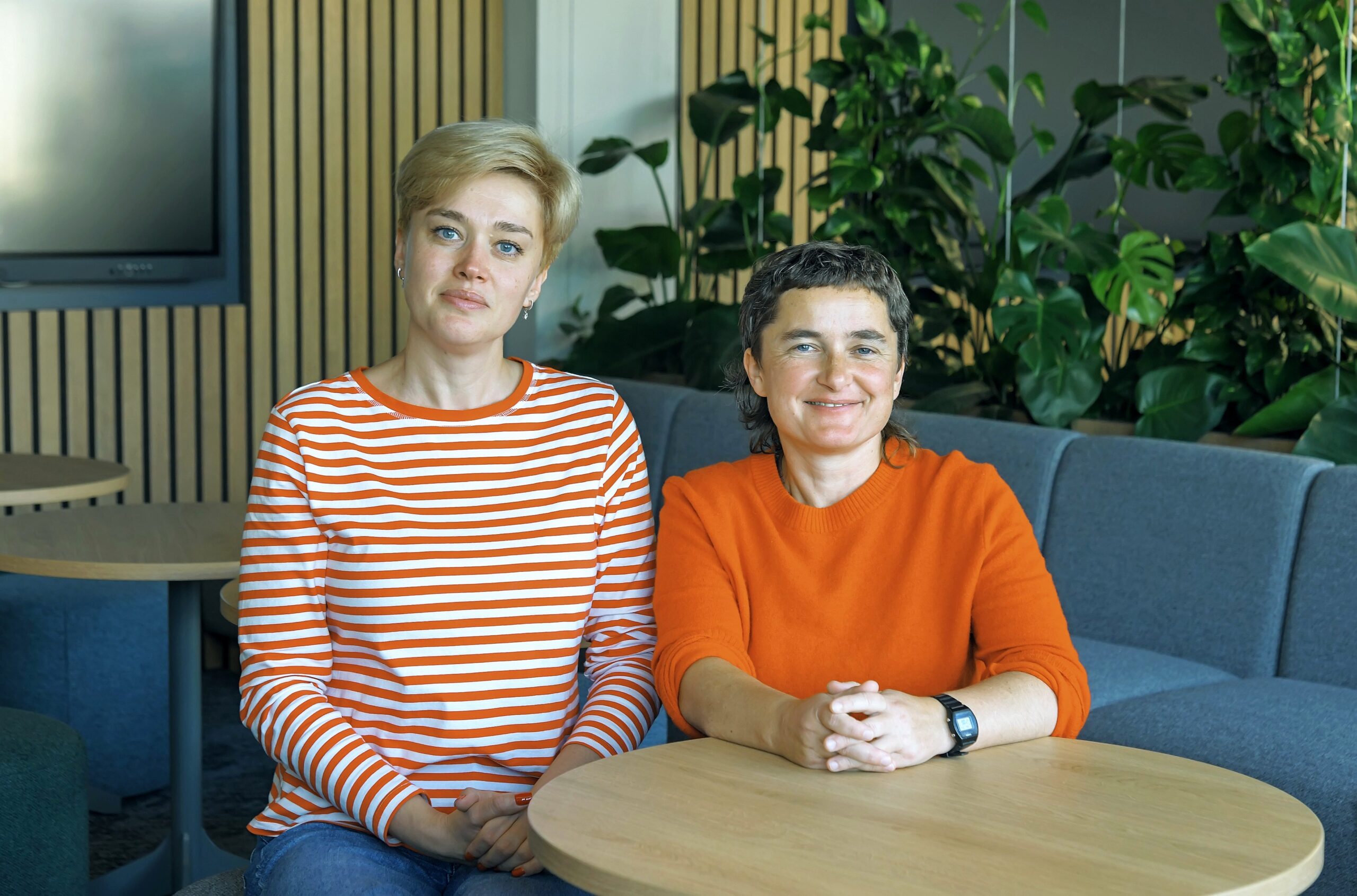
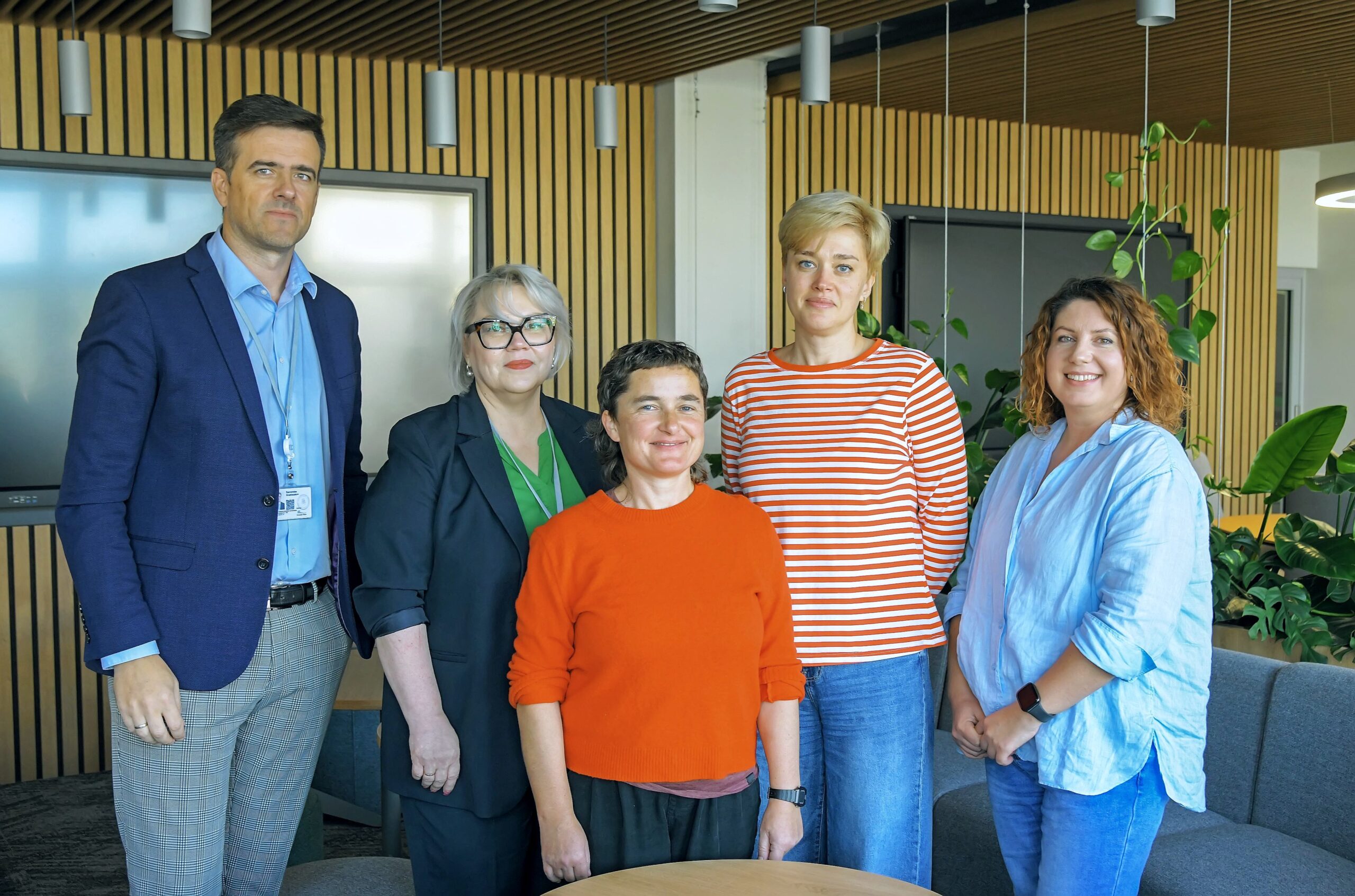
To explore these topics, we are joined by Lecturer Angela Dichte and Lecturer Yuliia Nikitchenko,. Angela Dichte is a lecturer in Biosphere Reserves Management and Forest Ecosystem Management, as well as a leading advocate for sustainability education. She has been involved in multiple international projects that focus on SDG 12 (Responsible Consumption and Production) and SDG 15 (Life on Land). Yuliia Nikitchenko is a lecturer and the coordinator of the international project “Ukrainian-German Teaching Network for a Digital Transformation of Environmental Education (Consolidation and Expansion Phase 2024).” Y. Nikitchenko, also a digital transformation specialist, is spearheading initiatives to modernise environmental education in Ukraine through innovative digital platforms and international teaching networks.

Both Lecturer A. Dichte and Yuliia Nikitchenko are from the Eberswalde University for Sustainable Development, Germany. They were invited by the VILNIUS TECH Sustainability Hub to deliver a series of lectures – “Prevention of Environmental Pollution” and “Sustainable Environment: The Importance of Biodiversity Conservation and Ecosystem Services in Sustainable Development.”

Together, Lecturer A. Dichte and Yuliia Nikitchenko discuss the importance of international university collaborations, share insights into sustainability education, and highlight the role of digital tools in shaping future environmental leaders.


The Importance of International Collaboration in Higher Education

Let’s begin by discussing the significance of international collaboration between universities in advancing the Sustainable Development Goals. What specific contributions can universities make to SDG 12 and SDG 15?

A. Dichte: “International collaboration allows universities to broaden their perspectives and recognize the diversity of approaches to sustainability. Particularly when working with partners from the Global South and Eastern Europe, it is crucial to establish relationships based on mutual respect and learning. Too often, these collaborations can be influenced by a Western-centric perspective, which must be consciously avoided. For students, academic staff, and institutions alike, these partnerships offer opportunities for growth, reflection, and a deeper understanding of global challenges.”

Lecturer A. Dichte believes that SDGs are valuable as a framework but emphasises the need for critical engagement. “The SDGs are not perfect; they have their limitations in development and implementation. However, this imperfection offers a chance to engage students in critical reflection, enabling them to approach sustainability with a deeper understanding and an analytical mindset.”

Y. Nikitchenko: “Universities today are more than just educational institutions; they are hubs of innovation and global engagement. Collaborating with international partners enables universities to share resources, expertise, and strategies for integrating SDGs into teaching and research. This collaborative spirit not only strengthens the academic community but also empowers students and researchers to contribute actively to global solutions. Embedding the SDGs into curricula equips students to make informed, sustainable choices in their future careers, thereby fostering a generation of responsible leaders.”


Biosphere Reserves as Learning Sites for Sustainability

Lecturer A. Dichte, you have extensive experience working with biosphere reserves. Could you share how these initiatives contribute to hands-on learning experiences for students?

A. Dichte: “Biosphere Reserves (BRs) are unique learning sites established under UNESCO’s Man and the Biosphere programme. They serve as model regions for sustainable development and offer a holistic approach to balancing conservation with sustainable resource use and social-economic development. This makes them ideal places for students to engage in hands-on learning, test new approaches, and observe best practices in action.”

Lecturer A. Dichte highlights that students can gain valuable insights by observing how BRs collaborate with local communities, NGOs, and businesses. “It’s not about coming in with preconceived ideas. It’s about listening, co-creating solutions, and building trust with local stakeholders. This approach not only enriches student learning but also strengthens the relevance and impact of our research.”


Skills for Effective Leadership in Sustainability

What are the most critical skills or knowledge areas that students need to develop to become effective leaders in implementing SDG 12 and SDG 15?

Lecturer A. Dichte: “The ability to listen, to reflect critically, and to have the courage to experiment and learn from failure are essential skills for sustainability leaders. These skills are closely tied to understanding that achieving sustainability requires a collaborative, democratic approach. Even if change seems slow, imposing solutions unilaterally is not the way forward. Leadership in sustainability is about creating space for diverse voices and facilitating collective action.”

Y. Nikitchenko: “Leadership in sustainable development involves more than understanding environmental science. It requires the ability to inspire and drive transformative change across different sectors. Universities are key to shaping future leaders by providing them with the tools to critically analyse complex issues, think creatively, and collaborate effectively.”

Lecturer A. Dichte and Y. Nikitchenko agree that interdisciplinary approaches are crucial for preparing students to navigate the multifaceted landscape of sustainability, enabling them to drive progress in various sectors.

Campus-Community Partnerships for Sustainable Development

Lecturer A. Dichte, how can universities ensure that sustainability is not just a theoretical concept in curricula but also a practice within the campus and surrounding communities?

Lecturer A. Dichte: “At our university, we integrate sustainability into the curriculum right from the start. All bachelor students must take a course in sustainable development during their first semester, where they work on small projects with local actors. This early involvement gives them a chance to make a tangible difference and build connections within the community. Additionally, our university has adopted the ‘Projektwerkstätten’ approach, where students develop and implement courses themselves. This experience empowers them to become change agents and provides a model for how sustainability can be integrated into both education and real-world impact.”

Personal Motivation: Committed to Sustainability and Education

Y. Nikitchenko, your project, the “Ukrainian-German Teaching Network,” emphasises the importance of digital transformation. How do digital tools and platforms shape the future of environmental education, particularly in the context of SDG 12 and SDG 15?

Y. Nikitchenko: “The project was launched to maintain educational continuity for students in Ukraine during the war, and it has since grown to encompass a network of 13 partner universities. Digital tools are transforming environmental education by making it more accessible, interactive, and closely connected to real-world challenges. For instance, online access to GIS tools allows students to work with real-world environmental datasets during lessons, which enhances their practical skills and problem-solving capabilities.”

Y. Nikitchenko also sees digital education as a way to bridge the gap between theory and practice. “Platforms that offer virtual experiments and ecological modelling enable students to investigate complex environmental scenarios and develop the technical expertise needed for future careers. This approach not only prepares them to tackle global challenges but also equips them with the skills to implement the SDGs effectively.”

When asked about their personal motivation for focusing on sustainability and education, both Professor A. Dichte and Y. Nikitchenko reflect on the importance of nurturing the next generation of sustainability leaders.

Lecturer A. Dichte: “For me, it’s about promoting critical thinking and reflection in the leaders of tomorrow. We must prepare students to question assumptions and co-create solutions.”

Y. Nikitchenko: “It’s about empowering students and educators to keep striving for a sustainable future, even in difficult circumstances. I believe that by providing the right tools and platforms, we can inspire the next generation to drive meaningful change.”

Their shared commitment to sustainability and education serves as a powerful example of how universities can play a transformative role in shaping a more sustainable and equitable future.


Funded by the Economic Revival and Resilience Plan "New Generation Lithuania“ and the state budget of the Republic of Lithuania.

Galerija

Related news

Interdisciplinarity in practice: how Electronics and Medical Engineering students developed a Human motion analysis system
Modern engineering solutions are increasingly created through collaboration between specialists from different fields. The university environment provides an opportunity to combine diverse competencies and develop solutions that would be difficult to achieve within the boundaries of a single discipline. Such collaboration was also at the heart of a bachelor’s thesis project in which VILNIUS TECH students Laura Venckutė (Faculty of Electronics) and Abderrazak El Aamrani (Faculty of Mechanics) combined expertise in electronics and medical engineering to develop a human motion recognition and evaluation system. From an Idea to Interdisciplinary Collaboration At the beginning of the project, students from the Medical Engineering and Electronics Engineering study programmes sought to address a problem relevant to both sports and rehabilitation: the lack of accessible systems capable of automatically evaluating human movements and providing immediate feedback. As the project authors point out, incorrect movements can reduce training effectiveness and increase the risk of injuries during rehabilitation, sports activities, or everyday tasks. For this reason, they decided to look for a technological solution that could help objectively assess movement quality. The idea emerged from previous projects and experience gained during their studies, while an important catalyst was the opportunity for collaboration proposed by their supervisors. From the outset, it was clear that the project would require expertise from different fields, as motion analysis involves not only developing a technical system but also defining meaningful criteria for evaluating human movement. [caption id="attachment_120707" align="alignnone" width="2048"] Electronics and Medical Engineering students developed a Human motion analysis system[/caption] The students brought different, yet closely interconnected and complementary competencies to the project. The Electronics Engineering student was responsible for computer vision, embedded systems, and system integration, while the Medical Engineering student contributed expertise in biomechanics and human movement assessment. Although responsibilities were divided according to individual areas of expertise, key decisions were made collaboratively. From the Initial Concept to a Functional System In the early stages, the team planned to develop a system capable of analysing a broader range of movement patterns and performing more advanced analytical functions. However, as the project progressed, technical limitations, available hardware resources, and the scope of the bachelor’s thesis had to be taken into account. As a result, some ideas had to be abandoned. According to the team members, no major disagreements arose during the project. Decisions were made by discussing possible alternatives, evaluating how well they aligned with the project objectives, and, whenever possible, testing different approaches in practice. When technical and medical requirements conflicted, the team sought solutions that best balanced project goals and implementation constraints. The final outcome of the project is a human motion recognition and feedback system based on a pose estimation algorithm designed for basketball shooting analysis. The system detects a person in real time, estimates body posture, evaluates shooting technique according to biomechanical criteria, and subsequently provides feedback to the user. The Value of Interdisciplinarity and Future Opportunities During testing, the system performed better than expected. It successfully analysed the movements of users of different heights and maintained reliable performance at distances of up to 12 metres. According to the students, not only did the technical results exceed expectations, but the collaboration process itself also proved highly successful. In their view, such a project could theoretically be completed by a specialist from a single field. In practice, however, this would be difficult and inefficient. The project required both expertise in electronics and an understanding of human movement analysis. Without competencies from both fields, considerably more time would have been needed for learning unfamiliar topics and identifying appropriate solutions. Looking ahead, the students see opportunities to further develop the project by improving system stability, optimising resource usage, expanding the range of supported movement patterns, and increasing motion recognition accuracy. Although they are not yet certain whether they will continue working in this specific area, they hope to further deepen their expertise in related fields of technology and engineering. Supervisors’ Insights: Interdisciplinarity as a Foundation of Future Engineering The thesis supervisors emphasise that the nature of the project itself required collaboration across disciplines. However, the greatest value of the project lies not only in the technical solution that was developed, but also in the students’ ability to work together effectively. Professor Kristina Daunoravičienė, lecturer in the Medical Engineering study programme, notes that developing a human posture recognition and evaluation system requires both an understanding of human movement and biomechanics, as well as the ability to create a technical system capable of collecting, processing, and presenting information to the user. „The need for different knowledge and competencies made this topic an excellent platform for collaboration between Medical Engineering and Electronics Engineering students. Such projects foster not only technical solutions but also the ability to understand the logic, limitations, and priorities of other disciplines,“ says Prof. Dr Kristina Daunoravičienė. Although the students were initially unfamiliar with one another and came from different engineering backgrounds, a shared goal quickly became the foundation of successful cooperation. According to the supervisor, Medical Engineering contributed the perspective of human movement assessment and result interpretation, while Electronics Engineering provided expertise in system architecture, prototyping, and optimisation. According to Prof. Dr K. Daunoravičienė, the most important outcome of the project is not only the developed prototype and its comparison with the Xsens motion analysis system: „Equally important are the competencies of collaboration, communication, trust, initiative, and the ability to learn from one another. These are the qualities that allow good ideas to become real, functioning solutions.“ Associate Professor Dr Vytautas Abromavičius of the Faculty of Electronics also points out that in the era of artificial intelligence, technical expertise alone is no longer sufficient. Clear communication, the ability to understand specialists from different fields, and working together towards a common goal are becoming increasingly important. „This bachelor’s thesis demonstrated that our students communicated exceptionally well and were able to explain specialised professional terminology in a simple and understandable way. This mutual understanding enabled them to effectively combine knowledge from different disciplines and achieve an excellent result,“ says Assoc. Prof. Dr Vytautas Abromavičius. According to him, the need for interdisciplinary projects in modern engineering continues to grow. Every real-world product developed for the market consists of multiple interconnected components; therefore, a broader understanding of the problem leads to better product applicability and a more complete final outcome.
More
VILNIUS TECH Professor A. Čenys Represents Baltic States at Google Leadership Summit
Prof. Antanas Čenys, a prominent researcher at VILNIUS TECH and the SustAInLivWork project, participated by personal invitation from Google in the exclusive Google for Education Higher Education Leader Series EMEA in London. Prof. Čenys was the only AI and cybersecurity expert from the Baltic countries to be personally invited to this high-level summit. The exclusive event brought together higher education leaders, technology pioneers, and innovation stakeholders from across Europe, the Middle East, and Africa. The summit focused on shaping the future of Artificial Intelligence, digital transformation, cybersecurity, and driving responsible innovation within the global academic and industrial landscapes. The insights and discussions from the London summit strongly resonate with the core mission of the SustAInLivWork project: strengthening Europe’s capacity to develop, deploy, and scale trustworthy AI solutions while simultaneously building the advanced skills, critical infrastructures, and innovation ecosystems required for a sustainable digital future. Through SustAInLivWork, VILNIUS TECH and its partners are actively delivering: An International AI Cluster: bridging the gap between research excellence, industry, and public sector stakeholders; Advanced Innovation Services: driving AI and data-driven solutions for various sectors; AI Skills Development: establishing lifelong learning opportunities and specialized training; Cross-Regional Collaboration: accelerating practical AI adoption and ensuring positive societal impact. The summit also underscored the rapidly growing importance of cybersecurity as a fundamental pillar for secure AI deployment. This focus perfectly aligns with ongoing initiatives led by VILNIUS TECH, including specialized cybersecurity skills development programmes supported by Google.org, aimed at strengthening digital resilience and cyber competence across Europe. As Europe accelerates its comprehensive AI transformation, structured collaboration between universities, industry leaders, policymakers, and major technology providers becomes increasingly paramount. SustAInLivWork and VILNIUS TECH remain committed to contributing to this evolutionary journey by building strong bridges between cutting-edge research, thriving innovation ecosystems, and sustainable societal progress.
More