In the coming decade, it is likely that fully autonomous vehicles, self-driving robotic systems, and drones performing various logistics and monitoring tasks will become commonplace on the streets. This will enter manufacturing and logistics spaces as well as the air in Lithuania. These systems could also assist in urgent deliveries of critically needed medications, among many other tasks.
Researchers at VILNIUS TECH have been actively developing autonomous transport technologies for several years. They are also investigating the environmental perception, decision-making, and control tasks of vehicles, both cars and drones. In tackling these challenges, they focus on the interaction between humans and machines, seeking a rational balance between automatically performed functions and tasks that require human attention.
According to Associate Professor Dr. Arturas Medeisis, dean of the Faculty of electronics, the university’s researchers have gained experience working with autonomous vehicles not only on land and in the air but also on water, since October 1st when scientists from the Lithuanian maritime academy joined VILNIUS TECH to tackle similar navigation tasks for ships.
“Our researchers have the necessary equipment for studies: sensors for environmental monitoring and embedded systems. We can also develop specialized chips—microcircuits tailored for communication or image recognition tasks in complex working environments, such as under high vibration conditions,” shares Dr. Medeisis.
The development of drone technologies is significantly supported by scientists from the Antanas Gustaitis aviation institute (AGAI) at VILNIUS TECH. According to Ignas Daugela, director of the Aerospace Data Center, the team of researchers and students is creating advanced systems for target tracking, autonomous flight, and the development of simulation environments.
“High-level intelligent systems and simulators are being developed in laboratories for testing autonomous flight, application, and tracking algorithms. We are creating drones with integrated autopilots, next-generation GNSS receivers, and cameras manufactured in Lithuania,” lists I. Daugela.
Experimental testing is crucial for technology research. At the university, these tests are conducted using experimental drones and real vehicles created by VILNIUS TECH researchers. Dr. Viktor Skrickij, director of the Transport and logistics competence centre, explains that they use specially modified Toyota Prius and VW ID3 cars equipped with driving robots for research. “Digital twins” (high-precision mathematical models of vehicles along with their operating environment) are utilised in computer modeling.
Competitive solutions arise from partnerships between researchers and businesses
VILNIUS TECH researchers can offer various technological, customized solutions for businesses, as well as opportunities to test and improve their products, consultations, and training. For instance, they provide systems for monitoring air, sound, and radiation pollution, as well as the integration of geological and archaeological sensors into drones.
“In the field of drones and autonomous transport, we are one of the leading institutions in the region. We successfully run unique engineering projects and research, such as flights of drones across Lithuania, the development of solar-powered aircraft, the development of aircraft and rockets for meteorological probing. We also have a unique simulator for transporting aircraft cabins,” says I. Daugela.
Future creators experience ‘The scientist’s garb’ while studying
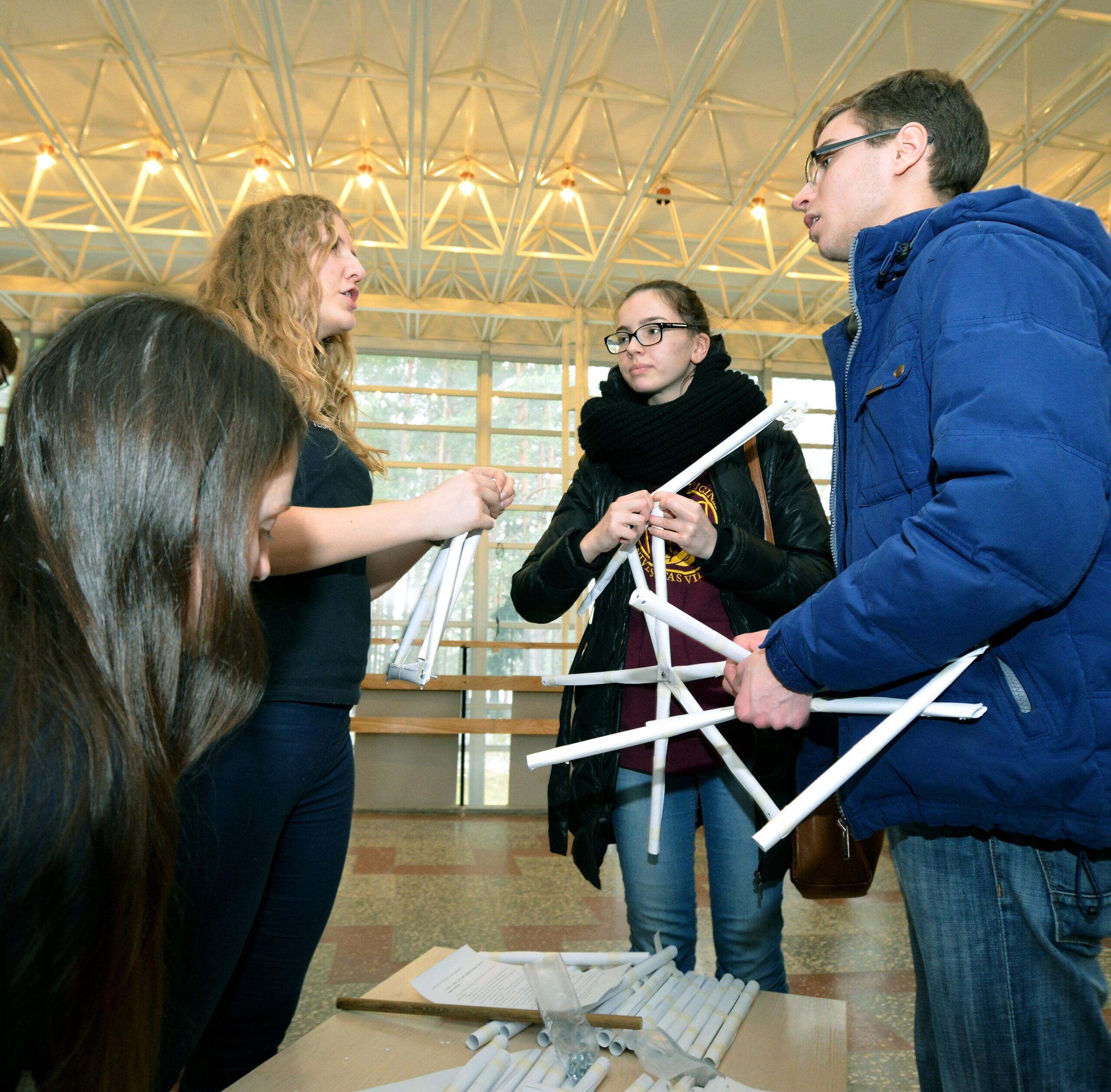
The competence centre would significantly contribute to the education of future creators, providing opportunities for students to work with cutting-edge technologies as they prepare to enter the labor market. VILNIUS TECH instructors involve the most curious students in projects carried out by researchers. In laboratories, they gain the latest knowledge, which is highly valued by employers. Some of them, having “tried on the scientist's garb,” continue their careers at the university.
AGAI students participate in creating and testing drone systems, simulators, and wind tunnels. Prototypes developed by students often attract interest from industry representatives. The knowledge gained at the university is currently applied not only in the defense sector but also in civil aviation, agriculture, environmental monitoring, and logistics and transport sectors. The drones developed at the university can be used for mapping air pollution, searching for mines, and meteorological probing.
Inventions born at the university are evaluated and patented
Technological solutions created by VILNIUS TECH researchers during international projects are already being used in cars manufactured by European producers.
“Manufacturers are patenting the innovative solutions discovered by our researchers. Our transport engineering scientists are particularly advanced in this regard; the technological solutions they have developed for vehicle suspensions are already being produced in the millions,” says Dr. Viktor Skrickij. He notes that while developing autonomous transport technologies, VILNIUS TECH researchers are currently collaborating with companies such as APTIV, Megaride, and Tenneco, as well as leading universities and research institutes in Germany, the Netherlands, Austria, France, Italy, the UK, Japan, South Korea, Latvia, and Finland.
Plans for a unique international competence centre for autonomous systems
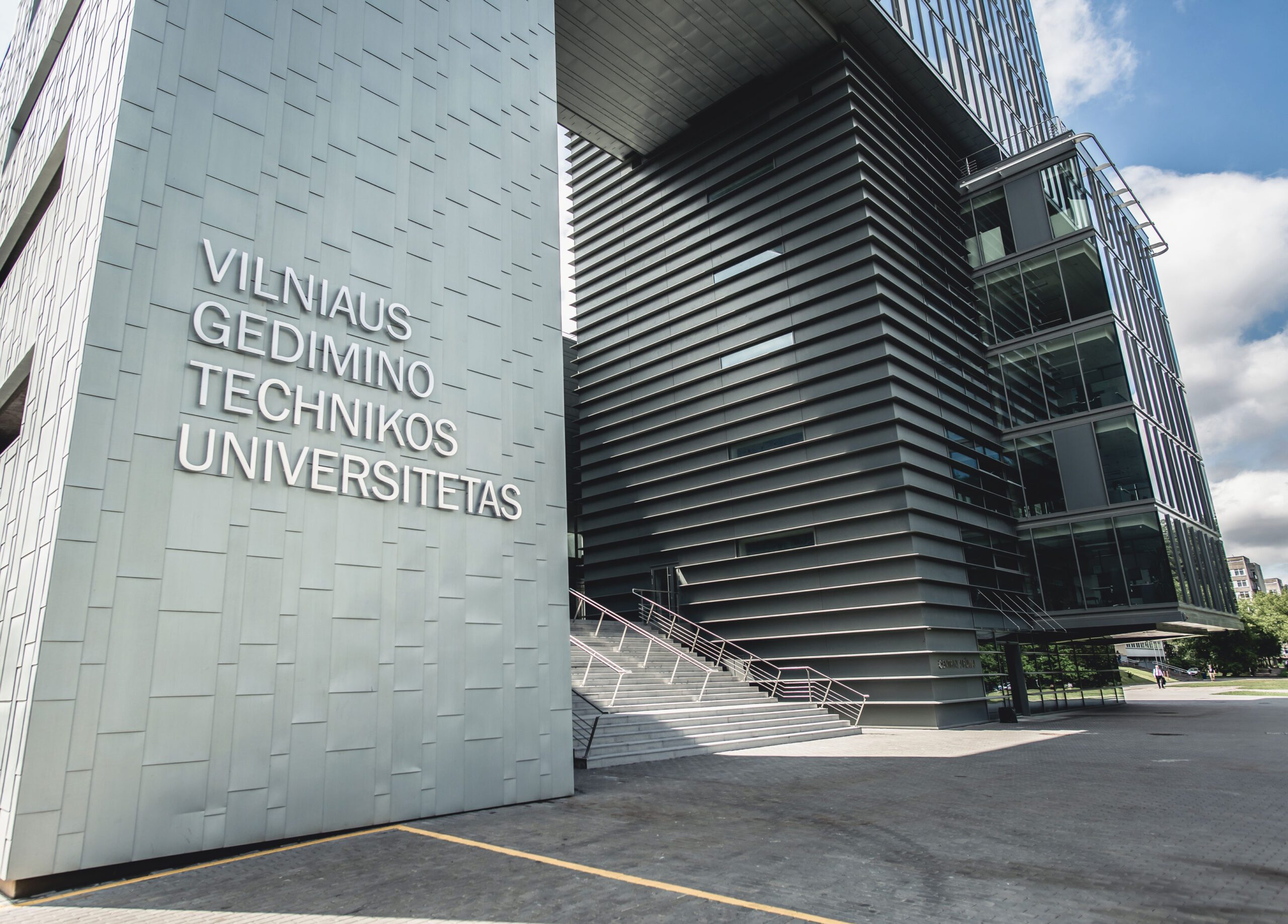
For about a decade, VILNIUS TECH has been nurturing and developing various smart technologies—from information and communication to artificial intelligence and transport. A significant amount of experience and a high level of technological preparation have been accumulated for practical solutions.
“We are integrating all competencies and technological knowledge for a meaningful and ambitious goal: as autonomous transport and mobility systems become strategically crucial areas for technological breakthroughs, we are uniting groups of researchers from the faculties of Electronics, Mechanics, Transport Engineering, AGAI, and the Lithuanian maritime academy to create an integrated competence centre that will develop essential technologies for air, land, or water autonomous systems,” says Dr. Arturas Medeisis.
To achieve this goal, experts from Vilnius Gediminas technical university plan to engage the best partners from Lithuania and beyond. This has been inspired by the Lithuanian Science Council’s announcement of a funding competition for international competence centres this year. The accumulated experience of VILNIUS TECH researchers, existing scientific staff, new research laboratories, and updated infrastructure would allow for further gathering of representatives from science and business. Thus, it would continue to systematise and strengthen the existing potential in the field of autonomous mobility solutions.
The planned Competence centre for autonomous systems could become a platform that would enable the unification and effective utilization of the existing potential for partnerships between science and business. According to AGAI experts, establishing this competence centre would combine research, education, and business collaboration in the aviation and space sectors, which would further contribute to the development of new technologies.
“With a competence centre, we could create and improve new technologies such as autonomous flying devices, environmental monitoring systems, and solar-powered aircraft. Together with businesses and various institutions, we would tackle important challenges. We could offer the city advanced systems for monitoring and mapping air pollution, which would improve environmental quality. We would strengthen the country’s technological potential by creating new jobs and encouraging investments in high technologies. We would provide businesses with opportunities to develop new services and products, increasing their efficiency,” says I. Daugela.
Galerija