
From the university to the executive chair: The story of construction engineering alumnus A. Guzikauskas

July 10, 2026

University studies often become one of the most important foundations for shaping a career. They provide not only theoretical knowledge but also practical skills that help young specialists successfully begin their professional path. One example is the VILNIUS TECH construction engineering alumnus and shareholder of KGC Group, Audrius Guzikauskas, who says that at the university he was immersed in the promising and interesting study program content and presented with the opportunity to solve real engineering tasks.

“My first job and my first real experience were related to general structures and facade design. I had enough theoretical knowledge, so I was glad to apply it in practice. It was a great opportunity to test the knowledge I had gained in real life,” he recalls.

He emphasizes that although the studies were sometimes challenging, they helped him develop responsibility and independence.

“Even if some subjects were more difficult for me, for example physics, I understood that all the experiences gained contribute to overall understanding and the ability to solve real problems,” he says.
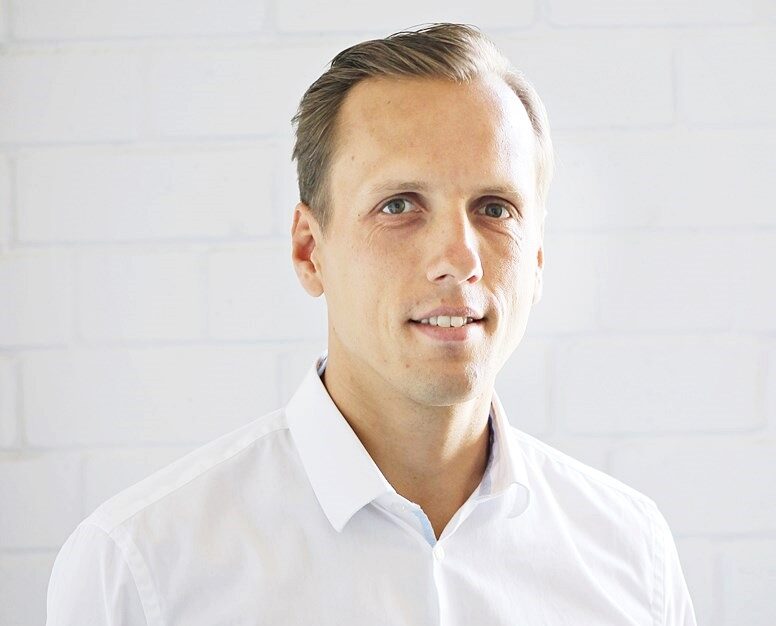
Audrius Guzikauskas

Audrius Guzikauskas

According to Guzikauskas, the theoretical knowledge gained during his studies helped not only in his first job but also later when managing a company: it allowed him to better understand processes, perform certain calculations, and make decisions based on logic. He says that a manager’s day is full of challenges, especially when leading a company of about 500 people with divisions across Europe. The most important thing is to focus on clients and the quality of the services provided whilst maintaining good working atmosphere and communication with colleagues.

“In my opinion, every manager must set the right example. I have the opportunity not to go to work every day, but I do not take advantage of it. Sometimes colleagues ask me why I work if I could be resting. It is my sense of responsibility. I believe that a manager must set an example – if he does not do that, it is difficult to expect others to behave responsibly,” explains the VILNIUS TECH alumnus.

The VILNIUS TECH alumnus also highlights the importance of technology in today’s labor market and the competencies of young specialists.

“Modern students know how to work with the latest programs that did not even exist when I was studying. This gives them a huge advantage. I can confidently say that the most attention should be given to talented young people who understand what they are doing. It is also very important that universities are improving together with technology. This progress is clearly reflected in the high level of studies and the knowledge provided,” he says.

Speaking about young people, Guzikauskas emphasizes that although today’s students have many technical skills, they must also learn the sense of responsibility.

“The most important thing is to make an effort, keep learning, and not give up. This is necessary if you want to achieve success. After all, persistence and consistent work determine both personal and professional success.”


Related news

Award-winning VILNIUS TECH researcher develops new way to reduce diesel emissions
Although transport electrification is increasingly seen as the future, the reality is different—diesel engines remain widely used and are expected to stay in service for at least the next decade. Along with them persists a major challenge: ultrafine particulate matter emissions that pass through conventional diesel particulate filters and contribute to air pollution associated with an increased risk of premature deaths. A Direct Threat to Human Health In Lithuania, the transport sector accounts for nearly 15% of fine particulate matter emissions, posing the greatest risk to residents of major cities such as Vilnius and Kaunas. According to Dr. Sai Manoj Rayapureddy, a researcher at the VILNIUS TECH Faculty of Transport Engineering, the greatest concern comes from particles that are too small to be captured by conventional diesel particulate filters. These particles escape into the environment and eventually enter the human body, where they easily interact with the skin and respiratory system, posing a direct threat to human health. [caption id="attachment_121916" align="alignnone" width="2543"] Dr. Sai Manoj Rayapureddy[/caption] To address this issue, Dr. Rayapureddy conducted research and prepared his doctoral dissertation, Investigation of Acoustic Agglomeration Phenomenon in Compression Ignition Engines Fuelled with Alternative Fuels for Reducing Particulate Matter Emissions. „In a world where pollution continues to increase, diesel vehicles are still widely used, while efforts are being made to reduce dependence on fossil fuels. This research proposes a solution by combining alternative fuel blends that produce lower emissions with the principle of acoustic agglomeration. In this process, sound waves cause ultrafine particles to interact and merge into larger clusters that can then be captured by conventional diesel particulate filters,“ explains Dr. Sai Manoj Rayapureddy, researcher at VILNIUS TECH. Results Exceeded Expectations Dr. Rayapureddy carried out his research in three stages, combining theoretical analysis, numerical calculations, and laboratory experiments. The experiments were conducted using a well-known 1.9-litre Audi-VW diesel engine installed in a VILNIUS TECH laboratory. To investigate how fuel properties affect particulate formation, he tested specially prepared fuel blends with different carbon-to-hydrogen ratios and oxygen content, comparing the resulting emissions with those of conventional diesel fuel. Finally, particulate emissions were measured both with and without the application of sound waves. The results exceeded expectations. The study found that applying acoustic waves reduced particulate emissions from conventional diesel fuel by 17–44%. When alternative fuel blends were used, the reduction increased to an impressive 24–80%. Dr. Rayapureddy also demonstrated that the higher oxygen content and improved surface characteristics of alternative fuels increased particle agglomeration efficiency by as much as 100–190%. „Applying acoustic agglomeration to diesel engine particles is still a relatively new and underexplored research field. I wanted to demonstrate its importance and potential for reducing engine emissions. What surprised and delighted me most was how effectively a long-established theoretical principle worked in practice. My research proved that this method significantly improves the ability of conventional particulate filters to remove harmful particles,“ says the Faculty of Transport Engineering researcher. According to Dr. Rayapureddy, while the future undoubtedly belongs to electric mobility, the present requires an intermediate solution. As the complete electrification of the transport sector is unrealistic within at least the next decade, improving today's technologies and reducing emissions from existing diesel-powered vehicles remains essential. „Implementing this concept could significantly improve the efficiency of existing diesel particulate filters. It would allow us to substantially reduce the fine particulate pollution generated by the diesel engines that are already on our roads and will continue to be used for years to come,“ he adds. A PhD Is Not a Sprint, but a Marathon Dr. Rayapureddy began his academic journey in India, where he earned a Bachelor's degree in Mechanical Engineering. He later moved to Lithuania to complete a Master's degree in Automotive Engineering at VILNIUS TECH before continuing with doctoral studies at the university. Throughout his academic career, he remained focused on making steady progress toward his goals, improving year after year. According to the researcher, writing the dissertation itself was not the most challenging part, as publishing several scientific papers during his doctoral studies helped him develop a clear research structure. „The most difficult part was justifying, revising, or even removing certain parts of the research during the peer-review process. In the end, however, everything worked out wonderfully. Thanks to the guidance of my supervisor and the valuable feedback from reviewers, my dissertation was awarded second place in Lithuania’s Best Doctoral Dissertation Competition. I consider my PhD studies—during which I also completed a second Master's degree in Engineering Economics and Management at VILNIUS TECH—to be the first step toward an academic career. Pursuing a doctorate requires curiosity, hard work, and patience. To everyone considering a career in research, I would like to say this: a PhD is not a sprint, but a marathon.“
More
VILNIUS TECH alumnus Robertas Dargis: “A leader cannot avoid making decisions, even if they aren’t perfect”
Robertas Dargis is a co-owner and chairman of the board of EIKA Group, one of the largest real estate development and management groups in Lithuania. In his professional path, he relies on engineering thinking, business experience, and active public engagement. The VILNIUS TECH alumnus (formerly Vilnius Civil Engineering Institute) openly speaks today about the importance of his studies in shaping his worldview, principles of leadership, and the transformation of Lithuanian business over several decades - from a centralized system to a dynamic, constantly changing market economy. [caption id="attachment_121994" align="alignnone" width="2560"] Robertas Dargis (ELTA)[/caption] According to him, it was during his university years that a fundamental shift in thinking began - from a closed, single-truth model to a broader perspective that encourages critical thinking, independence, and the ability to see the world in a complex way. At the same time, values instilled in the family had a strong influence - responsibility, respect for work, discipline, and the understanding that long-term results are achieved through consistency, not quick decisions. These experiences later became the foundation for both professional decisions and his understanding of leadership, where the most important thing is not perfect decisions, but the ability to make them and move forward. “A key role at the university was played by its lecturers - broad-minded people who did not limit themselves to engineering knowledge and spoke about what was happening in the world and how society was changing. The study environment encouraged not mechanical repetition of knowledge, but the ability to think, collect, and systematize information. This sharply contrasted with the school model, where knowledge reproduction, not understanding, was usually rewarded,” recalls the VILNIUS TECH alumnus. He also notes that after finishing school, moving from the smaller town of Mažeikiai to Vilnius was not only a geographical change, but also an important stage of personal growth. Studies at VILNIUS TECH provided more freedom as well as responsibility: one had to independently seek knowledge, attend seminars, communicate, and learn autonomously. Speaking about his professional path, he shares that his engineering education became an important foundation for thinking. It taught him to structure problems, break them into parts, evaluate them, and solve them consistently. According to him, such an analytical approach is universal and applicable beyond managing an organization and affects everyday life. “At the time when my professional journey began, the concept of business in Lithuania was still forming. There were no private companies or individual initiatives. The entire system functioned in a centralized way, and work took place in a state-regulated environment. Only after independence was restored did the real period of business formation and learning begin. This transformation was not easy - everything had to be learned from scratch: what share capital is, how the market works, what risks and business models are. Mistakes were inevitable, but it was precisely by making and correcting them that experience and understanding were formed,” notes the co-owner of EIKA Group. An important experience for him was also working with people. Although his engineering education provided a strong technical foundation, in practice he initially lacked psychological and social skills. As a young specialist taking on managerial roles, he had to quickly learn how to work with a team, motivate it, and make decisions in real conditions. “The essence of leadership is the ability to make decisions. A leader, in my view, cannot avoid responsibility, even if decisions are not perfect. Often one has to choose between bad and worse options, but the most important thing is to make a decision and move forward,” says R. Dargis. The VILNIUS TECH alumnus also emphasizes that flexibility and quick response are equally important - the ability to adjust decisions when circumstances change. Excessive attachment to one option can hinder progress. “Throughout my professional journey, I have been guided by the understanding that public activity and social connections are inseparable from professional growth. Participation in various activities, working with people and communities helped form social capital, which later became an important part of my business and leadership,” says R. Dargis. In recent years, according to him, one of the most important changes has been digital transformation and the development of artificial intelligence. This is fundamentally changing business processes, consumer behavior, and organizational structures, making adaptation a constant necessity. “Today universities should educate not only specialists, but also broadly thinking individuals who can understand the principles of how the world works and changes, think creatively, and solve complex situations. For students seeking their path, I advise taking an interest in the world, but not forgetting that creating value for society is an important part of personal growth. The ability to be useful to others often becomes the foundation of professional success as well,” advises the VILNIUS TECH alumnus. Finally, reflecting on his path, he emphasizes one of the most important lessons - continuous forward movement. “Even if decisions are wrong, the most important thing is not to stop. Mistakes and failures are part of the process, and the ability to learn from them and move forward determines the final outcome,” says R. Dargis.
More