
Graduate of VILNIUS TECH Saraj Pant: Cybersecurity is both exciting and rewarding

May 27, 2026

Once an Informatics Sciences student at VILNIUS TECH, today Saraj Pant from Nepal leads complex cyber threat investigations as Vice President of Operations at Resecurity. The intense and dynamic industry requires constant learning and adaptation. Yet for Saraj, it offers something rare – a profound sense of purpose, knowing his work contributes to global security.

Paving the way for future challenges

Exploring Europe had long been Saraj’s dream. Drawn to the Baltic region’s blend of culture, history, and innovation, he found the perfect match at VILNIUS TECH, where academic excellence met cultural discovery.

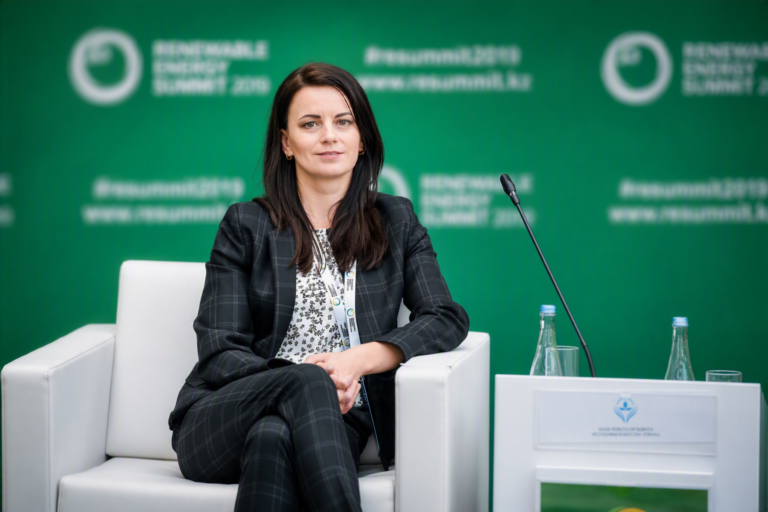
Saraj Pant

Saraj Pant

“The Informatics Sciences study programme matched my long-term goals in technology and cybersecurity, while life in Lithuania created opportunities for personal growth,” Saraj says. “Studying at VILNIUS TECH was not just about completing a degree; it was about gaining global exposure, developing resilience, and preparing for a career where adaptability, critical thinking, and collaboration across cultures are essential for success.”

Learning how to learn

Arriving in a new environment was initially a challenge. The diversity of people and perspectives pushed Saraj beyond his comfort zone. But with time, he adapted, built friendships, and grew confident in navigating new cultures. The challenges he faced during those early study days helped him develop confidence, patience, and resilience. Now, looking back, those initial struggles became valuable lessons that shaped Saraj into a global professional able to adjust to new environments and thrive even in uncertain circumstances.

“VILNIUS TECH offered me much more than just technical knowledge. It taught me how to think, adapt, and innovate,” Saraj recalls. “Assignments were designed to simulate real challenges, helping me practice structured analysis and creative solutions. I learned how to optimise my work process to achieve maximum results with efficient effort. The professors provided guidance, but the most important skill I developed was learning how to learn.”

Protecting governments, businesses, and individuals

Saraj agrees that the ability to self-learn and adapt has become a cornerstone of his career, where rapid change demands constant updating of knowledge and skills.

Saraj Pant

Saraj Pant

As Vice President at Resecurity, his career is intense and dynamic. A typical day at work starts with reviewing active investigations, analysing fresh intelligence, prioritising the most urgent cases, and instructing and motivating his team to maintain efficiency.

The most fulfilling part of his work is investigating complex cyber threats, especially those linked to the deep and dark web, where actionable intelligence requires focus on root cause and evidence collection. The work of Saraj and his colleagues helps organisations defend themselves from cyber threats before an attack can cause damage.

“The greatest reward is seeing the direct impact of my work in protecting governments, businesses, and individuals. Knowing that my efforts contribute to global security gives me a strong sense of purpose. Each day provides me with an opportunity to grow as a professional and as a leader,” says cybersecurity analyst.

Among the most impactful projects Saraj has had the opportunity to lead was the mission to gather intelligence on threats that targeted critical national infrastructure in Southeast Asia. His team analysed malicious networks, tracked criminal activity on the dark web, and collected actionable evidence. The intelligence provided helped strengthen the country’s ability to defend itself against cyberattacks. The project had a lasting impact on national security and highlighted the meaning of cybersecurity work. “It reaffirmed that this career is not only technical but also deeply purposeful,” Saraj reflects.

Theory is just the beginning

With cybersecurity evolving at light speed, this industry requires lifelong learning, which includes studying threat intelligence reports, monitoring new attack methods, exploring emerging tools, sharing experiences with peers worldwide, and focusing on professional certifications and simulations to keep skills sharp.

Saraj Pant

Saraj Pant

Saraj points out the importance of cultivating adaptability, knowing that solutions that work today may become outdated tomorrow. “Curiosity and discipline guide my approach to staying relevant and ensure that I am always ready to respond to evolving threats,” he notes. “Cybersecurity is both exciting and rewarding, but it requires dedication and passion.”

His advice to someone considering the future in this industry would be to remain curious and proactive, to start building practical skills early through labs, simulations, and open-source tools – theory alone is just the beginning.

“Engage in industry discussions, follow news on emerging threats, and experiment with tools to gain hands-on experience. Mistakes are part of learning, and each one brings valuable lessons,” shares Vice President at Resecurity and graduate of VILNIUS TECH. “Focus on strong fundamentals, but also explore the areas that inspire you. Remember, cybersecurity is not only about technology; it is about protecting people and creating meaningful impact.”

Related news

€75,000 Funding Opportunity for Women-Led Deep Tech Startups
Women-led deep tech startups are invited to apply for the European Union-funded "Women TechEU 2" program. This initiative aims to strengthen women's entrepreneurship in the technology sector, foster innovation, and help promising startups prepare for further growth and attract additional funding. Selected participants will receive a €75,000 grant and the opportunity to take part in a six-month tailored business development program. During this period, startups will be provided with mentoring, consulting, and training services designed to accelerate business growth and enhance competitiveness in the international market. The total budget for the "Women TechEU 2" program is €12 million. The plan is to fund 160 women-led startups from across Europe. Application Process The application process for the new call consists of two stages. First, applicants must submit an application for the Eligibility Strand to verify whether the startup meets the program's requirements. Applicants deemed eligible will then be invited to submit a Full Proposal. The eligibility assessment stage began on June 1, 2026. Applications are accepted on a rolling basis, with evaluations conducted weekly – the weekly submission deadline is every Tuesday by 18:00 (17:00 CEST). The first deadline is June 30, 2026, and the final deadline is July 13, 2027. Applicants will receive their eligibility assessment results no later than one week after the respective submission deadline. Who Can Apply? The program is designed for women-led, early-stage deep tech startups. To be eligible for funding, the following conditions must be met: At least one founder or co-founder of the startup is a woman; A woman holds a top-level executive position (CEO, CTO, or equivalent); Women hold at least 25% of the company's shares. Program Objectives The "Women TechEU 2" program aims to: Promote women's entrepreneurship in the deep tech sector; Help innovative startups scale up and attract additional European Union funding; Strengthen European innovation ecosystems; Support the development and commercialization of new technologies. Potential applicants are encouraged to review the application guidelines in advance and avoid waiting until the final deadline to submit their proposals. More information can be found here: https://womentecheurope.eu/active-calls/
More
New doctoral dissertation
VILNIUS TECH Library invites you to follow the published new dissertations. The dissertation „Performance investigation of a hybrid car engine fuelled with gasoline and gaseous mixtures“ („Benziną ir dujų mišinius naudojančio hibridinio automobilio variklio efektyvumo tyrimas“) prepared at VILNIUS TECH by Tadas Vipartas. The dissertation was prepared in 2021–2026. Scientific consultant – Prof. Dr Alfredas Rimkus. The dissertation was defended at the public meeting of the Dissertation Defence Council of the Scientific Field of Transport Engineering in the Aula Doctoralis Meeting Hall of Vilnius Gediminas Technical University at 9 a.m. on 12 June 2026. This dissertation investigates the use of alternative fuels (natural gas and hydrogen) to increase the efficiency of a spark-ignition engine. The impact of different fuels and engine control algorithms on the combustion process and on energy and ecological indicators was determined and evaluated by analysing the emerging technological constraints within the context of a power-split (series-parallel) hybrid powertrain. The dissertation presents a review of scientific literature, analysing the directions for internal combustion engine improvement, the properties of gaseous fuels and the challenges of their application, along with the operating principles of automotive hybrid powertrains. Bench tests were conducted to investigate the effect of late intake valve closing timing on an engine operating on natural gas, and the influence of hydrogen additives on the combustion process and knock control. The numerical analysis of the engine’s combustion process was performed using AVL BOOST™ software, while the energy and ecological indicators of the hybrid vehicle were evaluated through experimental research and numerical simulation in the AVL CRUISE™ software. The following main results were obtained in the dissertation: retarding the intake valve closing timing increased the brake thermal efficiency and NOx emissions while reducing carbon dioxide emissions when the engine operates on natural gas. It was determined that a hydrogen additive in the fuel improves the engine’s energy indicators, but increases nitrogen oxides emissions and the risk of engine knock. Engine knock is effectively managed by retarding the ignition advance angle. Numerical simulation results confirmed that these trends persist during the Worldwide Harmonized Light-duty Vehicles Test Cycle: the use of hydrogen reduces fuel consumption and carbon dioxide emissions, but increases nitrogen oxides emissions. The dissertation results revealed the potential of these technologies and strategies for their application. The obtained data can be applied in the development and selection of advanced engine control algorithms and in the formulation of technologically sound environmental standards. Nine scientific articles have been published on the topic of the dissertation: six in scientific journals indexed in the Clarivate Analytics Web of Science database with an impact factor, one in a scientific journal indexed in the Clarivate Analytics Web of Science database without an impact factor, one in conference proceedings indexed in the Clarivate Analytics Web of Science Conference Proceedings Citation Index, and one in peer-reviewed conference proceedings not indexed in international databases. The research results were presented at three scientific conferences in Lithuania and Poland. Doctoral dissertation readers can search via VILNIUS TECH Virtual Library.
More