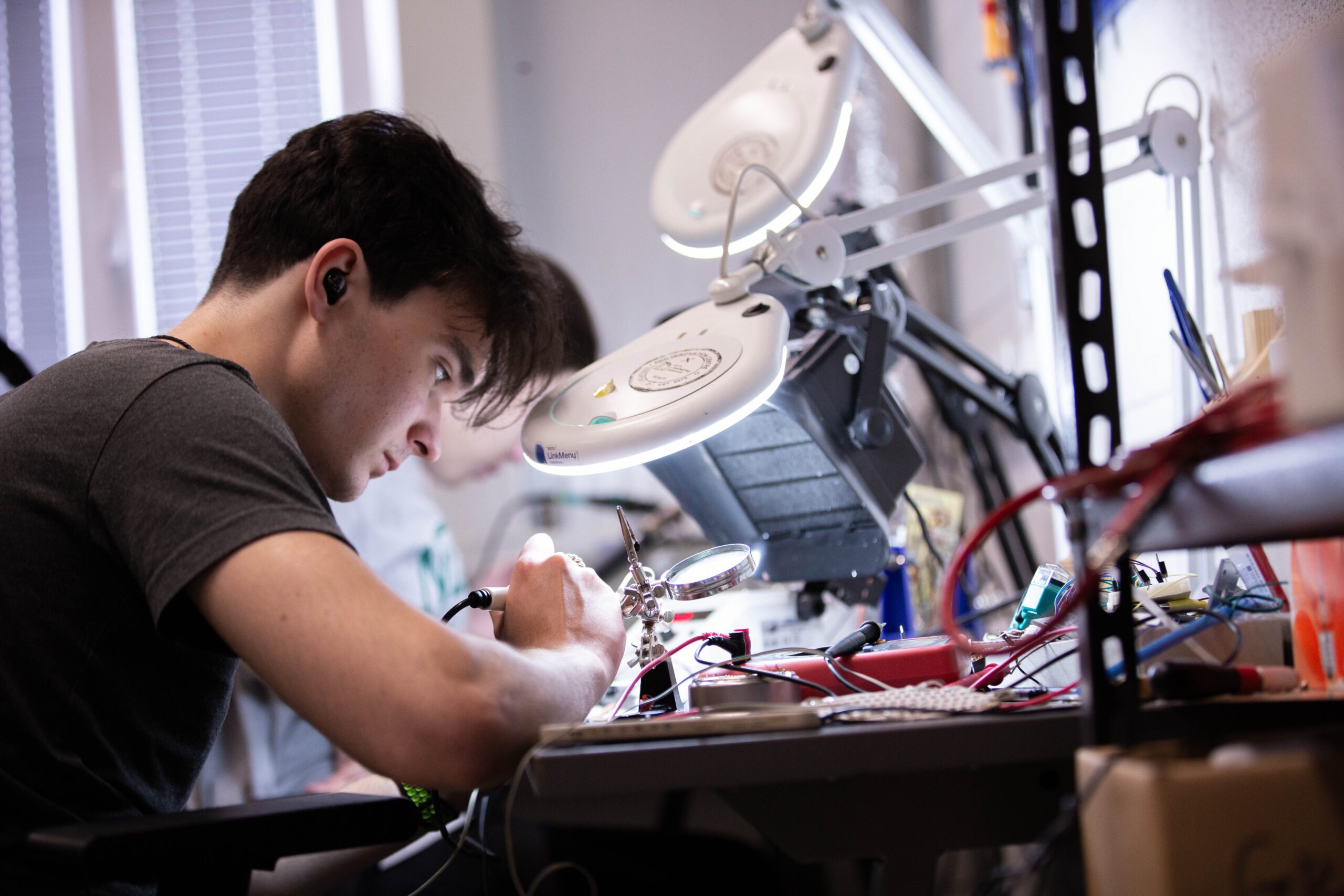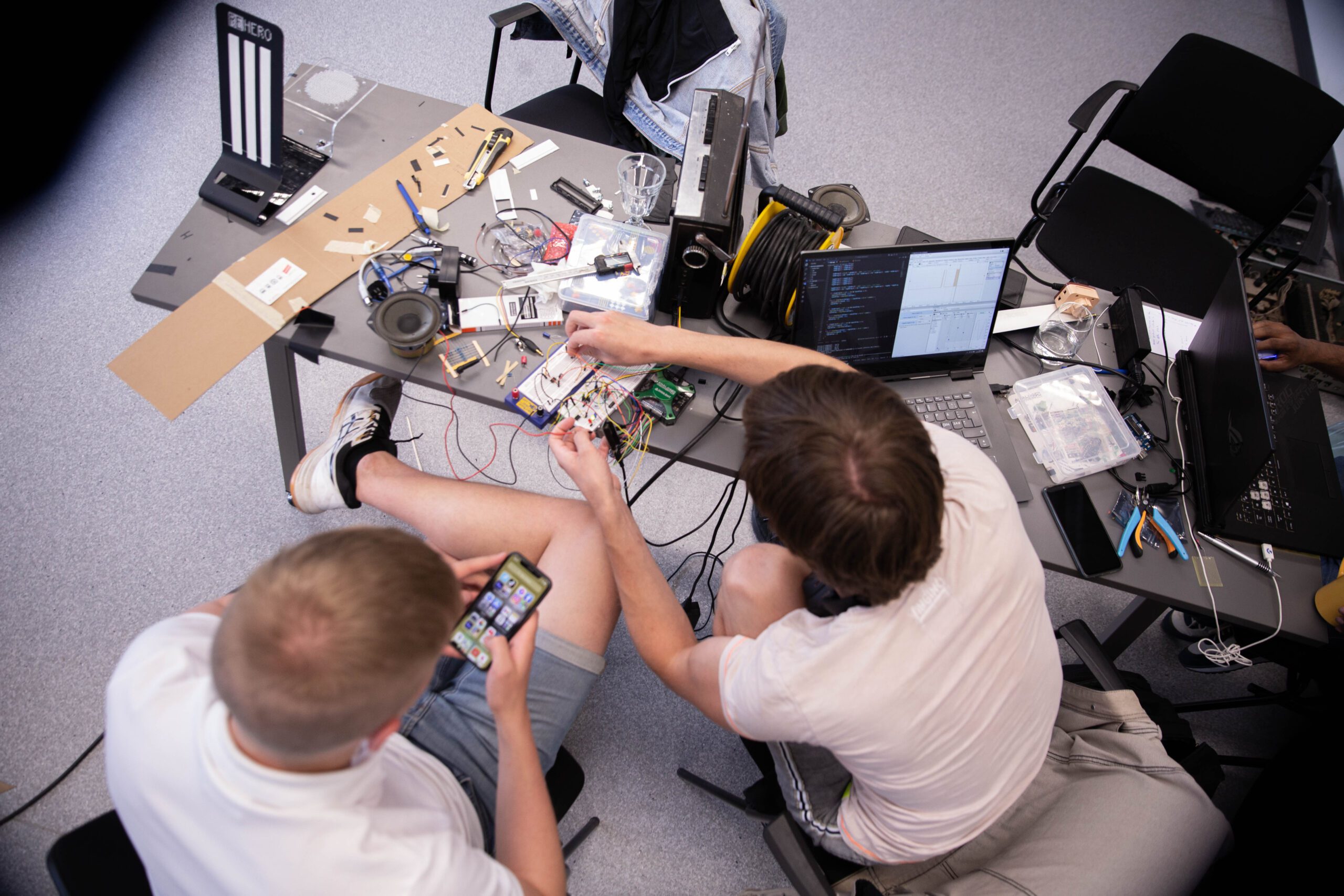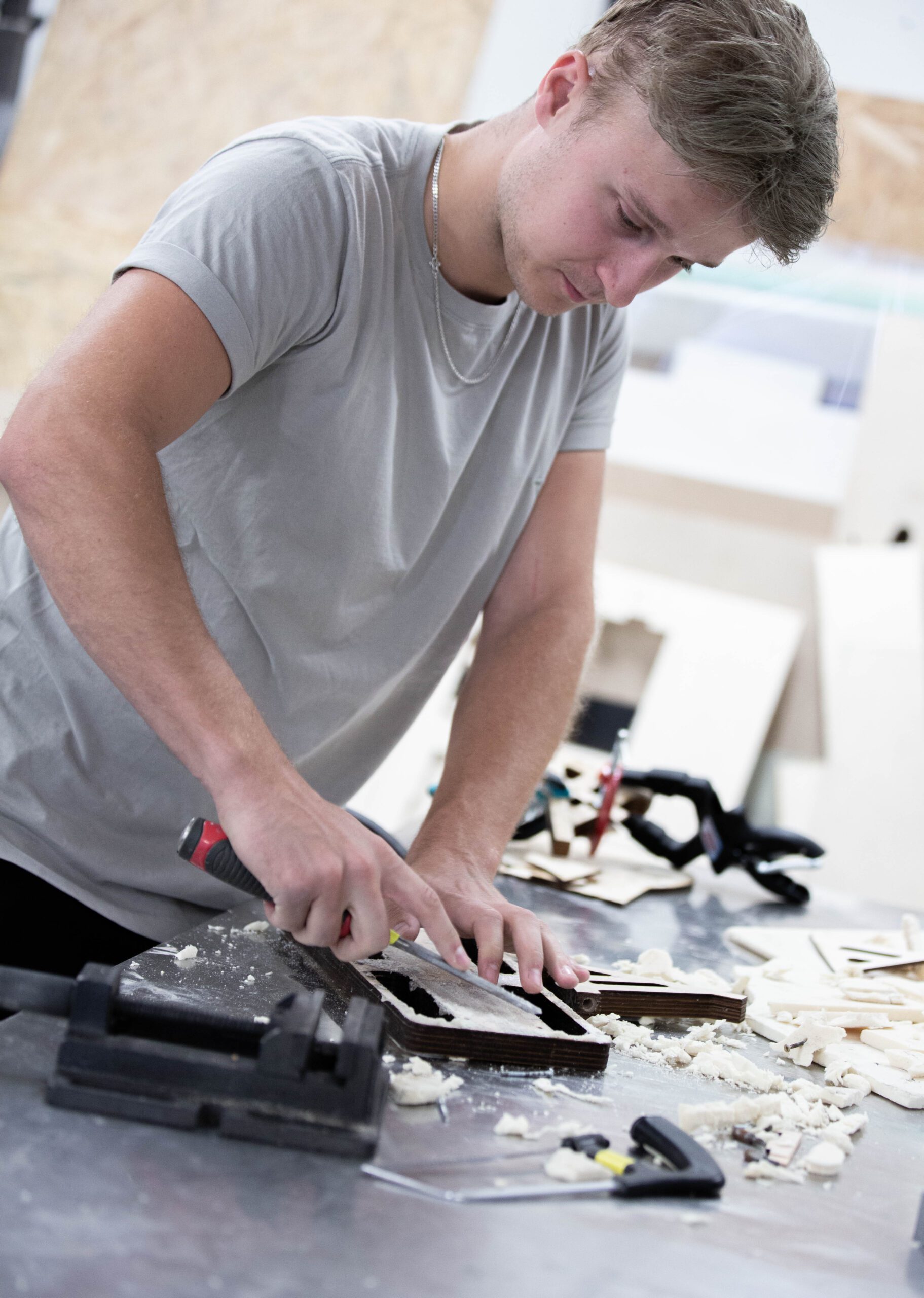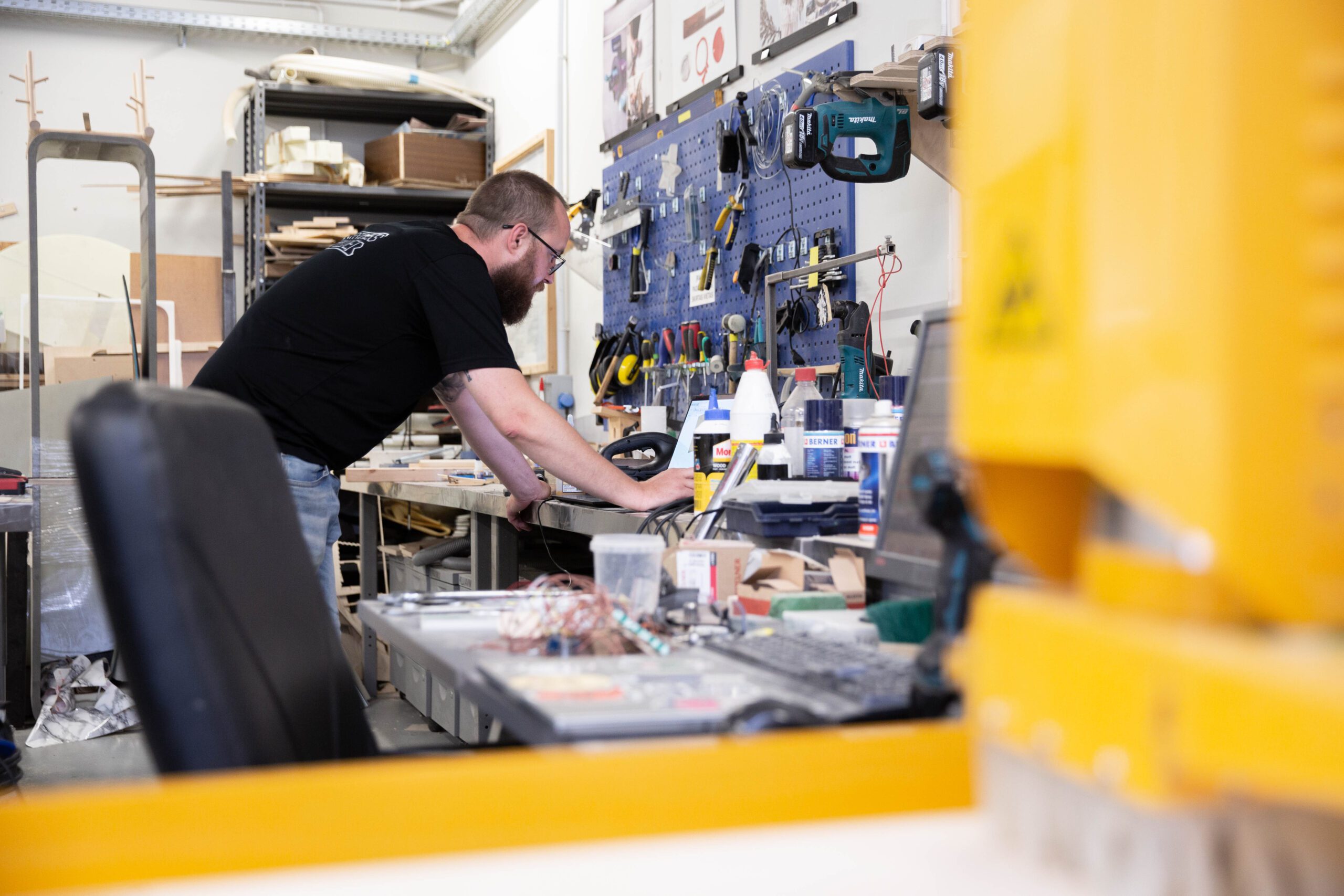
For two weeks, participants of the Erasmus+ program project “Makeademy” sought an answer to this question. Students from Lithuania, Latvia, Denmark, Spain, and Italy attended an intensive summer school, where they learned techniques for problem identification, idea generation, and solution finding. Ultimately, utilizing rapid prototyping and using electronic waste provided by the company “EMP Recycling,” the students developed solutions to identified problems. The summer school was hosted by Vilnius Gediminas Technical University (VILNIUS TECH) Creative and Innovation Center “LinkMenų fabrikas”.
From an artistic installation with holograms to the best business model
The summer school took place in a mixed format – students acquired theoretical knowledge remotely, and the second week took place in workshops at VILNIUS TECH’s “LinkMenų fabrikas.” Lecturers and mentors from VILNIUS TECH’s “LinkMenų fabrikas”, Palermo University in Italy, Aarhus University in Denmark, Riga Technical University in Latvia, and “FabLab Barcelona” in Spain provided theoretical and practical knowledge to the students. The company “EMP Recycling” offered a guided tour of their electronic waste sorting centre.
Five mixed teams of students created product prototypes. Their creative journey culminated in a pitching event where each team had 7 minutes to present their problem, idea, developed solution, business model, target audience, and the technical efficiency of the prototype they created.
The most innovative idea was presented by the team “ReHERO” – a game that allows playing the “Guitar Hero” game with any vintage music cassette. The most technically accomplished prototype was presented by the team “ReBooters.” Their installation named “HOLO Trash” uses holograms to educate people about the importance of waste sorting and recycling. This team used scanned waste from “EMP Recycling”.
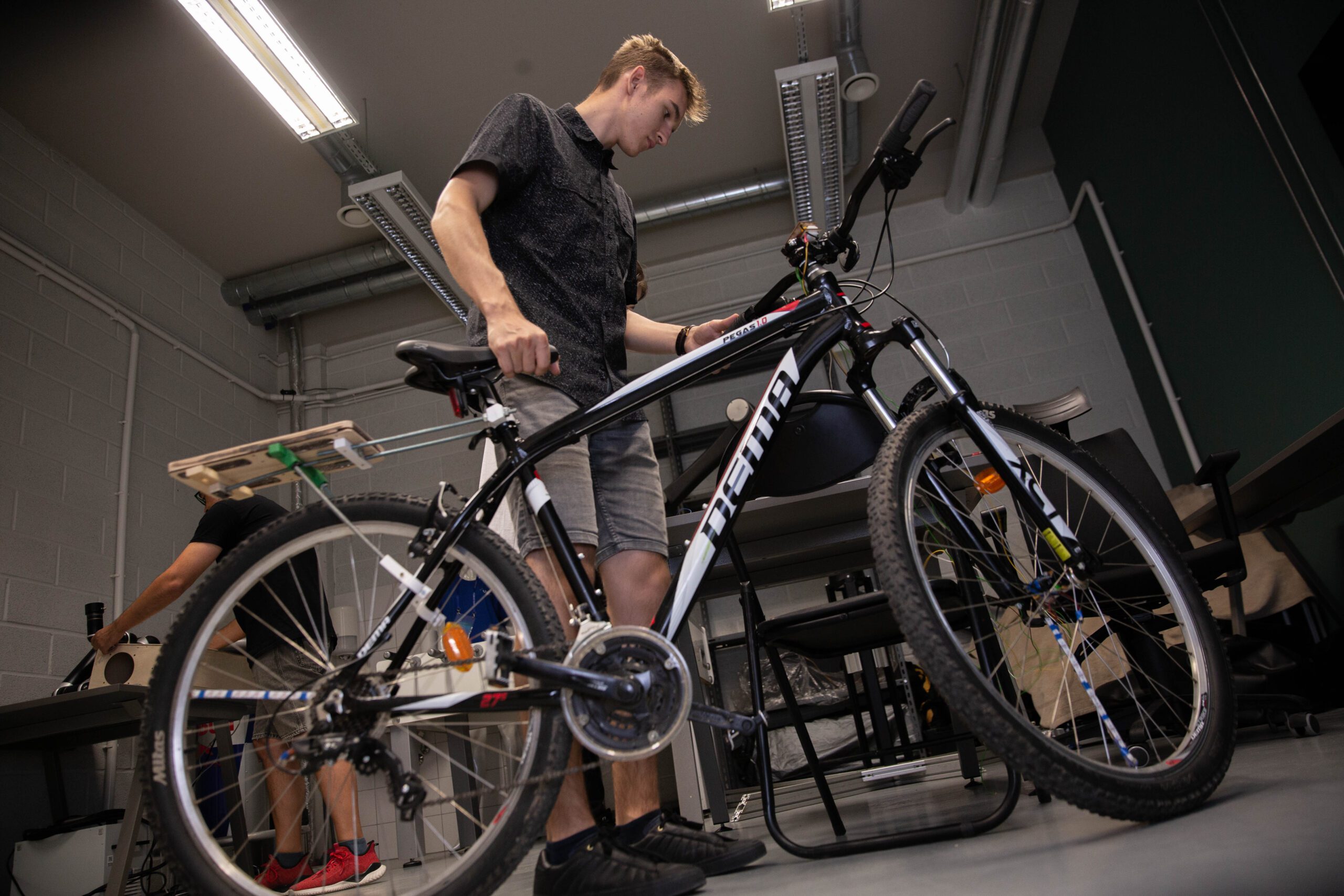
The best business model and presentation were prepared by the team “JOYBIKE.” They aim to create an assortment of innovative, functional, and adaptable bicycle accessories. Their prototype is a Palermo street culture-inspired bicycle accessory that produces musical sounds while pedalling. The team “FOUR-CE” introduced an automatic door lock that also disinfects hands, addressing the problem of bacteria and viruses spread in hospitals and medical facilities.
The most sustainable product prototype was presented by the team “Luminous Link,” which used the most electronic components obtained from the “EMP Recycling” company. Their created prototypes, two interconnected lamps, aim to alleviate the loneliness problem. When one lamp is turned on, the other, located with someone else, also lights up.
The summer school involved students from Vilnius Gediminas Technical University, ISM University of Management and Economics, Aarhus University in Denmark, Palermo University and Rome La Sapienza University in Italy, Riga Technical University, BAU College of Fine Arts and Design, Catalonia Institute for Advanced Architecture and its “FabLab Barcelona” workshops.
Secondary use of waste
One of the challenges of the summer school was to create a new product using electronic waste.
“By giving students the opportunity to turn electronic waste into new creations, we not only develop their technical skills but also provide an important lesson in sustainability. By harnessing the potential of discarded electronics, we aim to educate a generation that understands that today’s waste can become tomorrow’s resources,” says Dr Lina Pečiūrė, Director of VILNIUS TECH’s “LinkMenų fabrikas.”
According to L. Pečiūrė, the students’ creativity was surprising – even though they had the opportunity to use the same materials, the final results of the teams were very different.
The general director of “EMP Recycling” also praised the prototypes created by the students.
“In our daily operations, we aim to turn waste into high-quality resources, return materials to the circular economy, and preserve a clean environment for future generations. We encourage society to avoid waste generation, reuse items, or extend their lifespan. Therefore, we are very pleased that during the summer school, students created new, innovative projects using electronic waste provided by our company, rather than new materials. It is evident that innovation can be fostered by utilizing existing resources. We should promote and discuss such an approach more,” says Darius Valeika, General Director of “EMP Recycling.”
Makeademy project
The Erasmus+ project “Makers Academy: Developing Future Engineer’s Skills” (Makeademy) aims to strengthen engineering study programs by creating innovative teaching methods that help future engineers be flexible and creative. The flexible modular study program “Makeademy,” based on the CDIO (conceive-design-implement-operate) method, is being developed during the project. This method can help students acquire the skills needed to address professional and global challenges.
The project is coordinated by Vilnius Gediminas Technical University, with partners including Riga Technical University (Latvia), Catalonia Institute for Advanced Architecture – FabLab Barcelona (Spain), CESIE (Italy), and Aarhus University (Denmark).
The main results of “Makeademy” include the student experience map “Student Business Idea Development Plan” and study modules for technical creativity, deepening prototyping knowledge, as well as soft engineering skills development. All these results will be available on an open learning resources platform.
Galerija