How will artificial intelligence help save lives?

February 5, 2024
Lung diseases are among the most impactful on the human body and quality of life. Therefore, early diagnosis is a crucial factor for recovery. However, even with the most advanced medical techniques, timely diagnosis of lung cancer, tuberculosis, or the effects of diseases caused by COVID-19 does not always happen.

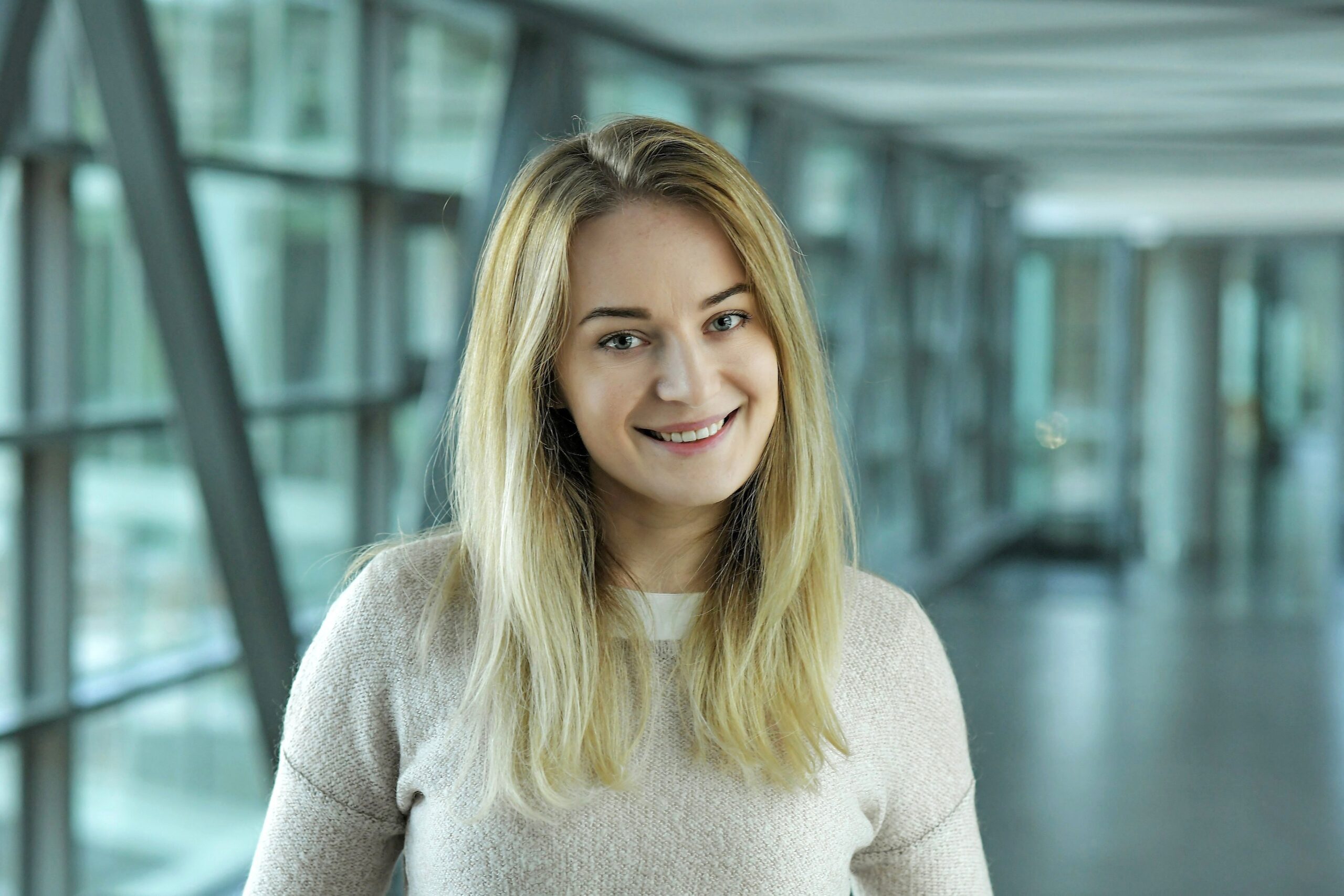
Edita Mazoniene, a doctoral student at Vilnius Gediminas Technical University (VILNIUS TECH) Faculty of Fundamental Sciences, explores how artificial intelligence can assist in identifying the consequences of lung diseases in the early stages of diagnosis.

Treatment for lung diseases costs 380 billion euros annually

Over the past three decades, researchers when analysing various indicators related to chronic respiratory diseases and patient data have found that the prevalence of various lung diseases has increased significantly due to population growth, environmental hazards, and longer life expectancy. It has also been estimated that 4 million people worldwide die from lung diseases, and European Union (EU) countries spend about 380 billion euros on their treatment. Therefore, early diagnosis and accurate classification of the disease, detecting early changes, and assessing the cause rather than the consequence, could gave a great impact on progression of lung diseases globally.

According to E. Mazoniene, most cases of lung diseases go unnoticed. For example, tuberculosis in its early stages is often confused with other diseases, resulting in patients not receiving timely and appropriate treatment, further complicating the condition and progression of the disease.

For faster and more accurate diagnosis of such diseases, E. Mazoniene employs artificial intelligence in her research, specifically convolutional neural networks used for image recognition and object identification in X-ray image analysis.

"Convolutional neural networks can be trained to compare and properly classify radiological images by applying a deep convolutional neural network model that automatically identifies, for example, cases of tuberculosis. After multiple experiments, researchers have achieved an accuracy of up to 98.6%," explains E. Mazoniene.

These networks can also be used for lung segmentation, playing a crucial role in computerized diagnostics. This is because the entire set of acquired images is transformed into a dataset and then analysed internally, layer by layer, rather than visually. This approach provides reliable indicators, unlike decisions based on X-ray interpretations, where changes or forming structures are not always clearly visible, which then gets analysed by a radiologist. Therefore, such data analysis can become a suitable biomedical tool for early lung disease diagnostics, providing significant assistance to doctors in differentiating diseases or identifying early disease.

It will also help in the fight against COVID-19

E. Mazoniene explains that as the world continues to battle various mutations of COVID-19 virus, researchers are still looking for more accurate ways to diagnose and differentiate them from other diseases in a time-efficient way. For this purpose, they employ artificial intelligence and deep learning methods, which enable a quick and efficient analysis, effective comparison of radiological images as well as identification of changes in the lungs.

"It is important to mention that accurate interpretation of radiological image analysis and disease identification in the early stages are crucial as other tests, such as serological tests (antibody detection), can only confirm or deny the presence of the disease, which might get unnoticed due to virus mutations. They also cannot determine lung obstruction (narrowing or blockage of the airways) or other changes. However, radiological images processed by machine learning methods can accurately classify images and assign them to the corresponding disease," explains the researcher.

Text prepared by Milda Mockunaite-Vitkiene, Internal Communication Projects Manager at Public Communication Department, VILNIUS TECH.

Photos by Aleksas Jaunius.
 

Galerija
Related news

Time-resistant student love: Emilija and Marius found each other at VILNIUS TECH
Love from university days does not rust - this is something the heroes of this article unanimously agree on. For them, VILNIUS TECH (then Vilnius Gediminas Technical University) provided not only education, a circle of long-lasting friends, and countless beautiful memories, but also love.  Emilija Gaveniene and Marius Gavenas not only met here, but also got engaged during the diploma awarding ceremony - an event later even broadcasted on national television.  First of all, tell us how you met each other and your love story began. Emilija: Our story began completely by chance. In the summer of 2013, after finishing school, I received a call from the Student Representation of the Faculty of Transport Engineering. They invited me, a first-year student, to a freshmen camp. Without much hesitation, I agreed, although I had been admitted to the Entertainment Industries study program at the Faculty of Creative Industries. I clearly remember seeing Marius on the main university stairs when I arrived - his appearance and self-confidence caught my attention. At the first-year student camp, there was a presentation of the student representation. After the event, we sat together on a bench and talked for about half an hour about the representation and life choices. After the camp, we each returned to our student routine, until we met again on May 8, 2015, at the student representation anniversary. That evening we danced, and since then we’ve been inseparable. Marius: Emilija still does not believe it, but I noticed her during the very first introduction game at the freshmen camp in Aukstadvarys. The shy Samogitian girl somehow caught my attention, and in the evening sitting on the bench was not quite as accidental as it seems. Marius, you proposed during the graduation ceremony. Why did you decide to propose in this way? Were you nervous in front of such a large audience? Marius: It turned out that this proposal perfectly summarized the study cycle. We met on Emilija’s first day at the university and committed to each other on the last. I was not only studying but also actively involved in the student representation, so I felt a special connection to the Alma Mater. [caption id="attachment_122391" align="alignnone" width="2048"] Emilija ir Marius[/caption] As for the idea itself, I was never afraid of attention, and I was not scared by it until the very last moment. Only when I was already kneeling and people started cheering did I become very emotional, and I am not even sure if I managed to say the standard “Will you marry me?” Also, I must thank the university staff who encouraged me when I doubted whether it was a good idea. Emilija, was this move unexpected? Or did you suspect something? Emilija: At that time we were living separately, so it was a complete surprise. We had been together for about three years, so I secretly sometimes dreamed about engagement. The only small hint was that the evening before the proposal Marius asked what my favorite song was. But I really could not have guessed it would happen during the graduation ceremony. Your proposal video became very popular on social media and was even featured in various media outlets. Did this bring additional emotions? Emilija: The emotions were overflowing! We also received a lot of media attention - we were shown on LRT news, on the show “Good Morning, Lithuania,” and radio stations called us. We were happy to share our joy. Marius: The attention was unexpected. When planning it, I definitely did not think it would become so public. Friends joked that I should have put an advertisement on my back and monetized it. How did your story continue? Emilija: Soon after the engagement we moved in together into our first shared apartment. A year later, in 2018, we had a big wedding, where Marius prepared a slideshow presentation telling our story. It was the highlight of the celebration. Later we bought our first home, and five years later we had our daughter Beata. She fills our lives daily with laughter, joy, and maturity. [caption id="attachment_122387" align="alignnone" width="1361"] Emilija ir Marius[/caption] How do you live now? How has your love grown? What is your professional field? Emilija: We are currently in a mature stage of love - family health and peace have become the most important things. We enjoy parenthood but still make time for each other. Our daughter Beata is 2.5 years old, so we are growing together with her. I recently returned from maternity leave and work as a senior customer service manager at Lindstrom. Like many mothers, I combine work and family. Marius: A friend wished us at our wedding: “May you always have something to look forward to.” That really helps. We have future plans and are moving toward them. Thanks to Emilija’s enthusiasm, we travel a lot, and traveling strengthens our relationship and deepens love. Professionally, I develop technical sales projects, where my engineering education and confidence gained in student representation help a lot. Do you think university love really does not rust? Do you know other couples who met at university and are still together? Emilija: I think we are living proof that it truly does not rust - on the contrary, it only gets stronger. We have many friends who also met at university and are still together. [caption id="attachment_122393" align="alignnone" width="1707"] Emilija ir Marius Gavėnai su dukrele[/caption] Marius: Where else do people meet anyway? What would you wish to the VILNIUS TECH community as former students? Emilija: We wish current and future students to be curious, active, and boldly engage in university life. Do not overthink every life choice, but rather enjoy everyday life - you never know where or when you might meet your life partner. Marius: I highly recommend using student status. While being a student, a lot is allowed and much is forgiven, so it is the best time to try yourself in different fields, go on Erasmus+ exchange, work different jobs, and try hobbies. Prepared by: Egle Kirliauskaite-Blazeviciene Photos: from personal archive
More