• University
  • News and events

Hydrogen Use in Spark Ignition Internal Combustion Engines – Scientific Seminar at the Faculty of Transport Engineering

March 20, 2025

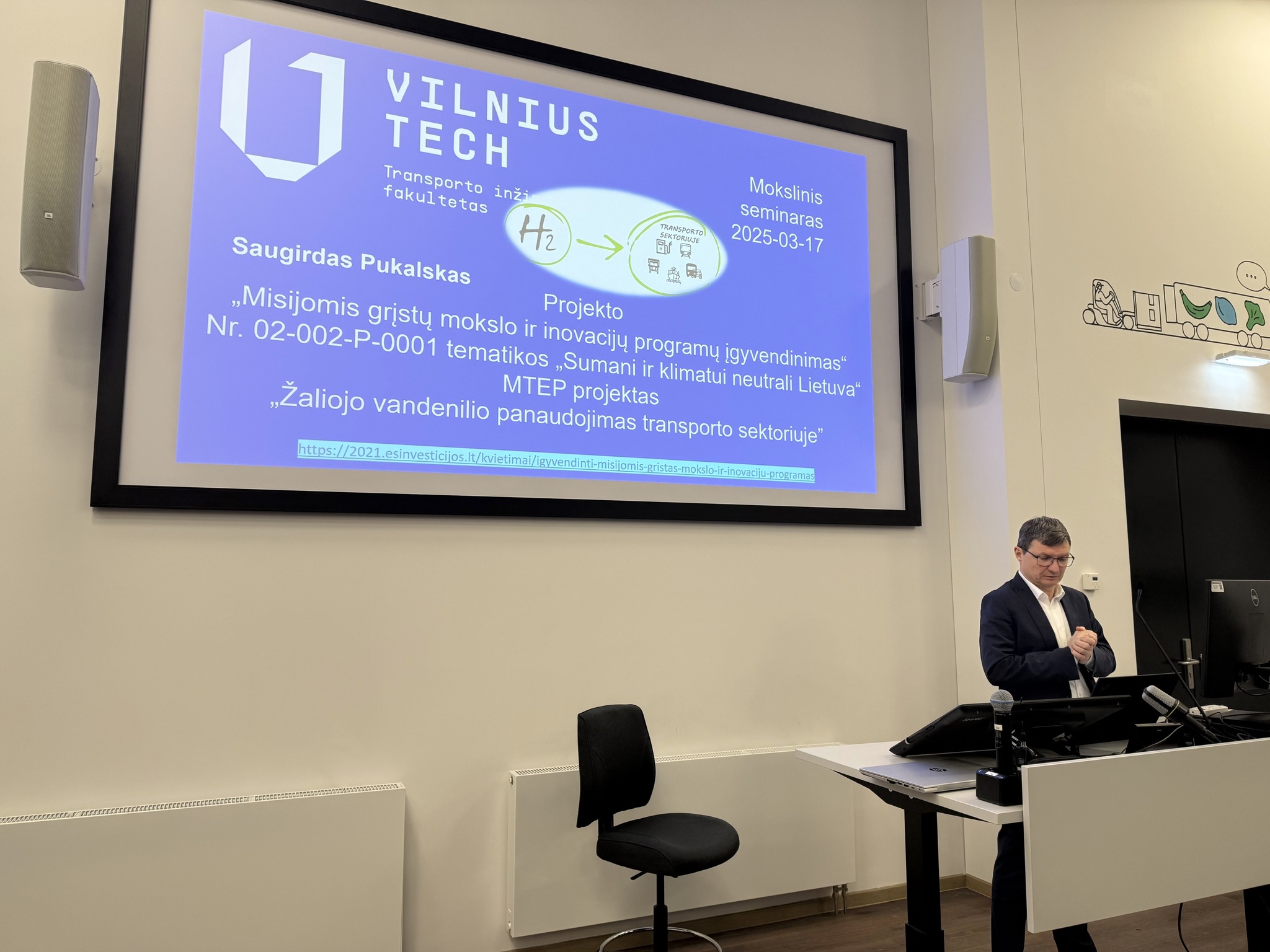
On the 17th of March, a scientific seminar was held at the Faculty of Transport Engineering at VILNIUS TECH, where the topic "Hydrogen Use in Spark Ignition Internal Combustion Engines" was presented. The seminar speakers, Associate Professor Dr. Saugirdas Pukalskas, Head of the Department of Automotive Engineering, and Professor Dr. Alfredas Rimkus, shared the latest scientific research to better understand the potential of hydrogen as an alternative fuel.

The seminar featured the R&D project "Use of Green Hydrogen in the Transport Sector," implemented under the project "Implementation of Mission-Oriented Science and Innovation Programs" No. 02-002-P-0001, under the theme "Smart and Climate-Neutral Lithuania." The goal of the project is to create a hydrogen supply system for conventional vehicles with internal combustion engines to reduce CO2 emissions in the transport sector and contribute to mitigating climate change.

The project, carried out in collaboration with JSC „SG Dujos Auto“, started in September, 2023 and will continue until April, 2026. During this time, a hydrogen supply system will be developed and tested, allowing part of the conventional fuels (gasoline or diesel) to be replaced by green hydrogen produced from renewable energy sources.

Project Goals and Results

One of the main goals of the project is to reduce CO2 emissions in the transport sector, where emissions make up a significant portion of all greenhouse gas emissions. The results of the project include:
• Six scientific articles on the possibilities of hydrogen use in the transport sector;
• A hydrogen supply system prototype and model, developed in collaboration with SG Dujos Auto;
• A research report summarizing the research and results obtained.

In addition, the project activities include the simulation of combustion processes for mixtures of hydrogen and conventional fuels, as well as driving modes of vehicles, the development of the hydrogen supply system, experimental engine tests, engine durability studies, and system improvements and adaptation for use in vehicles.

Climate Change Challenges and Hydrogen Potential

Project implementers emphasize that one of the most pressing global issues today is climate change, particularly due to CO2 emissions, the main source of which is the transport sector. To contribute to the reduction of these emissions, the project will test a hydrogen supply system that will allow the replacement of part of traditional fuels (gasoline or diesel) with green hydrogen. This technology could not only reduce emissions but also help achieve a more sustainable and low-pollution future for the transport sector.

The project plans to acquire unique hydrogen production and engine testing equipment that will allow the study of hydrogen usage possibilities in spark ignition internal combustion engines. Additionally, various tests will be conducted with different hydrogen and conventional fuel or biofuel ratios to find the most efficient ways to integrate these fuels into vehicles.

Insights of the Scientists

Assoc. Prof. Dr. Saugirdas Pukalskas, speaking about hydrogen use in the transport sector, emphasized the technological challenges associated with integrating hydrogen into existing internal combustion engines. He presented his research on various methods for using hydrogen and other alternative fuels, as well as discussed possible engineering solutions that could ensure the smooth application of these technologies in vehicles.

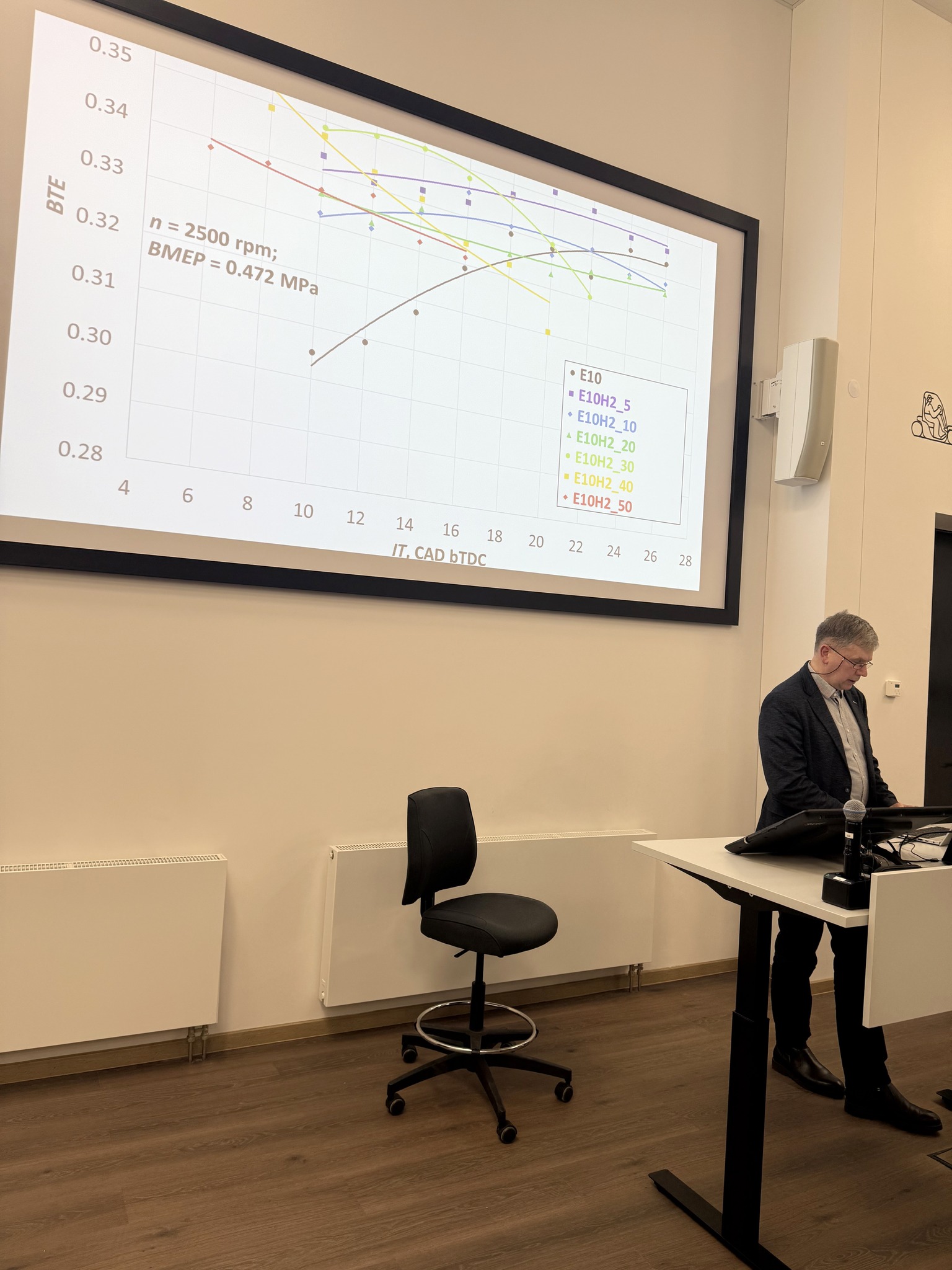
Meanwhile, Prof. Dr. Alfredas Rimkus presented research and its results, analyzing the effects of hydrogen on the performance of spark ignition internal combustion engines. Initial experimental tests were conducted at VILNIUS TECH laboratories, and based on them, an article on hydrogen's impact on vehicle energy and environmental characteristics was published in the journal Applied Sciences. In the study, dual fuels (gasoline and hydrogen) were used. In the first part of the research, tests were conducted by injecting 5% hydrogen into the engine's intake manifold, and energy and environmental performance "maps" were created for different operating modes. In the second part, a numerical simulation of the vehicle’s "WLTC" driving cycle was conducted, which showed an increase in energy efficiency and a reduction in emissions of pollutants such as CO and CH. However, it was noted that nitrogen oxide emissions increased due to more intense hydrogen combustion. As experimental tests continued, significantly increasing the hydrogen concentration in the internal combustion engine fuels highlighted more of hydrogen’s positive properties and challenges. Based on already known technologies and new solutions, hydrogen usage research is ongoing, and in the near future, plans are to test a vehicle on the road that would have a significant portion of its fuel made up of hydrogen.

Scientific Research and Innovation

The research results presented by the seminar speakers, Assoc. Prof. Dr. Saugirdas Pukalskas and Prof. Dr. Alfredas Rimkus, confirm the potential of hydrogen as a clean energy source capable of contributing to CO2 emission reduction. Professor Dr. A. Rimkus presented research on the efficiency of hydrogen use in internal combustion engines, while Assoc. Prof. Dr. S. Pukalskas discussed various technological solutions that would help integrate hydrogen into modern vehicles.

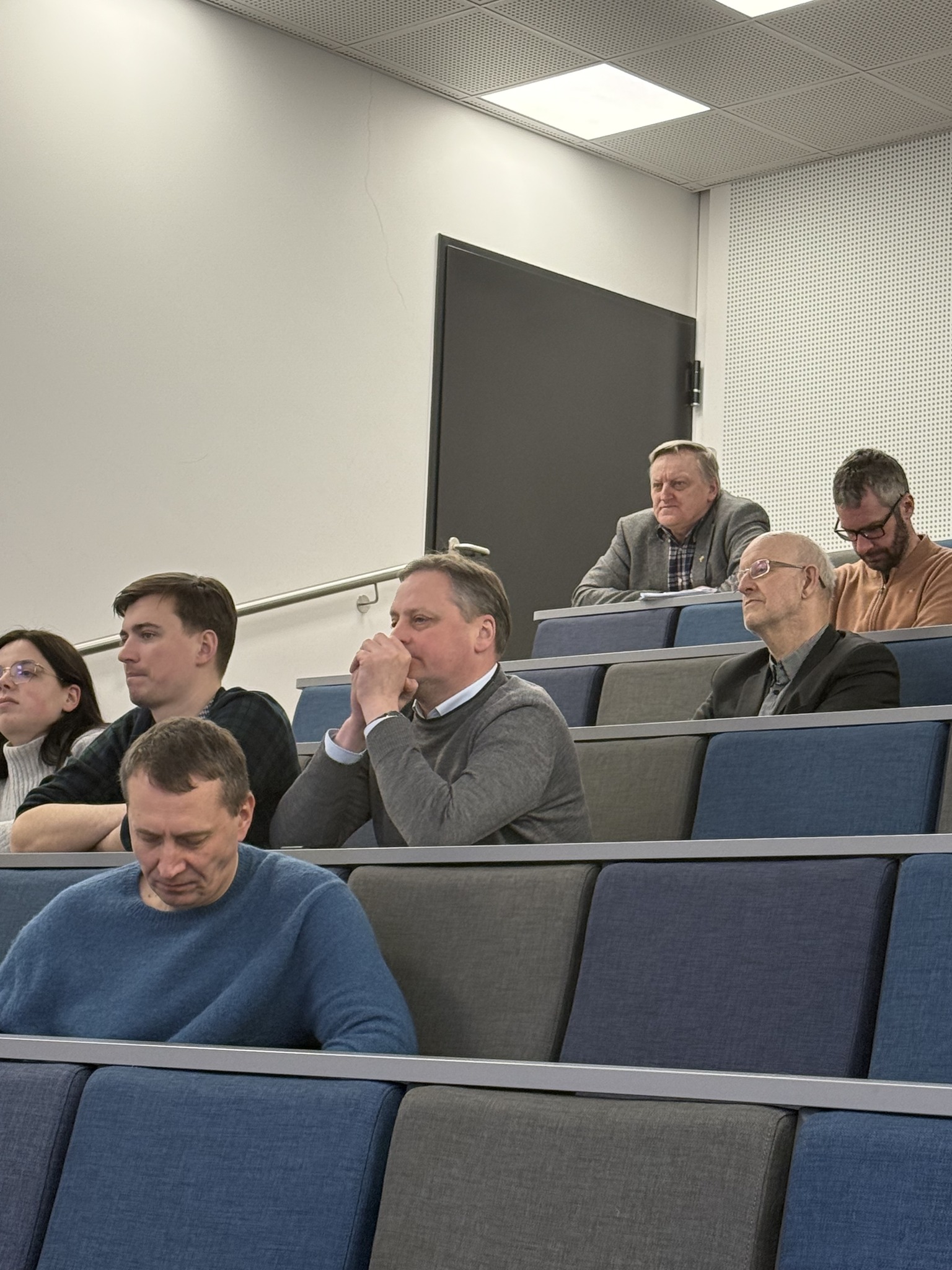
The seminar participants actively engaged in discussions about hydrogen’s potential as an alternative fuel and its role in achieving a climate-neutral transport sector.
 

Galerija
Related news

€75,000 Funding Opportunity for Women-Led Deep Tech Startups
Women-led deep tech startups are invited to apply for the European Union-funded "Women TechEU 2" program. This initiative aims to strengthen women's entrepreneurship in the technology sector, foster innovation, and help promising startups prepare for further growth and attract additional funding. Selected participants will receive a €75,000 grant and the opportunity to take part in a six-month tailored business development program. During this period, startups will be provided with mentoring, consulting, and training services designed to accelerate business growth and enhance competitiveness in the international market. The total budget for the "Women TechEU 2" program is €12 million. The plan is to fund 160 women-led startups from across Europe. Application Process The application process for the new call consists of two stages. First, applicants must submit an application for the Eligibility Strand to verify whether the startup meets the program's requirements. Applicants deemed eligible will then be invited to submit a Full Proposal. The eligibility assessment stage began on June 1, 2026. Applications are accepted on a rolling basis, with evaluations conducted weekly – the weekly submission deadline is every Tuesday by 18:00 (17:00 CEST). The first deadline is June 30, 2026, and the final deadline is July 13, 2027. Applicants will receive their eligibility assessment results no later than one week after the respective submission deadline. Who Can Apply? The program is designed for women-led, early-stage deep tech startups. To be eligible for funding, the following conditions must be met: At least one founder or co-founder of the startup is a woman; A woman holds a top-level executive position (CEO, CTO, or equivalent); Women hold at least 25% of the company's shares. Program Objectives The "Women TechEU 2" program aims to: Promote women's entrepreneurship in the deep tech sector; Help innovative startups scale up and attract additional European Union funding; Strengthen European innovation ecosystems; Support the development and commercialization of new technologies. Potential applicants are encouraged to review the application guidelines in advance and avoid waiting until the final deadline to submit their proposals. More information can be found here: https://womentecheurope.eu/active-calls/
More
New doctoral dissertation
VILNIUS TECH Library invites you to follow the published new dissertations. The dissertation „Performance investigation of a hybrid car engine fuelled with gasoline and gaseous mixtures“ („Benziną ir dujų mišinius naudojančio hibridinio automobilio variklio efektyvumo tyrimas“) prepared at VILNIUS TECH by Tadas Vipartas. The dissertation was prepared in 2021–2026. Scientific consultant – Prof. Dr Alfredas Rimkus. The dissertation was defended at the public meeting of the Dissertation Defence Council of the Scientific Field of Transport Engineering in the Aula Doctoralis Meeting Hall of Vilnius Gediminas Technical University at 9 a.m. on 12 June 2026. This dissertation investigates the use of alternative fuels (natural gas and hydrogen) to increase the efficiency of a spark-ignition engine. The impact of different fuels and engine control algorithms on the combustion process and on energy and ecological indicators was determined and evaluated by analysing the emerging technological constraints within the context of a power-split (series-parallel) hybrid powertrain. The dissertation presents a review of scientific literature, analysing the directions for internal combustion engine improvement, the properties of gaseous fuels and the challenges of their application, along with the operating principles of automotive hybrid powertrains. Bench tests were conducted to investigate the effect of late intake valve closing timing on an engine operating on natural gas, and the influence of hydrogen additives on the combustion process and knock control. The numerical analysis of the engine’s combustion process was performed using AVL BOOST™ software, while the energy and ecological indicators of the hybrid vehicle were evaluated through experimental research and numerical simulation in the AVL CRUISE™ software. The following main results were obtained in the dissertation: retarding the intake valve closing timing increased the brake thermal efficiency and NOx emissions while reducing carbon dioxide emissions when the engine operates on natural gas. It was determined that a hydrogen additive in the fuel improves the engine’s energy indicators, but increases nitrogen oxides emissions and the risk of engine knock. Engine knock is effectively managed by retarding the ignition advance angle. Numerical simulation results confirmed that these trends persist during the Worldwide Harmonized Light-duty Vehicles Test Cycle: the use of hydrogen reduces fuel consumption and carbon dioxide emissions, but increases nitrogen oxides emissions. The dissertation results revealed the potential of these technologies and strategies for their application. The obtained data can be applied in the development and selection of advanced engine control algorithms and in the formulation of technologically sound environmental standards. Nine scientific articles have been published on the topic of the dissertation: six in scientific journals indexed in the Clarivate Analytics Web of Science database with an impact factor, one in a scientific journal indexed in the Clarivate Analytics Web of Science database without an impact factor, one in conference proceedings indexed in the Clarivate Analytics Web of Science Conference Proceedings Citation Index, and one in peer-reviewed conference proceedings not indexed in international databases. The research results were presented at three scientific conferences in Lithuania and Poland. Doctoral dissertation readers can search via VILNIUS TECH Virtual Library.
More