Learn & travel: ATHENA summer schools & BIPs for students

June 19, 2023

The ATHENA European University Alliance has prepared a whole range of opportunities for students to make the most of their summer. ATHENA presents summer destinations for students who not only want to experience culture and life in ATHENA alliance countries but also to gain valuable knowledge and skills – from technical communication and sustainability to renewable energy and French language and culture. So, let's take a look at the ATHENA summer destinations 2023!

PORTO, PORTUGAL

Oh, Porto – the lovely second-largest city in Portugal, lies along the Douro River. Home to world-famous winery traditions, street art, and (as already mentioned) Francesinhas, Porto can be the place to be this summer. Check the opportunities in Porto:

Summer school: Getting Started with Technical Communication, 03/07-07/07

Technical communication is focused on the user of services or products and is an essential and transversal competence. Moreover, it is a professional area that is booming globally, most notably because of the digital and technological context of today’s world, and the need to inform the users in a clear way in order to create more value in products/services. The 2023 edition is a 5-day intensive face-to-face course, focusing on a general approach to Technical Communication, with a balanced program between theory and practice of approximately 30 contact hours, in a laboratory environment. More information here.

Photo by Everaldo Coelho on Unsplash

MARIBOR, SLOVENIA

Maribor – the city of hundreds of years of winery traditions and unique Slovene cuisine (imagine the mushroom soup with buckwheat mush). Maribor is a beautiful city filled with lots of friendly people and wonderful sights and monuments! Before heading to taste the wonders of Maribor, look at the amazing opportunities the University of Maribor has prepared for you:

Blended intensive programme: Solution Design, 27/08 – 08/09

Are you ready to face a real life problem in an international team of students of different professions and with experienced professors and experts? If YES, don’t hesitate to register for the 2023 Solution Design Summer school! More information here.

Blended intensive programme: 10th International Logistics Summer School – Sustainable Travel: Re-Defining the World of Travel, 28/08 – 05/09

This year’s summer school will provide you with an in-depth look at the logistics aspect of sustainable travel. You will learn about the challenges and opportunities that arise in transporting travellers, goods, and services sustainably and will include resource management, waste reduction, and improving transportation efficiency. More information here.

Blended intensive programme: Renewable Energy Sources, 04/09 – 08/09

During the summer school, students will learn about different types of renewable energy sources, such as hydrogen technologies, solar energy, wind energy, hydro energy and geothermal energy. More information here.

Blended intensive programme: 3rd International Summer School “Organization, Management & Society”, 04/09 – 09/09

Are you curious and innovative? Do you have a desire for new knowledge? Are you passionate problem solver? If you answered yes to at least one question, then you are the right person to join a group of students at Summer School FOV. It is not important your background, whether you are studying to become a Manager, an Economist, a Programmer, a Data Scientist, a Psychologist, Social Scientists. More information here.

Blended intensive programme: Simulation and Games in Nursing Education, 11/09 – 15/09

The University of Maribor, Faculty of Health Sciences, is organizing a SUMMER SCHOOL Simulation and Games in Nursing Education for nursing students with NO FEE for participants. The work will be done in pre-assigned small groups and will cover topics related to the significance of games and simulation in nursing education, 3D infographics creation, simulation escape rooms etc. More information here.

Blended intensive programme: Open Science Summer School, 11/09 – 15/09

The University of Maribor Summer School offers PhD students and young researchers an opportunity to learn and develop skills in the fields of research data management, open access to research results, the use of open research infrastructure, supercomputing resources and the European Open Science Cloud. More information here.

Blended intensive programme: International Summer School “Sustainability in International Business”, 11/09 – 16/09

Sustainability is becoming an increasingly important direction in business operations. It is rooted in the negative consequences of the neoliberal development paradigm in the world and the calls for sustainable development by international organisations and national governments. Apply for the International Summer School and gain insights into the sustainability aspects of international business! More information here.

Photo by University of Maribor

CARINTHIA, AUSTRIA

Klagenfurt is known as the capital of the state of Carinthia in Austria. It is ideally located on Lake Wörthersee, one of Europe’s largest and warmest Alpine lakes, in the southern part of Austria. Klagenfurt is a city of leisure and culture and is definitely worth a visit.
 
Blended intensive programme: Sustainable Entrepreneurship, 16/10-21/10

Teams of students from Austria and from all over the Alps-Adriatic region, as well as from Barcelona and ATHENA countries, will develop business ideas embedding sustainability and the SDGs. This cross-border collaboration does not only contribute to the entrepreneurial mindset of the students, it also strengthens their consciousness about sustainability and helps them develop intercultural and language skills. More information here. Registration here. Deadline for registration: 30/06. 10 places have been reserved for participants from ATHENA. 

Blended intensive programme: Diversity in the Digitized World – Challenges and Opportunities for (Re)establishing Social Justice, October

The programme is going to be held in Carinthia, Austria, in October. More information soon to be published: here.

Blended intensive programme – winter school: DEVOS – DEVeloping Outstanding Sustainable Entrepreneurship Competencies, 16/10 – 31/10

The purpose of this course is to develop exceptional and sustainable business competencies based on the "Global case study challenge" programme. More information to be published soon here. 

Klagenfurt, Austria

ORLÉANS, FRANCE

The fantastic city of Orléans stretches along the banks of the Loire River, with the small Saint-Marceau quarter and a historic center that is ringed by impressive piers and broad boulevards along the river. So, before seeking out Joan of Arc tributes, check out what summer schools ATHENA has prepared for you in Orléans:

International tutorials in Digital tools for built heritage diagnosis and monitoring, 20/06 – 21/06

This event is for those interested in keeping up with the latest developments in digital technologies for preservation and diagnostic support of historic buildings, as well as future trends. More information here.

French Language and Culture Summer School, 17/06 – 15/07

This summer, experience a full French immersion in Orleans (2 or 4 weeks), labelled “City of Arts and History”. Two or four weeks to Practice and make progress in French, Discover the region and its culture, Live French in and out of classes. More information here.

Photo by University of Orléans

Destination – VILNIUS TECH

For students who do not want to travel far or seek impressions within their own community after traveling abroad, Vilnius Gediminas Technical University (VILNIUS TECH) offers the opportunity to participate in summer schools organized by the university.

Blended intensive programme: Mastering music video creation, 19/06 – 30/06

Vilnius Gediminas Technical University (VILNIUS TECH) Creativity and Innovation Centre “LinkMenu fabrikas” invites ATHENA students from all partner universities to participate in the International Summer School of Sound and Vision “Mastering Music Video Creation“! This programme offers a unique opportunity for students to develop their filming, editing, cinematographic lighting, sound recording, design, and other essential video content creation skills. More information here.

VILNIUS TECH PhD Summer school, 17/07–21/07

VILNIUS TECH PhD Summer School is an annual event that aims to provide doctoral candidates with unique professional and personal development opportunities. It focuses on the key competencies required to achieve the best results beyond general doctoral students’ training. More information here.

Blended intensive programme: Sustainability Summer School, 18/09–29/09

The newly established VILNIUS TECH Sustainability Hub presents its first kick-off initiative – Sustainability Summer School. Teachers, students and practitioners are invited to participate in this summer school. Teachers are invited to deliver sustainability related courses in online sessions and to supervise group works during on-site session. Practitioners and business partners are invited to provide problem-based cases to be solved during the summer school. More information here.

Photo by Reza Bina on Unsplash

To apply for funding for participation in blended intensive programmes and summer schools, please register for the event, obtain the letter of acceptance from the receiving institution and then contact International Relations Office at VILNIUS TECH, outgoing@vilniustech.lt and rasita.martise@vilniustech.lt. 

Regarding participation in events organized by VILNIUS TECH, please contact organizers.

ATHENA European University offers ongoing mobility and development opportunities for every member of the community – from students to employees! To learn more about the possibilities offered by ATHENA, subscribe to the newsletter, follow ATHENA on social networks and visit the ATHENA website regularly.
 

Related news

Minister of Foreign Affairs K. Budrys: Lithuania is not an immediate target, but preparedness and resilience remain essential
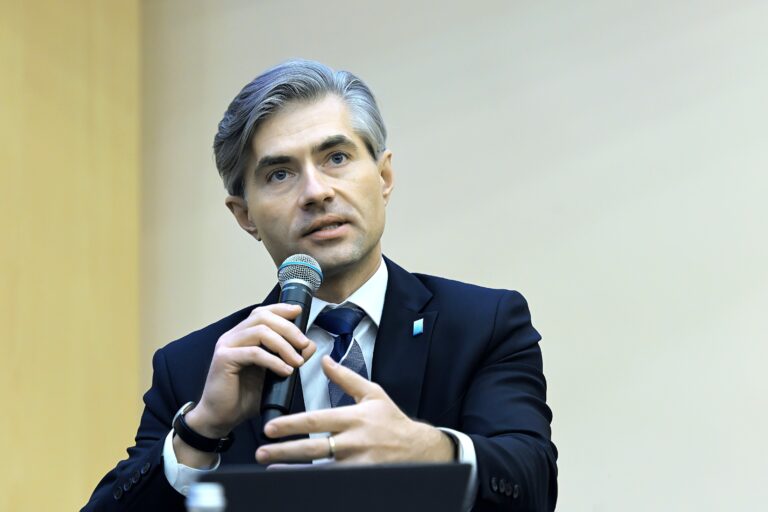
Lithuania’s security situation, the war in Ukraine, relations with the United States and China, and the growing threat of hybrid attacks were among the topics discussed during the public event “Are We Ready for What Comes Next?”, part of the Unlock Lithuania lecture series, featuring Lithuania’s Minister of Foreign Affairs, Kęstutis Budrys. The discussion was moderated by Dr. Vytautas Jankauskas, Adviser on Science and Innovation at the Ministry of Foreign Affairs. [caption id="attachment_136497" align="alignnone" width="2560"] V. Jankauskas and K. Budrys[/caption] Speaking to students and members of the university community, the minister addressed concerns about regional security, explained how Lithuania and its allies are strengthening the country's defence capabilities, and emphasised the importance of public preparedness and reliable information. Lithuania's security depends on preparedness and cooperation with allies Assessing the current security situation in the region, Budrys pointed out that Russia's war against Ukraine has fundamentally changed Europe's security environment. The scale of the conflict, the number of casualties and the use of modern military technologies have created challenges that extend beyond Ukraine's borders. Lithuania also experiences the indirect consequences of the war. Recent incidents involving drones approaching or entering Lithuanian airspace have demonstrated how developments on the battlefield can affect neighbouring countries. According to the minister, such incidents highlight the need to strengthen air surveillance, improve alert systems and ensure that Lithuania can respond quickly to emerging threats. "This is a collective effort. The purpose is to build resilience – the ability to respond quickly and ensure that our society is prepared," he said. Budrys also addressed concerns about the possibility of a direct military threat to Lithuania, emphasising that the current probability of such an attack is low. While Russia's intentions remain a concern, the minister noted that it currently lacks the capabilities to carry out military aggression against Lithuania. "We are not the target at the moment," he said, adding that Lithuania's NATO membership and close cooperation with its allies provide important security guarantees. Public awareness and reliable information are part of national security The minister also addressed the concerns of people who feel unsafe amid growing regional tensions. Drawing on his own experience as a parent, he emphasised that open conversations and clear information can help people better understand potential threats and respond appropriately. He pointed out that preparedness does not mean expecting the worst. Rather, it means knowing what to do in different situations, understanding official instructions and being familiar with available safety measures. For example, people should know where to seek shelter during an alert and how to follow the recommended two-wall safety rule, which means putting at least two walls between themselves and the outside of a building. Budrys encouraged students not to keep their concerns to themselves, but to discuss them with family members, colleagues and university representatives. He also highlighted the importance of critical thinking when following international developments. Noting that many young people get their news from social media platforms such as TikTok, he urged them to question the sources of information and verify what they see online. "Where did you get this information? Where did you read it? How does it work?" he said, describing the questions he regularly asks his own daughter. According to the minister, if the authorities received credible intelligence indicating an imminent threat, the public would be informed immediately. He stressed that transparent communication is essential for building trust and ensuring that people know how to act. Diplomacy remains essential despite growing global tensions The discussion also touched on the future of diplomacy in a world where military conflicts are becoming increasingly frequent. Budrys argued that diplomacy will remain indispensable, as all military conflicts ultimately require political agreements and negotiations to reach a lasting resolution. However, he acknowledged that the international environment is becoming more complicated as the global order shifts from a unipolar to a multipolar system. He warned that fundamental principles of international law, including respect for sovereignty, territorial integrity and the peaceful resolution of conflicts, are increasingly being challenged. Russia's actions in Ukraine, he noted, undermine the international rules established after the Second World War. This is why Lithuania continues to seek international support for Ukraine and advocates for a just and lasting peace. Lithuania seeks a stronger response to Russian hybrid threats In response to questions about Russian sabotage operations, attacks on critical infrastructure and other forms of hybrid warfare, Budrys argued that these activities should be treated as a serious part of Russia's broader military strategy. Lithuania's response, he said, should include increasing the political and economic costs of such operations for Russia. Among the measures he highlighted were further sanctions and efforts to designate Russia's military intelligence service as a terrorist organisation. Budrys emphasised that these threats are not limited to Lithuania or the countries on NATO's eastern flank. All European countries need to assess their vulnerabilities and strengthen their ability to protect critical infrastructure and society. The conversation at VILNIUS TECH gave students an opportunity to raise questions about the issues shaping Europe's security and Lithuania's role in the international community. Throughout the discussion, the minister returned to one central message: security is built not only through military capabilities and international alliances, but also through public awareness, preparedness, resilience and the ability to respond collectively to emerging challenges.
More
Between ships and technology: how can safe vessel traffic be ensured in the port of Klaipėda?
The Port of Klaipėda is Lithuania’s only ice-free port and one of the most important transport hubs in the Eastern Baltic region. Every day, vessels of various types – from passenger and cargo ships to tankers – navigate its waters, making safe vessel traffic one of the port’s key priorities. Heavy maritime traffic, narrower sections of the channel and large vessels moored alongside the quays present challenges for navigation specialists that require not only knowledge and experience, but also advanced technologies. Kamilija Būdvytytė, a graduate of the Marine Navigation study programme, dedicated her bachelor’s thesis to exploring this topic. She was awarded a scholarship by the Klaipėda Industrialists’ Association for research of significance to the city of Klaipėda. In her thesis, „Analysis of the Safe Passing of Vessels with Moored Ships in the Port of Klaipėda Based on the Recommendations and Regulations of International and Local Institutions“, she examined how the speed of a passing vessel and its distance from a moored vessel affect navigational safety. Using an advanced navigation simulator and digital modelling, K. Būdvytytė analysed various vessel-passing scenarios and assessed their impact on mooring systems and overall safety. The research results revealed that even relatively small changes in speed or distance can have a significant effect on the safety of vessel traffic and can help facilitate more effective decisions when organising traffic in the Port of Klaipėda. Although it may seem that the greatest risk is faced by moving vessels, according to the VILNIUS TECH graduate, moored vessels are also exposed to hazards. A passing vessel generates waves, water currents and pressure changes that can affect a moored vessel. These hydrodynamic effects can cause a vessel to be drawn towards the passing ship or pushed away from the quay, placing additional loads on mooring lines and quay fenders. Such situations are particularly sensitive when tankers are moored alongside the quay. „During my research, I paid particular attention to the factors that determine the safe passing of vessels. Some of the most important are vessel speed, the distance between vessels, their size and draught, as well as the width and depth of the channel. Weather conditions are equally important, including wind, currents and visibility. The main principle is simple: the higher the vessel’s speed, the greater the safe distance from a vessel moored alongside the quay should be,“ says K. Būdvytytė. To assess the impact of these factors, she used modern technologies. The research was conducted using the Wärtsilä TRANSAS NTPro 6 navigation simulator, in which the Port of Klaipėda channel was recreated. Different scenarios were modelled to analyse the passing of a Ro-Ro vessel alongside a tanker moored at the quay, while varying the vessel’s speed and the distance between the ships. According to the author, digital modelling provided insights that went far beyond theoretical calculations. The simulator made it possible to assess not only hydrodynamic forces, but also the effects of wind, currents, restricted water depth and changes in manoeuvrability. Such simulations provide an opportunity to safely test a variety of scenarios that would be difficult or even dangerous to reproduce under real-life conditions. „One of the most interesting findings of the research was that even small changes in speed or distance can significantly affect the loads on mooring lines. The highest loads were recorded not when the vessels were approaching or moving away from each other, but when they were sailing parallel to one another in close proximity. For example, when a vessel was travelling at a speed of 8 knots at a distance of just 50 metres from a tanker, the maximum load on a single mooring line reached 7.2 tonnes-force. When the speed was reduced to 4 knots or the distance increased to 120 metres, the loads decreased several times. These results clearly demonstrated that lower speeds and greater distances make a significant contribution to safety,“ explains the VILNIUS TECH graduate. According to K. Būdvytytė, the findings of the research could be useful not only for scientific research but also for the practical operations of the Port of Klaipėda. They could help determine safe sailing speeds more precisely in different areas of the port, improve vessel traffic management procedures, and support the training of pilots and bridge teams. K. Būdvytytė also suggests considering situational speed restrictions in areas where vessels pass particularly close to tankers moored alongside the quays. Today, safe navigation is supported by a wide range of smart technologies. Vessels use electronic navigation systems, radar, Automatic Identification Systems (AIS), electronic charts and various communication solutions. An important role in port operations is played by the Vessel Traffic Service (VTS), which monitors vessel movements in real time and coordinates their actions. „Future ports will increasingly resemble smart transport systems. Artificial intelligence (AI), automated traffic management platforms and so-called digital twins will help predict potential risks more accurately, identify the safest routes and optimise vessel movements. Nevertheless, even as technologies continue to advance rapidly, the human factor will remain crucial – whether it is a pilot, captain or traffic management specialist who makes the final decision in critical situations,“ says K. Būdvytytė. The research conducted by the VILNIUS TECH graduate demonstrates that modern maritime navigation is inseparable from advanced technologies, while safety still depends heavily on people’s ability to make responsible decisions. The study highlights how scientific knowledge, digital modelling and innovation can contribute to safer and more efficient port operations in the future.
More