Engineers Need More Than Technical Knowledge: How Are the Baltic and Nordic Countries Preparing the Next Generation of Innovators?
Engineering remains one of the most promising and sought-after career paths, prompting higher education institutions to continually invest in attracting and training engineering students. However, the accelerating pace of technological advancement is also changing the expectations placed on future engineers. Their competencies can no longer be measured solely by their ability to calculate, programme or build.
The Formula for the Engineer of the Future
Future engineers need a broad range of competencies: technical knowledge, critical thinking, cybersecurity, energy efficiency, ethical responsibility and international collaboration.
An international project, Advancing the Education of Engineers Through AI for Cyber-Sustainable and Energy-Efficient Union (ENERGYCOM), funded by the Nordplus Higher Education programme, is addressing this challenge.
The project aims to harness artificial intelligence (AI) in engineering education to prepare engineers capable of developing technologies that are not only advanced but also secure, energy-efficient and environmentally friendly.
“The ENERGYCOM project demonstrates that AI is not a substitute for humans in this equation. It is a powerful tool that can accelerate learning, help analyse complex systems and uncover new solutions.
“However, it is still up to humans to decide which direction technology should take. That is why educating the next generation of engineers does not begin with the question of what artificial intelligence can do for us. A much more important question is how we can use it to ensure that the systems we develop are safer, more energy-efficient and more beneficial to society,” says Dr Rasa Brūzgienė, project coordinator and Associate Professor at the Department of Computer Science at Kaunas University of Technology.
Why Is Technical Knowledge Alone No Longer Enough for Engineers?
Modern technologies are becoming increasingly interconnected. Electricity grids, manufacturing equipment, cars, buildings and even household appliances collect data, communicate over the internet and make automated decisions.
As these systems become more widespread, three closely interconnected areas are gaining importance: energy efficiency, cybersecurity and the responsible use of AI. Future engineers will need to assess not only whether a system works, but also how much energy it consumes, whether it is secure, what data it collects and what consequences its decisions may have for people and the environment.
“For example, an AI-powered smart manufacturing system can optimise electricity consumption, but if it is not properly secured, a cyberattack could disrupt its operation. Conversely, a highly sophisticated AI model may improve a system’s accuracy while also consuming more computing resources and energy,” says Dr Darius Plonis, Professor at the Faculty of Electronics at Vilnius Gediminas Technical University (VILNIUS TECH), who leads the university’s activities within the project.
Three Key Dimensions of Sustainability
The ENERGYCOM project identifies three interconnected areas of competency.
The first is sustainable engineering, which encompasses the design of mechanical and electronic systems, control technologies, robotics, mechatronics and energy-efficient devices. This means that students learn to assess the entire life cycle of a solution rather than focusing solely on how it performs in a laboratory.
Sustainable computing, meanwhile, covers software, algorithms, cloud computing, autonomous systems, multimedia technologies and decision-making processes. It is not merely a matter of technical proficiency; it can also be an issue of environmental responsibility.
“The third area is connectivity and communication, which brings together computer networks, communication protocols, hardware, data protection and cybersecurity. As the number of Internet of Things (IoT) devices grows, it is important to determine which data should be sent to the cloud and which can be processed directly on the device. Local data processing can reduce transmission loads and energy consumption, but device security and data confidentiality must also be ensured,” says Dr Andrius Katkevičius, Professor at the Faculty of Electronics at VILNIUS TECH.
AI as an Assistant for Students and Lecturers
According to Dr Diana Belova-Plonienė, Associate Professor at the Department of Electronic Systems at VILNIUS TECH, one of the project’s key ideas is to integrate AI-powered assistants into the learning environment.
These assistants can provide substantial support to students by explaining complex theoretical concepts, generating personalised assignments, identifying errors in source code or calculations, providing feedback, analysing learning progress and identifying knowledge gaps. They can also help lecturers develop interactive teaching materials.
However, AI-generated answers are not always correct. A model may produce information that sounds convincing but is technically inaccurate. In engineering, such an error could result in an incorrectly designed circuit, a vulnerable communication protocol or an unsafe decision made by an autonomous system.
“This is why critical thinking is particularly important in the project’s methodology. Students must be able to verify AI-generated results, evaluate the assumptions behind them, compare them with experimental data and take responsibility for the final engineering decision. Human judgement, ethical assessment and professional expertise therefore remain essential,” says the Associate Professor.
The ENERGYCOM activities are expected to strengthen lecturers’ ability to integrate AI appropriately into their teaching, increase student motivation and expand opportunities for international collaboration. Graduates should be better equipped to develop cyber-secure, energy-efficient systems that meet human needs.
The benefits to society could be even broader. Engineers trained to use these technologies responsibly could help develop more reliable critical infrastructure, more efficient energy solutions, safer IoT devices and more transparent AI systems.
“European digital education priorities emphasise that advanced digital skills, including AI, cybersecurity and data science, are important for Europe’s competitiveness and strategic technological capabilities,” says Dr Belova-Plonienė.
Bringing Together Ten Baltic and Nordic Universities
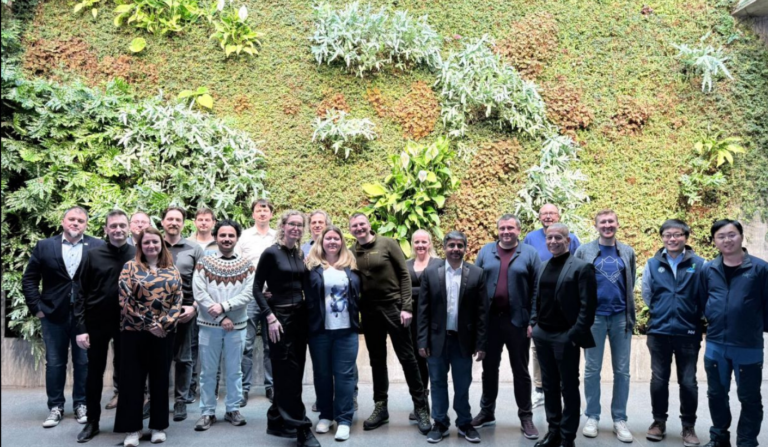
The ENERGYCOM network brings together nine higher education institutions from the Baltic and Nordic countries: Vilnius Gediminas Technical University, Kaunas University of Technology, Riga Technical University, Tallinn University of Technology, the University of Tartu, the University of Vaasa in Finland, UiT The Arctic University of Norway, Reykjavik University, the University of Iceland and Linköping University.
The partners’ expertise spans electronics, mechatronics, robotics, energy, the Internet of Things, signal processing, software development, cybersecurity, AI and human-centred information systems.
This broad range of expertise makes it possible to address engineering challenges from a systemic perspective. Researchers at some institutions can contribute knowledge of energy systems or power electronics, while others can bring cybersecurity expertise or demonstrate how artificial intelligence can be integrated into control, communication and autonomous systems.
Within this network, universities become more than isolated centres of knowledge: they form a shared international laboratory where teaching methods are exchanged, joint practical assignments are developed and new forms of AI-enhanced education are tested.
The project ran from 1 May 2025 to 1 October 2026. It was coordinated by Kaunas University of Technology, while the activities at Vilnius Gediminas Technical University were led by Professor Darius Plonis of the Department of Electronic Systems.
More