A PhD is often associated with demanding academic research, teaching students, and publishing scientific papers. However, these studies are increasingly becoming more practical in nature and can lead to new research beneficial for businesses and investors – or even to a patented invention. “I didn’t want to fall behind,” says Mantas Bertulis, a military officer who chose to pursue a PhD in Economics at Vilnius Gediminas Technical University (VILNIUS TECH), focusing on financial technologies (FinTech).
Perhaps his research and experiments will one day allow you to invest confidently and profitably in stock markets – even without specialized knowledge.
Worried about falling behind while working
M. Bertulis specializes in artificial intelligence (AI) forecasting in financial markets.
“My ultimate goal would be to create a new set of methods capable of predicting markets better than existing tools,” M. Bertulis describes his research. But how successful is artificial intelligence at predicting markets today?
According to the VILNIUS TECH doctoral student, AI models are fairly good at forecasting changes in global markets, but current models still struggle to capture drastic price fluctuations.
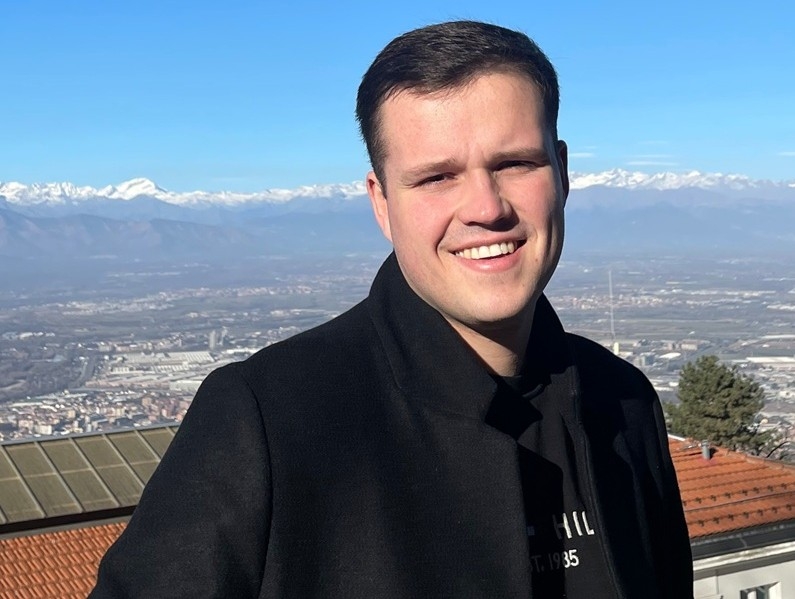
Mantas Bertulis
Finance has been at the center of M. Bertulis’s academic interests from the beginning, though his path to doctoral studies was unconventional. He earned a bachelor’s degree in Port and Shipping Company Finance at the former Lithuanian Maritime Academy (now the Lithuanian Maritime Academy of VILNIUS TECH) in Klaipėda, soon completed junior officer command training, and began serving in the Finance and Accounting Department of the Lithuanian Armed Forces.
His military service brought Mantas to Vilnius, where he took the opportunity to complete a master’s degree in International Business Finance. After obtaining this diploma, he still had one state-funded study opportunity left. He then completed a second master’s degree in Data Analytics at VILNIUS TECH.
“I’m still serving in the military, but I don’t want to fall behind in the latest financial tools and technologies. I noticed that although I work in finance, nothing fundamentally changes, and I started worrying that over time I wouldn’t gain any new knowledge,” recalls M. Bertulis about his biggest motivation for entering doctoral studies immediately after his second master’s degree. “I enjoy analyzing, exploring, and conducting research – because without theory, there can be no practice.”
Research that won’t end up in a drawer
The doctoral student says he would not be afraid to teach or write scientific articles, but what excites him most are the international opportunities. In October, he completed an internship in Spain, where he had the opportunity to interact with scientists researching the same topic as his doctoral dissertation.
“Doctoral students are required to complete a three-month scientific internship. Participation in an international conference abroad is also mandatory,” he explained.
M. Bertulis has already faced a rather direct question – whether his doctoral dissertation would become just another thesis collecting dust in a library archive or drawer.
“I answered, ‘Well, no!’ I aim to create methods that people could use to analyze, invest, and generate returns,” says the VILNIUS TECH doctoral student. “At this moment, I can’t even clearly say whether this work would be more useful for the private sector or for individual investors.”
He is even considering leaving active military service and practically testing the methods he is researching in the stock market.
“Everything only gets easier”
What stereotype about doctoral studies would M. Bertulis most like to dispel?
“Sometimes I hear fears that doctoral studies are extremely difficult. But by then you’ve already completed both bachelor’s and master’s studies — throughout that time you study interconnected subjects, so in my opinion, everything actually gets easier. By the time you enter a PhD program, you’ve already heard about certain topics and understand how things work together. There’s not nearly as much fear or stress,” M. Bertulis assures.
He adds that it is possible to balance doctoral studies with work and military service if you know how to prioritize.
“If you don’t leave everything until the last night, then everything is fine,” he laughs. “If deadlines arrive and you haven’t done anything yet — then yes, you don’t sleep.”
Future PhD students can already explore research topics
Dr. Viktorija Stasytytė, Head of the Doctoral School at Vilnius Gediminas Technical University, says that nearly 200 doctoral students are currently studying at the university across 12 scientific fields. The largest numbers are in mechanical engineering, civil engineering, and electrical and electronic engineering.
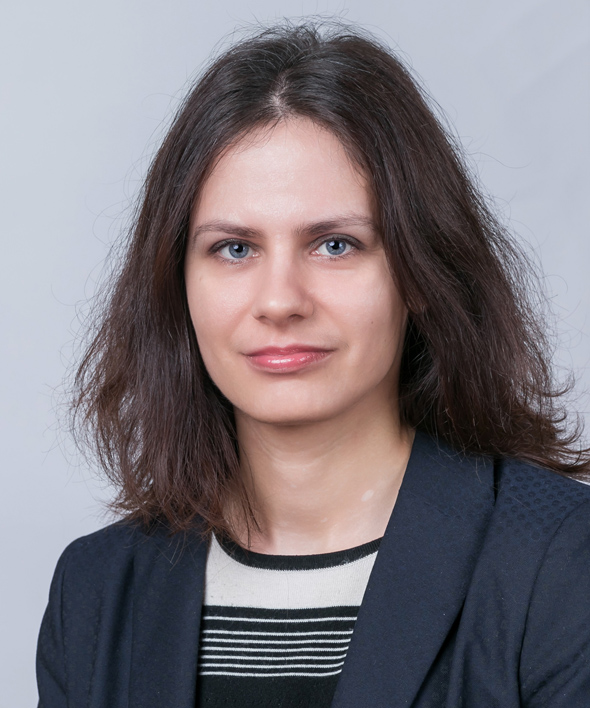
Doc. dr. Viktorija Stasytytė
“However, we also have doctoral students in the social sciences and humanities. The topics of their work are individualized because supervisors planning to take on doctoral students propose specific topics, which we then publish publicly. Once admissions for doctoral studies open (from June 15), prospective doctoral students choose a topic together with a specific supervisor,” explained Dr. V. Stasytytė about the doctoral admissions process.
Students applying for state-funded positions must choose from the offered topics, while those financing their studies themselves may propose their own topic. VILNIUS TECH encourages prospective doctoral students to establish contact with their future supervisor in advance.
“In such cases, both sides benefit – the potential doctoral student sees whether communication works well and whether they like the topic, while the supervisor evaluates whether they see potential in the candidate,” she noted.
Doctoral studies conducted together with business
Doctoral students take pride when the conclusions of their research are published in international scientific journals, but VILNIUS TECH also has many practical engineering fields where students sometimes become part of a research team that registers a patent for a new invention.
“Recently, Tomas Kropas defended his dissertation on an aerothermal heat pump, investigating how frost forms on it and how this reduces the device’s efficiency. The pump was tested in different countries under varying weather conditions. This is a concrete, tangible result – information relevant to specialists throughout Europe,” Dr. V. Stasytytė shared as an example of doctoral research.
Asked about collaboration with business, she revealed that the Research Council of Lithuania allocates several additional doctoral study positions through competition, and part of these positions are dedicated to conducting research together with Lithuanian companies.
“In such cases, one supervisor is appointed from the company and another from the university. Research is carried out both at the university and within the company,” says Dr. V. Stasytytė.
According to her, some students enter doctoral studies immediately after completing their master’s degrees, while others first gain experience in the labor market, discover which field interests them most, and only then return after several years to explore it from a scientific perspective.
“There are still many unexplored and unresearched areas – innovations and artificial intelligence tools are constantly developing. There are definitely fields where new discoveries and research can still be carried out,” concluded the VILNIUS TECH representative.