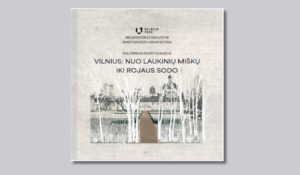
We are pleased to present the new VILNIUS TECH electronic publication „Vilnius: nuo laukinių miškų iki Rojaus sodo“ („Vilnius: From Wild Forests to the Garden of Eden“), edited by Associate Professor Giedrė Ingrida Laukaitytė-Malžinskienė of the Department of Urban Design.
The publication showcases the outcomes of the autumn semester project carried out by third-year students in the Landscape Architecture programme at the VILNIUS TECH Faculty of Architecture. The project comprises a comprehensive analysis of a historic area of Vilnius and its surrounding context, the development of a territorial strategy, and individual proposals for the preservation and future use of the site.
“The title of the project – Vilnius: From Wild Forests to the Garden of Eden – reflects the clear conceptual framework that guided our analytical work. We explored the notion of wildness in Vilnius in relation to the city’s spiritual and cultural development. As future landscape architects, we examined how natural landscape elements, urban transformation, and political processes have shaped the evolution of Vilnius’s cultural landscape.
Saviour’s Hill, the Garden of Eden, Rojaus Street, Blind Alley, Schwarz Tavern, the School for Noble Girls, K. Brzostowski’s golden heart, mysterious wells, the communities of the Jesuits, Missionaries, and Visitandine Order, the 1863 Uprising, Russification, Sovietisation, and other historical factors have all influenced the territory we investigated. The study area is located between Rasų, Subačiaus, Vitebsko, and Drujos streets. It includes the present-day grounds of the Visitandine Monastery and Church, the adjacent hospice, the grounds of the American School (occupying the site of former historic gardens), Vilnius Correctional Facility (also located within the former historic gardens), and the historical territory of the former Garden of Eden, which currently remains open and undeveloped.
Each student develops and presents an individual interpretation of their own ‘Paradise’, while the collective outcome of the group project lies in identifying the historical constants of the site and revealing the strengths and future potential of this currently underused territory.
The project involved analysing the historical development of the site, changes in topography, and vegetation patterns. Drawing on historical maps, texts, and works of art, we traced the relationships between historic buildings and former gardens, documented both surviving and lost heritage elements, explored patterns of life across different historical periods, and examined visual connections, compositional axes, existing and former urban structures, as well as concepts of ecclesiastical heritage — all of which are presented in this publication,” writes Associate Professor Giedrė I. Laukaitytė-Malžinskienė in the introductory section of the publication.
Electronic book (in Lithuanian) >>>