New doctoral dissertation

December 20, 2023
VILNIUS TECH Library invites you to follow the published new dissertations. The dissertation „Investigation of the inkjet printing process, evaluating the dynamics of the ink and the properties of specific printing surfaces“ („Rašalinio spausdinimo proceso tyrimas, įvertinant rašalo dinamiką ir specifinių spausdinimo paviršių savybes“) prepared by VILNIUS TECH, Tim Tofan. The doctoral dissertation was prepared at Vilnius Gediminas Technical University in 2019–2023., Supervisor – Assoc. Prof. Dr Raimondas Jasevičius.

The dissertation was defended at the public meeting of the Dissertation Defence Council of the Scientific Field of Mechanical Engineering in the SRA-I Meeting Hall of Vilnius Gediminas Technical University at 10 a.m. on 20 December 2023.

The most well-known and commonly used printing techniques made the inkjet printing technology more popular among manufacturers for its simplicity and flexibility. Demand for printing products is increasing in such areas as textile printing, microchip production and personalised production, raising quality requirements. Thus, inkjet printing is continuously enhancing its capabilities. With the printing market expected to grow, there are many propositions to improve the productivity of inkjet process. The dissertation aims to study the dynamics of an inkjet droplet at different stages of its formation, considering its interaction with the surface to improve the quality and speed of high-class inkjet printing and improve inkjet printhead testing applications. The present dissertation reviews theoretical and numerical techniques of inkjet printing process modelling by applying the Computational Fluid Dynamics (CFD) module using the finite elements method. Inkjet printing inks are calculated as Newtonian fluid. The ink flow is modelled by the incompressible Navier–Stokes equations. The presented simulation model is solved using a level set method to determine the ink and air interface. Experimental investigation results are reported on the inkjet printing process colour reproduction on different linen fabrics, and modelling results are given for droplet ejecting, printing and interaction processes with the flat surface and the interaction with the inkjet droplet with physically treated polymer surfaces. Based on systematic and analysed numerical simulations of research on the operation of inkjet printing heads, Article 1 describes the inkjet print-head models, which analyse how different inks impact droplet formation and movement at different time steps. Article 2 presents an experimental realisation of colour reproduction by inkjet printing possibilities on different materials in different printing settings. Article 3 presents the physical and numerical experiments on the impact characteristics of inkjet printhead droplets with flat surfaces. Different surface treatment methods were investigated to increase droplet adhesion with flat surfaces. Article 4 investigates the numerical model of the print head modelled in three-dimensional space. Various parameters of drop formation and fall were experimentally determined with a change in the time of the excitation impulse. A numerical analysis was carried out regarding the influence of the excitation time on the droplet formation and further movement. The supplemented articles were published in four peer-reviewed scientific journals listed in the Clarivate Analytics Web of Science database with an impact factor. The study results were presented at three international conferences.

Doctoral dissertation readers can search via VILNIUS TECH Virtual Library.

Related news

Photography Exhibition "Leaving My Body" by Ieva Mizgeraitė
We invite you to visit the photographic exhibition "Leaving My Body" by VILNIUS TECH alumna Ieva Mizgeraitė. This collection is a journey through a woman's inner world – through the body, emotions, self-discovery, and the attempt to look at oneself from the outside. In her work, the photographer explores a body that does not always conform to society's expectations, situations beyond our control, the masks we see around us and sometimes put on ourselves, as well as the constant demand to be strong, equal, and always ready. “Each project was born from a specific emotion – from the noise and dialogue in my mind that arose at that moment. Searching for answers, I left my body and looked at everything from the outside – through the states of my models, their poses, gazes, and bodies. I understood that when you look at yourself from the outside, emotions become temporary. Inner dilemmas that once seemed permanent begin to dissolve,” the photographer says about the concept behind the exhibition. The exhibition brings together anger, resistance, masks, expectations, and freedom. These are not merely personal themes – they are experiences familiar to many women. The photographer says that she captures not faces, but psychological states. For her, photography has become a way of self-discovery and self-reflection – a form of meditation that helps her step away from the noise of the outside world and better understand what truly matters. The author works predominantly in black and white. She has been professionally active in photography since 2025. The exhibition "Leaving My Body" is an introduction to a deeper journey, which is planned to be presented in Gallery A of the library in November 2026.   The exhibition is on display in the foyer on the second floor of the Central Library.
More
Built a global career: VILNIUS TECH alumna encourages students not to be afraid of engineering
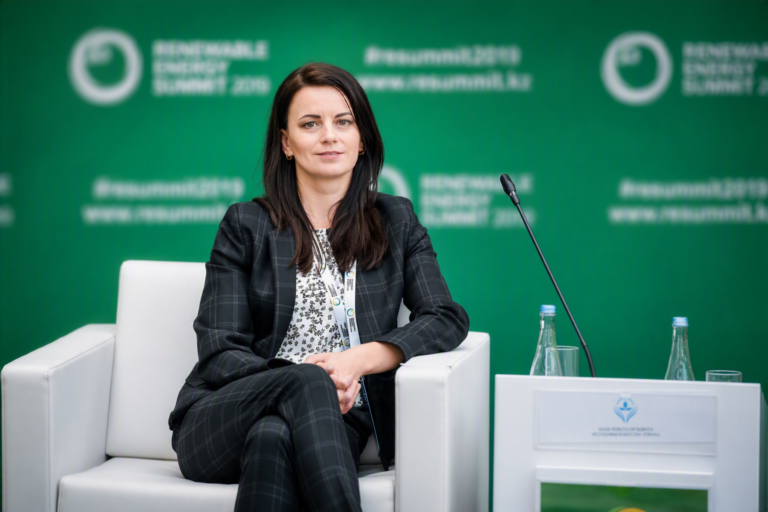
What should you study if you're equally interested in the humanities and the sciences? VILNIUS TECH alumna Katažina Andrukonytė knows this dilemma well. Today, she leads international teams and advises on some of the world's largest energy and infrastructure investments, but when she graduated from school, she had no clear idea which path to choose. „A few setbacks, staying proactive, and choosing the right study programme helped me discover a career that I truly enjoy and find meaningful. If I could give future students just one piece of advice, it would be this: don't be afraid to choose engineering,“ she says. [caption id="attachment_122573" align="alignnone" width="1536"] Katažina Andrukonytė[/caption] Based in Finland, Andrukonytė leads a team at AFRY that works on projects financed by international financial institutions. She coordinates complex energy and infrastructure projects across Europe, Asia, Australia, and other regions, while advising banks, investment funds, governments, private investors, and project developers on investments worth hundreds of millions of euros. Yet more than twenty years ago, she was simply another school graduate trying to decide what to study. Engineering wasn't the original plan „At school, I was equally interested in the humanities and the sciences. I explored several study options, including law. To be honest, engineering wasn't my dream. After I wasn't admitted to my first-choice programme, I decided to study engineering instead—and looking back, it was one of the best decisions I've ever made,“ she recalls. At VILNIUS TECH, she completed a Bachelor's degree in Environmental Engineering Technologies, followed by a Master's degree in Environmental Engineering and Management. Later, encouraged by her employer, she also earned a Master's degree in Building Energy Engineering. „What surprised me most was how quickly employers started recruiting engineering students. I had barely started my master's studies before companies were already competing to hire us,“ she says with a smile. Finding the right specialisation While studying, Andrukonytė realised that environmental engineering offers a wide range of career opportunities. She also understood the importance of identifying an area where she could apply her knowledge in practice. The turning point came when the company where she was already working encouraged her to specialise in energy engineering. „My employer was looking for specialists in the energy sector and suggested that I continue my studies in Building Energy Engineering. They even covered my tuition because qualified professionals were in such high demand. That's how I found the field I wanted to build my career in,“ she explains. Today, she believes this approach can benefit many young people: first gain a broad engineering education that opens multiple career paths, then discover the area you are most passionate about. More than a degree Although the studies were challenging, Andrukonytė believes they gave her a strong professional foundation. „There was certainly plenty of mathematics and physics, but engineering is much more than formulas. The difficult subjects are simply part of the learning process—you have to work through them,“ she says. For her, however, the greatest value of studying at VILNIUS TECH lay beyond the classroom. „The university offered countless opportunities to get involved in projects, competitions, international summer schools, and exchange programmes. I made the most of them. During my studies, I had the chance to study and complete internships abroad six times. I visited the Czech Republic, Denmark, Italy, South Korea, Finland, and Sweden. Those experiences showed me just how many doors an engineering education can open,“ she says. Engineering opens doors around the world Today, Andrukonytė lives in Finland with her family and works for AFRY, one of Europe's leading engineering, design, and consulting companies, employing around 19,000 specialists in more than 40 countries. For the past 15 years, she has worked on international energy and infrastructure projects, advising banks, investment funds, project developers, and investors. Her work brings together professionals from many different fields, including engineers, financial experts, investors, municipal authorities, and international organisations. „Over the past few years, we've seen growing investment in biomethane, hydrogen, renewable energy, hybrid energy systems, energy storage, district heating, power generation, and decarbonisation projects. Technical expertise is essential, but so are communication, negotiation, and project management skills. My role is to bring together specialists from different backgrounds and help them work as one team. That's why I always say engineering isn't only for people who love numbers. There is plenty of room for people with strong communication and interpersonal skills as well. Energy is a global industry, and if you're a skilled engineer, your expertise will be valued anywhere in the world.“
More