On Hope, Inner Freedom, and Community: A Chaplain’s Look at the Past Year

December 23, 2025

As the year comes to a close, it is a natural time to review our work, evaluate our achievements, and cherish moments of community. University life, full of academic challenges and discoveries, also has another side that is often unseen but incredibly important—the spiritual one. We spoke with Chaplain Andres Lavin about what this year was like for the VILNIUS TECH community from the perspective of pastoral care.

In our conversation, the chaplain shares his thoughts on the most significant events, the sentiments of students and faculty, key achievements, and the goals for the upcoming year that will inspire the community to grow and become stronger.

– The past year at the university has been intense. If you had to single out one or two events, projects, or initiatives that were the most vivid and meaningful for you as a chaplain this year, what would they be?

– Interestingly, my main work as a chaplain takes place not on the university campus, but on Sunday afternoons in a church in Vilnius's Old Town. There, I celebrate Mass for students, hear confessions, or discuss spiritual matters with them. It is often where I meet university students with whom I begin to connect, and we later meet in my office in Saulėtekis or on Trakų Street. Also very important to me were the Mass I celebrated for the academic community on All Souls' Day, and the lecture on science and faith given by Saulius Matulevičius last April at the Saulėtekis campus building.

– Pastoral care at a university is often an unseen work. What achievements this year—perhaps unexpected or small, but important—are you most pleased with? What went better than you planned?

– That’s very true; a large part of the fruits of pastoral work is invisible—helping those who are lost find their way, offering hope and joy to the tired or discouraged, and encouraging those who can do more than they think. For me, it is a great success (because it is so in God's eyes) when a person comes to confession after many years or when a process of personal conversion begins.

I was also very happy to be invited to participate in academic activities. For example, last February, at a conference on addiction organized by psychologists who assist students, I spoke on a relevant topic: how different forms of addiction affect the loss of inner freedom.

– A university is a constantly changing community. What sentiments among students and faculty did you notice this year? What topics were most relevant to them, and what were the most common reasons they sought a conversation?

– It's interesting to note that while the university and people's situations change, people themselves do not fundamentally change. Nearly everyone's dreams, challenges, and worries are similar because human nature is constant. Of course, in Lithuania, we are experiencing the tragedy of the war in Ukraine very deeply, and this influences the topics of conversation. For example, some people ask whether, from a moral standpoint, it is permissible to leave the country and settle elsewhere in the face of an imminent war, or if it is necessary to stay and risk one's own life and the lives of one's family.

Another common topic is screen addiction, which leads to the impoverishment of personal relationships. These relationships are always important, especially in youth.

– You organized various activities this year. Which ones saw the greatest student involvement?

– The Mass for All Souls' Day attracted the most people. This seems logical, as people see a concrete opportunity to remember and pray for their deceased relatives and loved ones. The lecture on faith and science also drew considerable interest from both students and faculty. People seek to understand how these two aspects of reality not only do not contradict each other but can coexist in perfect harmony because God is the sole Creator of all reality—both the visible (the object of science) and the invisible (the object of faith).
 
– Looking ahead to the coming year, what are your main priorities and pastoral goals? Where would you like to focus most of your attention?
– Next year, I would like to organize volunteering activities for students, as many have expressed a desire for it. Many people want to feel useful, to help the sick, the disabled, and lonely seniors. We are currently considering various possibilities. In any case, it would be an activity open to all interested students, not just Catholics or Christians.

I would also like to visit all the dean's offices and meet with the academic leadership of each faculty. So far, I have only met with some of them, so there are still many more to see.

Another dream of mine for the coming year is for more university students to participate in the Alpha course—an introductory course on faith and the Christian life. All of our university students who have taken this course have been very satisfied, and a significant number of them stay on as volunteers to help the next group of participants.

– Are you planning any innovations—perhaps new event formats, discussion series, or collaborative projects—that you could announce to the university community?

– Besides the volunteering activities, I would like to start teaching. It would be an elective course for students. I am an economist—that was my civil profession before I began my studies for the priesthood—and later, in my ecclesiastical studies, I specialized in philosophical anthropology and ethics. It is possible that next academic year I will teach a course related to these fields. I would be very happy to do so, as it would allow me to meet new students and maintain direct contact with them.

– In your view, what is most lacking in the modern academic person, and how do you plan to help address that need in the coming year?

– I believe there is a lack of greater love for serious study and work. There is a lack of a spirit of sacrifice and, ultimately, a love for the truth.

We live in a society that highly values what is fast, useful, and yields immediately visible results. If those results are not achieved, disappointment and sadness follow. Many people believe that their value as individuals depends on their successes and results, and they become disheartened when they do not see quick fruits.

Furthermore, things that provide short-term gratification are highly valued. Many personal decisions are made based on preferences and emotions rather than reason. It is essential to confront these issues in personal conversations. However, I admit that some things, such as a love for truth or effort, are not easy to understand without the perspective of faith.

– As a person and a priest, how do you "recharge" after an active year to have the energy to be a pillar of support for others again next year?

– I love to read and listen to music, and I also enjoy sports, especially cycling. To be honest, however, what truly refreshes me most are the moments I spend daily in the chapel, speaking with the Lord present in the Eucharist. There, at the altar, I leave my fatigue, worries, and difficulties. To stop thinking about myself and to think about God (and especially to talk with Him about what troubles and weighs us down), who is much greater than all our problems and worries, is very calming.

– What would be your main message or wish for the university community—students, faculty, and staff—as we welcome the New Year?

My main message to the university community is one of hope and peace. In the polarized world we live in today, it is crucial to create and foster a culture of dialogue, respect, humility, and the search for truth—a culture that the academic community can and must practice.

To believers, I would like to say: have hope, because God is at work and intervenes in history, despite all the difficulties and evils we see in the world. Saint Paul says, "For those who love God, all things work for good." And Saint Augustine comments, "All things—that means evil too." God is all-powerful, which means that even from evil itself, He can bring forth great good. Therefore, the Christian view of the world is not catastrophic, but hopeful.

Merry Christmas and a Happy 2025!

All members of the community seeking answers related to faith and spirituality can contact Father Andres Lavin for matters of pastoral care and spiritual support. He can also be consulted regarding baptism, confession, marriage, or other sacraments.

You can meet with him:

  • On Tuesdays at Saulėtekio al. 11, S3 building, Room 102, from 12:00 PM to 2:30 PM.
  • On Thursdays at Trakų g. 1, V 327, from 11:30 AM to 2:30 PM.

You can find more information about pastoral care at the university here.
Related news

Interdisciplinarity in practice: how Electronics and Medical Engineering students developed a Human motion analysis system
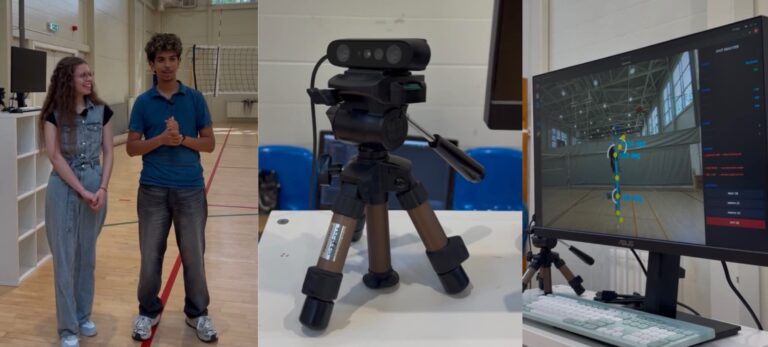
Modern engineering solutions are increasingly created through collaboration between specialists from different fields. The university environment provides an opportunity to combine diverse competencies and develop solutions that would be difficult to achieve within the boundaries of a single discipline. Such collaboration was also at the heart of a bachelor’s thesis project in which VILNIUS TECH students Laura Venckutė (Faculty of Electronics) and Abderrazak El Aamrani (Faculty of Mechanics) combined expertise in electronics and medical engineering to develop a human motion recognition and evaluation system. From an Idea to Interdisciplinary Collaboration At the beginning of the project, students from the Medical Engineering and Electronics Engineering study programmes sought to address a problem relevant to both sports and rehabilitation: the lack of accessible systems capable of automatically evaluating human movements and providing immediate feedback. As the project authors point out, incorrect movements can reduce training effectiveness and increase the risk of injuries during rehabilitation, sports activities, or everyday tasks. For this reason, they decided to look for a technological solution that could help objectively assess movement quality. The idea emerged from previous projects and experience gained during their studies, while an important catalyst was the opportunity for collaboration proposed by their supervisors. From the outset, it was clear that the project would require expertise from different fields, as motion analysis involves not only developing a technical system but also defining meaningful criteria for evaluating human movement. [caption id="attachment_120707" align="alignnone" width="2048"] Electronics and Medical Engineering students developed a Human motion analysis system[/caption] The students brought different, yet closely interconnected and complementary competencies to the project. The Electronics Engineering student was responsible for computer vision, embedded systems, and system integration, while the Medical Engineering student contributed expertise in biomechanics and human movement assessment. Although responsibilities were divided according to individual areas of expertise, key decisions were made collaboratively. From the Initial Concept to a Functional System In the early stages, the team planned to develop a system capable of analysing a broader range of movement patterns and performing more advanced analytical functions. However, as the project progressed, technical limitations, available hardware resources, and the scope of the bachelor’s thesis had to be taken into account. As a result, some ideas had to be abandoned. According to the team members, no major disagreements arose during the project. Decisions were made by discussing possible alternatives, evaluating how well they aligned with the project objectives, and, whenever possible, testing different approaches in practice. When technical and medical requirements conflicted, the team sought solutions that best balanced project goals and implementation constraints. The final outcome of the project is a human motion recognition and feedback system based on a pose estimation algorithm designed for basketball shooting analysis. The system detects a person in real time, estimates body posture, evaluates shooting technique according to biomechanical criteria, and subsequently provides feedback to the user. The Value of Interdisciplinarity and Future Opportunities During testing, the system performed better than expected. It successfully analysed the movements of users of different heights and maintained reliable performance at distances of up to 12 metres. According to the students, not only did the technical results exceed expectations, but the collaboration process itself also proved highly successful. In their view, such a project could theoretically be completed by a specialist from a single field. In practice, however, this would be difficult and inefficient. The project required both expertise in electronics and an understanding of human movement analysis. Without competencies from both fields, considerably more time would have been needed for learning unfamiliar topics and identifying appropriate solutions. Looking ahead, the students see opportunities to further develop the project by improving system stability, optimising resource usage, expanding the range of supported movement patterns, and increasing motion recognition accuracy. Although they are not yet certain whether they will continue working in this specific area, they hope to further deepen their expertise in related fields of technology and engineering. Supervisors’ Insights: Interdisciplinarity as a Foundation of Future Engineering The thesis supervisors emphasise that the nature of the project itself required collaboration across disciplines. However, the greatest value of the project lies not only in the technical solution that was developed, but also in the students’ ability to work together effectively. Professor Kristina Daunoravičienė, lecturer in the Medical Engineering study programme, notes that developing a human posture recognition and evaluation system requires both an understanding of human movement and biomechanics, as well as the ability to create a technical system capable of collecting, processing, and presenting information to the user. „The need for different knowledge and competencies made this topic an excellent platform for collaboration between Medical Engineering and Electronics Engineering students. Such projects foster not only technical solutions but also the ability to understand the logic, limitations, and priorities of other disciplines,“ says Prof. Dr Kristina Daunoravičienė. Although the students were initially unfamiliar with one another and came from different engineering backgrounds, a shared goal quickly became the foundation of successful cooperation. According to the supervisor, Medical Engineering contributed the perspective of human movement assessment and result interpretation, while Electronics Engineering provided expertise in system architecture, prototyping, and optimisation. According to Prof. Dr K. Daunoravičienė, the most important outcome of the project is not only the developed prototype and its comparison with the Xsens motion analysis system: „Equally important are the competencies of collaboration, communication, trust, initiative, and the ability to learn from one another. These are the qualities that allow good ideas to become real, functioning solutions.“ Associate Professor Dr Vytautas Abromavičius of the Faculty of Electronics also points out that in the era of artificial intelligence, technical expertise alone is no longer sufficient. Clear communication, the ability to understand specialists from different fields, and working together towards a common goal are becoming increasingly important. „This bachelor’s thesis demonstrated that our students communicated exceptionally well and were able to explain specialised professional terminology in a simple and understandable way. This mutual understanding enabled them to effectively combine knowledge from different disciplines and achieve an excellent result,“ says Assoc. Prof. Dr Vytautas Abromavičius. According to him, the need for interdisciplinary projects in modern engineering continues to grow. Every real-world product developed for the market consists of multiple interconnected components; therefore, a broader understanding of the problem leads to better product applicability and a more complete final outcome.
More
VILNIUS TECH Professor A. Čenys Represents Baltic States at Google Leadership Summit
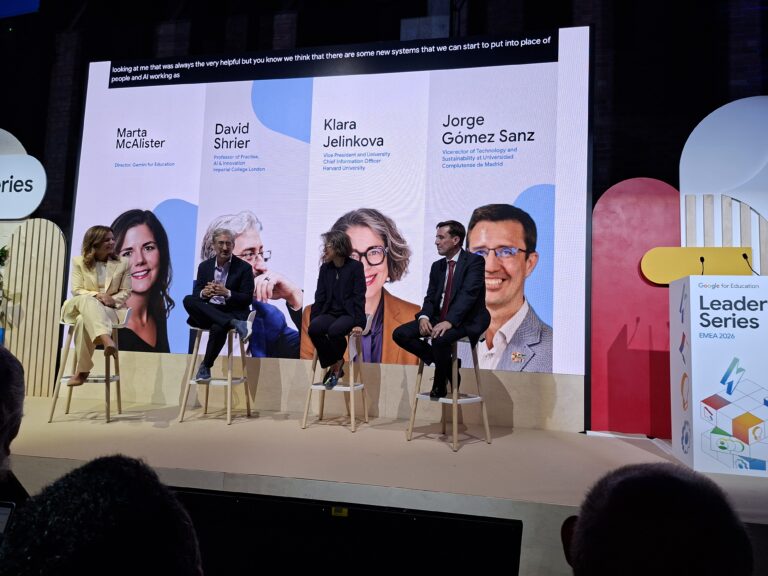
Prof. Antanas Čenys, a prominent researcher at VILNIUS TECH and the SustAInLivWork project, participated by personal invitation from Google in the exclusive Google for Education Higher Education Leader Series EMEA in London. Prof. Čenys was the only AI and cybersecurity expert from the Baltic countries to be personally invited to this high-level summit. The exclusive event brought together higher education leaders, technology pioneers, and innovation stakeholders from across Europe, the Middle East, and Africa. The summit focused on shaping the future of Artificial Intelligence, digital transformation, cybersecurity, and driving responsible innovation within the global academic and industrial landscapes. The insights and discussions from the London summit strongly resonate with the core mission of the SustAInLivWork project: strengthening Europe’s capacity to develop, deploy, and scale trustworthy AI solutions while simultaneously building the advanced skills, critical infrastructures, and innovation ecosystems required for a sustainable digital future. Through SustAInLivWork, VILNIUS TECH and its partners are actively delivering: An International AI Cluster: bridging the gap between research excellence, industry, and public sector stakeholders; Advanced Innovation Services: driving AI and data-driven solutions for various sectors; AI Skills Development: establishing lifelong learning opportunities and specialized training; Cross-Regional Collaboration: accelerating practical AI adoption and ensuring positive societal impact. The summit also underscored the rapidly growing importance of cybersecurity as a fundamental pillar for secure AI deployment. This focus perfectly aligns with ongoing initiatives led by VILNIUS TECH, including specialized cybersecurity skills development programmes supported by Google.org, aimed at strengthening digital resilience and cyber competence across Europe. As Europe accelerates its comprehensive AI transformation, structured collaboration between universities, industry leaders, policymakers, and major technology providers becomes increasingly paramount. SustAInLivWork and VILNIUS TECH remain committed to contributing to this evolutionary journey by building strong bridges between cutting-edge research, thriving innovation ecosystems, and sustainable societal progress.
More