Scientist A. Zigmontiene on Sustainable Christmas: "Holidays should not be a burden on nature"

December 22, 2023
Christmas is one of the most anticipated celebrations of the year. However, scientists have calculated that the overall consumption – food, travel, Christmas lights, and gifts over the three days of Christmas can generate up to 650 kg of carbon dioxide (CO2) per person. This accounts for 5.5% of our annual carbon footprint.

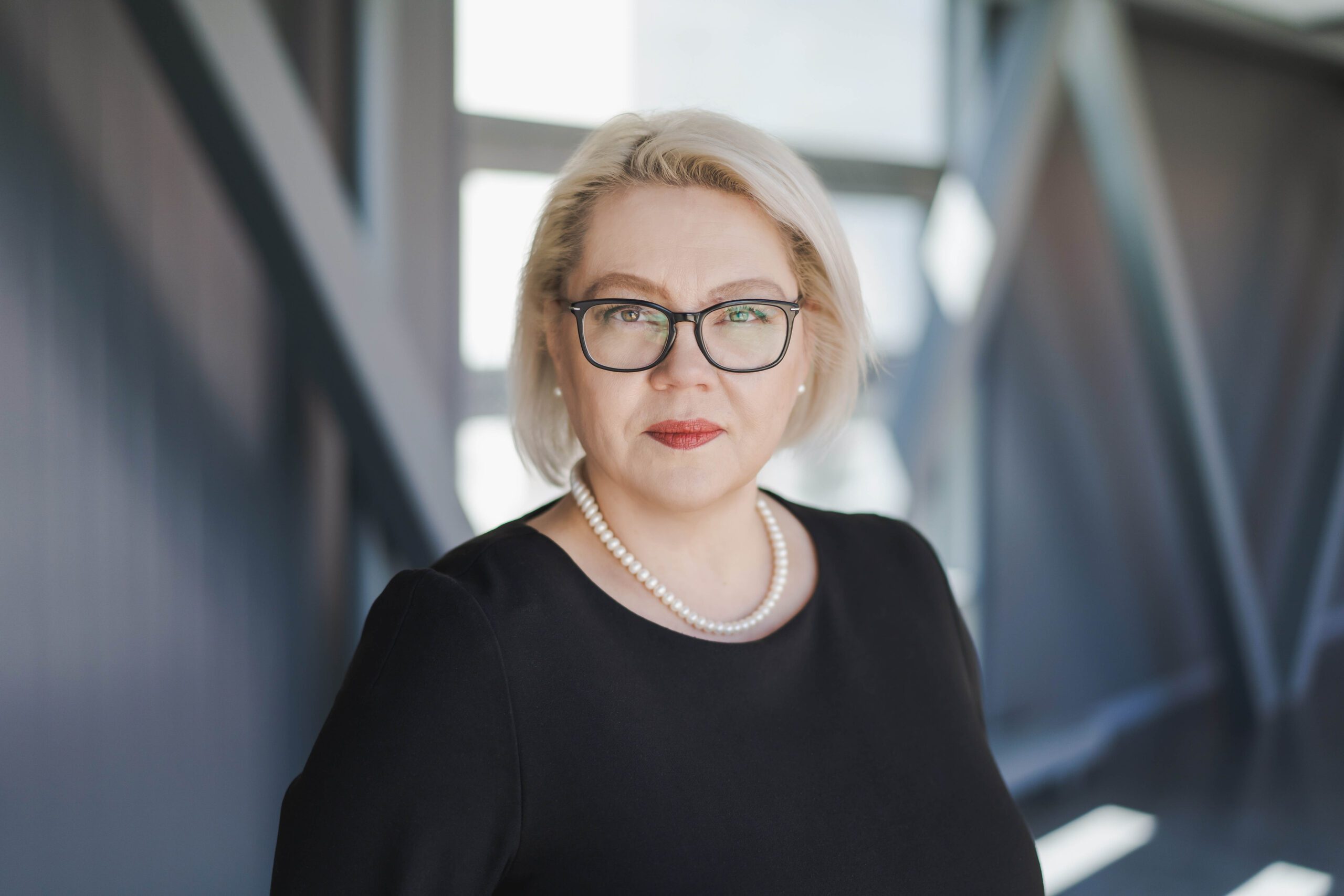
"Christmas is a time when most of us may lose a sense of moderation – buying gifts that we try to wrap in the most festive way possible. We want to surprise our loved ones with an abundance of food. Therefore, the month of December is the most polluted in the year, as unconsumed food, wrapping paper, or holiday decorations increase the waste to up to 30%," says doc. dr. Ausra Zigmontiene, lecturer at the Faculty of Environmental Engineering at Vilnius Gediminas Technical University (VILNIUS TECH).

Beautiful paper turns into non-recyclable litter

Studies in the United Kingdom have revealed that Britons discard 108 million rolls of wrapping paper annually. The length of discarded wrapping paper could reach the moon – equivalent to 384,400 km. The statistics on Christmas waste in the UK indicate that households typically produce more than three 60-liter bags of packaging during the holidays. A study by the environmental organization "Greenpeace" showed that the production of 1 kg of wrapping paper emits more than 3 kg of CO2.

"All waste is natural resources, most of which usually end up in incinerators or landfills. Improperly managed waste pollutes our environment. Rotting food waste emits greenhouse gases, and if they are improperly handled, natural resources are also lost," explains A. Zigmontiene.

According to A. Zigmontiene, the more beautiful, shiny, eye-catching and easily-unwrappable the paper is, the more non-recyclable it is. The majority of Christmas gift wrapping paper and bag waste is also non-recyclable because they are a mix of various materials such as paper, plastic, textile elements, adhesive tape, and glue residues.

"If such packaging materials end up in the natural environment rather than waste container, they break down into small microplastic particles exposed to sunlight. These, entering open water bodies and soil, cause secondary pollution and negatively affect fauna," says the scientist.

Festive dinner ends up in the bin

After the holidays, mountains of uneaten food also end up in containers. This abundance of discarded food has painful consequences and contributes to the greenhouse effect.

"Research shows that households are responsible for more than half of the discarded food in the food chain. This is not just a waste of our money but also the cause of carbon dioxide and other greenhouse gas emissions. According to preliminary calculations, each European Union (EU) resident throws away about 173 kg of food per year, and each Lithuanian throws away about 60 kg of food that could still be consumed," says A. Zigmontiene.

The situation of uneaten food in Lithuania is further complicated by the fact that in most villages there are no special containers for composting – separate sorting of food. Kitchen waste is just beginning to be implemented, so this waste often ends up in mixed containers.

Celebrating more sustainably is mission possible

Although it may seem challenging to avoid these essential holiday attributes, finding more environmentally friendly alternatives is possible.

"Each of us can easily and inexpensively contribute to solving this problem – gifts can be wrapped cheaply and sustainably, without leaving mountains of waste. First of all, look around your home – you will definitely find old gift bags, unused scarves, clothes, or fabric scraps. These are items that are perfect for wrapping gifts. Even old newspapers, posters, or shopping bags can be useful. Instead of plastic strings, ribbons, use thicker threads found at home, and replace bows with natural elements – twigs, branches, cinnamon sticks, or dried orange slices. If you are giving food products, you can put them in an old box or a woven basket," advises Dr. A. Zigmontiene.

As for food preparation, planning and assessing how many people will eat and appropriating the size of the portions accordingly are crucial.

"To preserve the table traditions of Christmas and Christmas Eve and maintain the food variety during dinner, you need to assess which dishes will be eaten immediately and which will only be tasted. This way, you will save not only your finances but also natural resources," says Dr. A. Zigmontiene.

The sustainability expert also advises careful consideration of gifts. According to the scientist, if you don't know what to give to your loved one or colleague, give handmade treats, sauces, or canned goods. Holidays are a great opportunity to provide loved ones with reusable attributes of sustainable living: product bags, reusable hot drink mugs, and the like.

"Christmas is a celebration for us, but it is important not to forget that it should not be at the expense of nature," says A. Zigmontiene.

The text was prepared by Milda Mockūnaitė-Vitkienė, Head of Internal Communication Projects at the Public Communication Directorate of VILNIUS TECH.

Galerija

Related news

€75,000 Funding Opportunity for Women-Led Deep Tech Startups
Women-led deep tech startups are invited to apply for the European Union-funded "Women TechEU 2" program. This initiative aims to strengthen women's entrepreneurship in the technology sector, foster innovation, and help promising startups prepare for further growth and attract additional funding. Selected participants will receive a €75,000 grant and the opportunity to take part in a six-month tailored business development program. During this period, startups will be provided with mentoring, consulting, and training services designed to accelerate business growth and enhance competitiveness in the international market. The total budget for the "Women TechEU 2" program is €12 million. The plan is to fund 160 women-led startups from across Europe. Application Process The application process for the new call consists of two stages. First, applicants must submit an application for the Eligibility Strand to verify whether the startup meets the program's requirements. Applicants deemed eligible will then be invited to submit a Full Proposal. The eligibility assessment stage began on June 1, 2026. Applications are accepted on a rolling basis, with evaluations conducted weekly – the weekly submission deadline is every Tuesday by 18:00 (17:00 CEST). The first deadline is June 30, 2026, and the final deadline is July 13, 2027. Applicants will receive their eligibility assessment results no later than one week after the respective submission deadline. Who Can Apply? The program is designed for women-led, early-stage deep tech startups. To be eligible for funding, the following conditions must be met: At least one founder or co-founder of the startup is a woman; A woman holds a top-level executive position (CEO, CTO, or equivalent); Women hold at least 25% of the company's shares. Program Objectives The "Women TechEU 2" program aims to: Promote women's entrepreneurship in the deep tech sector; Help innovative startups scale up and attract additional European Union funding; Strengthen European innovation ecosystems; Support the development and commercialization of new technologies. Potential applicants are encouraged to review the application guidelines in advance and avoid waiting until the final deadline to submit their proposals. More information can be found here: https://womentecheurope.eu/active-calls/
More
New doctoral dissertation
VILNIUS TECH Library invites you to follow the published new dissertations. The dissertation „Performance investigation of a hybrid car engine fuelled with gasoline and gaseous mixtures“ („Benziną ir dujų mišinius naudojančio hibridinio automobilio variklio efektyvumo tyrimas“) prepared at VILNIUS TECH by Tadas Vipartas. The dissertation was prepared in 2021–2026. Scientific consultant – Prof. Dr Alfredas Rimkus. The dissertation was defended at the public meeting of the Dissertation Defence Council of the Scientific Field of Transport Engineering in the Aula Doctoralis Meeting Hall of Vilnius Gediminas Technical University at 9 a.m. on 12 June 2026. This dissertation investigates the use of alternative fuels (natural gas and hydrogen) to increase the efficiency of a spark-ignition engine. The impact of different fuels and engine control algorithms on the combustion process and on energy and ecological indicators was determined and evaluated by analysing the emerging technological constraints within the context of a power-split (series-parallel) hybrid powertrain. The dissertation presents a review of scientific literature, analysing the directions for internal combustion engine improvement, the properties of gaseous fuels and the challenges of their application, along with the operating principles of automotive hybrid powertrains. Bench tests were conducted to investigate the effect of late intake valve closing timing on an engine operating on natural gas, and the influence of hydrogen additives on the combustion process and knock control. The numerical analysis of the engine’s combustion process was performed using AVL BOOST™ software, while the energy and ecological indicators of the hybrid vehicle were evaluated through experimental research and numerical simulation in the AVL CRUISE™ software. The following main results were obtained in the dissertation: retarding the intake valve closing timing increased the brake thermal efficiency and NOx emissions while reducing carbon dioxide emissions when the engine operates on natural gas. It was determined that a hydrogen additive in the fuel improves the engine’s energy indicators, but increases nitrogen oxides emissions and the risk of engine knock. Engine knock is effectively managed by retarding the ignition advance angle. Numerical simulation results confirmed that these trends persist during the Worldwide Harmonized Light-duty Vehicles Test Cycle: the use of hydrogen reduces fuel consumption and carbon dioxide emissions, but increases nitrogen oxides emissions. The dissertation results revealed the potential of these technologies and strategies for their application. The obtained data can be applied in the development and selection of advanced engine control algorithms and in the formulation of technologically sound environmental standards. Nine scientific articles have been published on the topic of the dissertation: six in scientific journals indexed in the Clarivate Analytics Web of Science database with an impact factor, one in a scientific journal indexed in the Clarivate Analytics Web of Science database without an impact factor, one in conference proceedings indexed in the Clarivate Analytics Web of Science Conference Proceedings Citation Index, and one in peer-reviewed conference proceedings not indexed in international databases. The research results were presented at three scientific conferences in Lithuania and Poland. Doctoral dissertation readers can search via VILNIUS TECH Virtual Library.
More