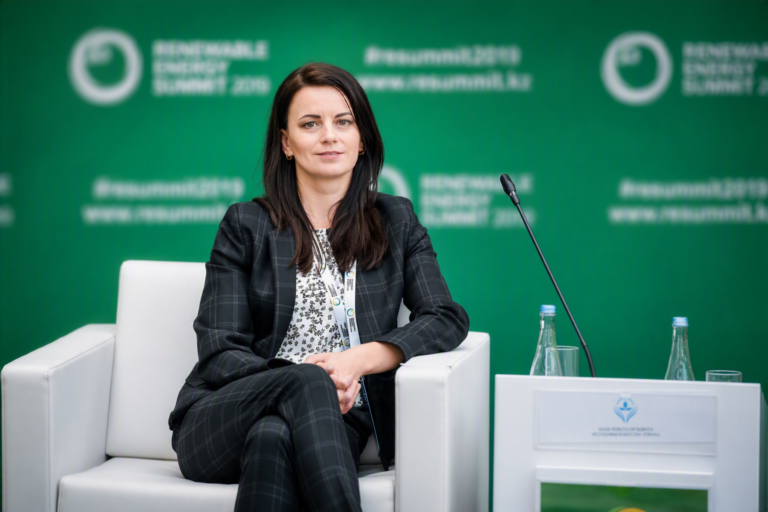
The market of small satellites has been growing rapidly since 2000. In 2018, approximately 300 small satellites were launched, which is almost three times as many as in 2016. Reduced satellite launch costs and investments from venture capital funds had major influence on the market growth. In addition, the development of the internet of things and machine communication also increased the demand for small satellites. The new opportunities in space industry are also of interest to Lithuanian business and science community. We talk about the trends of the industry with Laurynas Mačiulis, the man behind the idea of the first Lithuanian satellite, PhD candidate and the leader of the Satellite System Research Group at Antanas Gustaitis Aviation Institute at Vilnius Gediminas Technical University (VGTU).
Space serves business
According to L. Mačiulis, namely, business contributes to the exponential growth of small satellite market by sending more and more of them to space. The data from SpaceWorks – a company that specialises in assessment and analysis of this market – show that more than half of current small satellites serve a commercial purpose, and by 2022 it will make 70% of the market. Other small satellites are used for military, research and other civil purposes.
The researcher believes that small satellites are already capable of carrying out the same functions as the large ones, and currently have two main areas of application: earth observation and telecommunications. “The main advantages of small satellites are that their production time is shorter and costs are lower; thus, one can launch many satellites at one time and form a functioning network of satellites able to provide global services rapidly. For example, if 50-100 satellites with the Earth observation equipment are launched and placed into Earth’s orbit, one can receive data every few hours or more often. One satellite flies over a specific area of Earth once a day and can send a good quality photo,” says VGTU’s representative.
According to him, some Lithuanian companies are looking into the opportunities that small satellites could create for their business, but these are just a few. “To start, one needs a truly innovative business idea and a team of highly qualified professionals. Furthermore, investments into space sector, even though they might give high economic returns, have a high risk factor: one needs high initial capital and the result is not known until tested in space. A large network of satellites is needed to provide global services and the costs include not only satellite production and launch, but also ground infrastructure and network management,” – notes L. Mačiulis.
Researcher estimates that production of one small 1-10 kg satellite could cost somewhere between several hundred and 0.5 million Euros. The launch cost is approximately 80 thousand US dollars per kilogram. However, the costs might be reduced by half as new light space launch vehicles are being developed and tested. Another interesting trend, very similar to mobile phone industry, is that small satellites have become popular in the market because of their small size and compactness, but now they are becoming larger because of growing client expectations and business needs. SpaceWorks reports that currently 11-50 kg satellites are gaining more popularity as compared to 1-10 kg small satellites.
Small satellites for machine communication on Earth
Earth observation still remains the most popular application of small satellites – data on climate change, changes in soil and ecosystems, the condition of crops, impact of natural and man-made disasters etc. is monitored and collected. Approximately 58% of small satellites are carrying out these functions. Meanwhile, the function of telecommunication faces the highest growth in this market. SpaceWorks forecasts that this market share, currently at 4%, will grow up to 22% by 2022 as the demand for the internet of things and machine to machine communication rises.
“The internet of things uses small satellites to exchange data via global network with focus on machine to machine communication. It is expected that all pieces of smart equipment and robots, which will monitor and manage our autonomous equipment, manufacturing plants, cars, planes, cargo movement etc. will generate enormous amount of data that will be transmitted to service stations and the internet, i.e. to the end user. In addition, machines will exchange data between themselves. There are no problems to transmit data in cities, where ground infrastructure is well developed, but challenges arise in remote locations, sparsely populated areas, or, for example, at certain height or in oceans, where GSM networks are not available. In such situations one needs an alternative network, namely, satellites,” says VGTU’s researcher. According to him, this is one of the top reasons for growing business interest in this area. L. Mačiulis also shared that currently they are working on a technical feasibility study for a Lithuanian start-up which is interested in providing the internet of things services.
Lithuanian perspectives

L. Mačiulis believes that development of small satellites broke the stereotype that space is the arena of big and rich countries. However, this niche area with high added value also needs high investments in human capital. “In addition to know-how which is collected over many years, exceptionally highly qualified staff is the key to creating, producing and selling space technologies. Lithuanian space industry collapsed after the Soviet times, no activities have been continued and gained expertise has been lost. The new generation did not have anything to learn from and had to start from scratch,” researcher emphasised.
L. Mačiulis shares, that a lot has been learnt during this rather short period. In 2014, he and other like-minded partners have established a first Lithuanian space start-up Nanoavionika, which provides small satellite system integration and production services. He shares that global competition is tough, but there is only one way ¬– either you are a global player, or you do not exist at all.
“Space industry covers a lot of high-tech sectors. We should be proud as Lithuania carries out a growing number of research and scientists work on projects commissioned by the European Space Agency. Photonics, optoelectronics, earth observation technologies, geodesy – clearly, these are strong and competitive areas of research in our country, and they can be applied in space. I wish there are more strong and innovative companies, which could commercialise research results, and that researchers would focus in the areas relevant for Lithuanian business and industry,” says the university’s representative.
Research on small satellites at VGTU is carried out at A. Gustaitis Aviation Institute. The research focuses on satellite technologies, their application areas, and various interdisciplinary projects in cooperation with the Faculties of Electronics and Mechanics. Nowadays, the university’s researchers are planning the construction and launch of another Lithuanian satellite. “We want to build an interdisciplinary team, which is able to stand up to the task. Also we are looking for cooperation with other research institutions and business. We, as researchers, are interested not in the satellite itself, but in carrying out experiments, creating innovative technologies and testing them in real conditions to be able to commercialise them in the future. We need a proof that it works in space,” says L. Mačiulis who received Petras Vileišis award from the Lithuanian Confederation of Industrialists for his work on small satellites.