Built a global career: VILNIUS TECH alumna encourages students not to be afraid of engineering
What should you study if you're equally interested in the humanities and the sciences? VILNIUS TECH alumna Katažina Andrukonytė knows this dilemma well. Today, she leads international teams and advises on some of the world's largest energy and infrastructure investments, but when she graduated from school, she had no clear idea which path to choose.
„A few setbacks, staying proactive, and choosing the right study programme helped me discover a career that I truly enjoy and find meaningful. If I could give future students just one piece of advice, it would be this: don't be afraid to choose engineering,“ she says.
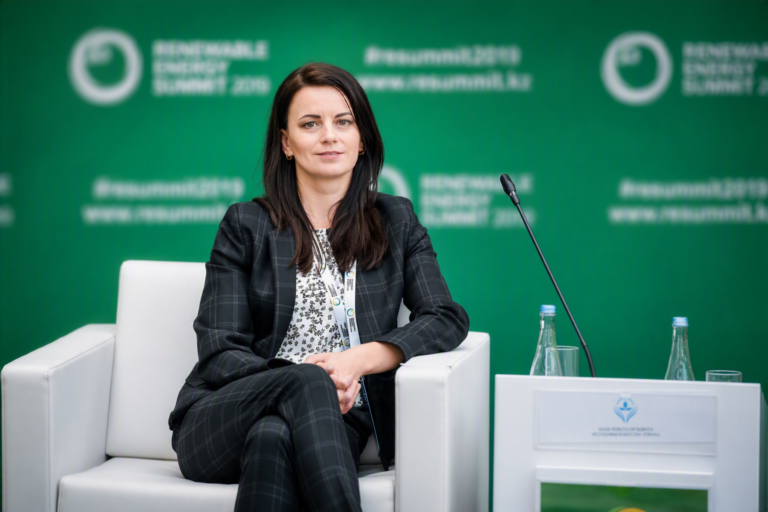
[caption id="attachment_122573" align="alignnone" width="1536"] Katažina Andrukonytė[/caption]
Based in Finland, Andrukonytė leads a team at AFRY that works on projects financed by international financial institutions. She coordinates complex energy and infrastructure projects across Europe, Asia, Australia, and other regions, while advising banks, investment funds, governments, private investors, and project developers on investments worth hundreds of millions of euros.
Yet more than twenty years ago, she was simply another school graduate trying to decide what to study.
Engineering wasn't the original plan
„At school, I was equally interested in the humanities and the sciences. I explored several study options, including law. To be honest, engineering wasn't my dream. After I wasn't admitted to my first-choice programme, I decided to study engineering instead—and looking back, it was one of the best decisions I've ever made,“ she recalls.
At VILNIUS TECH, she completed a Bachelor's degree in Environmental Engineering Technologies, followed by a Master's degree in Environmental Engineering and Management. Later, encouraged by her employer, she also earned a Master's degree in Building Energy Engineering.
„What surprised me most was how quickly employers started recruiting engineering students. I had barely started my master's studies before companies were already competing to hire us,“ she says with a smile.
Finding the right specialisation
While studying, Andrukonytė realised that environmental engineering offers a wide range of career opportunities. She also understood the importance of identifying an area where she could apply her knowledge in practice.
The turning point came when the company where she was already working encouraged her to specialise in energy engineering.
„My employer was looking for specialists in the energy sector and suggested that I continue my studies in Building Energy Engineering. They even covered my tuition because qualified professionals were in such high demand. That's how I found the field I wanted to build my career in,“ she explains.
Today, she believes this approach can benefit many young people: first gain a broad engineering education that opens multiple career paths, then discover the area you are most passionate about.
More than a degree
Although the studies were challenging, Andrukonytė believes they gave her a strong professional foundation.
„There was certainly plenty of mathematics and physics, but engineering is much more than formulas. The difficult subjects are simply part of the learning process—you have to work through them,“ she says.
For her, however, the greatest value of studying at VILNIUS TECH lay beyond the classroom.
„The university offered countless opportunities to get involved in projects, competitions, international summer schools, and exchange programmes. I made the most of them. During my studies, I had the chance to study and complete internships abroad six times. I visited the Czech Republic, Denmark, Italy, South Korea, Finland, and Sweden. Those experiences showed me just how many doors an engineering education can open,“ she says.
Engineering opens doors around the world
Today, Andrukonytė lives in Finland with her family and works for AFRY, one of Europe's leading engineering, design, and consulting companies, employing around 19,000 specialists in more than 40 countries.
For the past 15 years, she has worked on international energy and infrastructure projects, advising banks, investment funds, project developers, and investors. Her work brings together professionals from many different fields, including engineers, financial experts, investors, municipal authorities, and international organisations.
„Over the past few years, we've seen growing investment in biomethane, hydrogen, renewable energy, hybrid energy systems, energy storage, district heating, power generation, and decarbonisation projects. Technical expertise is essential, but so are communication, negotiation, and project management skills. My role is to bring together specialists from different backgrounds and help them work as one team.
That's why I always say engineering isn't only for people who love numbers. There is plenty of room for people with strong communication and interpersonal skills as well. Energy is a global industry, and if you're a skilled engineer, your expertise will be valued anywhere in the world.“
More