Summer challenge for makers: what did the MAKERS 5.0 teams create at "LinkMenu fabrikas"?

July 4, 2025
Two weeks of summer dedicated entirely to prototyping. This is the path chosen by the MAKERS 5.0 participants – international Erasmus+ Blended Intensive Programme (BIP) students from Vilnius Gediminas Technical University (VILNIUS TECH) and several other European universities. From 23 June to 4 July, they gathered at VILNIUS TECH’s “LinkMenu fabrikas” to try out rapid prototyping technologies and immerse themselves in the creative process.
The VILNIUS TECH Creativity and Innovation Centre’s “LinkMenu fabrikas” summer school is designed for beginner students who want to deepen their knowledge in prototyping. For two weeks, Lithuanian and foreign students learned and worked in 3D printing, electronics, sustainable design, design-thinking, metal and woodworking.
From idea to prototype
The programme took place in two phases. The first was virtual week where students analysed design challenges, explored materials and users’ needs, and participated in interactive sessions led by experts from “LinkMenu fabrikas” as well as guest lecturers. The aim of the first week was to develop a strategy for the workshop: from concept development to production plan and technical solutions.
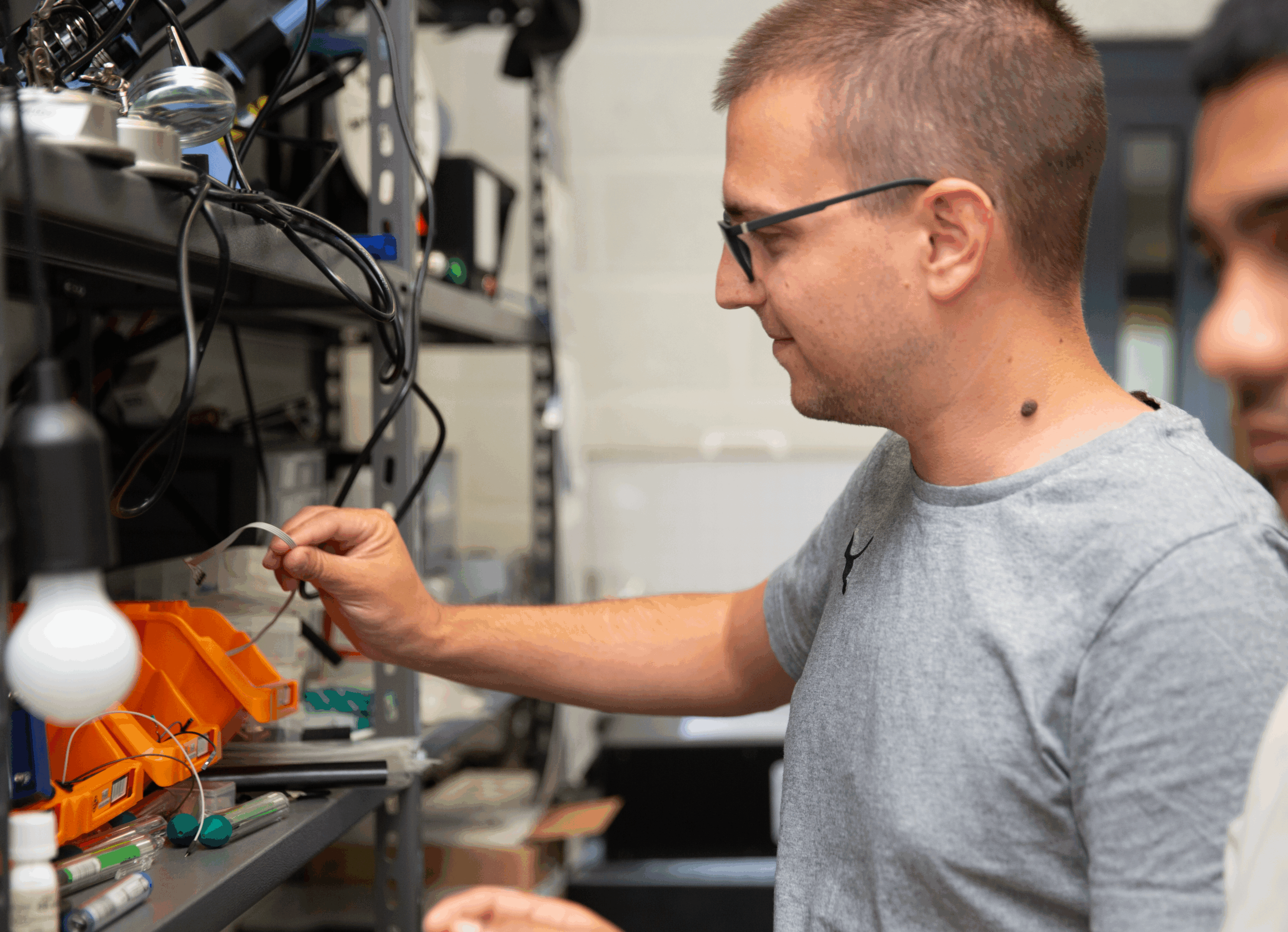
In the second week, the participants met in Vilnius at the “LinkMenu fabrikas” prototyping workshop. Here, a four-day intensive prototyping marathon took place. Teams worked with 3D printers, lasers, woodworking equipment and, most importantly, electronic components that brought the prototypes to life and functionality.
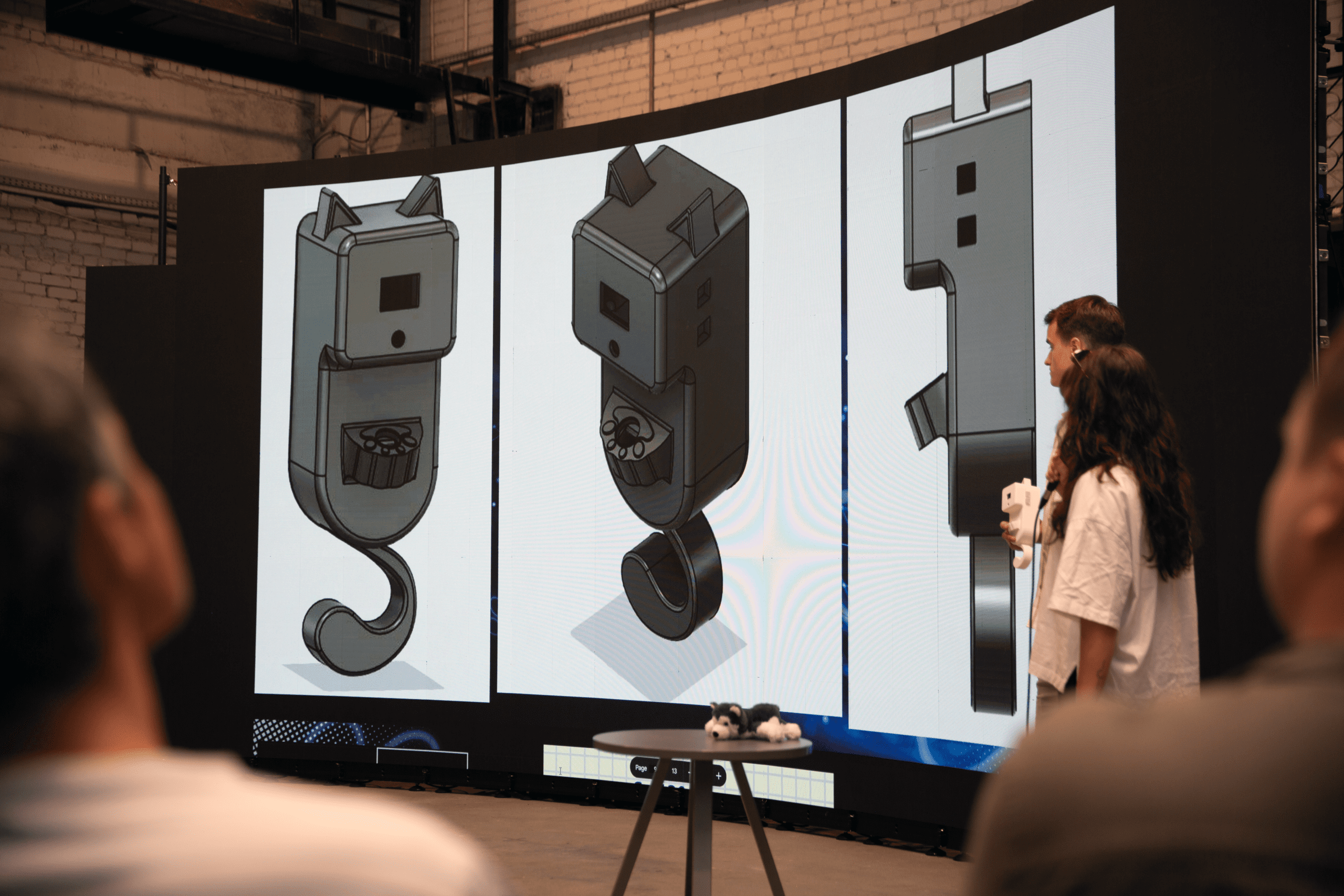
On the last day of the international school, public presentations were held. The student teams not only demonstrated their technical solutions, but also the sustainability and innovation of their design solutions. The ideas were defended in front of the jury, showing both creative thinking and technological readiness.
Prototypes developed by students

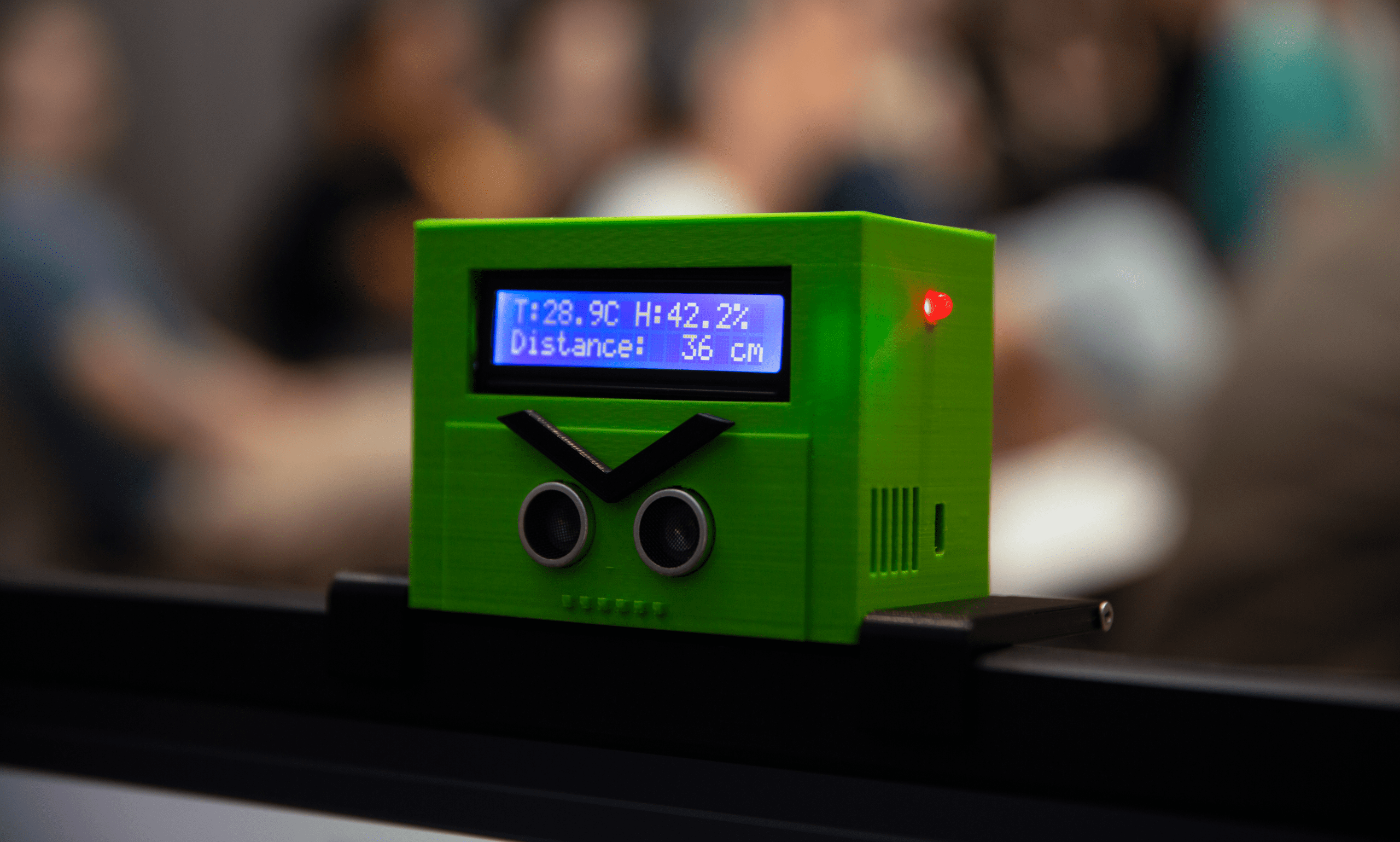
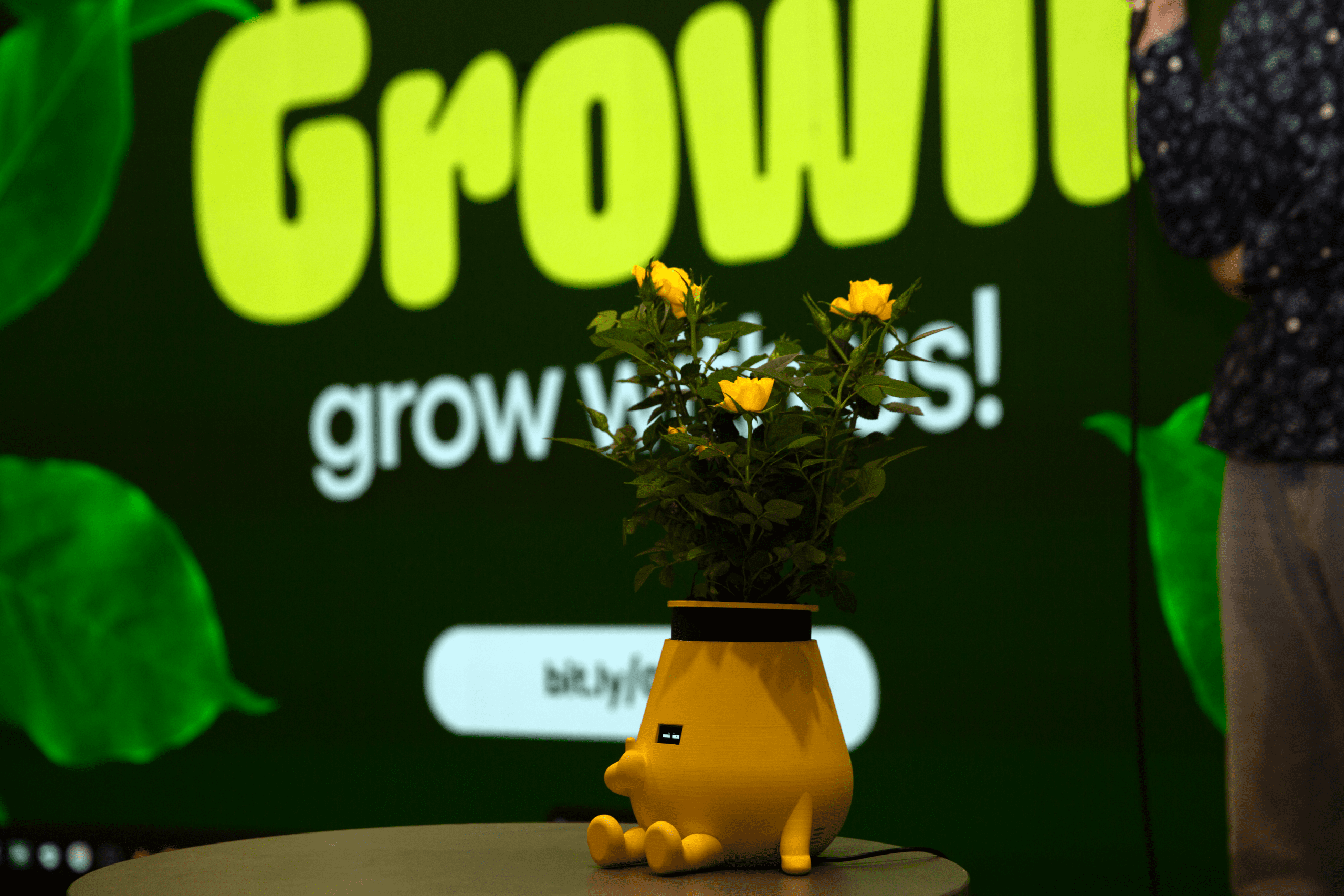
Five student teams presented prototypes: “Smart Helper”, a monitor-mounted device that helps maintain healthy working conditions by monitoring whether the user is sitting too close to the screen, measuring room temperature and humidity, and helping to ensure good working conditions; “Growii”, a smart pot with built-in sensors that tracks soil moisture, temperature and humidity and reminds the user when to water the plant; “Sound Totem” – a noise level meter that triggers light signals when the environment gets too loud, encouraging others to remember the health risks of noise; “Helper Kitten” – a wall-mounted mini-health checkpoint that can measure body temperature and pulse, designed as a simple and quick solution for public spaces; “Air Monitor” – an air quality monitor that measures temperature, humidity and gas concentrations, and triggers alarms such as sound and red light when safety limits are exceeded.

MAKERS 5.0 International Summer School aims to enhance students’ competences and international experience through innovative teaching methods. The summer school brought together students from Tallinn Technical University (Estonia), the University of Daugavpils (Latvia), the Riga University of Technology (Latvia), the Latvian University of Life Sciences and Technology (Latvia), the Ventspils University of Applied Sciences (Latvia), the University of Ruse (Bulgaria) and the ATHENA European University Alliance partner University of Siegen (Germany), University of Maribor (Slovenia) and students from VILNIUS TECH.

Galerija

Related news

International PhD Summer School Begins at VILNIUS TECH
From 7 to 11 July, VILNIUS TECH is hosting an international PhD Summer School, bringing together 30 early-career researchers from Lithuania and abroad. This year, the event welcomes PhD students from the Czech Republic, Poland, Germany, Sweden, Finland, Romania, Latvia, Kyrgyzstan, and Azerbaijan, as well as doctoral students from VILNIUS TECH and other Lithuanian universities. Throughout the five-day programme, participants will attend lectures, workshops, and discussions covering some of the most relevant topics in contemporary research, including scientific communication, academic writing, open science, the application of artificial intelligence in research, data privacy, and research ethics. The Summer School also offers opportunities to develop presentation skills, strengthen collaboration, and explore innovation and entrepreneurship in research. The programme also includes cultural and networking activities designed to introduce participants to both the University and Lithuania. Doctoral students will visit the VILNIUS TECH Sustainability Centre, the University's building on Plytinės Street, and the VILNIUS TECH LinkMenų fabrikas innovation and creativity centre. They will also take part in a guided tour of Vilnius Old Town and visit the Palace of the Grand Dukes of Lithuania. The international PhD Summer School aims not only to strengthen the academic competencies of early-career researchers but also to foster international collaboration, encourage the exchange of ideas, and help build lasting professional networks among researchers from different countries.    
More
Challenges in Science, Regional Security, and Energy Transformation Discussed at the Baltic Rectors' Forum
On June 29, VILNIUS TECH representatives Assoc. Prof. Dr. Vaidotas Trinkūnas and Prof. Dr. Sonata Tolvaišienė attended the Baltic Rectors' Forum in Gdańsk, Poland. This forum serves as a platform for interaction among the higher education, business, economic, and public administration sectors to address contemporary regional challenges. The main themes of the forum were strengthening relations, fostering closer cooperation, and building a better future, thus marking the beginning of important academic and strategic collaboration. The event brought together over 100 representatives of universities and institutions from Poland, Germany, Denmark, Sweden, Finland, Norway, Lithuania, Latvia, and Ukraine. Participants included rectors and representatives from leading universities in the Baltic Sea region, officials from public administration (including three Polish ministries) and the business sector, as well as experts in energy, security, and climate transformation. The forum's agenda covered issues that have become particularly important to the region in the context of the current geopolitical situation, as well as economic and technological challenges. Security (military, energy, and digital), along with challenges related to energy transformation, digitalization, and climate change, were the focus of discussions among representatives of the academic world, business, and diplomacy from both the Baltic Sea region and beyond. Speakers highlighted the current challenges facing the region and explored areas for cooperation, knowledge sharing, and the exchange of experience. Topics of discussion included threats arising from Russia's actions, the need to diversify energy sources, the development of the maritime economy (including ports), the advancement of "green" energy, digitalization, and prospects for diplomatic cooperation in the region. The need to learn from the experience of other countries and regions (such as the Nordic or Black Sea regions) was also widely emphasized. The role of science and universities in supporting development and ensuring security emerged as one of the most crucial aspects. Official press release: University of Gdańsk
More