Sustainable Discoveries: American Students’ Reflections on the Sustainability Summer School in Vilnius

June 6, 2023

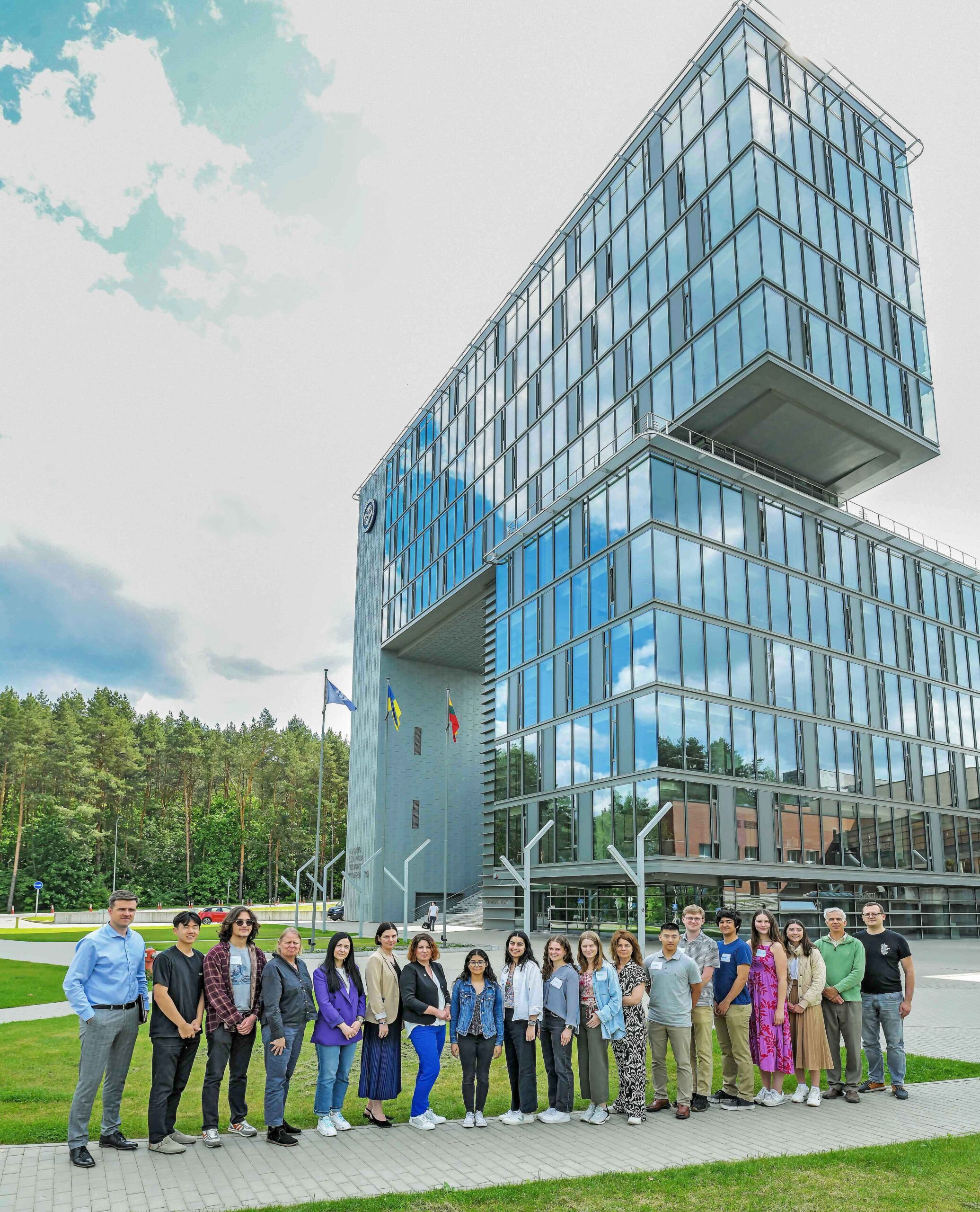
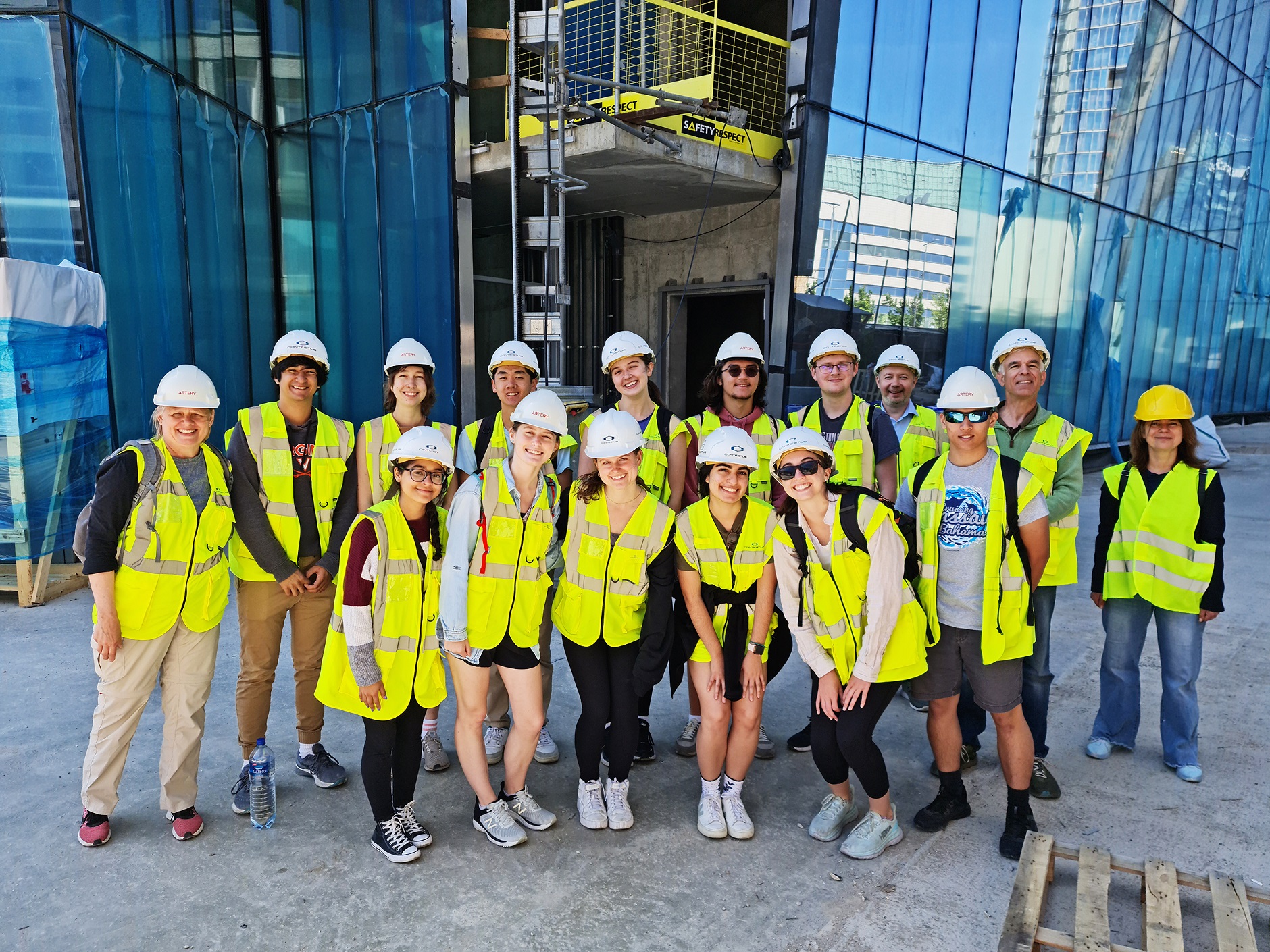
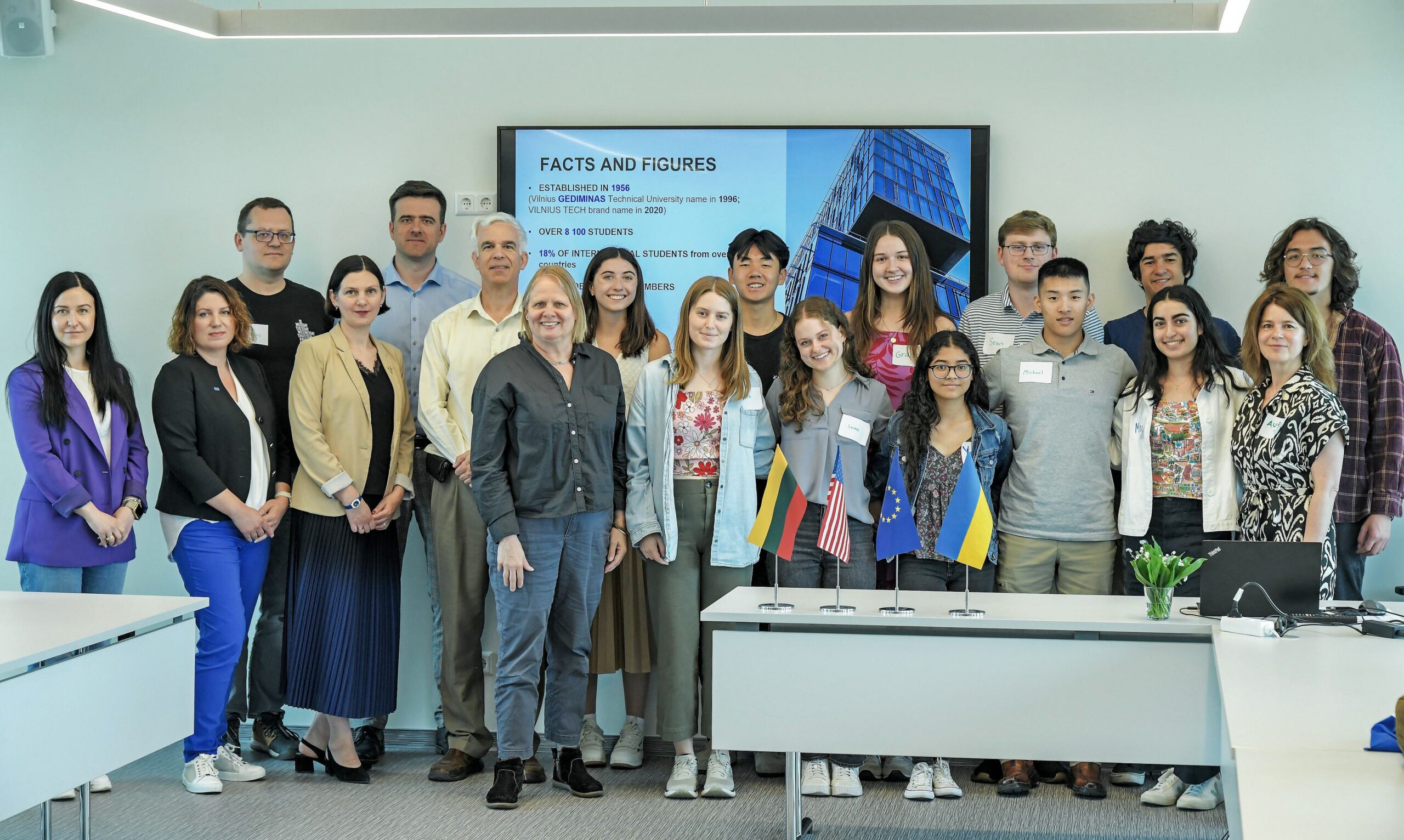
Over the past couple of weeks students from the University of Virginia (USA) attended the Sustainable Urban Design Challenges Summer School at VILNIUS TECH. The summer school brought together students from different disciplines to study and discuss interdisciplinary solutions for building sustainable cities. These students found common ground in their passion for sustainable urban design and formed a cohesive group during their time in Vilnius. From workshops to cycling tours – students had a chance to explore VILNIUS TECH and Vilnius, and learned about sustainability practices in a different cultural context. We had a quick chat with students about their experiences in Vilnius, and we would like to share a few of their thoughts (which showcases the importance of cultural exchange and interdisciplinary collaboration in addressing global sustainability challenges):

Language and people
“It has been wonderful. Everyone here speaks very good English, which is so impressive. You can communicate very easily. Also, people here are so welcoming and super-friendly”
“Lithuania is unique. It has a unique language, which is a significant part of Lithuanian culture. The Lithuanian language is believed to be the closest sounding thing of how our ancestors spoke thousands of years ago”

Interdisciplinarity and group dynamics
“A lot of topics we are studying and the solutions are interdisciplinary. It's not as simple as one major providing a fix. You need everybody to come together in order to fix it”
“You could look at it from so many different lenses in terms of building more sustainable neighborhoods and cities. For instance, you could apply principles from computer science, such as data optimization, or look at it from an architectural point of view and – we recently had a lecture about it – build green buildings. I think that our group's diverse majors will contribute to a more comprehensive report in the end”
“Since we all came for the same reason to learn about sustainable design and we all as a group experiencing new things, I think that made us become a real group”

Green city
“All the green spaces make the city feel less suffocating. I mean it's definitely walkable, but it is also nicely spread out. We've been walking a lot, and we are planning to go on a few bike tours. In the evening, we are free to explore and do whatever we want. We've done a lot”
“I would like to mention the walkability, bikeability, and public green spaces of the city. We have been discussing it, and I have noticed it everywhere we go. The sidewalks are wide, well laid out, and the separate bike lanes are so nice. Even though the city is entirely new to me, but I never felt lost. You can just really easily orient yourself in this city, there are big landmarks like, oh there's the Bell Tower, there's the Cathedral. I know where I am, which just makes it really helpful to be in a new place. I think it's a very good city for beginner travelers”

Difference from the US
“Vilnius doesn’t feel like a city in the US. The feelings are very different when you just walk around. We all have said that we feel much safer here. It has been quite easy to walk around even late at night”
“It doesn't feel as crowded here. In cities in the US, you always feel like you are kind of on top of each other. Also the city is very clean”
“The dining culture here is different. In the US, it often feels more hasty, whereas here it seems that dinners tend to take around three hours. Is it common in your households to spend that much time during dinner? It’s nice, because you spend more time to get to know each other. It's a form of a break”.

Sustainability practices 
“It has been really refreshing to see how many people at different levels of the university, as well as in the government, are aware of various sustainability practices. We would also like to spend time with young people and hear their opinions and perspectives. I have also been learning a lot from the questions posed by my peers from different fields, and it has been truly eye-opening”
“Another difference between the US and here, in terms of sustainability, is that sustainability feels more like an afterthought in the US, added on to the design, whereas here it feels like sustainability is an integral part of the design thinking process from start to finish. This approach is refreshing to see, as it emphasizes the preventative nature of sustainability”
“We've been talking a lot since we've got here about the idea of a circular economy and trying to reduce waste in all aspects, you know, whether it's using an item, constructing a building, or any other activity. While this idea is mentioned in the United States, but it's definitely not a priority. Here in Lithuania, it really feels like priority to just think about what it is that we're using and could we be doing it better. I really do like that the focus is there in Lithuania”
“Last semester I took a virtual design course focused on programming plans prior to construction. It involved utilizing models, which incorporate cost estimations throughout the timeline. You can already integrate the sustainability aspects to the design before they're being built and to see how we can not only maintain these aspects but also keep comprehensive records to understand how much more sustainable buildings can be even before they are constructed”

Embracing technology in sustainability
“One thing that I think is like really cool that we have learned here is the application of computer science systems in building infrastructure. These systems increase efficiency by monitoring temperatures, collecting a lot of data, and implementing micro-level improvements. I think that's really cool thing that computer science could be used for. Also, we have seen a lot of open data movements. For instance, there is an open data portal dedicated to building information, providing accessibility and facilitating the collection of valuable information”
“Regarding renewable technology, I have seen things even in the energy museum. We went there yesterday. One idea that caught my attention was a wind turbine designed to be placed in the jet stream, allowing it to harness energy from that high-altitude location. I believe that these types of future projects, targeting higher altitudes, would greatly contribute to harnessing Earth's renewable resources”
“When you observe the Earth from space and utilize satellites to capture images, you gain a comprehensive view of the planet's surface that you can't see just standing on the ground. You could see air particles in the atmosphere, as well as measure average temperatures. You can see where we are as a planet going, basically. And what we can do to stop the climate change”

Studying at VILNIUS TECH
“Personally, I would definitely study at VILNIUS TECH. The professors we have been working with are incredibly knowledgeable and helpful. Especially when it comes to answering our questions. I mean their lectures are great, but then we pose all these different questions and they immediately have these, you know, super intellectual and really smart answers. That was just what I was looking for. It truly showcases their expertise. At the same time they are so nice and welcoming. Overall, I have really enjoyed interacting with the faculty here”

Recommendation to friends in the US 
“The history here is incredibly profound, and everybody just seems deeply aware and appreciative of that fact and just trying to preserve it. And also, yeah, the natural beauty of the surroundings and the forward thinkingness of the people I think is really awesome”
“It's a place with a unique culture, that is not Americanized whatsoever. The city itself is beautiful, and it seems they are making efforts to promote tourism, but in way that preserves culture. So, without a doubt, I would recommend it to anyone. Moreover, what we are learning here appears to be highly applicable in the US. We can assess the pros and cons of the what’s being done here and determine what we can learn from and improve upon in the US”
“I also think people from the US would greatly benefit from visiting here because I think there's a mindset in the US that sustainability conflicts heavily with economics or quality of life. But when coming here it becomes evident that this notion is not true. I think sustainability here has increased the quality of life and economic well-being, and reduced inequality, and all these aspects, so, yeah, I would recommend visiting”
 

Galerija
Related news

New doctoral dissertation
VILNIUS TECH Library invites you to follow the published new dissertations. The dissertation „Investigation of recurrent neural networks-based methods for early fault detection and short-term power forecasting in wind energy applications“ prepared at VILNIUS TECH by Mindaugas Jankauskas. The dissertation was prepared in 2021–2026. Scientific consultant – Prof. Dr Artūras Serackis. The dissertation was defended at the public meeting of the Dissertation Defence Council of the Scientific Field of Electrical and Electronic Engineering in the Aula Doctoralis Meeting Hall of Vilnius Gediminas Technical University at 10 a. m. on 5 June 2026. The increasing role of wind energy in modern power systems creates a growing need for reliable turbine operation, accurate short-term power forecasting, and computationally efficient data-driven methods. This dissertation addresses two related problems: early fault detection in wind turbines using supervisory control and data acquisition (SCADA) time-series data, and short-term wind farm power forecasting using meteorological forecasts. The dissertation aims to develop and investigate data-driven methods that improve the accuracy, efficiency, and practical applicability of short-term wind power forecasting and early wind turbine fault detection using SCADA and meteorological forecast data. The first part of the dissertation develops and investigates a virtual-sensor-based method for condition monitoring and early fault detection in wind turbines using SCADA time-series data, including the selection of the most informative features and the evaluation of factors affecting prediction accuracy. The second part of the dissertation analyzes and optimizes recurrent neural-network structures for the virtual sensor by evaluating feature-sequence formation, training schemes, and alternative activation functions to increase accuracy and reduce the computational cost relevant for practical deployment. The third part of the dissertation develops and investigates a bidirectional long short-term memory (BiLSTM) based method for short-term wind farm power forecasting using meteorological forecast data, and evaluates the impact of different numerical weather prediction (NWP) sources and the suitability of an objective function with a normalized Nord Pool price multiplier for day-ahead energy production forecasts. The dissertation contributes to the fields of wind energy and artificial intelligence by proposing and validating data-driven methods for virtual sensing, residual-based early fault detection, recurrent-model optimization, computationally efficient activation-function selection, and economically meaningful short-term wind power forecasting. The research results have been published in three peer-reviewed scientific journals and one conference proceeding, and were presented at seven conferences and seminars. Doctoral dissertation readers can search via VILNIUS TECH Virtual Library.
More
Geopolitics is changing design priorities: infrastructure must withstand explosions too
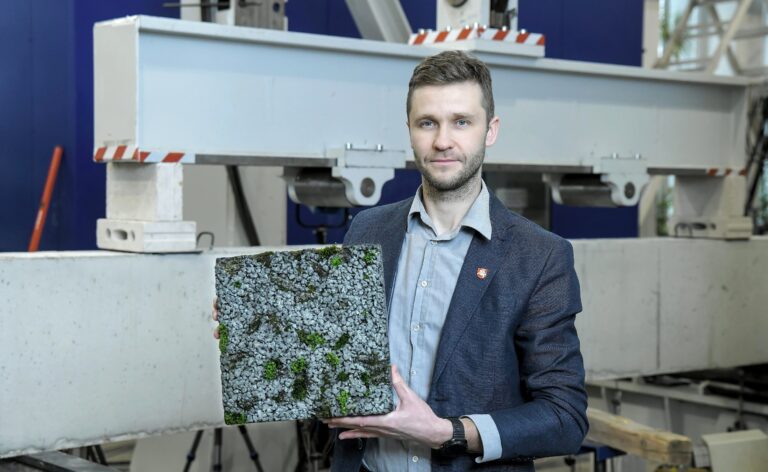
Until recently, buildings were primarily designed to withstand conventional loads such as wind, snow, and everyday use. However, geopolitical developments in Europe and around the world are changing perspectives in Lithuania as well: the resilience of infrastructure to extreme scenarios, such as explosions, is becoming an integral part of the design process. Dr. Povilas Dabrila, a junior researcher at the Department of Steel and Composite Structures of the Faculty of Civil Engineering at VILNIUS TECH University, says that explosions are a rare but high-consequence threat, and traditional design approaches do not always account for such scenarios. [caption id="attachment_115773" align="alignnone" width="2560"] Povilas Dabrila[/caption] “The war in Ukraine has forced us to rethink many things. One of them is how we design, maintain, and protect infrastructure. For a long time, we focused mainly on conventional impacts: snow, wind, operational loads on buildings and bridges, and energy efficiency. Today, however, it is clear that infrastructure may also face far more dangerous scenarios, such as explosions or vehicle impacts,” he explains. According to him, infrastructure becomes even more important during crises, as people’s safety may depend on it. “Bridges, roads, buildings, energy facilities, and communication networks are essential not only for everyday life. If a bridge collapses or communications fail during a crisis, emergency assistance may not arrive in time. This is no longer merely a technical loss—it can cost lives. Therefore, infrastructure resilience today is not just an engineering issue; it is also a matter of public safety, crisis preparedness, and national resilience,” emphasizes Dabrila. What happens during an explosion? The researcher explains that the effect of an explosion on structures differs fundamentally from conventional loads. “An explosion affects a building extremely suddenly. A blast wave forms and, within a very short time, transfers significant pressure to the façade, windows, walls, and floors. What distinguishes an explosion from other challenging conditions is the duration of its impact. Snow loads a structure gradually over a long period, and even wind is not as sudden as an explosion. In the case of an explosion, the impact is felt almost instantly.” As a result, structures respond differently as well. “The key question is not only whether an element can withstand the load. What also matters is how it behaves under dynamic loading—how it deforms and whether it maintains its integrity.” According to Dabrila, explosions often first damage weaker elements such as windows, façade components, and non-load-bearing walls. The greatest risk arises when load-bearing elements are damaged, leading to more extensive structural failures. In such cases, collapse may occur. “In rare cases, localized damage can trigger a much larger collapse. For example, if a single column is damaged, internal forces are redistributed to other elements, which may also fail, causing the collapse to spread further. It is important to note that such situations are rare in ordinary buildings. Buildings are designed with safety margins, and regulations require the evaluation of structural safety and reliability.” Reducing the impact is essential According to Dabrila, blast resistance requires a comprehensive approach: both the resilience of the structure itself and measures that either increase the distance between the explosion and the building or reduce the impact of the blast. “A building’s resistance to explosions does not depend solely on stronger walls or columns. It is a system-wide issue: how the building is designed, how it behaves when damaged, and what additional measures reduce the impact before it reaches the structure. From a structural perspective, the most important thing is sufficient load-bearing capacity. If a column, beam, slab, or connection is damaged, internal forces should be able to redistribute to other structural elements. Then the failure of one element does not necessarily lead to the collapse of the entire structure.” It is also important to understand how the structure behaves under sudden loads. Explosion loads are extremely intense and short-lived, so engineers must evaluate not only whether a component can withstand the load but also how it deforms and whether the structure retains its integrity. Equally important are measures that reduce the impact itself. “These may include standoff distances, earth berms, concrete barriers, additional protective structures, screens, or nets. Their purpose is to move the threat farther away, block direct impact, or absorb part of the energy so that it does not reach the primary structure. We can see practical examples in Ukraine. The country employs various protective solutions, ranging from additional structural elements to protective nets that reduce the risk of direct drone strikes or other impacts.” How blast resistance is achieved According to Dabrila, designing structures that are more resistant to explosions involves solutions at several levels — from reducing the impact itself to strengthening the structure. “The first goal is to reduce the impact before it reaches the building. This can be achieved through standoff distances, concrete blocks, earth berms, barriers, protective fences, anti-drone nets, or additional structural installations. At the same time, the most critical structural components — columns, slabs, walls, and connections — are strengthened. This can be done using steel, reinforced concrete, composite materials, or additional bracing.” Energy-absorbing systems are also used, including protective panels, multilayer façades, and composite modules. Their purpose is to absorb part of the blast energy and reduce damage to the primary structure. According to Dabrila, digital technologies make it possible to evaluate potential scenarios in advance. “Modeling is also extremely important. Today, numerical models allow us to evaluate how a building or its individual elements would behave during an explosion, impact, or another extreme event. This enables us to base decisions on calculations and testing rather than assumptions. In the future, I believe we will see more lightweight, easily installable protective systems — for example, multilayer composite modules that can be used to protect existing buildings and infrastructure.” Science is seeking practical solutions Dabrila explains that research in this field is focused not only on theory but also on practical applications in infrastructure design. The Faculty of Civil Engineering at VILNIUS TECH studies how structures and materials behave under complex loading conditions. “Our research focuses on structural resistance to extreme loads and the development of lightweight multilayer composite systems. We are looking for solutions that could provide additional protection for buildings, bridges, and other infrastructure against impacts, blast waves, high temperatures, and similar threats. One area of research involves protective composite modules that could be installed on existing structures and serve as an additional protective layer.” According to him, both the materials and their internal structure are important. “Different layers, materials, and internal geometries can be combined, including energy-absorbing structures. The goal is to make the protection as lightweight as possible while maximizing energy absorption.” Experimental testing conducted at the faculty helps researchers understand the real behavior of materials, while numerical modeling allows this knowledge to be applied on a larger scale. “Through testing, we observe how materials actually deform and fail. Modeling allows us to scale those results up — for example, evaluating not only a small specimen but also a structural component or a real-world structure. Such research is important because it can lead to practical recommendations: which materials to choose, what layer configurations to use, how to attach protective modules, and where protection would provide the greatest benefit.” The goal is to control damage Dabrila stresses that it is impossible to make buildings completely resistant to explosions. Everything depends on the size of the explosion, the distance from the blast, the building’s structural system, the surrounding environment, and how the impact reaches the building. “The primary objective is usually not to make a building ‘indestructible’ but to control the damage. This means setting clear priorities. The most important goals are protecting people, preventing sudden collapse, reducing damage, and, if possible, maintaining critical functions.” In Dabrila’s view, assessing infrastructure resilience against extreme scenarios has not yet become common practice in Lithuania. Explosions and other extreme scenarios are typically considered only for specific types of facilities. However, changing circumstances are also changing design priorities. “There is increasing discussion about civil protection, critical infrastructure security, and the resilience of facilities under crisis conditions. As a result, this topic is gradually moving from a narrow specialist field into a broader engineering and national security issue.” He notes that much still depends on the client’s perspective. “Such solutions often involve additional costs, while their benefits become apparent only during a crisis. As a result, it can be difficult to justify the investment, especially when the primary focus is minimizing construction costs.” Nevertheless, he believes that building resilience should be viewed not as an extra expense but as a risk management measure. “Resilience is not a luxury — it is risk management. Not every project requires the most expensive solutions, but critical facilities should be subject to higher standards. Sometimes even simple measures — better site planning, protective barriers, or strengthening critical structural elements—can significantly reduce risk.” In his opinion, infrastructure security will increasingly be viewed as part of national resilience. “Whether such solutions become a standard part of the design process will depend on clients’ attitudes and on clear requirements and methodologies. Designers need to know when such scenarios must be assessed and how to evaluate them. I believe that, at least for critical infrastructure, such assessments should become standard practice. Not every building requires the same level of protection, but the most important facilities should be designed with extreme scenarios in mind.”
More