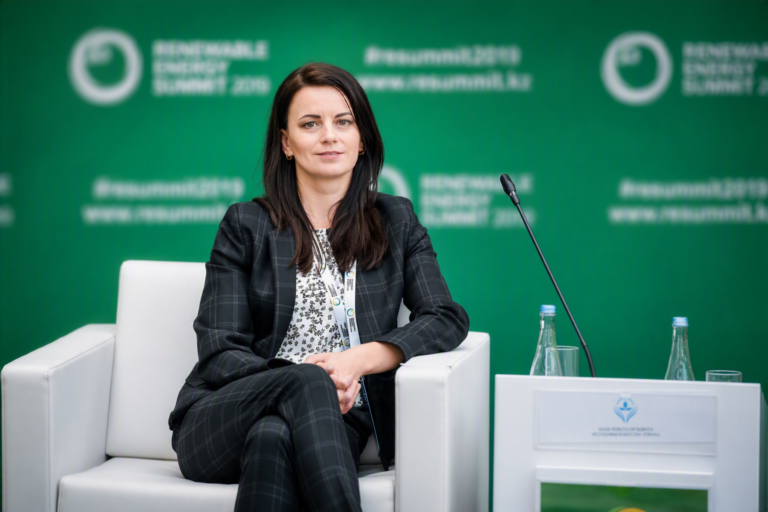
The future of transport sector: energy efficient vehicles that protect human life

May 13, 2019

The transport sector in Lithuania is undergoing a rapid change as the development of an automatization of processes and application of smart digital technologies gain momentum. In addition to changes in technologies, the issues of ecology and environmental protection are equally important and have an increasing impact on the transport sector of our country. “I hope that the transport system will soon reach high electrification rates, and only quiet, energy efficient vehicles that protect human life will ride our streets,” associate professor Vidas Žuraulis from the Department of Automobile Engineering at Vilnius Gediminas Technical University (VGTU) forecasts environment and people friendly future of transport.

Transport system in Lithuania. Are we keeping pace with the latest global trends?

There is a wide ranging discussion on transport system in Lithuania; therefore, we can hear various opinions of the public and officials on the subject. It is not surprising, because transport plays an important role in our country. Freight forwarding is well-developed mostly due to geographic situation of the country. Intensive East-West and South-North freight flows lead to higher efficiency of freight companies, and have an impact on the State and its people. Transport sector – including road, maritime and rail transport – makes a significant contribution to the country’s gross domestic product (GDP). Another important aspect is our access to the Baltic Sea, and, thus, an important role in the transport policy of the Baltic Sea Region. 

In addition to logistics, our daily journeys and more distant travelling are inseparably linked the day-to-day functioning of the country. I think everybody agrees that most of us use cars, public transport, bicycles, scooters or other means of transport. We are part of the traffic system even if we walk. This shows the importance of transport and the significance of a smooth functioning transport system. Technological advancement and smart systems are part of this sector and, in various forms, contribute to development of a more efficient transport and try to satisfy at least basic needs of the population.  

It is not easy to talk about transport system due to its multifacetedness, but all in all I believe that we are on the right track to achieving high goals, and the benefits of transport are adequately exploited. In fact, it is difficult to talk about the transport system in Lithuania in general terms, because there are so many aspects and areas. Technologies help us to follow the global trends and developments of infrastructure, vehicles, and, more widely, the concepts of freight or passenger transport. By tracking trends, we inevitably compare ourselves against others. In Lithuania progress is visible in some areas, in some we can see the initial steps, while in some we can already see the mistakes made. 

You have mentioned trends and latest developments. Which ones do you consider the most important in the transport sector?

Thinking about the latest trends in the transport sector, robotisation and automation come first to my mind. It’s not necessarily the futuristic picture of driving-flying silent machines where human is just a passenger. Technologies in our environment are already protecting us from the risks of the transport system, also they help us to move faster and more comfortable. Transportation in closed warehouses or environments hostile to humans is done by robots or remotely controlled machines, roads are packed with cameras which can control the load of infrastructure according to the shape, temperature or licence plate numbers. 

We also have to mention the issues of environment protection. Solution of these issues is important globally. The efficiency of power units of vehicles, generation of energy from alternative energy sources, neutralisation of emissions are some important directions for further development of transport systems. In the future they will become more prominent and will require more attention from the public and professionals. 

Could you mention some important ongoing projects in the transport sector, what is especially relevant?

In addition to the afore mentioned issues of automatization and emission reduction in transport sector, traffic safety remains an important topic in road transport area. The European Union and various international organisations (the United Nations, the World Health Organisation) have ambitious goals to decrease the number of road accidents and fatalities. In some countries this has been a priority for more than fifty years, but still road fatalities remain one of the main causes of death.

In this area the human itself, their psychophysiology, mentality, is very important in addition to the role of technologies and contribution from professionals. This expands the field of transport even more. If only the technologies will be developed, humans might not be able to cope with it; they will need more physical help and even more psychological assistance. In the middle of the twentieth century, when maximum speed of cars was rising very quickly, people were enjoying the technological advancements, but had challenges in assessing the risks related to it. It could be that we will face other evolution challenges as technologies start changing people and interpret their actions?

The future of transport in 5-10 years. What can we expect in Lithuania and globally?

In the future, transport will keep on developing in the direction of sustainable mobility. I cannot imagine any other way, because we want to remain mobile, but strive to avoid traffic jams, we want to reach our destinations faster, more comfortable and with minimum effect on the environment. It depends on us and on the market trends, on which we often rely, what measures will we take now and in the future: will we choose an electric scooter or a self-balancing board, will we invest in an electric car, or maybe we will come back to good old public transport, which offers indisputable advantages?

I am convinced that during the coming decade self-driving transport will move on from shiny car shows, scientific symposiums and testing grounds onto our roads, and Lithuanians will not only watch it on videos on the internet, but will see it in real life as well. On the other hand, I am quite cautious about extreme technological innovations. Despite it, I am happy to participate in the implementation of the technological advancement of the transport system.

I hope that the transport system will soon reach high electrification rates, and only quiet, energy efficient vehicles that protect human life will ride our streets. Also I would like to see solar panels on the roofs of supermarkets and on the parking lots, and I would be so happy if families with children would opt for bicycles instead of wasting time in traffic jams.

 

Related news

Photography Exhibition "Leaving My Body" by Ieva Mizgeraitė
We invite you to visit the photographic exhibition "Leaving My Body" by VILNIUS TECH alumna Ieva Mizgeraitė. This collection is a journey through a woman's inner world – through the body, emotions, self-discovery, and the attempt to look at oneself from the outside. In her work, the photographer explores a body that does not always conform to society's expectations, situations beyond our control, the masks we see around us and sometimes put on ourselves, as well as the constant demand to be strong, equal, and always ready. “Each project was born from a specific emotion – from the noise and dialogue in my mind that arose at that moment. Searching for answers, I left my body and looked at everything from the outside – through the states of my models, their poses, gazes, and bodies. I understood that when you look at yourself from the outside, emotions become temporary. Inner dilemmas that once seemed permanent begin to dissolve,” the photographer says about the concept behind the exhibition. The exhibition brings together anger, resistance, masks, expectations, and freedom. These are not merely personal themes – they are experiences familiar to many women. The photographer says that she captures not faces, but psychological states. For her, photography has become a way of self-discovery and self-reflection – a form of meditation that helps her step away from the noise of the outside world and better understand what truly matters. The author works predominantly in black and white. She has been professionally active in photography since 2025. The exhibition "Leaving My Body" is an introduction to a deeper journey, which is planned to be presented in Gallery A of the library in November 2026.   The exhibition is on display in the foyer on the second floor of the Central Library.
More
Built a global career: VILNIUS TECH alumna encourages students not to be afraid of engineering
What should you study if you're equally interested in the humanities and the sciences? VILNIUS TECH alumna Katažina Andrukonytė knows this dilemma well. Today, she leads international teams and advises on some of the world's largest energy and infrastructure investments, but when she graduated from school, she had no clear idea which path to choose. „A few setbacks, staying proactive, and choosing the right study programme helped me discover a career that I truly enjoy and find meaningful. If I could give future students just one piece of advice, it would be this: don't be afraid to choose engineering,“ she says. [caption id="attachment_122573" align="alignnone" width="1536"] Katažina Andrukonytė[/caption] Based in Finland, Andrukonytė leads a team at AFRY that works on projects financed by international financial institutions. She coordinates complex energy and infrastructure projects across Europe, Asia, Australia, and other regions, while advising banks, investment funds, governments, private investors, and project developers on investments worth hundreds of millions of euros. Yet more than twenty years ago, she was simply another school graduate trying to decide what to study. Engineering wasn't the original plan „At school, I was equally interested in the humanities and the sciences. I explored several study options, including law. To be honest, engineering wasn't my dream. After I wasn't admitted to my first-choice programme, I decided to study engineering instead—and looking back, it was one of the best decisions I've ever made,“ she recalls. At VILNIUS TECH, she completed a Bachelor's degree in Environmental Engineering Technologies, followed by a Master's degree in Environmental Engineering and Management. Later, encouraged by her employer, she also earned a Master's degree in Building Energy Engineering. „What surprised me most was how quickly employers started recruiting engineering students. I had barely started my master's studies before companies were already competing to hire us,“ she says with a smile. Finding the right specialisation While studying, Andrukonytė realised that environmental engineering offers a wide range of career opportunities. She also understood the importance of identifying an area where she could apply her knowledge in practice. The turning point came when the company where she was already working encouraged her to specialise in energy engineering. „My employer was looking for specialists in the energy sector and suggested that I continue my studies in Building Energy Engineering. They even covered my tuition because qualified professionals were in such high demand. That's how I found the field I wanted to build my career in,“ she explains. Today, she believes this approach can benefit many young people: first gain a broad engineering education that opens multiple career paths, then discover the area you are most passionate about. More than a degree Although the studies were challenging, Andrukonytė believes they gave her a strong professional foundation. „There was certainly plenty of mathematics and physics, but engineering is much more than formulas. The difficult subjects are simply part of the learning process—you have to work through them,“ she says. For her, however, the greatest value of studying at VILNIUS TECH lay beyond the classroom. „The university offered countless opportunities to get involved in projects, competitions, international summer schools, and exchange programmes. I made the most of them. During my studies, I had the chance to study and complete internships abroad six times. I visited the Czech Republic, Denmark, Italy, South Korea, Finland, and Sweden. Those experiences showed me just how many doors an engineering education can open,“ she says. Engineering opens doors around the world Today, Andrukonytė lives in Finland with her family and works for AFRY, one of Europe's leading engineering, design, and consulting companies, employing around 19,000 specialists in more than 40 countries. For the past 15 years, she has worked on international energy and infrastructure projects, advising banks, investment funds, project developers, and investors. Her work brings together professionals from many different fields, including engineers, financial experts, investors, municipal authorities, and international organisations. „Over the past few years, we've seen growing investment in biomethane, hydrogen, renewable energy, hybrid energy systems, energy storage, district heating, power generation, and decarbonisation projects. Technical expertise is essential, but so are communication, negotiation, and project management skills. My role is to bring together specialists from different backgrounds and help them work as one team. That's why I always say engineering isn't only for people who love numbers. There is plenty of room for people with strong communication and interpersonal skills as well. Energy is a global industry, and if you're a skilled engineer, your expertise will be valued anywhere in the world.“
More