The leaders of innovation at manufacturing companies: who are they?

May 27, 2020

The new decade started with tricky challenges for the manufacturing industry in Lithuania. The Fourth Industrial Revolution is bringing significant changes in the way we work. The revolution is gaining pace and the utilization of new technologies is growing, and we are reimagining the way humans, machines and data interact. It is important to recognise that highly skilled engineers are at the heart of a successful implementation of new digital technologies. Vilnius Gediminas Technical University (VGTU) monitors closely the situation on the job market and manufacturing industry and implements changes in their study process. Students at VGTU gain the latest professional knowledge and master new digital technologies; the university also promotes interdisciplinary cooperation between engineers in mechanics and manufacturing. 

The recent pandemic showed that the need for engineers will only increase 

Students need a good knowledge of mathematics and physics to study mechanical or manufacturing engineering. Unfortunately, pupils have to choose subjects at school rather early in life, long before they know what they would like to study in the future, and often they choose an easier path – without courses in science – that requires less effort.  

“Pupils start thinking about their studies at university and their future careers in senior years at secondary school. At that time, their choice becomes limited due to the course profile that they have chosen earlier, and an option to study engineering is automatically eliminated. Then, students have to choose the social sciences or humanities. It is one of the factors why management and administration studies have become so popular. This situation leads to too many professionals in management and administration, and the high demand for engineers,” says assoc. prof. Gintas Viselga, vice-dean at VGTU’s Faculty of Mechanics. 


Technical education institutions have started the discussion on the potential shortage of engineering skills in the future a long time ago; finally, the employers have recognized this as well.  

“The demand for mechanical engineers has always been rather high; but, recently, the demand grew significantly. The main reason behind this is the rapid development of the economy – almost all manufacturing industries have been expanding and continuously increasing production. The global automotive industry is not an exception. Our company is part of this industry and we needed a lot of colleagues who could help us to exploit the opportunities in the market. Now, we expect a recession, but this is not bad news for engineers. We have noticed changes in the global supply chain: European automotive companies move away from suppliers in China and look for partners in Eastern Europe, the Baltic States, and Lithuania as well,” says Kristina Šarkinaitė, deputy CEO of Metec – a German automotive component producer. 

The largest players of the automotive industry have planned the changes in their supply chains and decided to transfer their business from politically unstable China to other locations before the pandemic. Now, this trend will be even more visible. But what does that mean for mechanical and manufacturing engineers? It means that the demand for these professionals will increase. The representative of the company says, that companies from various manufacturing industries will be looking for possibilities to transfer their manufacturing activities from China to countries in Europe, and Lithuania is a very attractive alternative. We will likely see a lot of new orders and proposals.    

An advantage in the market

Rising levels of global consumption mean that mechanical engineers have to develop new and more efficient equipment, devices and machines for the manufacturing industry; and manufacturing engineers need to improve or reinvent manufacturing technologies, to develop new manufacturing systems, which can adapt to rapid changes in the demand; thus, one can never get bored in this industry, the job is not only interesting but also well-paid. 

The latest report by Invest Lithuania shows that the number of professionals in industrial engineering sectors is rather low and these professionals are quite well paid. The data show that an average salary of an industrial engineering professional in Lithuania is 1 148 EUR, and their salaries are 46% higher than the average salary in Lithuania.  

Manufacturing and mechanical engineers have strong advantages in the job market. They have a wide array of competencies and skills and easily adapt in various areas of work.  K. Šarkinaitė, the representative of Metec, confirms this by saying: “Engineers are valuable, because, in addition to knowledge about manufacturing technologies and design, they also are knowledgeable about information technologies, quality management, and can communicate effectively with customers in different languages, understand about ecology requirements, and have knowledge about various other activities at companies. Naturally, every person focuses only on several areas, on something that they are most fond of. On the other hand, companies are looking for professionals who have a wider understanding of how companies work, and who can adapt quickly. Then an employer knows that an employee will stay with the company even during the most unexpected changes and they will also help others in the company to adapt.”

Technologies change the nature of work

Companies are forced to rethink their manufacturing processes because of the ever-growing industry digitalization. It also changes the nature of work of mechanical and manufacturing engineers: their work requires less physical effort, but professionals need more expertise in various areas beyond the engineering itself. 

“The basic knowledge in engineering is not enough anymore. Professionals need to know about automated equipment control, the latest information technologies – to be able to programme numerically controlled machines: robots, welding, painting, riveting machines, 3D scanners and printers and other modern manufacturing equipment. A mechanical engineer should know how to maintain and repair this type of complex equipment. Maintenance has to be timely and meticulous, and, in case of machine failure, it should be repaired as quickly as possible because downtime costs are tremendous,” G. Viselga is convinced.  

During the last decade, the nature of work had changed in almost every industry; engineering is not an exception. The biggest challenge for engineers is the pace at which the technologies and software development changes and, subsequently, change the machines, equipment and technologies used in the industry. 

“Now more than ever engineers need to be the leaders of innovation at manufacturing companies because they have the knowledge and skills to understand the global trends, evaluate their impact on a specific company. Every employee must share responsibility. Even the most experienced managers are not able to follow the immense flow of information and decision-making process becomes more decentralised, employees have more freedom and responsibility to make decisions related to their work. Also, they must understand the benefits of systematic work and how it can be developed. Ecology, the sustainability of products and resources is another important area of activities. It is very likely that these aspects will be the next drivers for change in the way engineers work,” says K. Šarkinaitė on the changes in the nature of work of engineers.

Employers are looking beyond the technical knowledge

The report by Invest Lithuania says that top talent is a must for a success story of a manufacturing company. The report presents the most company-valued competences: employees in Lithuania are valued for their multilingual skills, curiosity to learn, cultural fit, and strong work ethics. Employers also mention that profession-related competencies are crucial, but also it is important that professionals in Lithuania can work in teams and have high motivation. 

K. Šarkinaitė, the representative of Metec, notes that their company especially values attention to detail, thoroughness and desire to learn. “Work at different companies and plants has certain specificity. University engineering students must be able to adapt: have skills to comprehend large volumes of information, be able to find analogies, and apply their knowledge in new contexts. The young professionals have to be thorough and attentive to detail – it is the best way to master new processes and provide their insights for the rest of the organisation to learn,” says the representative of the company.

Vice-dean of VGTU’s Faculty of Mechanics explains that currently there is a very wide choice of technical equipment. Engineers need to understand very well the technical parameters of various machines used in manufacturing, and to be able to assess if the analysed equipment is the best choice for the specific company, will the new machines fit into the current system, is it compatible with other machines and equipment. Once a machine is bought, engineers need to master its control and maintenance requirements. Usually, providers of equipment are from other countries; thus, engineers must speak foreign languages and communicate effectively on the level of technical terms. Also, they need to train other employees to work on new machines – effective communication skills are crucial to avoid equipment and production failures. Nowadays, just technical skills are not enough for engineers who work in the industry; they also need excellent computer literacy, communication skills, learn languages, and be flexible in terms of work time and place. 

Vice-dean G. Viselga also says that manufacturing and mechanical engineering students develop strong logical thinking during their studies, and it will keep the young professionals on their feet during the turbulent times and in the ever-changing engineering world, and despite everything, they will be able to create and design new machines and technologies that change the world. 
 

Related news

Interdisciplinarity in practice: how Electronics and Medical Engineering students developed a Human motion analysis system
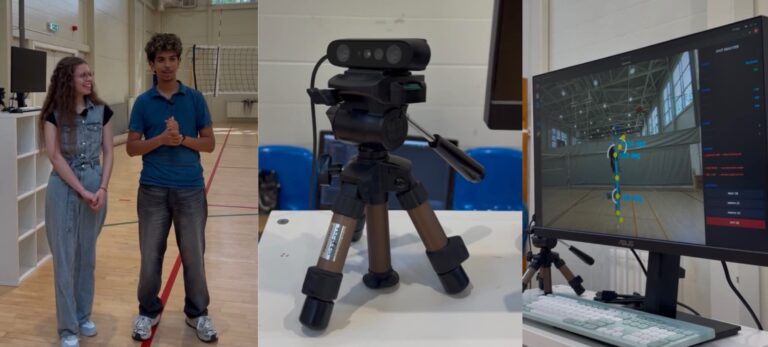
Modern engineering solutions are increasingly created through collaboration between specialists from different fields. The university environment provides an opportunity to combine diverse competencies and develop solutions that would be difficult to achieve within the boundaries of a single discipline. Such collaboration was also at the heart of a bachelor’s thesis project in which VILNIUS TECH students Laura Venckutė (Faculty of Electronics) and Abderrazak El Aamrani (Faculty of Mechanics) combined expertise in electronics and medical engineering to develop a human motion recognition and evaluation system. From an Idea to Interdisciplinary Collaboration At the beginning of the project, students from the Medical Engineering and Electronics Engineering study programmes sought to address a problem relevant to both sports and rehabilitation: the lack of accessible systems capable of automatically evaluating human movements and providing immediate feedback. As the project authors point out, incorrect movements can reduce training effectiveness and increase the risk of injuries during rehabilitation, sports activities, or everyday tasks. For this reason, they decided to look for a technological solution that could help objectively assess movement quality. The idea emerged from previous projects and experience gained during their studies, while an important catalyst was the opportunity for collaboration proposed by their supervisors. From the outset, it was clear that the project would require expertise from different fields, as motion analysis involves not only developing a technical system but also defining meaningful criteria for evaluating human movement. [caption id="attachment_120707" align="alignnone" width="2048"] Electronics and Medical Engineering students developed a Human motion analysis system[/caption] The students brought different, yet closely interconnected and complementary competencies to the project. The Electronics Engineering student was responsible for computer vision, embedded systems, and system integration, while the Medical Engineering student contributed expertise in biomechanics and human movement assessment. Although responsibilities were divided according to individual areas of expertise, key decisions were made collaboratively. From the Initial Concept to a Functional System In the early stages, the team planned to develop a system capable of analysing a broader range of movement patterns and performing more advanced analytical functions. However, as the project progressed, technical limitations, available hardware resources, and the scope of the bachelor’s thesis had to be taken into account. As a result, some ideas had to be abandoned. According to the team members, no major disagreements arose during the project. Decisions were made by discussing possible alternatives, evaluating how well they aligned with the project objectives, and, whenever possible, testing different approaches in practice. When technical and medical requirements conflicted, the team sought solutions that best balanced project goals and implementation constraints. The final outcome of the project is a human motion recognition and feedback system based on a pose estimation algorithm designed for basketball shooting analysis. The system detects a person in real time, estimates body posture, evaluates shooting technique according to biomechanical criteria, and subsequently provides feedback to the user. The Value of Interdisciplinarity and Future Opportunities During testing, the system performed better than expected. It successfully analysed the movements of users of different heights and maintained reliable performance at distances of up to 12 metres. According to the students, not only did the technical results exceed expectations, but the collaboration process itself also proved highly successful. In their view, such a project could theoretically be completed by a specialist from a single field. In practice, however, this would be difficult and inefficient. The project required both expertise in electronics and an understanding of human movement analysis. Without competencies from both fields, considerably more time would have been needed for learning unfamiliar topics and identifying appropriate solutions. Looking ahead, the students see opportunities to further develop the project by improving system stability, optimising resource usage, expanding the range of supported movement patterns, and increasing motion recognition accuracy. Although they are not yet certain whether they will continue working in this specific area, they hope to further deepen their expertise in related fields of technology and engineering. Supervisors’ Insights: Interdisciplinarity as a Foundation of Future Engineering The thesis supervisors emphasise that the nature of the project itself required collaboration across disciplines. However, the greatest value of the project lies not only in the technical solution that was developed, but also in the students’ ability to work together effectively. Professor Kristina Daunoravičienė, lecturer in the Medical Engineering study programme, notes that developing a human posture recognition and evaluation system requires both an understanding of human movement and biomechanics, as well as the ability to create a technical system capable of collecting, processing, and presenting information to the user. „The need for different knowledge and competencies made this topic an excellent platform for collaboration between Medical Engineering and Electronics Engineering students. Such projects foster not only technical solutions but also the ability to understand the logic, limitations, and priorities of other disciplines,“ says Prof. Dr Kristina Daunoravičienė. Although the students were initially unfamiliar with one another and came from different engineering backgrounds, a shared goal quickly became the foundation of successful cooperation. According to the supervisor, Medical Engineering contributed the perspective of human movement assessment and result interpretation, while Electronics Engineering provided expertise in system architecture, prototyping, and optimisation. According to Prof. Dr K. Daunoravičienė, the most important outcome of the project is not only the developed prototype and its comparison with the Xsens motion analysis system: „Equally important are the competencies of collaboration, communication, trust, initiative, and the ability to learn from one another. These are the qualities that allow good ideas to become real, functioning solutions.“ Associate Professor Dr Vytautas Abromavičius of the Faculty of Electronics also points out that in the era of artificial intelligence, technical expertise alone is no longer sufficient. Clear communication, the ability to understand specialists from different fields, and working together towards a common goal are becoming increasingly important. „This bachelor’s thesis demonstrated that our students communicated exceptionally well and were able to explain specialised professional terminology in a simple and understandable way. This mutual understanding enabled them to effectively combine knowledge from different disciplines and achieve an excellent result,“ says Assoc. Prof. Dr Vytautas Abromavičius. According to him, the need for interdisciplinary projects in modern engineering continues to grow. Every real-world product developed for the market consists of multiple interconnected components; therefore, a broader understanding of the problem leads to better product applicability and a more complete final outcome.
More
VILNIUS TECH Professor A. Čenys Represents Baltic States at Google Leadership Summit
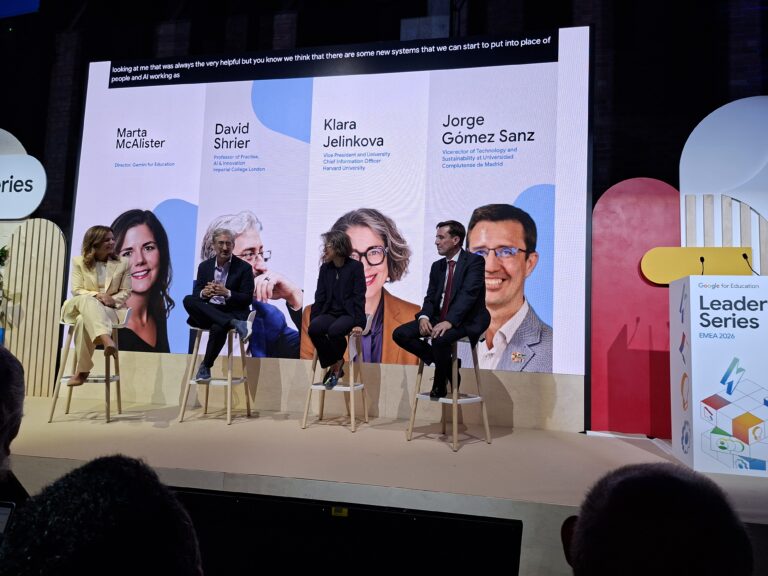
Prof. Antanas Čenys, a prominent researcher at VILNIUS TECH and the SustAInLivWork project, participated by personal invitation from Google in the exclusive Google for Education Higher Education Leader Series EMEA in London. Prof. Čenys was the only AI and cybersecurity expert from the Baltic countries to be personally invited to this high-level summit. The exclusive event brought together higher education leaders, technology pioneers, and innovation stakeholders from across Europe, the Middle East, and Africa. The summit focused on shaping the future of Artificial Intelligence, digital transformation, cybersecurity, and driving responsible innovation within the global academic and industrial landscapes. The insights and discussions from the London summit strongly resonate with the core mission of the SustAInLivWork project: strengthening Europe’s capacity to develop, deploy, and scale trustworthy AI solutions while simultaneously building the advanced skills, critical infrastructures, and innovation ecosystems required for a sustainable digital future. Through SustAInLivWork, VILNIUS TECH and its partners are actively delivering: An International AI Cluster: bridging the gap between research excellence, industry, and public sector stakeholders; Advanced Innovation Services: driving AI and data-driven solutions for various sectors; AI Skills Development: establishing lifelong learning opportunities and specialized training; Cross-Regional Collaboration: accelerating practical AI adoption and ensuring positive societal impact. The summit also underscored the rapidly growing importance of cybersecurity as a fundamental pillar for secure AI deployment. This focus perfectly aligns with ongoing initiatives led by VILNIUS TECH, including specialized cybersecurity skills development programmes supported by Google.org, aimed at strengthening digital resilience and cyber competence across Europe. As Europe accelerates its comprehensive AI transformation, structured collaboration between universities, industry leaders, policymakers, and major technology providers becomes increasingly paramount. SustAInLivWork and VILNIUS TECH remain committed to contributing to this evolutionary journey by building strong bridges between cutting-edge research, thriving innovation ecosystems, and sustainable societal progress.
More