The new VILNIUS TECH chaplain: "I will assist anyone who wants to talk"

June 17, 2024
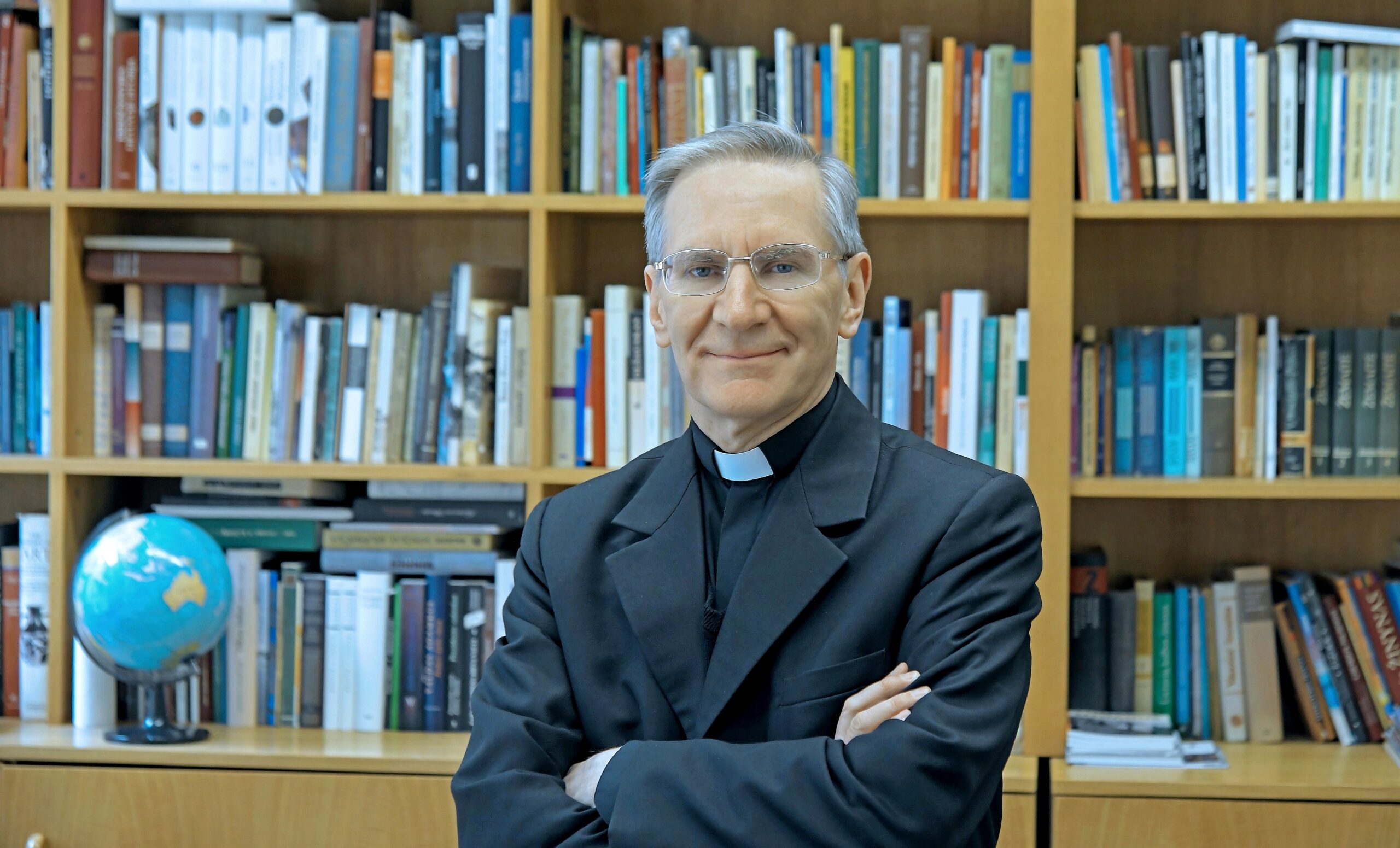
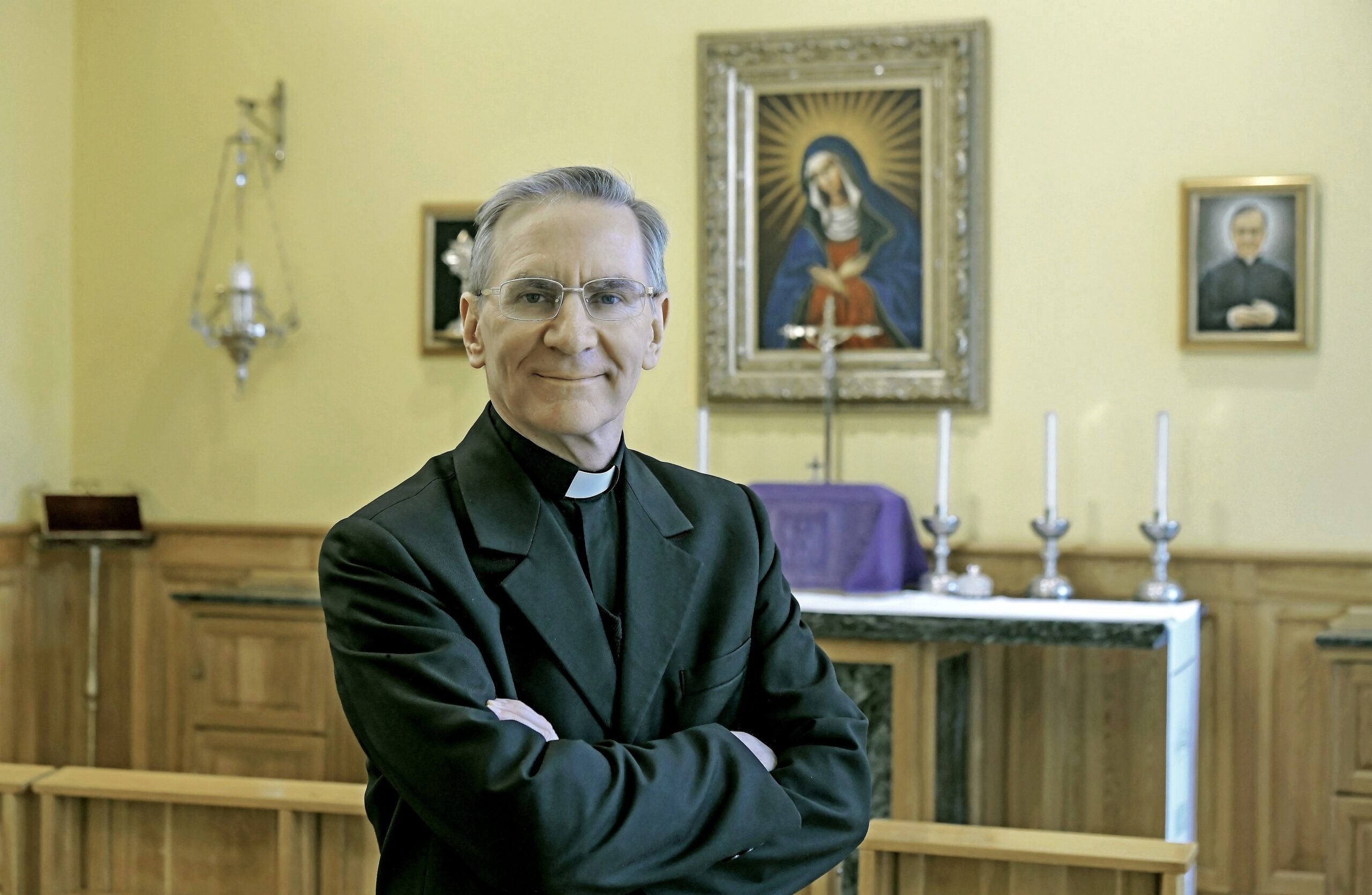
This year Father Andres Lavin was appointed as the new chaplain of Vilnius Gediminas Technical University (VILNIUS TECH). The priest, who will be welcoming students and university staff, has special plans for the community.

In Lithuania – on a mission

Father A. Lavin, originally from the Chilean capital Santiago, has been living in Lithuania for 27 years. Initially, after completing th studies of economics, he worked as an economist for 6 years, but later, he felt the calling to become a priest, which one day led him to Lithuania.

"With the fall of the Berlin Wall, the Soviet Union, the Lithuanian Catholic Church began inviting institutions from other countries. The then Archbishop of Vilnius, Cardinal Juozas Audrys Backis, invited the Opus Dei prelature, to which I belonged, to come to Lithuania. I had previously told my then boss, the bishop, that I would gladly go somewhere to do missionary work, to help people, so I was offered this opportunity," the priest explains.

Upon arriving in Lithuania, one of the biggest challenges for A. Lavin was the Lithuanian language. Adjusting to the climate was not difficult, but to be able to speak the language took him several years after which he could gradually work as a priest.

The priest saw Lithuanians as a very devout nation with many heroes of faith. He attributes this to the long period of Soviet occupation when the churches were closed and people, especially city dwellers, could not publicly confess their faith, receive sacraments, or celebrate religious holidays, so they had to seek different spiritual support.

Healing soul illnesses

The new VILNIUS TECH chaplain, A. Lavin, will soon start receiving community members who want to talk to him. According to the priest, this can help people deal with soul illnesses.

"A person's soul can get sick just like the body. These illnesses include a tendency toward selfishness, laziness, and we all (including me) have them. Since everything in a person is connected, we cannot say that only the body is sick, only the head, psyche, or only the soul. Sometimes physical pain can turn into a soul illness, and vice versa. So I am ready to accept anyone who wants to talk about anything – studies, family, dreams, future, difficulties," the priest invites.

A. Lavin also sincerely hopes to help young future creators, who nowadays increasingly face psychological challenges. The priest observes that contemporary youth around the world more and more often experience various fears, anxiety, depression, and this suffering is compounded by a sense of loneliness and a changed perception of God.

"Today, a computer is a young person's best friend. As time goes on, when a teenager encounters life's problems, they feel lonely, especially when they want to communicate but don't know how or with whom; they communicate in the virtual space, on social networks," the priest says.

The priest is convinced that without knowing how to communicate with each other, especially with loved ones, young people no longer know how to communicate with God. A. Lavin gives an example that as a child grows up, they observe their parents and compare them to a higher power.
"The child sees that the father is good and thinks that God is even better. If they see that the father is merciful, they automatically understand that God is even more merciful and so on. However, when children, for various reasons, do not see such examples in their families, they begin to perceive God as some kind of controller who demands something," the priest reflects.

To talk to the new chaplain, you can do so by email (alavini@gmail.com), call +370 694 276 85, or visit the Church of the Holy Cross (S. Daukanto St. 1, Vilnius) on Mondays and Fridays from 14:00 to 16:00.

The article was prepared by Milda Mockunaite-Vitkiene, the internal communication projects manager of the Public communication directorate at VILNIUS TECH.
 

Photos by Aleksas Jaunius


Galerija
Related news

New doctoral dissertation
VILNIUS TECH Library invites you to follow the published new dissertations. The dissertation „Resistance of technological waste-modified concrete to freeze–thaw cycles and alkaline corrosion“  („Technologinėmis atliekomis modifikuoto betono atsparumas užšaldymo ir atšildymo ciklams bei šarminei korozijai“) prepared at VILNIUS TECH by Edvinas Pocius. The dissertation was prepared in 2021–2026. Scientific consultant – Prof. Dr Džigita Nagrockienė. The dissertation was defended at the public meeting of the Dissertation Defence Council of the Scientific Field of Materials Engineering in the Aula Doctoralis Meeting Hall of Vilnius Gediminas Technical University at 10 a.m. on 8 June 2026. The dissertation investigates concrete modified with glass processing waste, concrete sludge, and a crystallizing additive. The goal is to develop concrete that is resistant to freeze–thaw cycles and alkali–silica reaction (ASR) by replacing part of the cement with glass waste and sand with concrete sludge. By selecting the optimal amount of technological waste, the aim is to improve the basic properties of concrete while maintaining its resistance to freeze–thaw cycles and alkali–silica reaction. The tasks addressed in the work include the analysis of glass processing waste and concrete sludge, evaluating their impact on the properties of the cement paste. After determining the recommended waste content, the physical and mechanical properties of the modified concrete are investigated, focusing on resistance to freeze–thaw cycles and alkali–silica reaction. This research sequence aims to substantiate the basic properties and resistance to freeze–thaw cycles and alkali–silica reaction of the newly developed material. The dissertation consists of an introduction, three chapters, general conclusions, a list of references, a list of the author‘s scientific publications, and a summary in English. The Introduction discusses the research problem and relevance, describes the object of research, formulates the aim and tasks, and outlines the research methodology, scientific novelty, practical significance, and statements for defence. The First Chapter discusses active mineral substances, their formation and use in concrete production. It discusses the generation of concrete sludge and glass waste, as well as the impact of their use on the physical and mechanical properties and durability of concrete. The durability of waste-modified concrete and the assessment of carbon dioxide emissions are also described. Conclusions are formulated, and the objectives of the dissertation are refined at the end of the chapter. The Second Chapter presents the materials used, their properties, and their formation. It describes the research methods and equipment chosen to investigate the structure and properties of the concrete and to calculate its CO2 emissions. The Third Chapter substantiates recommended dosages of glass waste and concrete sludge and their effects on cementitious systems. Glass waste was found suitable for cement replacement, and dry sludge for fine aggregate. An environmental impact assessment was also performed. Five scientific articles were published on the dissertation topic in the Web of Science database, Science Citation Index Expanded, peer-reviewed publications with a citation index. Doctoral dissertation readers can search via VILNIUS TECH Virtual Library.
More