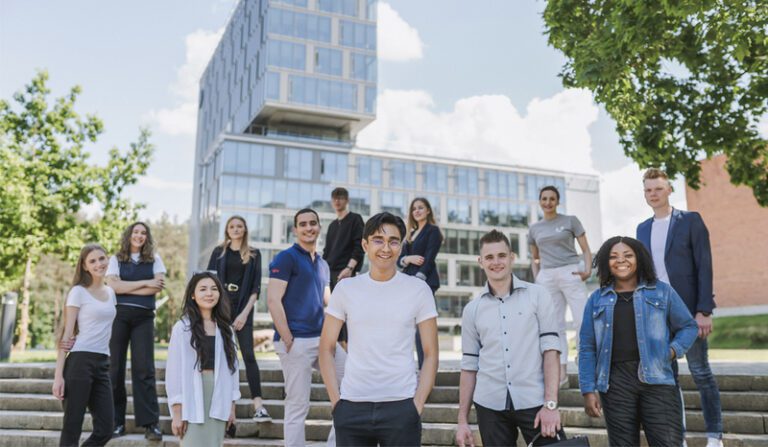
Can a world-improving idea be born in less than three days? Participants of the "Rethinking Hardware 2.0" hackathon tried to answer this question. Over the weekend, students, start-ups, hardware enthusiasts, and engineers worked on creating product prototypes at the Vilnius Gediminas Technical University (VILNIUS TECH) Creativity and Innovation Centre "LinkMenų fabrikas". During the three-day hackathon, they aimed to develop or direct their technologies towards achieving the United Nations Sustainable Development Goals.
"The second edition of the "Rethinking Hardware 2.0" hackathon, which we co-organize with the "Bridgio Tech Accelerator", attracted almost twice as many participants as its first edition. Therefore, we are pleased to see that the community of creators, engineering enthusiasts, business, and academia in Lithuania actively contributes to the search for solutions to the challenges of the modern world," says Dr Lina Pečiūrė, director of the Creativity and Innovation Centre "LinkMenų fabrikas" at VILNIUS TECH.
"The "Rethinking Hardware 2.0" hackathon was a fruitful experience for us at "Bridgio". The collaboration between business and academia proved to be immensely valuable as we were able to bring together diverse perspectives, skill sets, and expertise to tackle real-world challenges. Working closely with talented students and researchers allowed us to ignite the spark to start developing innovative solutions that we believe will one day see the light of day as real products. This kind of collaboration helps bridge the gap between theory and practice and fosters a culture of innovation that is vital for driving progress in the industry," says Leonid Gasan, COO and partner of "Bridgio Tech Accelerator".
Three days dedicated to solving sustainability challenges
During the "Rethinking Hardware 2.0" hackathon, participants were challenged to create product prototypes that would address the United Nations Sustainable Development Goals (SDGs) and impact-creating technologies. The main themes of the hackathon in which participants addressed problems were technical equipment solutions for sustainable agriculture (SDG2); accessible and sustainable energy solutions (SDG7); technical equipment solutions for sustainable cities (SDG11), sustainable transportation, and sustainable habitats.
Teams, with the help of mentors, were ale to use the facilities of VILNIUS TECH's "LinkMenų fabrikas" – 3D printing, electronics, wood, and metal workshops. Before the weekend challenge began, participants actively consulted with hackathon mentors – business representatives and specialists – to refine their prototype ideas and address problems. Short learning and mentoring sessions took place during the hackathon.
Winners of the innovation race
According to L. Pečiūrė, during the hackathon, participants came up with various solutions, from prototypes of sustainable mobility tools to concepts of robots that can clean sand or snow.
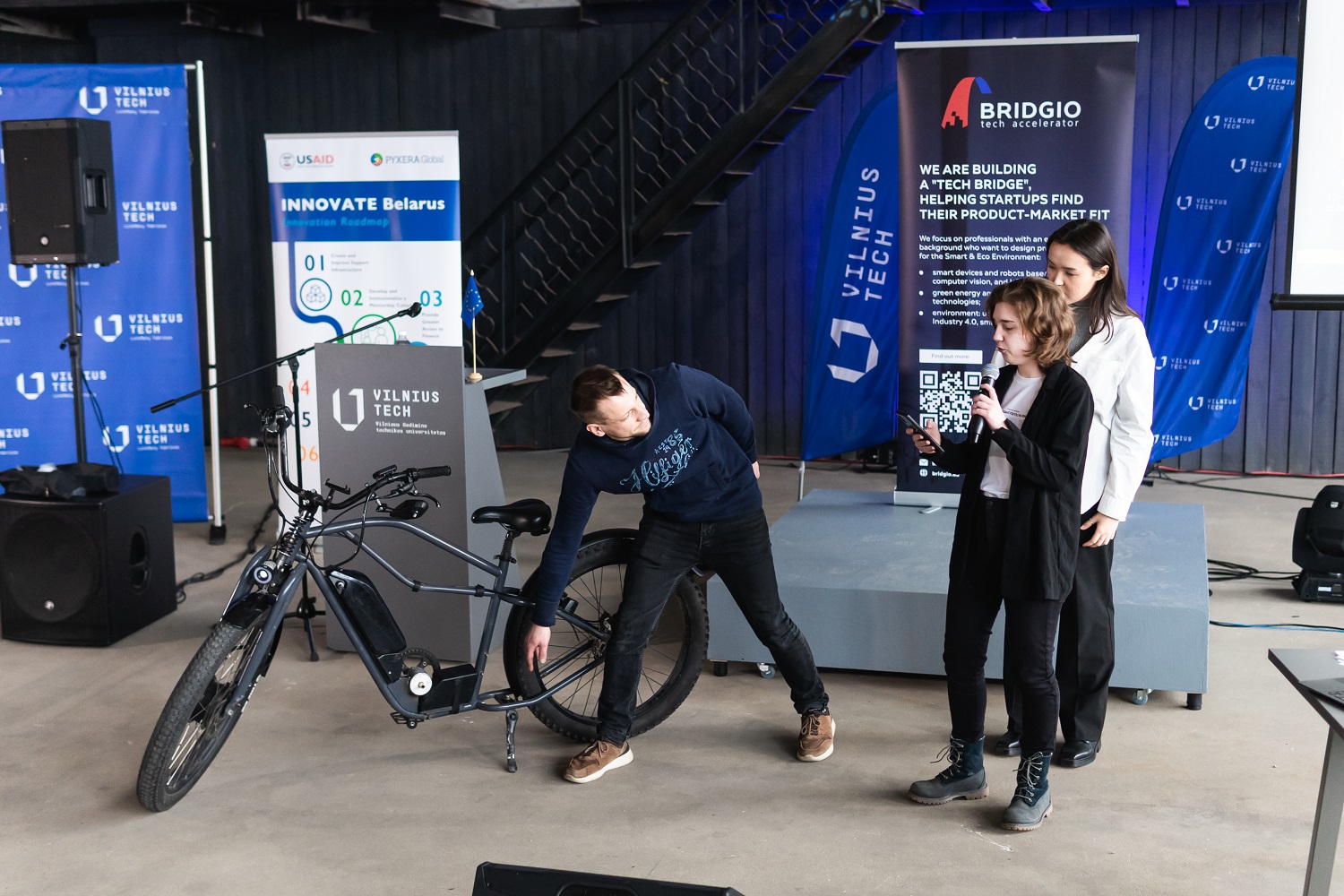
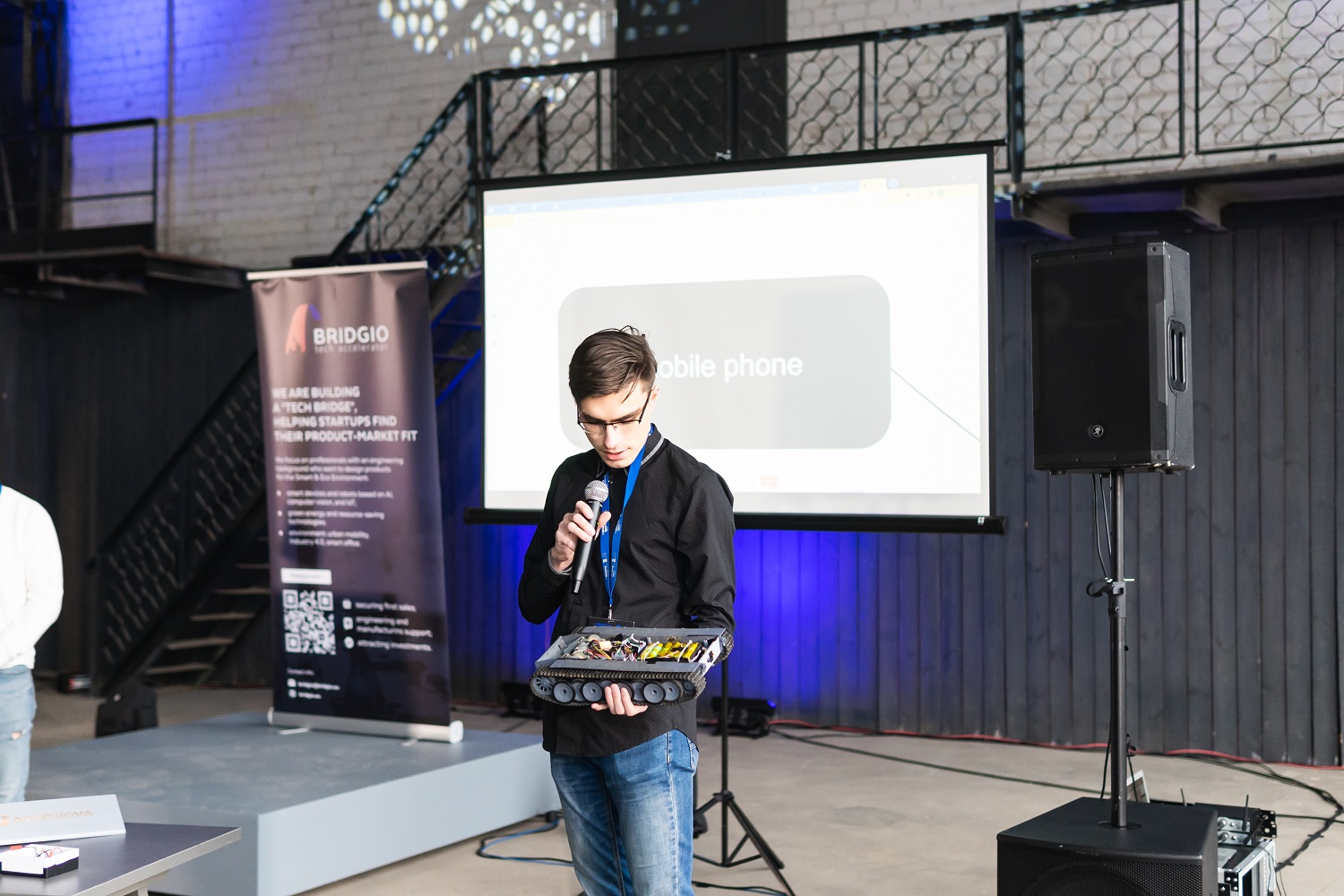
During the hackathon's final event on Sunday, 16 teams presented their prototypes. The jury, consisting of members from the business and academic communities, evaluated the participants' results based on criteria such as innovation, technical implementation, functionality, business idea, sustainability, and more.
After listening to all the presentations and getting familiar with all the prototypes, it was revealed that the first place was won by a team called "GFT Solutions," whose members are VILNIUS TECH bachelor's students Taira Misiūnienė and Giedrius Misiūnas. They presented a prototype of an automatic waste recycling and sorting device. This team, among other additional prizes, won the 1500 euro cash main prize established by the company "Gurtam."
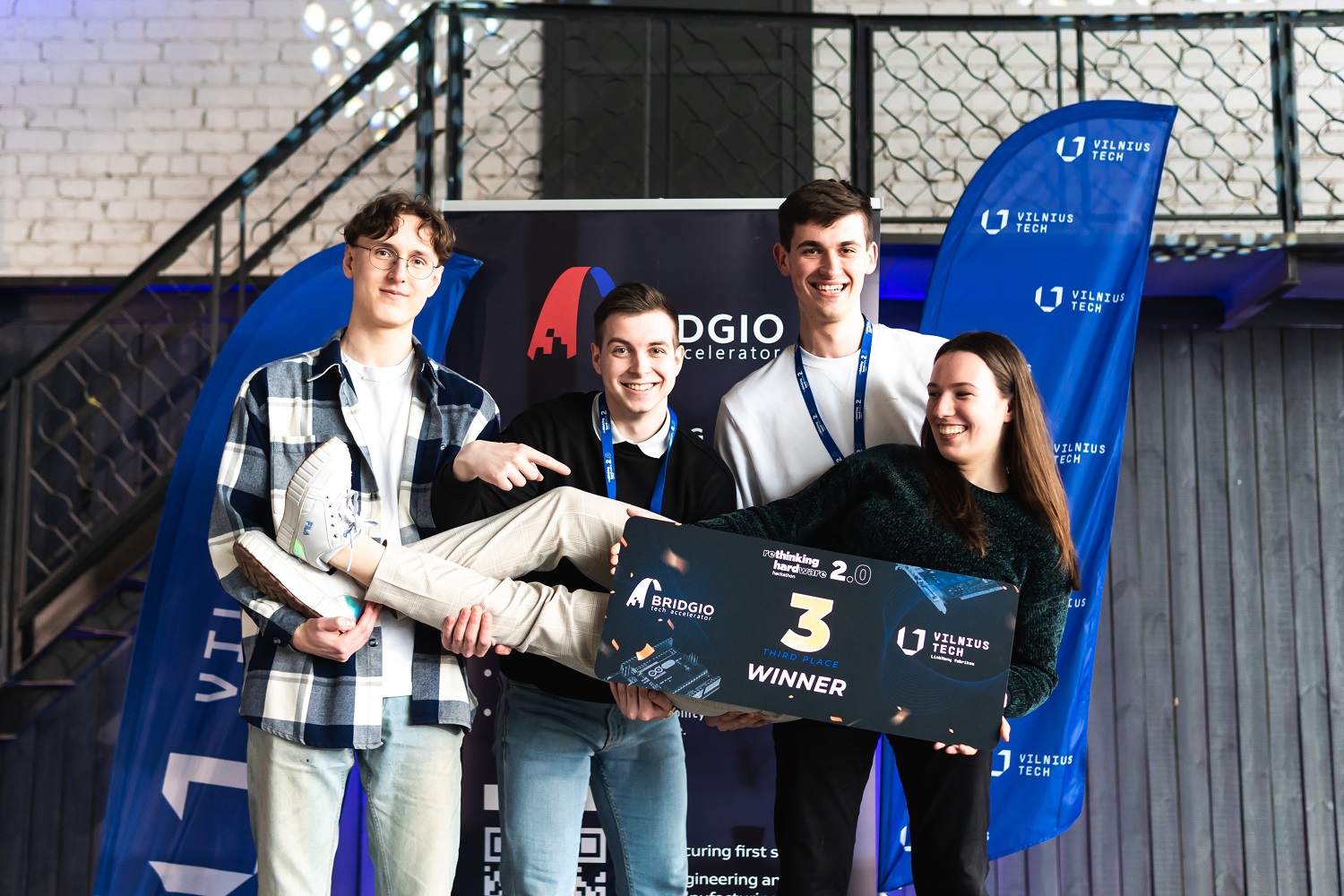
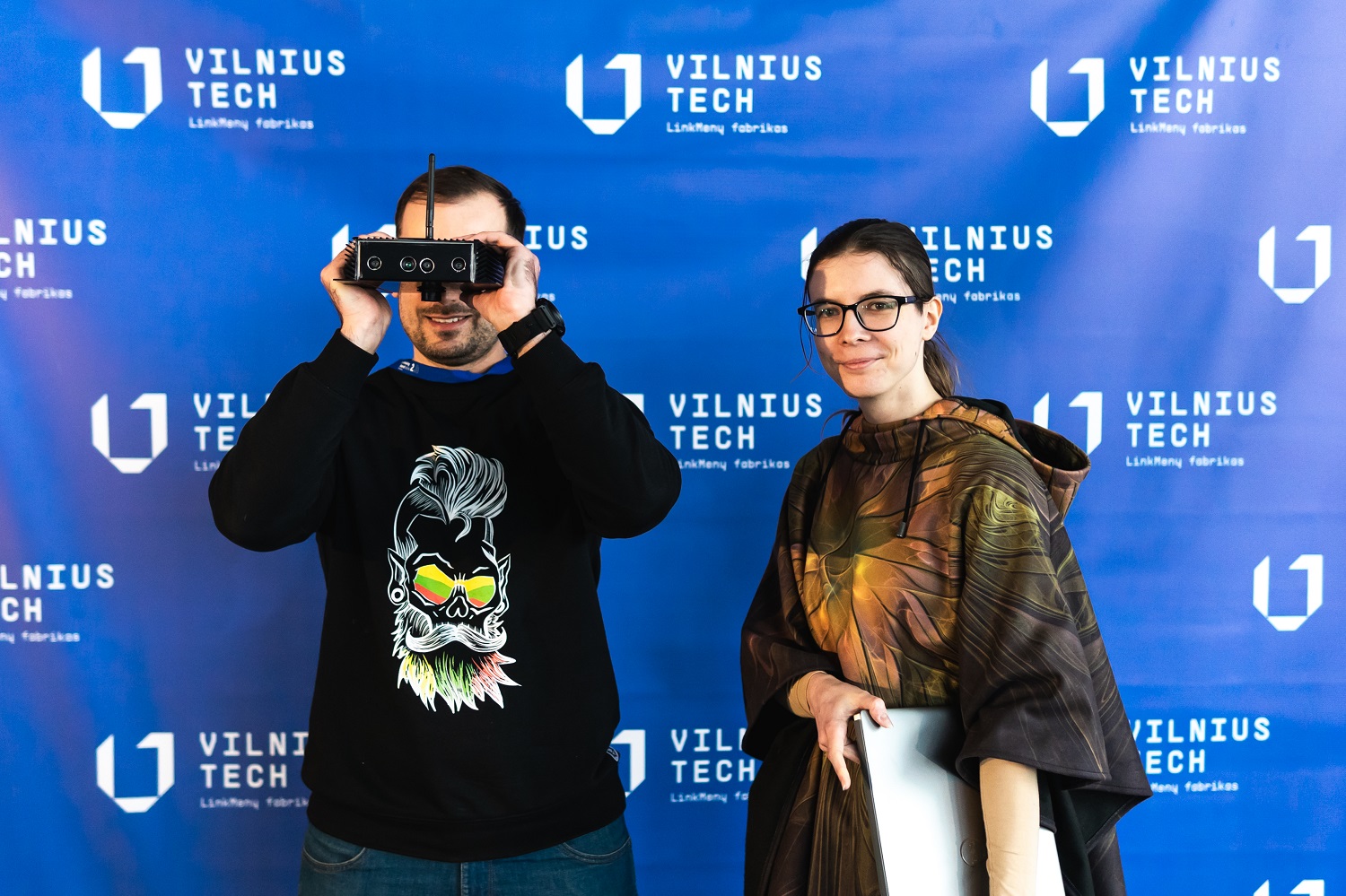
The second place was won by the team from "AMI tech," which presented a smart camera for livestock monitoring. The third-place winners were the team "ACES," whose prototype was a concept of a vibration-based autonomous robot for beach cleaning. The winning team and the remaining participants were awarded prizes established by partners and sponsors.
"By bringing together students, experts from the world of science and business, the "Rethinking Hardware 2.0" hackathon was an excellent example of how collaboration promotes innovation. The solutions created during this event have the potential not only to change industrial sectors but also to have a positive impact on society," says Dr Lina Pečiūrė, Director of the VILNIUS TECH Creativity and Innovation Centre "LinkMenų fabrikas."
Hackathon partners and sponsors include the "European Bank for Reconstruction and Development," "Ignitis Group," "OneSoil," "Manufacturing Innovation Valley," "EPAM," and "Gurtam." Educational partners – "HubSpot" and ATHENA European University. Technical partners of the hackathon are "Promwad Electronics," "Lemona electronics," "Softeq," and "Arrow Electronics." The hackathon community is created by "Tech Zity," "Hardware Ecosystem," and "Technarium." Participants were supported by "Kavos draugas," "Pergalė," and "RedBull."
Galerija