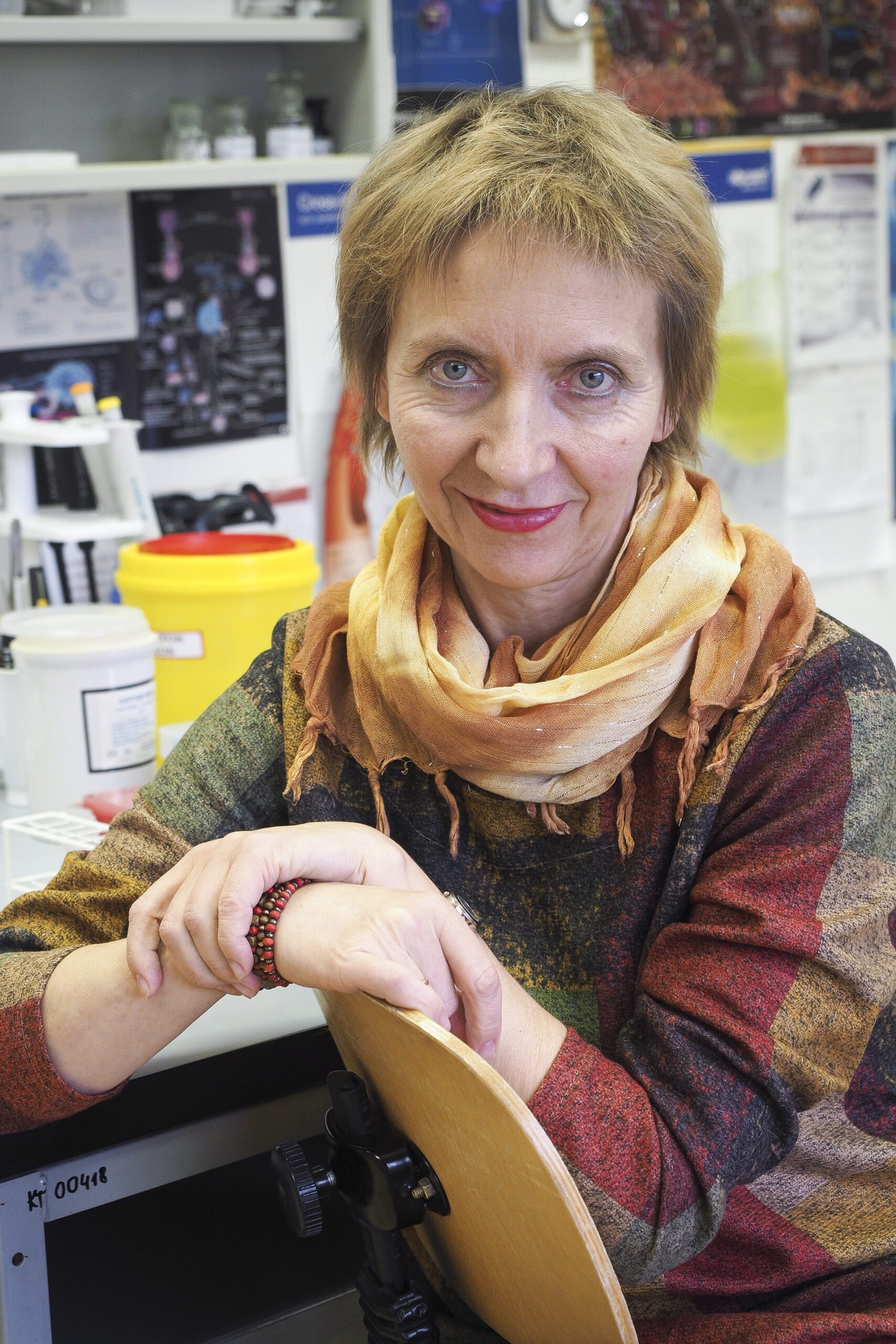
We talk to Vita Pašukonienė, professor at Vilnius Gediminas Technical University (VILNIUS TECH), Faculty of Fundamental Sciences (FFS), doctor of biomedical sciences, and senior researcher at the National Cancer Institute (NCI) about why these questions are an integral part of science and extremely important to humanity.
Origins trace back to the times of Hippocrates
According to the scientist, the beginning of bioethics coincides with the first regulations of the doctor-patient relationship during the time of Hippocrates.
The Hippocratic Oath is the first normative document of bioethics, and although it has become symbolic, it is still valid today. Today this part of bioethics includes not only the doctor-patient relationship but also issues of life protection and termination, transplantation and donation, organization of the health care system, clinical and biomedical research, protection of patient data, and many other rules, regulations, orders, and laws related to health protection. However, bioethics is by no means just medical ethics.
"As biotechnology science develops, bioethical regulation has emerged in all biotechnology processes. This is especially important in conducting research that involves experiments on animals, and even more so in stem cells related science development such as cloning and gene engineering, whose processes are unimaginable without the regulation of bioethical norms," says Prof. Dr. V. Pašukonienė.
Another area of bioethical definition is biocentric ethics. According to the professor, this is a broader understanding of human responsibility to the world.
"Practically until now, humanity has treated the entire nature (both living and non-living) as a resource to be exploited for their benefit. Where we’re going to end up with such an attitude is clear to people even without any bioethical education. Biocentric ethics emphasises that it’s not only humans who have rights but the living and non-living nature does too. This is the only way to secure humanity's survival and preservation," emphasises the scientist.
The professor explains that the main rule of ethics and ethical behaviour is not to cause suffering (both physical and psychological) to others, both humans and other living beings.
"When it comes to non-living nature, the requirement of morality must encompass any human actions towards the environment as it is now general knowledge that a significant part of human progress has a boomerang effect causing suffering to all living beings, including Homo sapiens," explains Prof. Dr. V. Pašukonienė.
Summing up, the researcher at VILNIUS TECH states that bioethics becomes a compass of human life practically in all areas of life.
What moral dilemmas does science face?
Many scientific fields encounter bioethical regulations, for example, developers of cell technologies are controlled in both areas – creating therapeutic preparations using human cells and in purifying water with bacteria. Bioethics is also important in planning deforestation, protecting water bodies, sorting waste, and developing renewable energy technologies. Knowledge of bioethical norms is required for all processes that involve both living and non-living nature as well as humans, and with the development of biotechnologies, there is a constant creation of new bioethical norms.
"Society has the right and even the obligation to create rules and limitations for scientists so that as they delve into their research subjects, they do not violate moral boundaries, do not cause pain and suffering to research objects and subjects. Regulations are there to make sure that the aim of scientific research does not become more important than ensuring human or environmental rights. Also, society must control how scientists adhere to those norms. On the other hand, science is advancing, and if today's project fits into previously established norms, then tomorrow those old norms may become obstacles for science to research and create new products," says Prof. Dr. V. Pašukonienė.
As an example, the scientist presents stem cell methods, which, according to her, can work wonders in treating many diseases considered incurable (such as diabetes, neurodegenerative diseases, blindness, tissue or organ regeneration, etc.), however, so far there is no proper regulation regarding cell sources. Outdated norms prevent the utilisation of methods that woild no longer be used for their intended purpose, but there is no order and consensus on the matter.
Another example is newly emerging problems such as artificial intelligence (AI) for which solutions and bioethical regulations were not relevant before.
"While AI was the aim, the goal of technology – everyone excitedly was waiting for. When it appeared – we started to see how many problems it can cause. And the fact that students can dishonestly use it during their studies is really a minor issue compared to how AI can use us ourselves, including our biological information. So, bioethics, like all ethics and all science, is an ongoing process," says the professor.
Another area where bioethics becomes an integral part of the discipline is the science of bioengineering, taught at the VILNIUS TECH Faculty of Fundamental Sciences.
As the bioethics lecturer explains, bioengineering is the activity of using bio-entities (including the entire environment) or their parts in engineering, or engineering products that could alter biological entities.
"Bioengineering is a very broad concept, and it is difficult to predict all possible ethical problems that may arise for specialists in this field. Therefore, with students, during a short bioethics course we try to get at least slightly familiar with more common ones: experiments with animals, bioethical requirements for their use in science, normative regulation of biotechnology processes – gene engineering, cell technologies, regulation of stem cell use for clinical purposes, the legal basis for the development and research of products for clinical use, ecological problems of ethics," lists the professor.
The scientist adds that engineers may encounter all these and many other processes, but the most important thing is that they should have knowledge and awareness that humans live and create in the world shared with others, so it is necessary to find ethical ways to communicate among themselves and in relation to nature.
What is morally appropriate in science?
The bioethics lecturer states that it is impossible to unambiguously answer ethical questions.
"When it comes to the area of ethics regulated by laws, prohibitions, in biomedicine and bioengineering, for example, what is right today might not be appropriate tomorrow. One of many such examples is the development of wind turbine technologies. This technology can reduce the use of fossil fuels, so from one side of biocentric ethics, it is very positive. However, if we install turbine parks in protected areas – we will destroy biodiversity, if we do it near residential areas – representatives of biomedicine will argue about the negative impact on human health. Finally, a sustainable bioengineering scientist will remind us that a lot of harmful gases were emitted into the environment when building power plants, and solution to how to dispose of heavy metals in the turbine blades hasn’t been thought of yet. The best decisions should be made by some objective metrics, which, unfortunately, we do not have," says Prof. Dr. V. Pašukonienė.
The professor continues, stating that we also lack authoritative ethics specialists or committees in bioengineering, which leads to having many bad, unjust, or short-sighted decisions. Nobody prepares bioethics specialists for bioengineering, and according to the scientist, the industrial sector would not really miss such specialists.
"Right now, the only strong guards of biomedical ethics are those overseeing clinical issues and scientific research conducted with humans and animals. It would be great if the opinion of bioethics specialists carried more importance or even became mandatory in the processes of technology development, nature conservation, and sustainable solutions for the preservation of all of us, our children, and the future. But for now, let's appreciate the fact that it’s become mandatory for students of any ‘bio’ speciality study programs such as biotechnology and bioengineering, to complete a bioethics course," says Prof. Dr. V. Pašukonienė.
The text was prepared by Milda Mockunaite-Vitkiene, the Head of Internal Projects in Public Communication Department at VILNIUS TECH.
Galerija