Victory in sports: being physically prepared is not enough

February 26, 2024
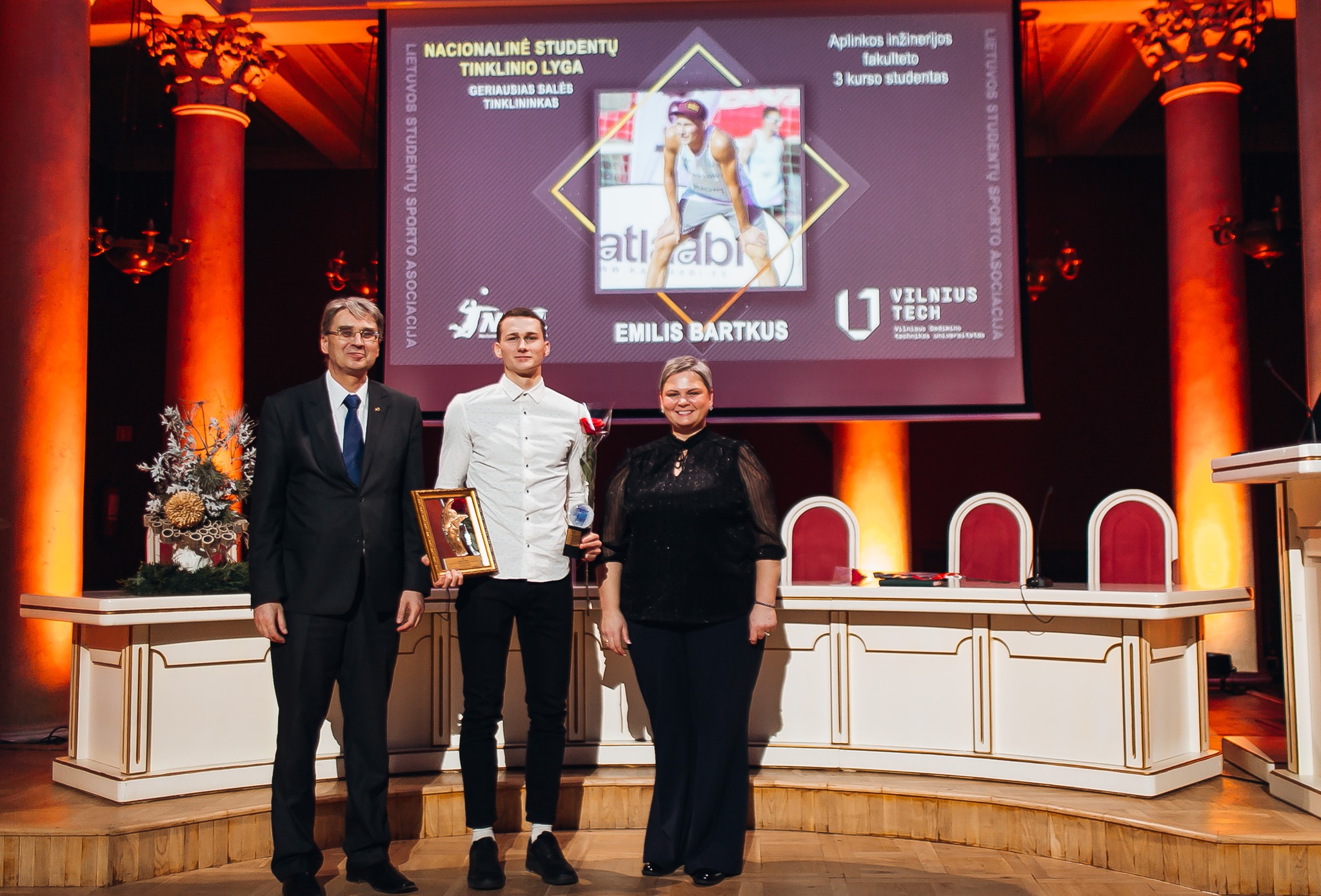
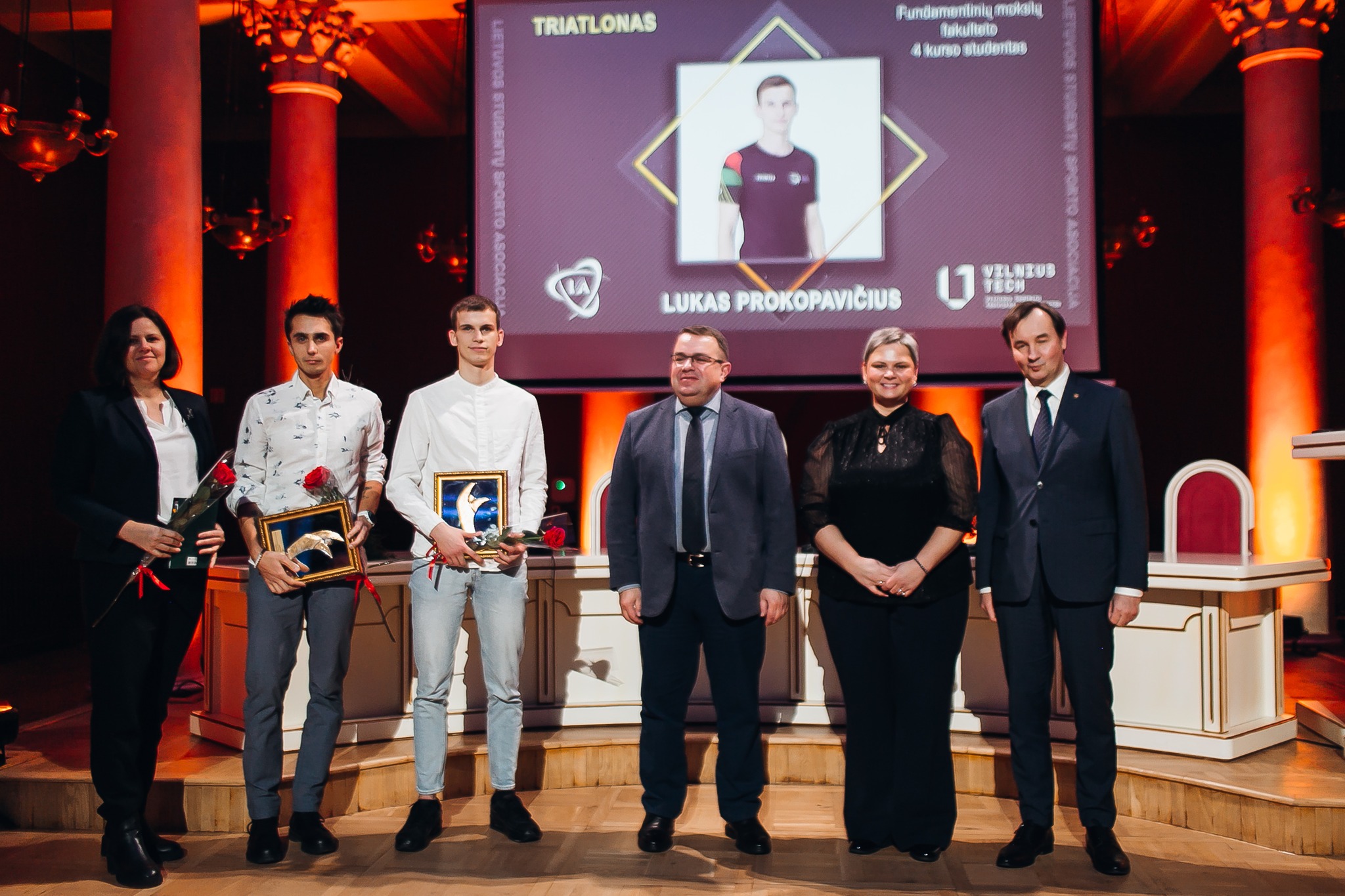
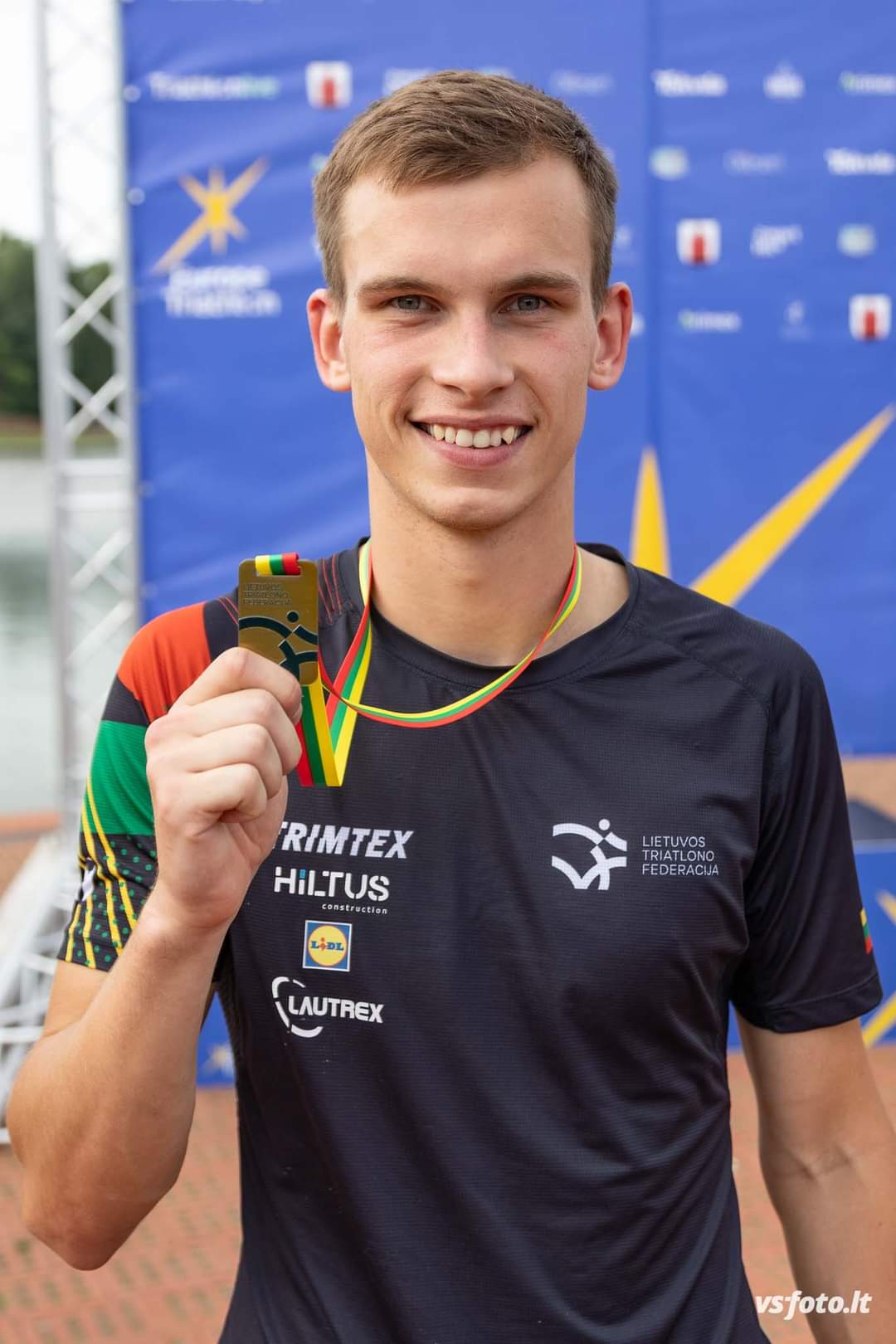
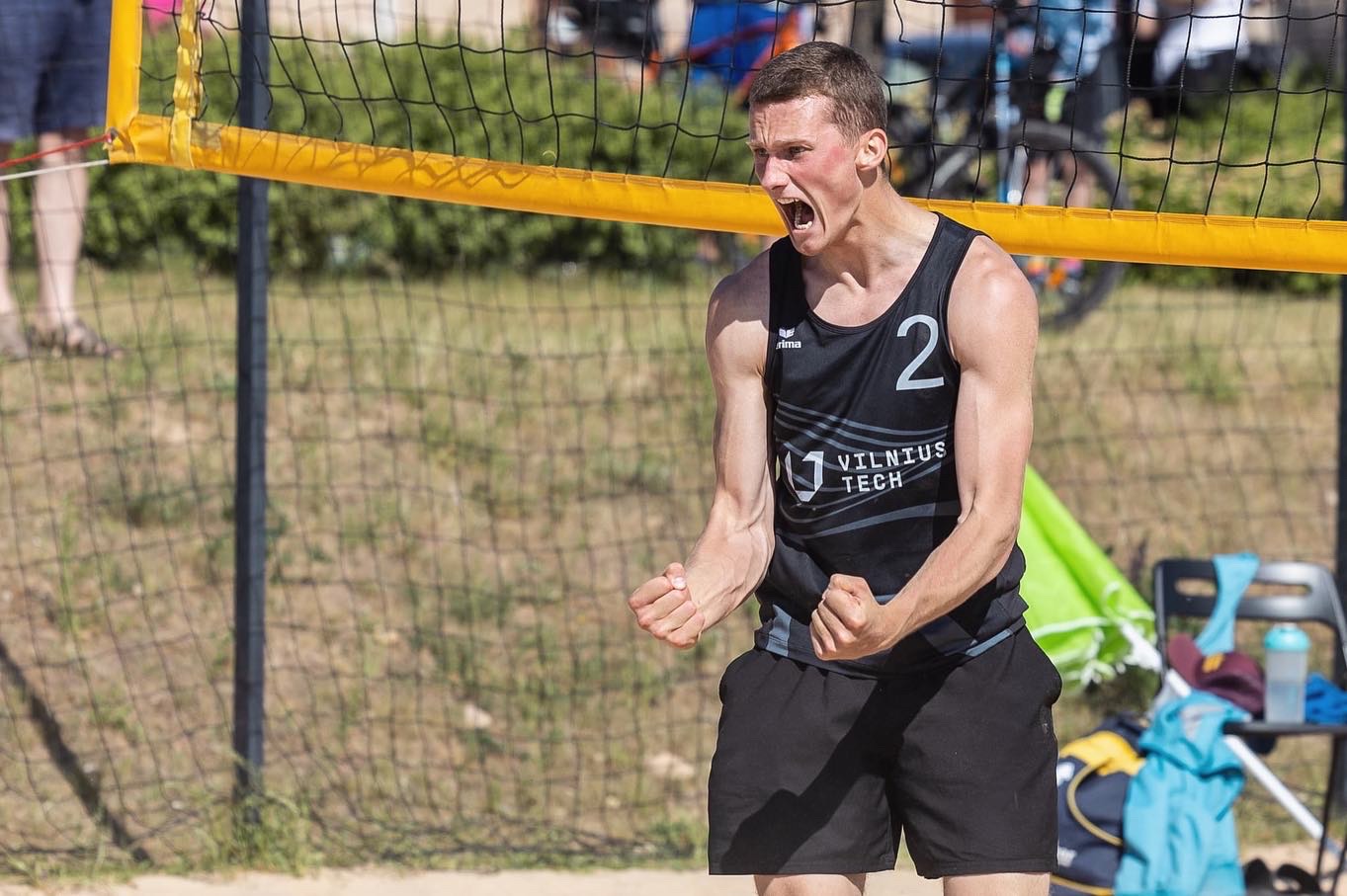
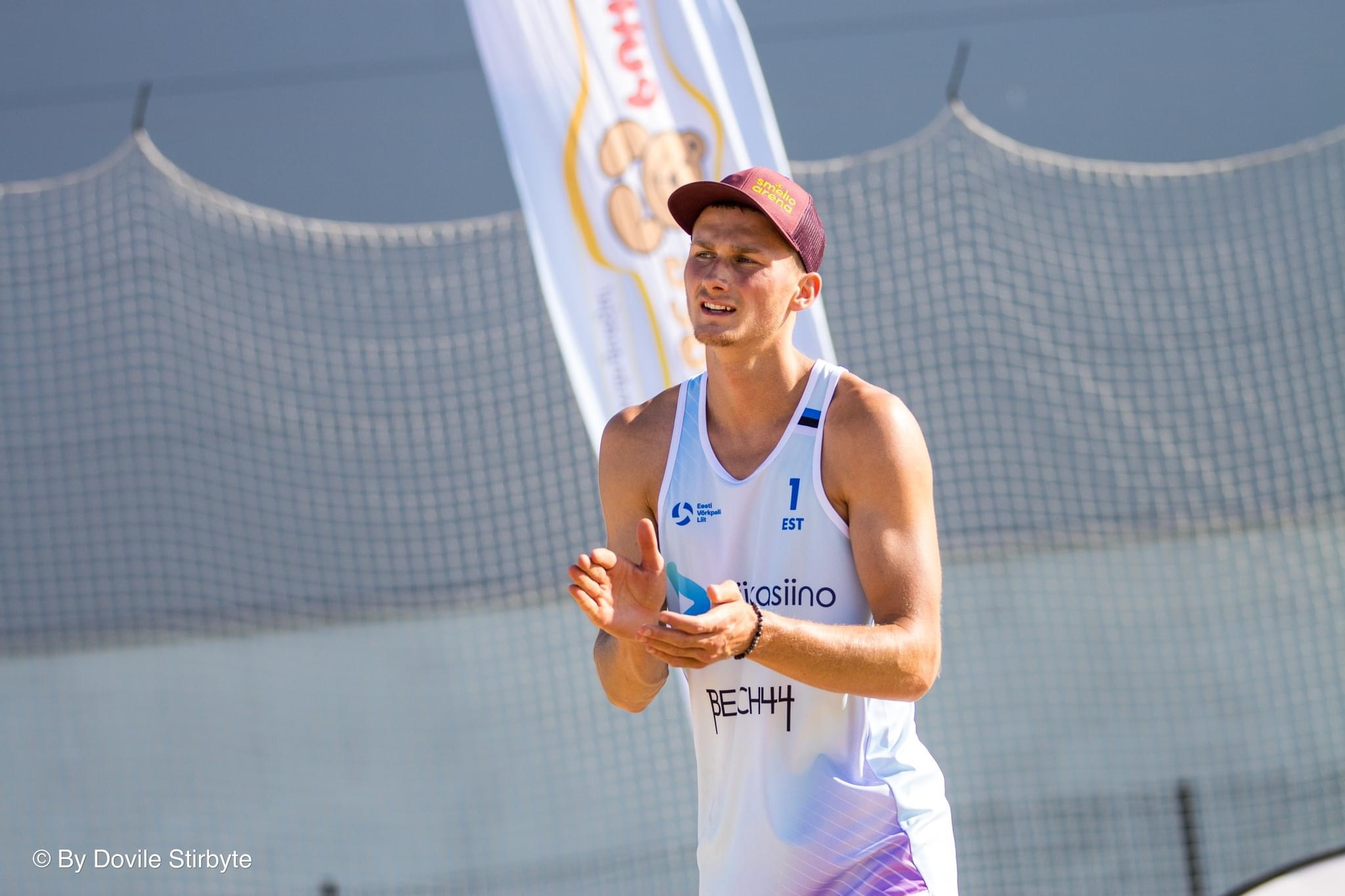
Emilis Bartkus and Lukas Prokopavičius – two future creators of Vilnius Gediminas Technical University (VILNIUS TECH), for their merits and achievements in sports in 2023  were awarded as the best student athletes by the Lithuanian Student Sports Association (LSSA).

Both young men are studying different subjects, compete in different sports as well, but what they have in common is determination, endurance, and a desire to give it all. Let's get to know them.

 Let's introduce ourselves – what are you studying at VILNIUS TECH and what year are you in?

Emilis: I am studying in the Faculty of Environmental Engineering, in the Geodesy and Geoinformatics study program, I am in my third year.

Lukas: I’m studying Software Engineering at the Faculty of Fundamental Sciences, I am in my fourth year.

– What led you to sports and why?

Emilis: I think my brother Edgaras guided me to sports. I followed in his footsteps all my childhood and adolescence, did the same sports as he did until and we both eventually chose volleyball (current coach at VILNIUS TECH – Radoslav Adamovič).

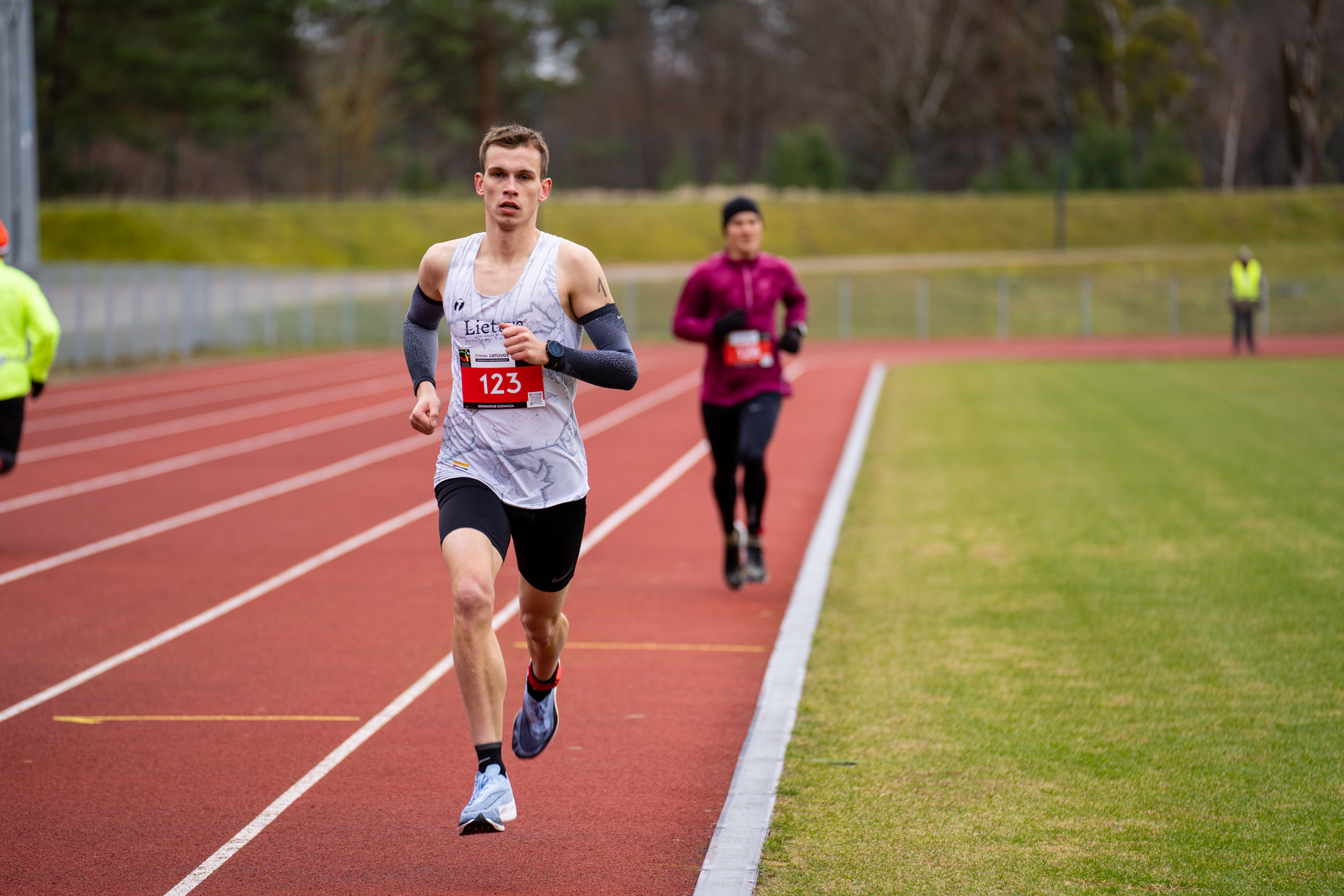
Lukas: Sports have always been with me throughout my life. From a very young age, I spent summer days riding a bike, was a part of various sports clubs, but eventually ended up in triathlon (current coach at VILNIUS TECH – Dalius Pavliukovičius). When I started it was just for fun, but over time it grew into more than just entertainment for me.

– What attracts you to this particular sport? What do you find in it?

Emilis: It's hard to answer this question briefly, but I'll try to list the main aspects. Both beach and indoor volleyball captivate me with the complexity of technique, tactical aspects, and positional differences. I like that this sport requires very good physical preparation. A person playing volleyball must be a true athlete and work hard in order to achieve good results on the court. I enjoy every moment during competitions or training sessions, I try to analyse myself, learn more and more each time. The team, with which I spend most of my time, contributes to this whole combination. Throughout the season, various things happen that remain in memory and I always remember them with a smile on my face.

 
Lukas: Triathlon – a combination of three sports, which are quite different but they all require endurance. I particularly like the dynamics of training because you train for more than one sport.

– Sports require various qualities: quick thinking, endurance, fast reaction. Which ones are most important in your sport? Is good physical preparation alone enough?

Emilis: All the qualities you mentioned are very important. In addition, I would also include mastering volleyball technique, physical preparation, and certain character traits.

Lukas: Endurance, because competitions can last about 30 minutes or 2 hours, not to mention longer distances. However, like in any sport, good physical preparation alone will not make you a winner. When trying to achieve high results, pushing yourself to the maximum, psychology becomes a part of the process – if you don't want to suffer or achieve a good result – it won't be achieved.

– What is the most difficult or challenging aspect in your sport?

Emilis: I think the most difficult thing in volleyball is to keep cool nerves and a clear mind. There are many moments when nerves, uncontrolled emotions get in the way – that is when mistakes happen. Probably, every athlete works on staying calm during all competitions so that emotions do not interfere with achieving higher results. To overcome these challenges, you need to analyse yourself. If a bad result occurred due to emotions or lack of control over nerves, you should remember what the situation was like and think about what you could do differently next time to avoid such outcome.

Lukas: I think the most difficult thing is to balance the whole routine of life so that there is enough time not only for training but also for studies, work, or other activities.

– What generally motivates you to compete? Is the desire to win provides sufficient motivation? Emilis: I have no problem with motivation; the moment I hear a whistle signalling the start of the match, I want to dominate and win.

Lukas: As far as I can remember, I always stand at the starting line with one goal – to do my best. If the desire to win is your motivation and it accompanies you in all training sessions, then, I think, it is a sufficient motivation. However, I am not motivated solely by victory; I like to compete, to squeeze out the maximum from myself and feel that taste of blood in my mouth.

– It is said that victory teaches nothing, but defeat – a lot. Do you agree with this saying? Perhaps you have your sports examples when victory or defeat taught you something?

Emilis: I agree with this saying. I won't give specific examples, but the most common case in sports is an underestimated opponent. Then you come to the competition as a winner, not evaluating the opponent, which leads to the experience of defeat. Such defeats are the most painful; they teach you and make you think. The most memorable for me was the final of last year's Lithuanian men's volleyball championship in Alytus. Although it was not my first final in the Lithuanian championship, but in this final, I had an important role on the court, so this final stuck in my memory the most. I remember these matches as both the most painful defeat because we were very close to victory and the first place, but it also was a  victory nonetheless because I gained a lot of experience and enjoyed the game.

Lukas: Every defeat is a lesson from which we learn because every defeat is painful, so I usually remember them better than victories because I know what not to do to win.

– Do you have any special traditions or rituals before competitions?

Emilis: I don't have any special rituals, but before every competition, I try to listen to my favourite music and have a cup of coffee.

Lukas: I have no rituals; I try to be independent of the environment or things, the important thing is to have sports equipment with me, and then I will do the rest.

– What are your future plans regarding sports? Do you plan to continue actively participating in competitions after graduating?

Emilis: Right now, the priority is to finish my studies, and after that, I'll see, maybe I'll dive even deeper into sports and volleyball.

Lukas: After the 2023 season, I quit swimming, so there is little chance to see me in triathlon competitions next season, but now I spend more time running, and when the weather gets warmer, I'll start cycling and prepare for the European as well as World Duathlon Championships. I believe that sports will accompany me for a long time as the pursuit of results motivates me, and I 100 percent enjoy what I am doing now.
 

The text was prepared by Milda Mockūnaitė-Vitkienė, the Head of Internal Communication Projects at the Public Communication Directorate of VILNIUS TECH.

Galerija

Related news

Photography Exhibition "Leaving My Body" by Ieva Mizgeraitė
We invite you to visit the photographic exhibition "Leaving My Body" by VILNIUS TECH alumna Ieva Mizgeraitė. This collection is a journey through a woman's inner world – through the body, emotions, self-discovery, and the attempt to look at oneself from the outside. In her work, the photographer explores a body that does not always conform to society's expectations, situations beyond our control, the masks we see around us and sometimes put on ourselves, as well as the constant demand to be strong, equal, and always ready. “Each project was born from a specific emotion – from the noise and dialogue in my mind that arose at that moment. Searching for answers, I left my body and looked at everything from the outside – through the states of my models, their poses, gazes, and bodies. I understood that when you look at yourself from the outside, emotions become temporary. Inner dilemmas that once seemed permanent begin to dissolve,” the photographer says about the concept behind the exhibition. The exhibition brings together anger, resistance, masks, expectations, and freedom. These are not merely personal themes – they are experiences familiar to many women. The photographer says that she captures not faces, but psychological states. For her, photography has become a way of self-discovery and self-reflection – a form of meditation that helps her step away from the noise of the outside world and better understand what truly matters. The author works predominantly in black and white. She has been professionally active in photography since 2025. The exhibition "Leaving My Body" is an introduction to a deeper journey, which is planned to be presented in Gallery A of the library in November 2026.   The exhibition is on display in the foyer on the second floor of the Central Library.
More
Built a global career: VILNIUS TECH alumna encourages students not to be afraid of engineering
What should you study if you're equally interested in the humanities and the sciences? VILNIUS TECH alumna Katažina Andrukonytė knows this dilemma well. Today, she leads international teams and advises on some of the world's largest energy and infrastructure investments, but when she graduated from school, she had no clear idea which path to choose. „A few setbacks, staying proactive, and choosing the right study programme helped me discover a career that I truly enjoy and find meaningful. If I could give future students just one piece of advice, it would be this: don't be afraid to choose engineering,“ she says. [caption id="attachment_122573" align="alignnone" width="1536"] Katažina Andrukonytė[/caption] Based in Finland, Andrukonytė leads a team at AFRY that works on projects financed by international financial institutions. She coordinates complex energy and infrastructure projects across Europe, Asia, Australia, and other regions, while advising banks, investment funds, governments, private investors, and project developers on investments worth hundreds of millions of euros. Yet more than twenty years ago, she was simply another school graduate trying to decide what to study. Engineering wasn't the original plan „At school, I was equally interested in the humanities and the sciences. I explored several study options, including law. To be honest, engineering wasn't my dream. After I wasn't admitted to my first-choice programme, I decided to study engineering instead—and looking back, it was one of the best decisions I've ever made,“ she recalls. At VILNIUS TECH, she completed a Bachelor's degree in Environmental Engineering Technologies, followed by a Master's degree in Environmental Engineering and Management. Later, encouraged by her employer, she also earned a Master's degree in Building Energy Engineering. „What surprised me most was how quickly employers started recruiting engineering students. I had barely started my master's studies before companies were already competing to hire us,“ she says with a smile. Finding the right specialisation While studying, Andrukonytė realised that environmental engineering offers a wide range of career opportunities. She also understood the importance of identifying an area where she could apply her knowledge in practice. The turning point came when the company where she was already working encouraged her to specialise in energy engineering. „My employer was looking for specialists in the energy sector and suggested that I continue my studies in Building Energy Engineering. They even covered my tuition because qualified professionals were in such high demand. That's how I found the field I wanted to build my career in,“ she explains. Today, she believes this approach can benefit many young people: first gain a broad engineering education that opens multiple career paths, then discover the area you are most passionate about. More than a degree Although the studies were challenging, Andrukonytė believes they gave her a strong professional foundation. „There was certainly plenty of mathematics and physics, but engineering is much more than formulas. The difficult subjects are simply part of the learning process—you have to work through them,“ she says. For her, however, the greatest value of studying at VILNIUS TECH lay beyond the classroom. „The university offered countless opportunities to get involved in projects, competitions, international summer schools, and exchange programmes. I made the most of them. During my studies, I had the chance to study and complete internships abroad six times. I visited the Czech Republic, Denmark, Italy, South Korea, Finland, and Sweden. Those experiences showed me just how many doors an engineering education can open,“ she says. Engineering opens doors around the world Today, Andrukonytė lives in Finland with her family and works for AFRY, one of Europe's leading engineering, design, and consulting companies, employing around 19,000 specialists in more than 40 countries. For the past 15 years, she has worked on international energy and infrastructure projects, advising banks, investment funds, project developers, and investors. Her work brings together professionals from many different fields, including engineers, financial experts, investors, municipal authorities, and international organisations. „Over the past few years, we've seen growing investment in biomethane, hydrogen, renewable energy, hybrid energy systems, energy storage, district heating, power generation, and decarbonisation projects. Technical expertise is essential, but so are communication, negotiation, and project management skills. My role is to bring together specialists from different backgrounds and help them work as one team. That's why I always say engineering isn't only for people who love numbers. There is plenty of room for people with strong communication and interpersonal skills as well. Energy is a global industry, and if you're a skilled engineer, your expertise will be valued anywhere in the world.“
More