VILNIUS TECH and Taiwan Continue Cooperation in Science and Technology

July 13, 2026

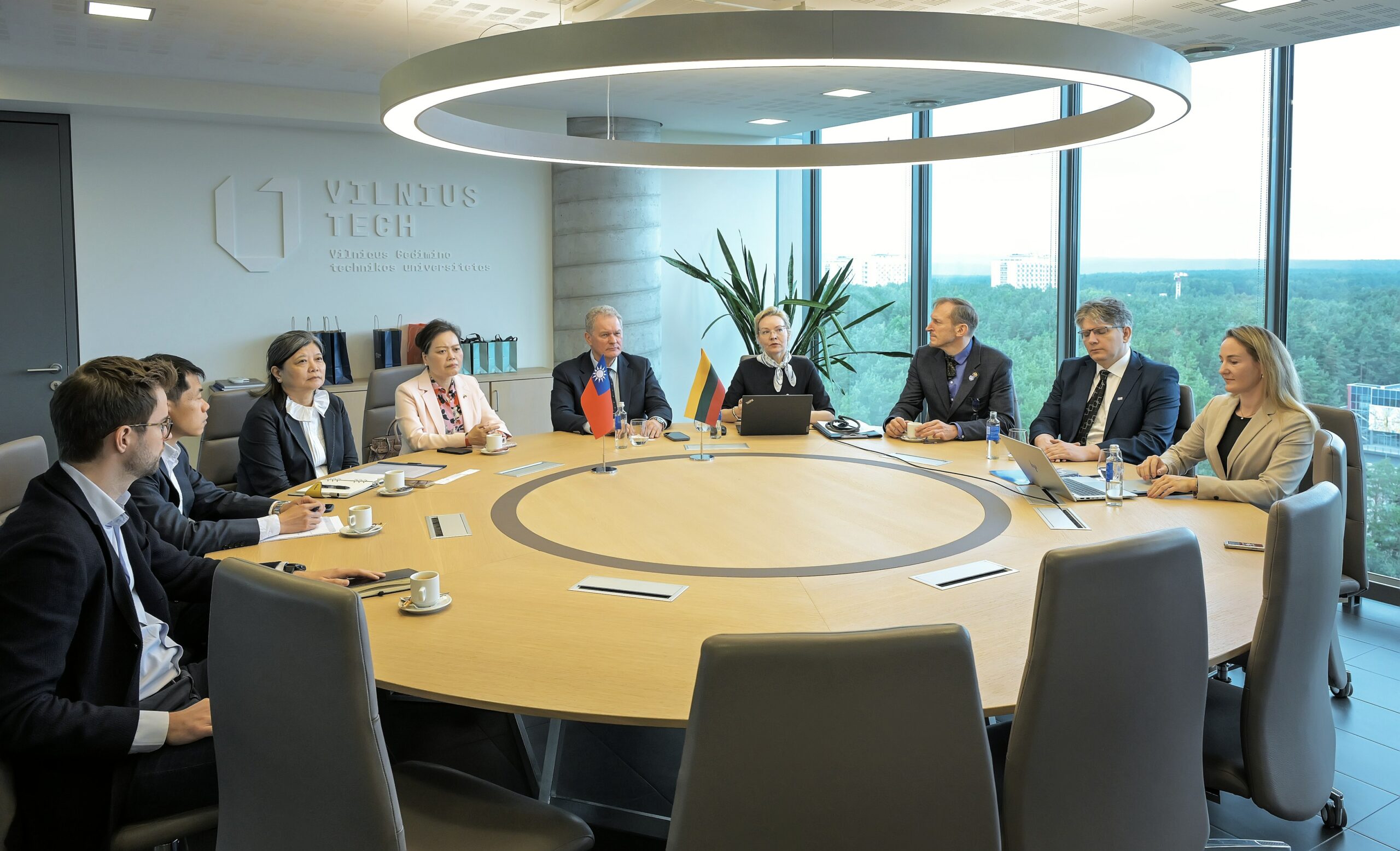
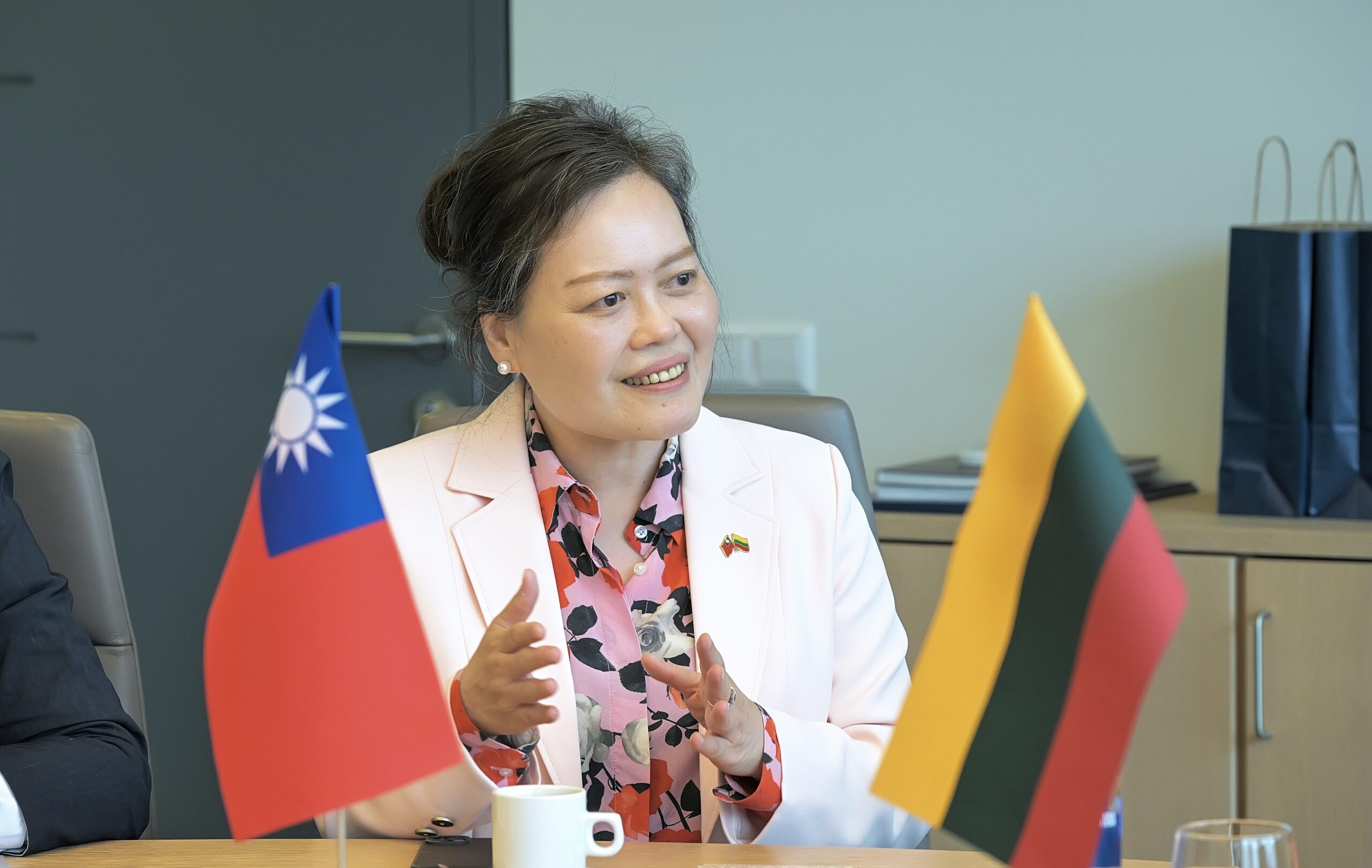
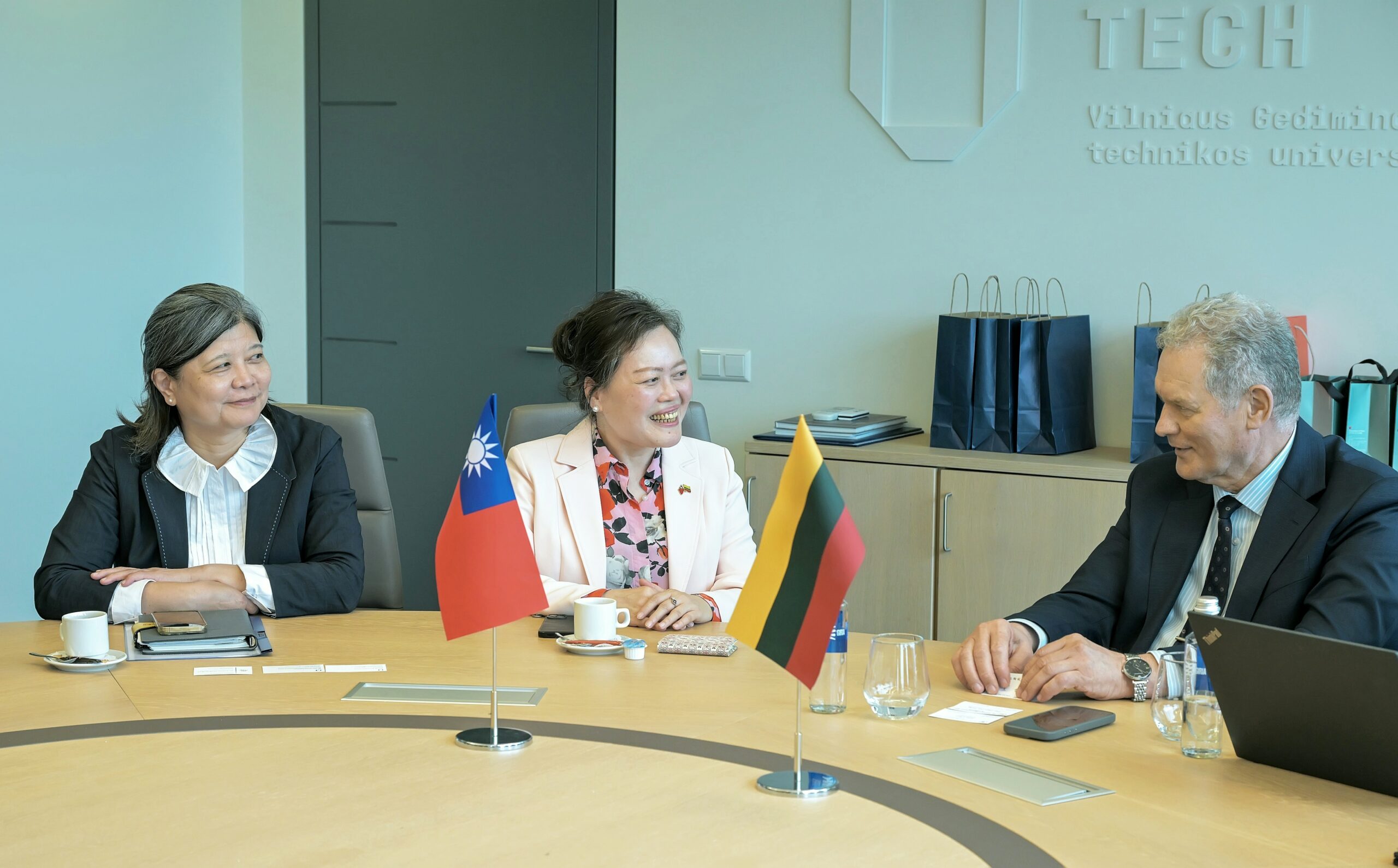
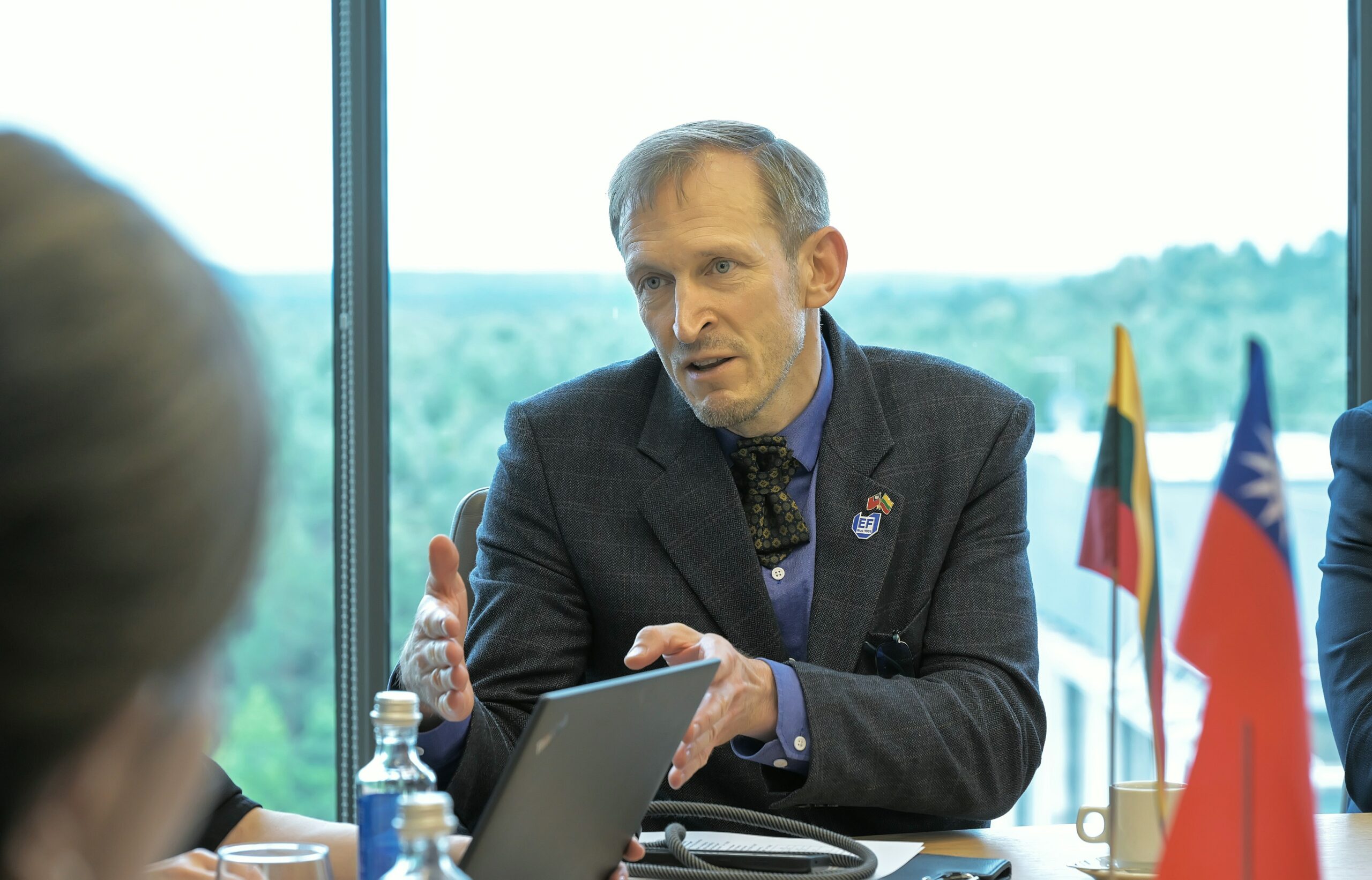
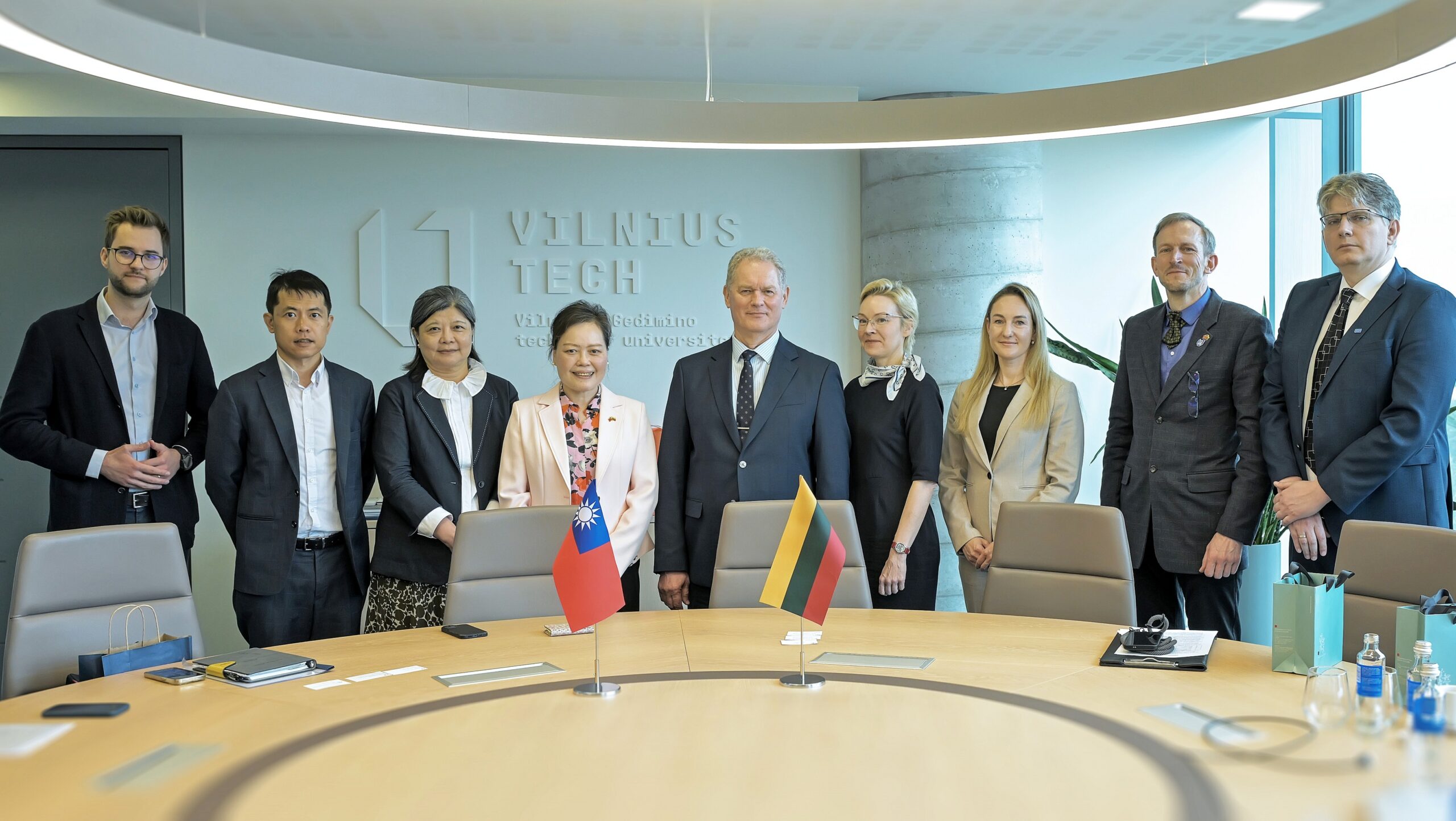
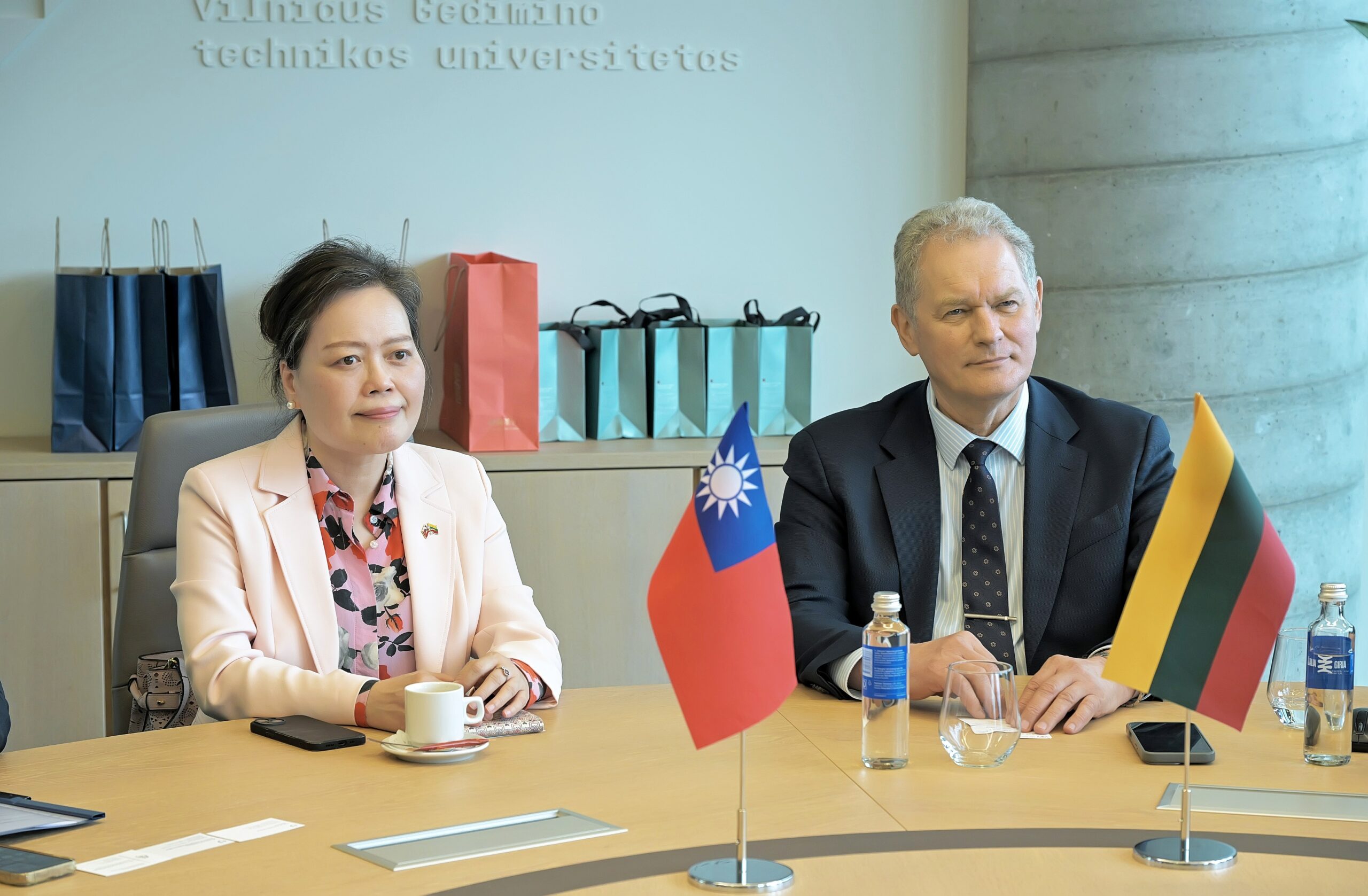
A meeting was held at VILNIUS TECH with the Representative of the Taiwanese Representative Office in Lithuania, Constance Hsueh Hong Wang, Executive Director of the Science and Technology Division Prof. Shun-Fen Tzeng, and Head of the Economic Division Sabir Chien.

According to VILNIUS TECH Rector Romualdas Kliukas, cooperation with Taiwanese universities is built on a long-term partnership and mutual scientific benefit. Through joint projects carried out over many years, VILNIUS TECH researchers have had the opportunity to conduct significant scientific research.

The Taiwanese Representative Office reaffirmed its support for the ongoing initiatives of VILNIUS TECH and its partner universities in Taiwan, particularly in the fields of semiconductors, biotechnology and cybersecurity, as well as for cooperation in developing the activities of the ChipsC²-LT Competence Centre.

“The main goal of this cooperation is to nurture young talent in the semiconductor field. Semiconductor technologies are the foundation of Taiwan’s success, and we are eager to share this experience. This partnership will serve as a springboard for further cooperation, opening up opportunities for Lithuanian students to undertake internships in Taiwanese laboratories and work with state-of-the-art scientific equipment,” said Constance Hsueh Hong Wang, Representative of the Taiwanese Representative Office in Lithuania, during the visit.

VILNIUS TECH also invited the Taiwanese Representative Office to join the initiative of establishing an endowment fund. According to Assoc. Prof. Dr Artūras Medeišis, Dean of the Faculty of Electronics, this would give the partnership between the two institutions a long-term strategic dimension and create sustainable value for future generations.

Long-Term Cooperation with Taiwan

VILNIUS TECH has been cooperating with some of Taiwan’s leading universities since 2011. In recent years, the most intensive research collaboration and academic exchange have taken place with the following institutions:

  • National Cheng Kung University (NCKU);
  • National Taiwan University of Science and Technology (Taiwan Tech);
  • National Sun Yat-sen University (NSYSU);
  • National Taipei University of Technology (TaipeiTech).

VILNIUS TECH aims to continue its successful cooperation through joint seed grant programmes for collaborative research with TaipeiTech, Taiwan Tech and NSYSU. Over the past two years, more than 30 researchers have jointly implemented 13 collaborative research projects and produced publications in the fields of microelectronics, artificial intelligence, sensors and biosensors, biomechanics and biomedical engineering, robotics and virtual reality, environmental engineering, cybersecurity and process automation, technology commercialisation, and innovation management.

Between 2023 and 2026, VILNIUS TECH welcomed 24 incoming exchange students from Taiwan. During the same period, 40 staff members participated in teaching or training mobility visits, while 44 VILNIUS TECH students studied or completed internships at Taiwanese universities. In cooperation with NSYSU, the VILNIUS TECH Faculty of Electronics currently offers two double-degree Master’s programmes.

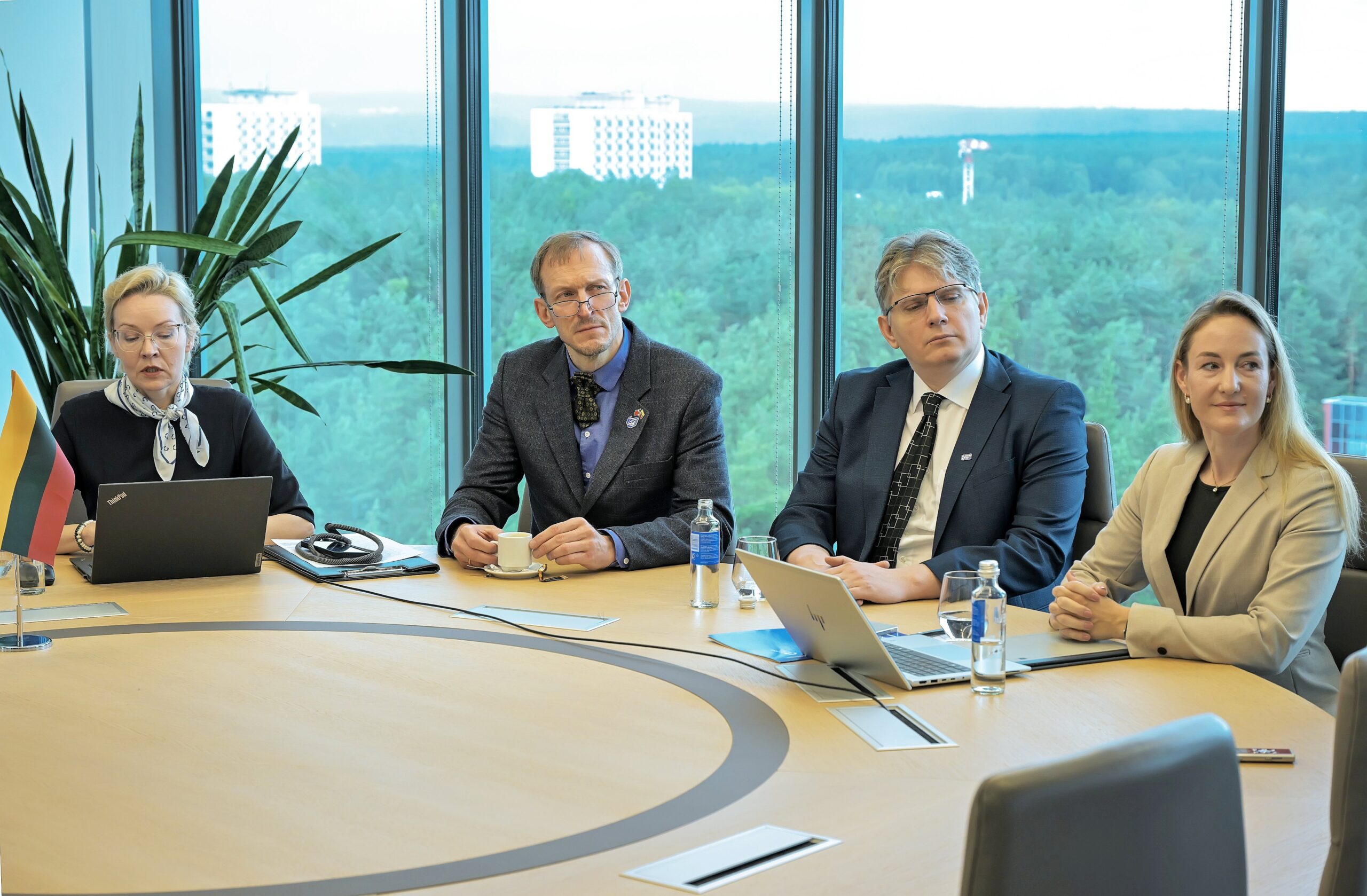
The VILNIUS TECH delegation included Rector Romualdas Kliukas, Dean of the Faculty of Electronics Assoc. Prof. Dr Artūras Medeišis, Head of the Department of Computer Science and Communications Technologies Prof. Dr Vaidotas Barzdėnas, Chief Specialist at the Strategic Partnership Centre Jūratė Jurginytė, and Director of the International Relations Office Aleksandra Sokolova. The meeting was also attended by Vytautas Jankauskas, Advisor for Science and Innovation at the Ministry of Foreign Affairs of the Republic of Lithuania.

Galerija
Related news

VILNIUS TECH Introduces a New Universally Accessible EPUB3 Publication
Vilnius Gediminas Technical University (VILNIUS TECH) is proud to introduce a new accessible EPUB3 publication as part of its commitment to implementing the accessibility requirements for electronic books set out in the Law on the Accessibility Requirements for Products and Services of the Republic of Lithuania and to advancing inclusive publishing standards in Lithuania. The publication, Technical Requirements for the Preparation of Final Theses in Logistics and Transport Management: Methodological Guidelines („Logistikos ir transporto vadybos baigiamųjų darbų techninio parengimo reikalavimai: metodiniai nurodymai“), was authored by Prof. Dr. Darius Bazaras and Prof. Dr. Aldona Jarašūnienė of the Department of Transport Engineering, Logistics and Transport Management. Published in the EPUB3 format—the internationally recognized standard for accessible digital publishing—the book offers a flexible and inclusive reading experience. Readers can customize the font, text size, contrast, alignment, and spacing, while the content automatically adapts to different screen sizes and devices. The publication also includes an interactive table of contents and hyperlinks, alternative text descriptions for illustrations, properly identified passages in foreign languages, and full compatibility with text-to-speech technologies. The publication is available on the VILNIUS TECH e-book platform at  ebooks.vilniustech.lt . All VILNIUS TECH institutional users can access the university's electronic books free of charge by connecting through the university network or via the university's VPN service.
More
Award-winning VILNIUS TECH researcher develops new way to reduce diesel emissions
Although transport electrification is increasingly seen as the future, the reality is different—diesel engines remain widely used and are expected to stay in service for at least the next decade. Along with them persists a major challenge: ultrafine particulate matter emissions that pass through conventional diesel particulate filters and contribute to air pollution associated with an increased risk of premature deaths. A Direct Threat to Human Health In Lithuania, the transport sector accounts for nearly 15% of fine particulate matter emissions, posing the greatest risk to residents of major cities such as Vilnius and Kaunas. According to Dr. Sai Manoj Rayapureddy, a researcher at the VILNIUS TECH Faculty of Transport Engineering, the greatest concern comes from particles that are too small to be captured by conventional diesel particulate filters. These particles escape into the environment and eventually enter the human body, where they easily interact with the skin and respiratory system, posing a direct threat to human health. [caption id="attachment_121916" align="alignnone" width="2543"] Dr. Sai Manoj Rayapureddy[/caption] To address this issue, Dr. Rayapureddy conducted research and prepared his doctoral dissertation, Investigation of Acoustic Agglomeration Phenomenon in Compression Ignition Engines Fuelled with Alternative Fuels for Reducing Particulate Matter Emissions. „In a world where pollution continues to increase, diesel vehicles are still widely used, while efforts are being made to reduce dependence on fossil fuels. This research proposes a solution by combining alternative fuel blends that produce lower emissions with the principle of acoustic agglomeration. In this process, sound waves cause ultrafine particles to interact and merge into larger clusters that can then be captured by conventional diesel particulate filters,“ explains Dr. Sai Manoj Rayapureddy, researcher at VILNIUS TECH. Results Exceeded Expectations Dr. Rayapureddy carried out his research in three stages, combining theoretical analysis, numerical calculations, and laboratory experiments. The experiments were conducted using a well-known 1.9-litre Audi-VW diesel engine installed in a VILNIUS TECH laboratory. To investigate how fuel properties affect particulate formation, he tested specially prepared fuel blends with different carbon-to-hydrogen ratios and oxygen content, comparing the resulting emissions with those of conventional diesel fuel. Finally, particulate emissions were measured both with and without the application of sound waves. The results exceeded expectations. The study found that applying acoustic waves reduced particulate emissions from conventional diesel fuel by 17–44%. When alternative fuel blends were used, the reduction increased to an impressive 24–80%. Dr. Rayapureddy also demonstrated that the higher oxygen content and improved surface characteristics of alternative fuels increased particle agglomeration efficiency by as much as 100–190%. „Applying acoustic agglomeration to diesel engine particles is still a relatively new and underexplored research field. I wanted to demonstrate its importance and potential for reducing engine emissions. What surprised and delighted me most was how effectively a long-established theoretical principle worked in practice. My research proved that this method significantly improves the ability of conventional particulate filters to remove harmful particles,“ says the Faculty of Transport Engineering researcher. According to Dr. Rayapureddy, while the future undoubtedly belongs to electric mobility, the present requires an intermediate solution. As the complete electrification of the transport sector is unrealistic within at least the next decade, improving today's technologies and reducing emissions from existing diesel-powered vehicles remains essential. „Implementing this concept could significantly improve the efficiency of existing diesel particulate filters. It would allow us to substantially reduce the fine particulate pollution generated by the diesel engines that are already on our roads and will continue to be used for years to come,“ he adds. A PhD Is Not a Sprint, but a Marathon Dr. Rayapureddy began his academic journey in India, where he earned a Bachelor's degree in Mechanical Engineering. He later moved to Lithuania to complete a Master's degree in Automotive Engineering at VILNIUS TECH before continuing with doctoral studies at the university. Throughout his academic career, he remained focused on making steady progress toward his goals, improving year after year. According to the researcher, writing the dissertation itself was not the most challenging part, as publishing several scientific papers during his doctoral studies helped him develop a clear research structure. „The most difficult part was justifying, revising, or even removing certain parts of the research during the peer-review process. In the end, however, everything worked out wonderfully. Thanks to the guidance of my supervisor and the valuable feedback from reviewers, my dissertation was awarded second place in Lithuania’s Best Doctoral Dissertation Competition. I consider my PhD studies—during which I also completed a second Master's degree in Engineering Economics and Management at VILNIUS TECH—to be the first step toward an academic career. Pursuing a doctorate requires curiosity, hard work, and patience. To everyone considering a career in research, I would like to say this: a PhD is not a sprint, but a marathon.“
More