• University
  • News and events

VILNIUS TECH begins renovating one of the largest dormitories in Saulėtekis: around €12.8 million allocated to improve students’ living conditions

September 23, 2026

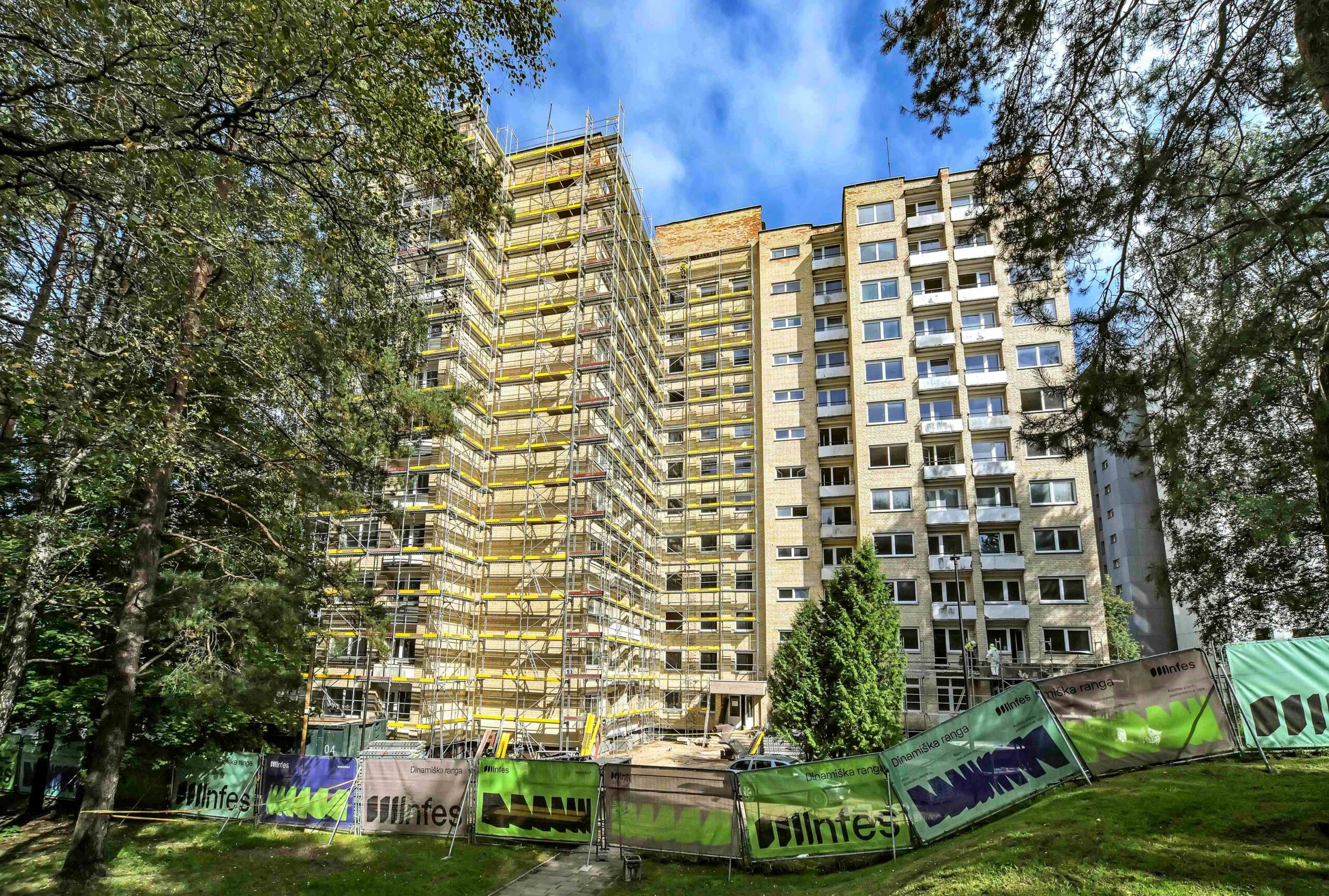
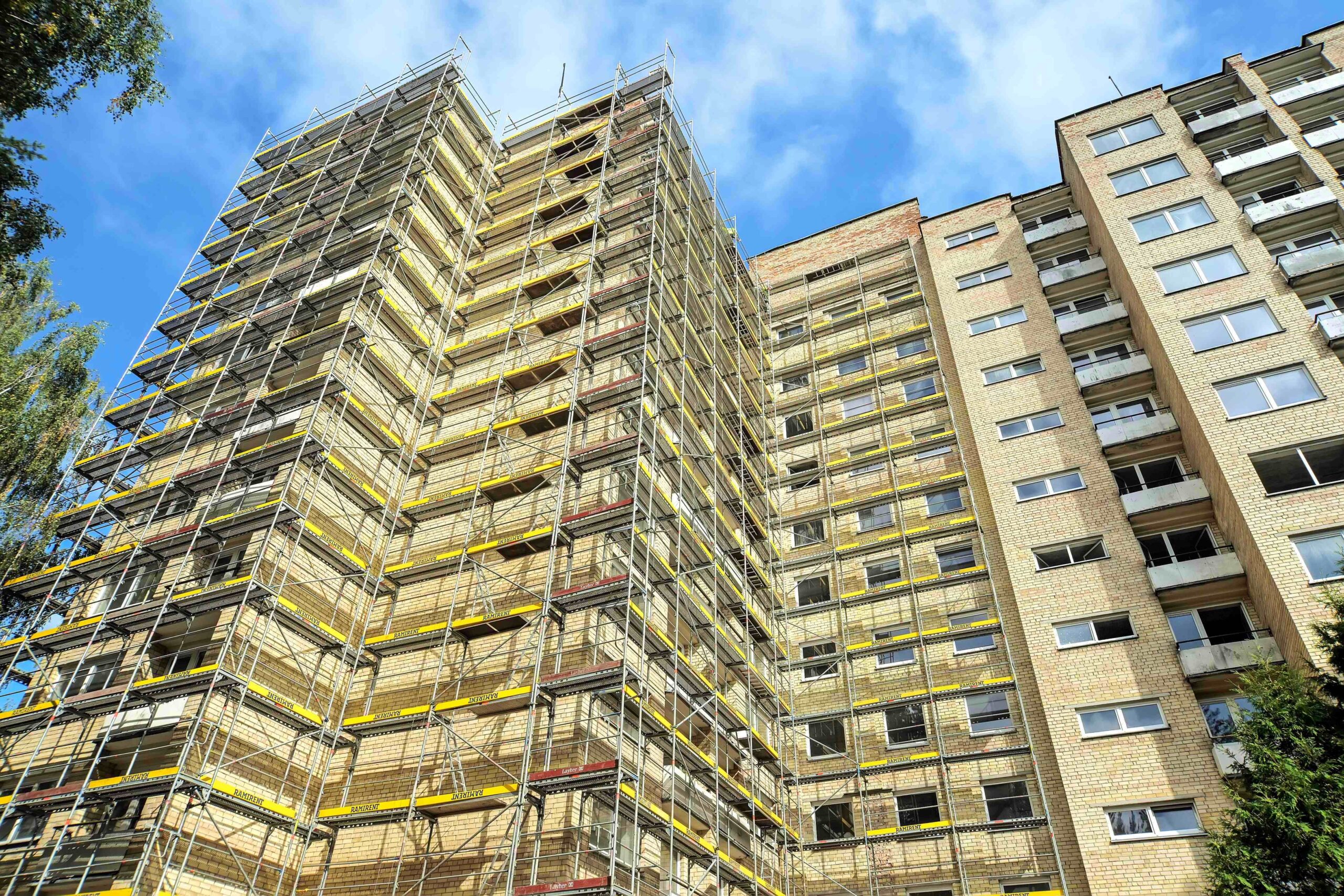
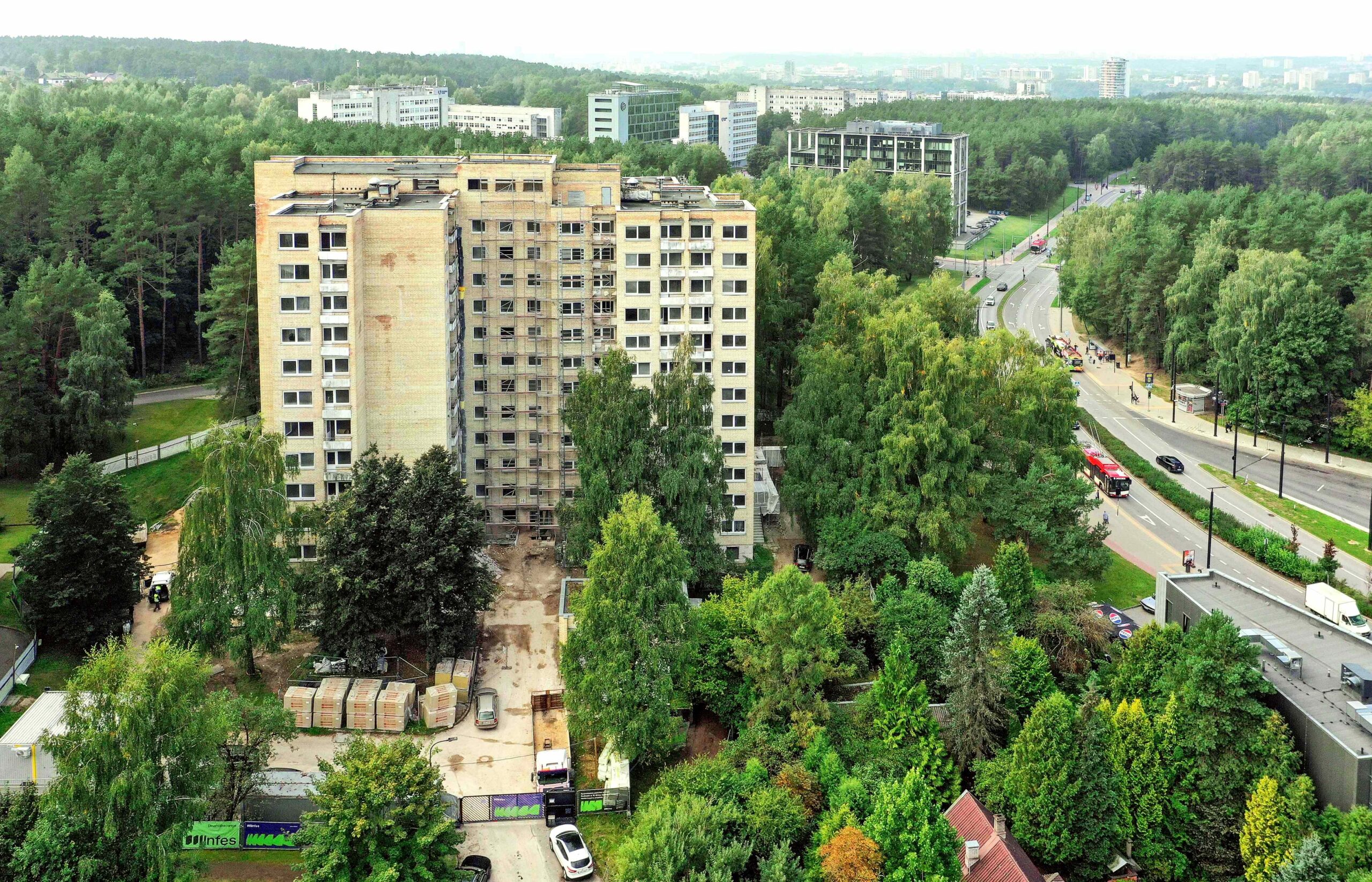
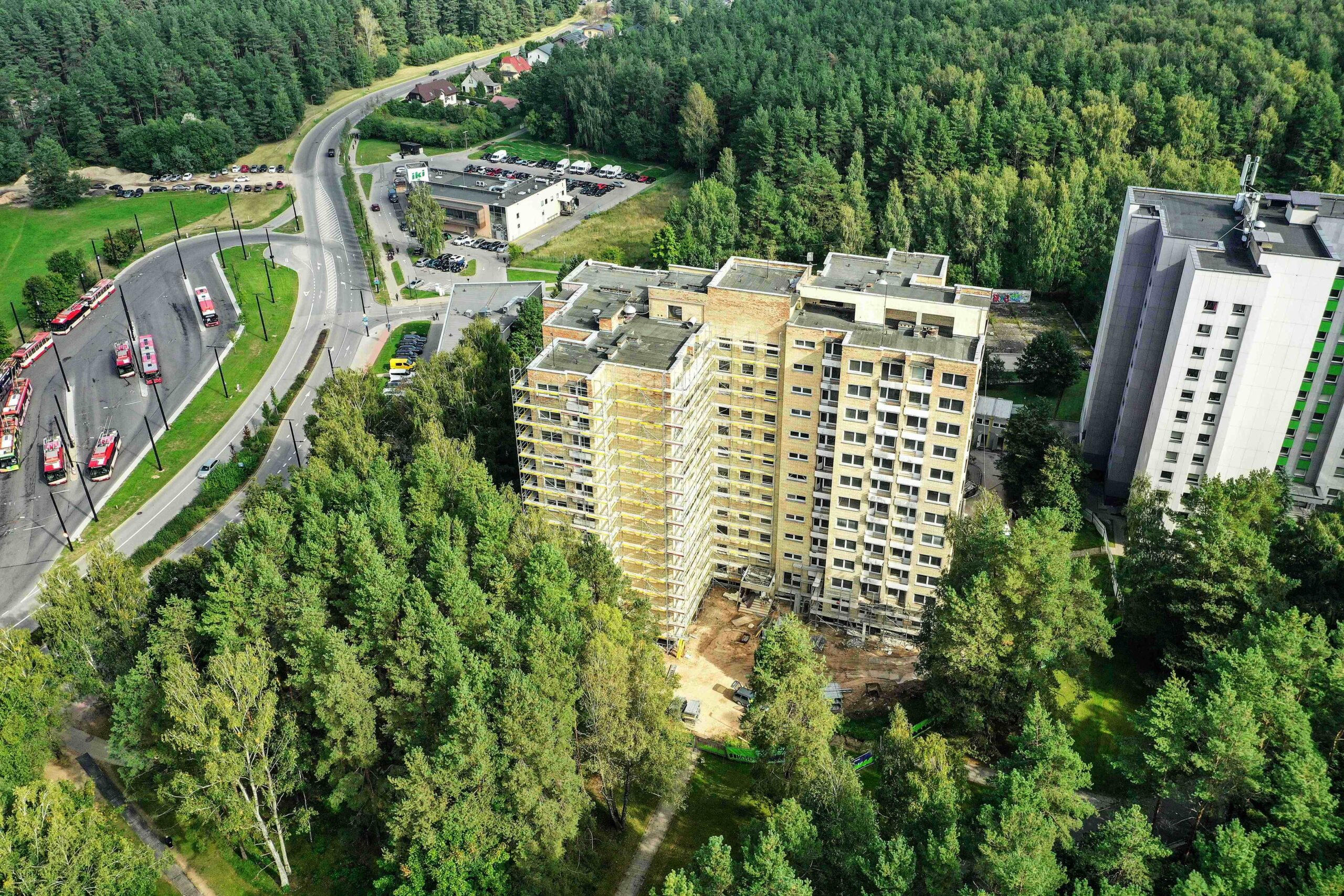
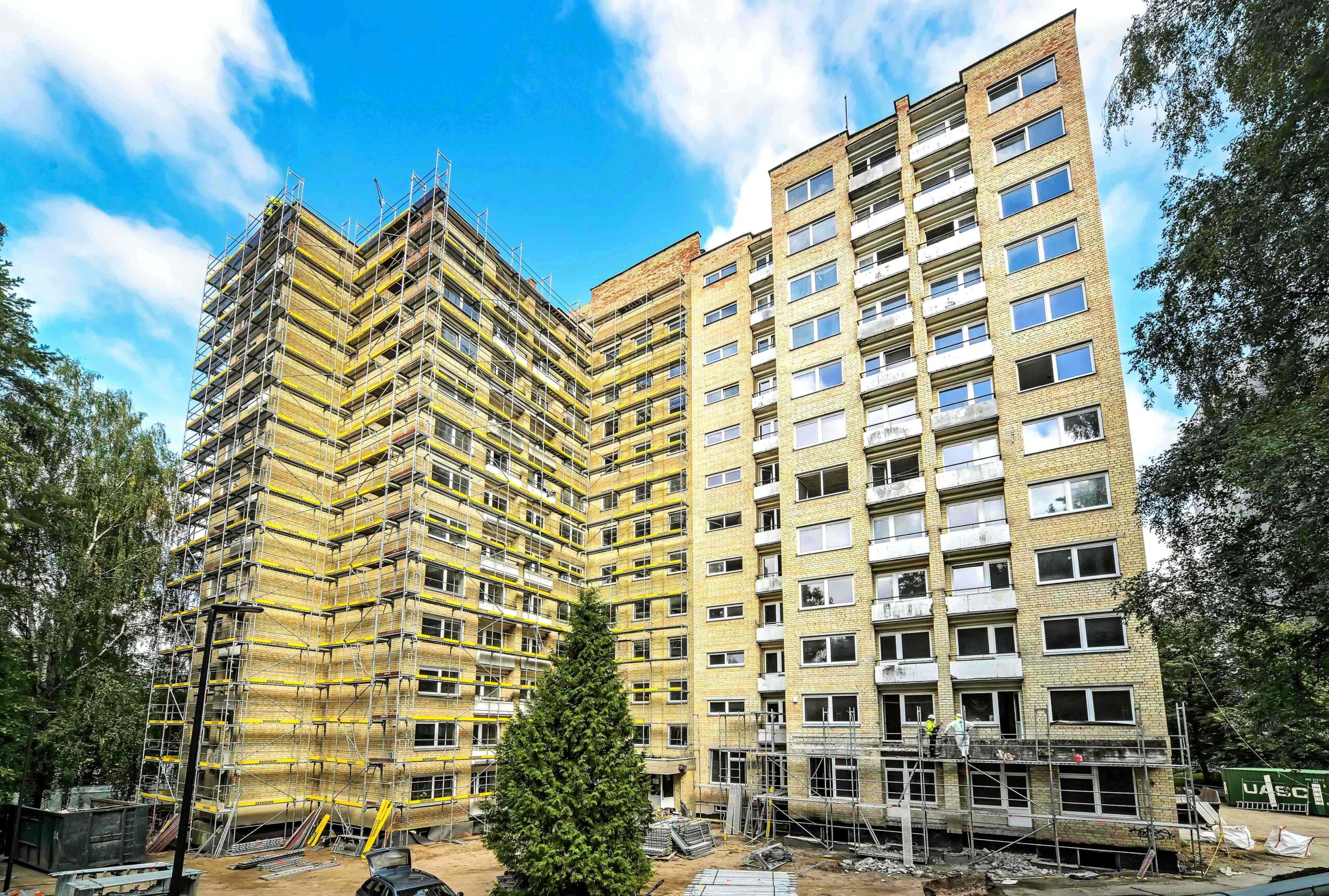
Vilnius Gediminas Technical University (VILNIUS TECH) has begun its largest and, to date, most expensive student housing renovation project – the renovation of Dormitory No. 5 on Saulėtekis Avenue. Approximately 12.8 million euros will be allocated for the building’s repair, modernization, and the improvement of students’ living conditions.

Following the implementation of the energetic and functional modernization project for the building located at Saulėtekio al. 19-1, one of the university’s largest dormitories will be fundamentally renewed. The exterior will be renovated, the interior premises repaired, spaces redesigned, and the infrastructure modernized and adapted to various needs.

It is planned that, post-renovation, this dormitory will offer arguably the best living conditions out of all VILNIUS TECH dormitories, and the first students will be able to move in by 2028. This will mark the completion of an important stage in the renovation of VILNIUS TECH dormitories in Vilnius, resulting in all of the university’s dormitory rooms being repaired and renewed.

According to the Chancellor of VILNIUS TECH, Assoc. Prof. Dr. Vaidotas Trinkūnas, the renovation of the dormitories aims not only to ensure conditions that meet modern hygiene, safety, and quality of life requirements. The university strives to ensure that infrastructure renewal goes hand in hand with student well-being, energy efficiency, building longevity, and accessibility.

“A university dormitory is much more than a place where students stay during their study years. It may never replace home, but we want it to become a place where students safely and comfortably start their independent lives, make friends who often remain for life, learn to live in a community, and leave the university not only with a diploma but also with fond memories of the years spent here,” says VILNIUS TECH Chancellor Assoc. Prof. Dr. Vaidotas Trinkūnas.

Major Changes Ahead

With the dormitory’s renovation, not only will the exterior be improved—windows replaced and the facade insulated—but the engineering systems will also be updated. A mechanical ventilation and heating system will be installed for all dormitory premises and rooms, achieving higher energy efficiency (Class B). A photovoltaic (solar) power plant is planned for the roof of the renovated dormitory, which will generate part of the electricity required by the building.

The interior premises will be repaired and adapted to students’ needs: rest, leisure, and community spaces, individual study and collaborative work zones, and bicycle storage will be created; rooms and common areas will be updated; and kitchenettes and sanitary facilities will be installed in separate blocks.

Following the latest requirements, the entire building’s infrastructure will be adapted for students with individual needs—from entrances and elevators to rooms and sanitary facilities.

“For us, renovation is not just about repainting walls or buying new furniture. We aim to create a cozy and functional living environment that provides space for relaxation, independent and group work, socialization, and student events. A student must have the opportunity not only to have quiet time in their room but also to meet with friends, study together, cook meals, or simply be part of the community.

As a university of technology, it is important for VILNIUS TECH that modern solutions are also reflected in the dormitory infrastructure—in efficient ventilation and heating systems, smart lighting and energy consumption management, the use of renewable energy, and other solutions that increase living comfort and reduce the building’s environmental impact,” states the university Chancellor.

Will Accommodate 500 Students

Unlike previous projects, the exterior and interior renovation of this dormitory is not taking place in stages—all floors of the dormitory are being repaired at once. During the repair, the dormitory is temporarily closed, and its residents are living in alternative accommodations assigned after an individual assessment of each case.

After the renovation, the number of residential places in the dormitory will change, allowing it to accommodate over 500 students. The dormitory will eliminate triple rooms; responding to recent trends and aiming to ensure maximum comfort for students, only single and double rooms will remain.

“We have received a lot of positive feedback from students and their parents about the living conditions in our dormitories. We are glad that students highly appreciate the changes made, as well as the quality-to-price ratio of the dormitories,” adds Assoc. Prof. Dr. V. Trinkūnas.

€12.8 Million for Dormitory Renovation

An estimated 12.8 million euros will be allocated for the functional and energy renovation project of Dormitory No. 5. It is financed by the European Union’s Recovery and Resilience Facility, the state budget of the Republic of Lithuania, loan funds from ILTE bank, and the university’s own funds.

The project’s implementation is co-financed by the European Union, with €11,093,079 allocated for the renewal of the residential building—student dormitory No. 5—from the 2021–2027 EU Investment Programme and the state budget of the Republic of Lithuania. The building’s renovation is being carried out by the company UAB “Infes”.

Every year, VILNIUS TECH invests in infrastructure renewal—improving the study, research, work, and living environments. Currently, 4 out of the 7 university dormitories have been completely renovated, 1 has been repaired, 1 is under renovation, and funding sources are being sought for the renovation of the remaining dormitory.

In the future, there are also plans to renovate the dormitory of the VILNIUS TECH Lithuanian Maritime Academy (LJA) in Klaipėda.

Galerija
Related news

Building an AI cluster is only the beginning: what makes an innovation ecosystem work?
Many innovation networks succeed in bringing together companies, universities and public organisations. Far fewer succeed in turning those connections into long-term collaboration. As the SustAInLivWork AI Cluster enters its next stage of development, Lithuanian and Finnish experts are asking what it really takes to build an innovation ecosystem that remains active long after individual projects and funding programmes end. Bringing companies, researchers and public institutions into the same network is only the first step. The greater challenge is turning that network into an active community where organisations find partners, exchange knowledge and develop new projects. This is now the focus of the SustAInLivWork AI Cluster, presented during the SustAInLivWork Annual Summit 2026 in Kaunas. Bringing together 38 organisations across eight sectors, the cluster is entering a new phase: moving beyond building a network towards creating meaningful collaboration. So far, the project has mapped 101 organisations across the AI ecosystem, including 68 international stakeholders. According to Vilma Purienė, Lead of WP4 of SustAInLivWork and Head of the Tech Transfer & Valorization Office at VILNIUS TECH, attracting new members is no longer the main objective. “We are putting a lot of effort into engaging AI Cluster members, but we also need to think about what the best offer for them is. What services, data, access to the platform and other activities can we provide so that they remain engaged and see clear value in being part of the AI Cluster?” says Purienė. From membership to collaboration Joining a cluster does not automatically lead to new partnerships or innovation. To help organisations move beyond simple membership, the SustAInLivWork team is developing services ranging from tailored onboarding and expert consultations to pilot support and partner matching through the SustAInLivWork Arena. Rather than acting as a directory of organisations, the Arena is being designed as a practical collaboration platform where members can discover relevant expertise, identify shared challenges and connect with potential partners for future projects. What Finland has already learned The challenge of keeping an innovation ecosystem active is far from unique. During the Annual Summit, Prof. Dr Matti Vilkko from Tampere University shared lessons from Finland's SIX initiative and the Mobile Work Machines community, which he has helped develop over the past six years. According to Vilkko, previous Finnish initiatives successfully built strong networks of companies and universities. The real challenge came later: once funding ended, many communities gradually became inactive: “This is not a free marketplace. It is not that a company simply comes into the ecosystem and starts getting results from it automatically. Everybody has to invest something: their own time, activities and, in some cases, money into the goals of the ecosystem.” For this reason, the Finnish model places strong emphasis on continuous interaction between researchers and companies, ensuring that collaboration continues beyond individual projects or funding periods. AI connects sectors, not only technologies The Finnish experience also highlights a broader shift in the role of artificial intelligence. Rather than being treated as a separate discipline, AI increasingly serves as an enabling technology embedded across manufacturing, healthcare, transport, energy and many other fields. The SustAInLivWork AI Cluster follows the same philosophy by bringing together organisations from different sectors to identify shared challenges that AI can help solve. Alongside collaboration, the project is also developing practical guidance on the responsible use of AI, covering legal compliance, transparency, data protection and human oversight under the EU AI Act. Success will be measured by collaboration Over the coming years, the cluster aims to grow to at least 100 members and establish ten international cluster agreements. Yet, according to Purienė, these figures are not the ultimate measure of success. “Our plan is to engage as many stakeholders as possible, not only local ones but also international organisations and partners. We want to create opportunities for future projects, collaboration, joint ventures and other interactions that will keep the AI Cluster sustainable, alive and active,” she says. For the SustAInLivWork team, the real indicator of success will not be the size of the network itself, but the number of meaningful collaborations it generates and the long-term value those partnerships create for researchers, businesses and society. The SustAInLivWork project is co-funded under the European Union’s Horizon Europe programme under Grant Agreement No. 101059903 and under the European Union Funds’ Investments 2021–2027 (project No. 10-042-P-0001).
More
VILNIUS TECH Virtual Library's Possibilities
You can find publications for your studies and for your leisure time in the VILNIUS TECH Virtual Library. The Virtual Library of VILNIUS TECH is an integrated search system that enables a one-stop search for information resources in the Catalogue of VILNIUS TECH Library, the Lithuanian Academic Electronic Library eLABa, VILNIUS TECH subscription databases and open-access information sources. VILNIUS TECH Virtual Library information resources*: 1. Library Catalogue 2.Science Publications (VILNIUS TECH eLABa PDB) 3. VILNIUS TECH in Press 4. VILNIUS TECH Scientific Journals 5. VILNIUS TECH Subscribed Scientific Journals 6. Electronic Theses and Dissertations (VILNIUS TECH eLABa ETD) 7. Institutional Repository 8. Subscribed Electronic Resources 9. Lithuanian Standards Board Standards (LST) 10. Lithuanian Academic Institutions Catalogues (BK) * To find the search settings for resources, please expand the options in the search box.   The Virtual Library of VILNIUS TECH can be found at vb.vilniustech.lt or on the VILNIUS TECH Library homepage >>> E-Resources >>> VILNIUS TECH Virtual Library After logging in to the VILNIUS TECH Virtual Library, you can find information related to your library account in the “My Library Card” section in the upper-right corner. Using this feature, you can: renew the due dates of borrowed items; view your current requests; check information about overdue fines for items not returned on time; save search results and queries; subscribe to receive news and updates by email. Discover the possibilities offered by the VILNIUS TECH Virtual Library and easily find the information resources you need for your studies, research, and leisure.  
More