VILNIUS TECH hosted a special event "Towards future research impact in Lithuania"

October 19, 2022

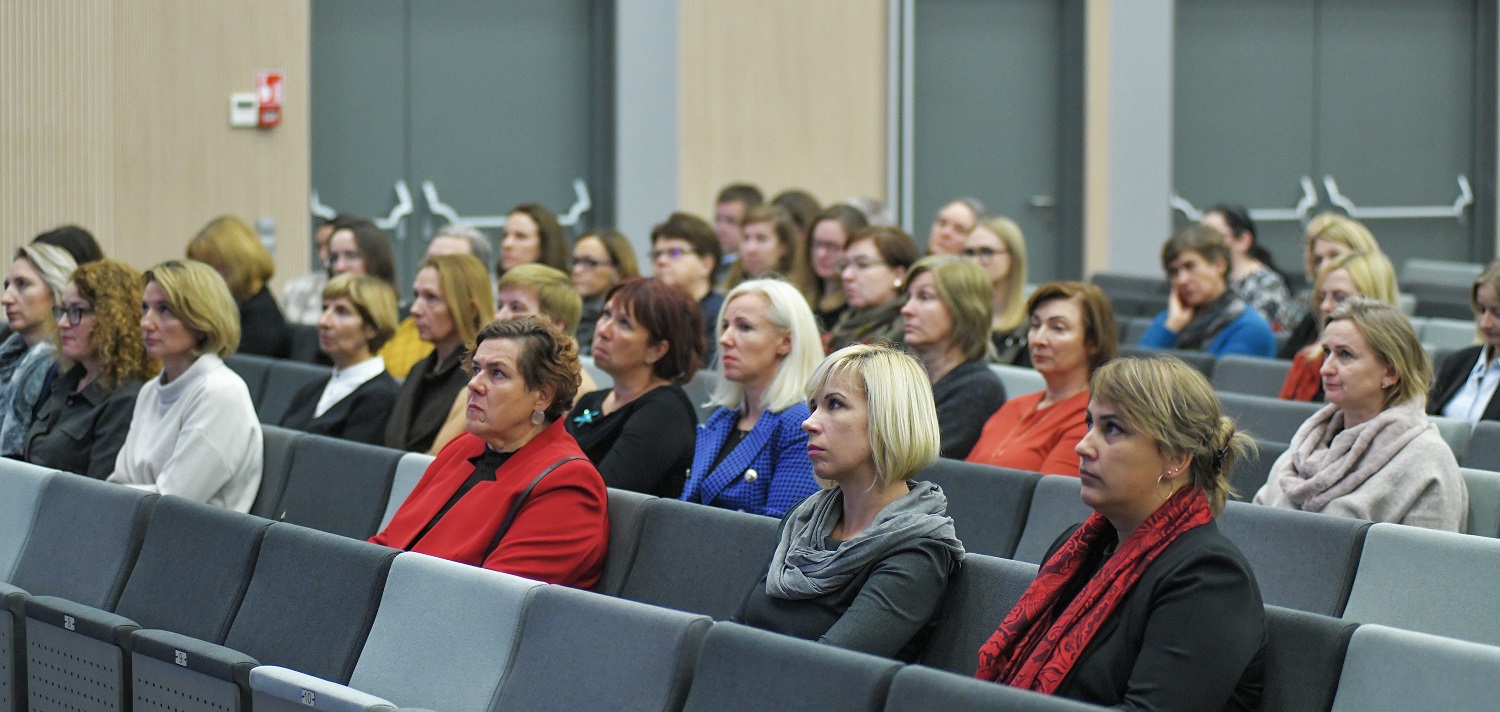
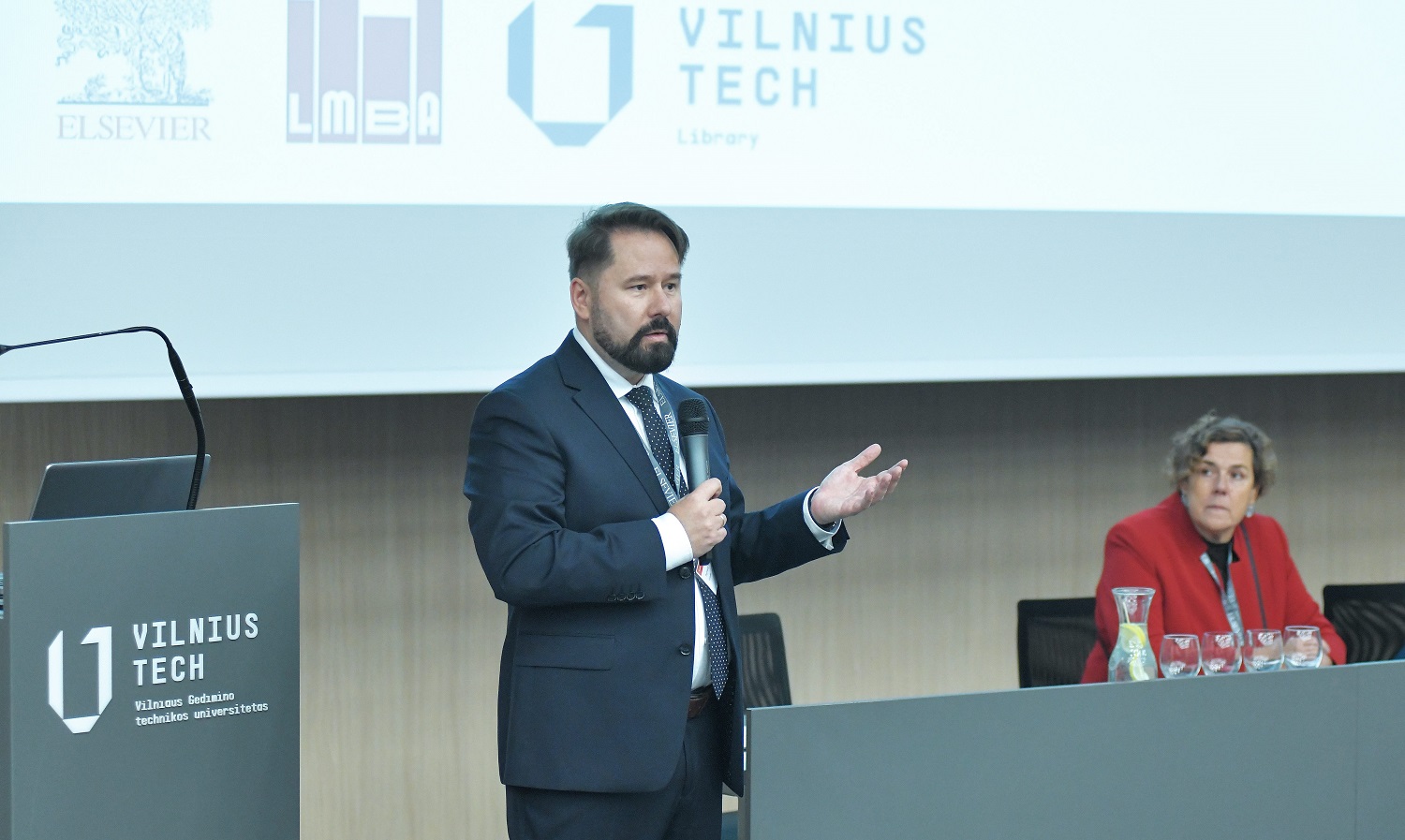
On October 18, Vilnius Gediminas technical university (VILNIUS TECH) hosted a special event, Towards Future Research Impact in Lithuania, which brought together members of the Lithuanian Research Library Consortium (LMBA) to assess two decades of Lithuania’s research and chart a course for its continued impact. The special event featuring Research Excellence Awards marked the Year of Lithuanian Universities along with the Twentieth Anniversary of the LMBA.

Findings from a signature report prepared by Elsevier, A research landscape assessment of Lithuania, were presented to attendees as a lead-in to a discussion on the strategic aspects of research evaluation in Lithuania.

LMBA has been instrumental in its contributions in advancing the research ecosystem in Lithuania over the past two decades. Through its advocacy for research quality, LMBA sought and secured subscriptions to high-quality research services and tools, ensuring Lithuania’s academic research community benefited from superior access to scholarly content.

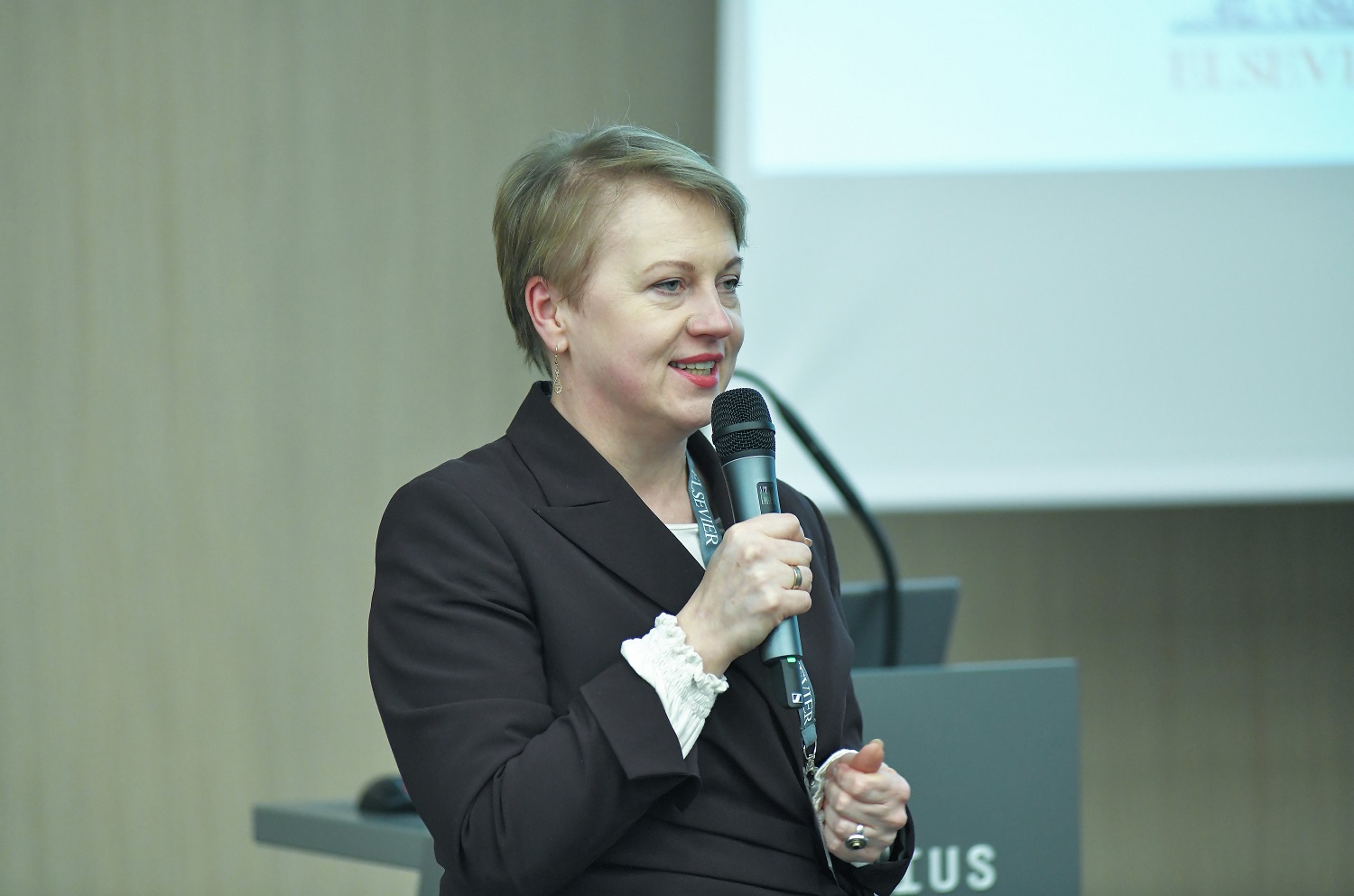
President of the LMBA Ingrida Kasperaitienė stated, “Often, in our daily activities, we do not recognize the great meaning of the work we do. And only when we stop for a minute, only when we gather, when we look at what we have created in the perspective of time, do we realize that our work created a change that our daily work and cooperation brought benefits to society and created significant added value: for an ordinary student, researcher, academic institution. LMBA is proud of the work it has done during its twenty years of operation and thanks everyone for the cooperation and joint activities. I firmly believe that this special meeting, "Towards Future Research Impact in Lithuania,” which has brought together a large group of experts from the Lithuanian academic community, will inspire us for further active cooperation to expand the results of Lithuanian scientific research and contribute to the development of open science.“

"It is clear that efforts by the Consortium to increase the availability of high-level content for researchers across Lithuania have been very effective. As a trusted partner to LMBA, Elsevier is very proud to be part of this story. I appreciate the high commitment of LMBA Leaders and look forward for next 20 years of successful collaboration," stated Tomasz Psonka, Regional Director for Poland & the Baltic Countries.

Full list of the Research Excellence Award recipients and more information about the event can be found here.

Galerija
Related news

Lithuania’s Technology Transfer Network “TTO Lithuania” Becomes a Member of the Prestigious European NAAC Committee
A significant international recognition has been awarded to Lithuania’s science and innovation community. TTO Lithuania—the national collaboration platform uniting Lithuanian Technology Transfer Offices (TTOs)—has officially become a member of the National Associations Advisory Council (NAAC), a governing body of the European knowledge and technology transfer association ASTP. This achievement marks another important step in Lithuania’s continued integration into Europe’s highest-level knowledge transfer and innovation governance structures. In its official welcome letter, ASTP emphasized that TTO Lithuania’s membership will strengthen the voice of Lithuania’s innovation community and provide opportunities to contribute actively to the development of European Union innovation policies. Vilma Purienė, Director of the Knowledge and Technology Transfer Centre at VILNIUS TECH and current Chair of the TTO Lithuania network, has been appointed as Lithuania’s official representative to the committee.   What Is NAAC and Why Does It Matter for Lithuania? The National Associations Advisory Council (NAAC) is one of ASTP’s key governance bodies, currently bringing together 35 national associations from 28 European countries. The committee serves as a vital link between European-level initiatives, regional technology transfer offices, and local innovation ecosystems. By becoming a full member of NAAC, TTO Lithuania gains strategic opportunities in four key areas:   Representation and Visibility Each national association is represented in the committee by one official delegate. From now on, the interests and perspectives of Lithuania’s knowledge and technology transfer professionals will be represented alongside those of Europe’s leading innovation nations.   Advisory Role in European Innovation Policy NAAC members provide direct advice to ASTP’s Executive Board on European and EU policy matters related to innovation, knowledge commercialization, and technology deployment. This enables Lithuania not only to learn from international best practices but also to share its own experiences, achievements, and emerging trends with the broader European innovation community.   Influence on Governance NAAC holds the unique right to nominate candidates directly to the ASTP Executive Board, ensuring that the perspectives of national associations remain an integral part of strategic decision-making processes.   Participation in Decision-Making As a member of the council, TTO Lithuania gains voting rights within the organization, allowing it to participate directly in the adoption of key resolutions and the submission of proposals.   A Step Towards Deeper European Integration NAAC members collaborate actively throughout the year. The council typically holds five to six meetings annually, including four online sessions and up to two in-person gatherings. These meetings address the most pressing issues in knowledge transfer, review developments in regulatory frameworks, and foster the creation of joint initiatives and projects. TTO Lithuania’s accession to the council opens new opportunities for specialists from Lithuanian universities, research institutes, and technology transfer organizations to engage more closely in international processes, strengthen their professional expertise, and help ensure that Lithuanian scientific discoveries and innovations reach global markets more effectively. This milestone further reinforces Lithuania’s position within the European innovation ecosystem and highlights the growing recognition of the country’s contributions to knowledge transfer, research commercialization, and innovation-driven growth.
More
New doctoral dissertation
VILNIUS TECH Library invites you to follow the published new dissertations. The dissertation „Analysis and modeling of deformations induced by the extrusion of fiber-reinforced polymers“ prepared at VILNIUS TECH by Mahmoud Samy Mahmoud Mohammed Farh. The dissertation was prepared in 2021–2026. Scientific consultant – Prof. Dr Viktor Gribniak. The dissertation was defended at the public meeting of the Dissertation Defense Council of the Scientific Field of Materials Engineering in the Aula Doctoralis Meeting Hall of Vilnius Gediminas Technical University at 2 p.m. on 10 June 2026. Additive manufacturing via fused filament fabrication (FFF) enables the creation of geometrically complex components. Yet, its use in structural and semi‑structural applications remains limited by anisotropic mechanical response, defect sensitivity, and fabrication‑induced residual stresses that cause warpage and geometric inaccuracy. This dissertation investigates polylactic acid (PLA)- based materials manufactured by FFF, including neat and partially recycled PLA, continuously reinforced PLA, and short-fiber-reinforced composites, to develop an integrated experimental-computational methodology for evaluating mechanical efficiency and predicting process-induced distortion. The research object comprises the mechanical, thermal, viscoelastic, microstructural, and thermo‑mechanical characteristics of these materials. The dissertation develops a unified approach linking reinforcement strategy, material structure, thermal history, mechanical performance, and warpage behavior. The adopted methodology combines quasi‑static tensile and flexural testing, thermomechanical characterization, scanning electron microscopy, and finite-element simulations. Continuous aramid reinforcement developed in this study for FFF increases the load-bearing capacity of the tension specimens by 67%. Still, reinforcement efficiency was limited by toolpath continuity, interfacial defects, and the absence of in‑process fiber tensioning. Short‑fiber-reinforced composites exhibit distinct fiber‑type‑dependent behavior: carbon‑filled PLA increases stiffness, while wood‑filled PLA enhances crystallinity, stiffness retention near the glass‑transition temperature, toughness, and dimensional fidelity. Wood‑fiber reinforcement reduces edge warpage by 43% and carbon fiber by 14.3% under identical conditions. A staged thermo‑mechanical simulation framework is developed to model printing, cooling, and detachment, transferring residual stress and distortion fields into subsequent mechanical simulations. The ABAQUS model for neat PLA predicts warpage with an average error of 8.2–10.6%, whereas a Digimat workflow captures the deformation in short‑fiber-reinforced PLA with an error of 14.3–17.9%. The latter predictions were obtained for the first time. The dissertation consists of an introduction, three main chapters, general conclusions, and references. The First Chapter provides a literature review of FFF of reinforced polymers, including material combination and modeling strategies. The Second Chapter specifies the chosen materials, test program, and thermo mechanical modeling concept. The Third Chapter evaluates experimental and numerical results, integrating mechanical, thermal, microstructural, and simulation based findings. The General Conclusions summarize the dissertation work, which is supported by four publications, including three articles in Web of Science indexed journals with impact factors, and four conference presentations. Doctoral dissertation readers can search via VILNIUS TECH Virtual Library.    
More