VILNIUS TECH Researcher’s Work Opens New Opportunities in Bridge Construction

September 9, 2025
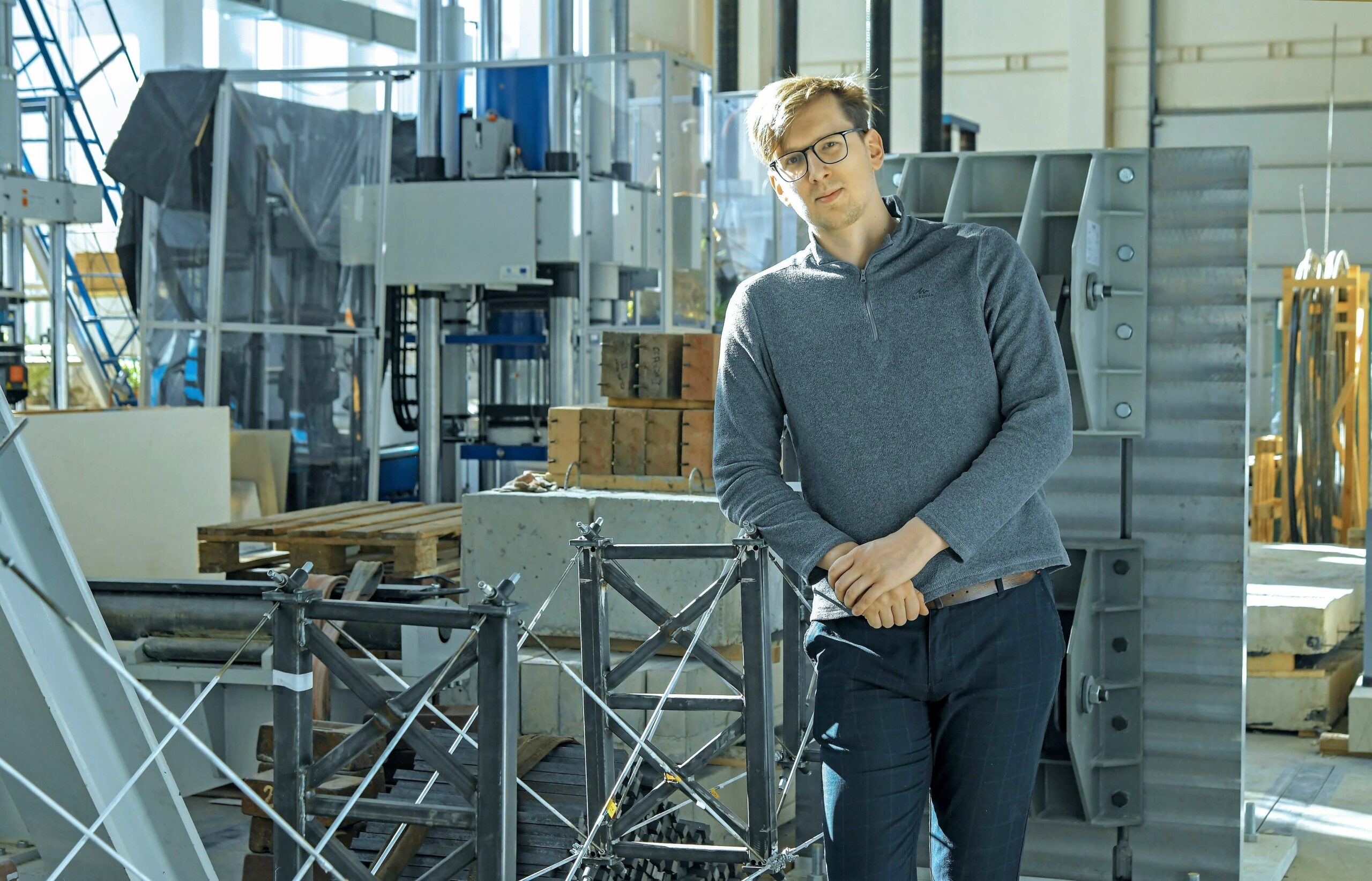
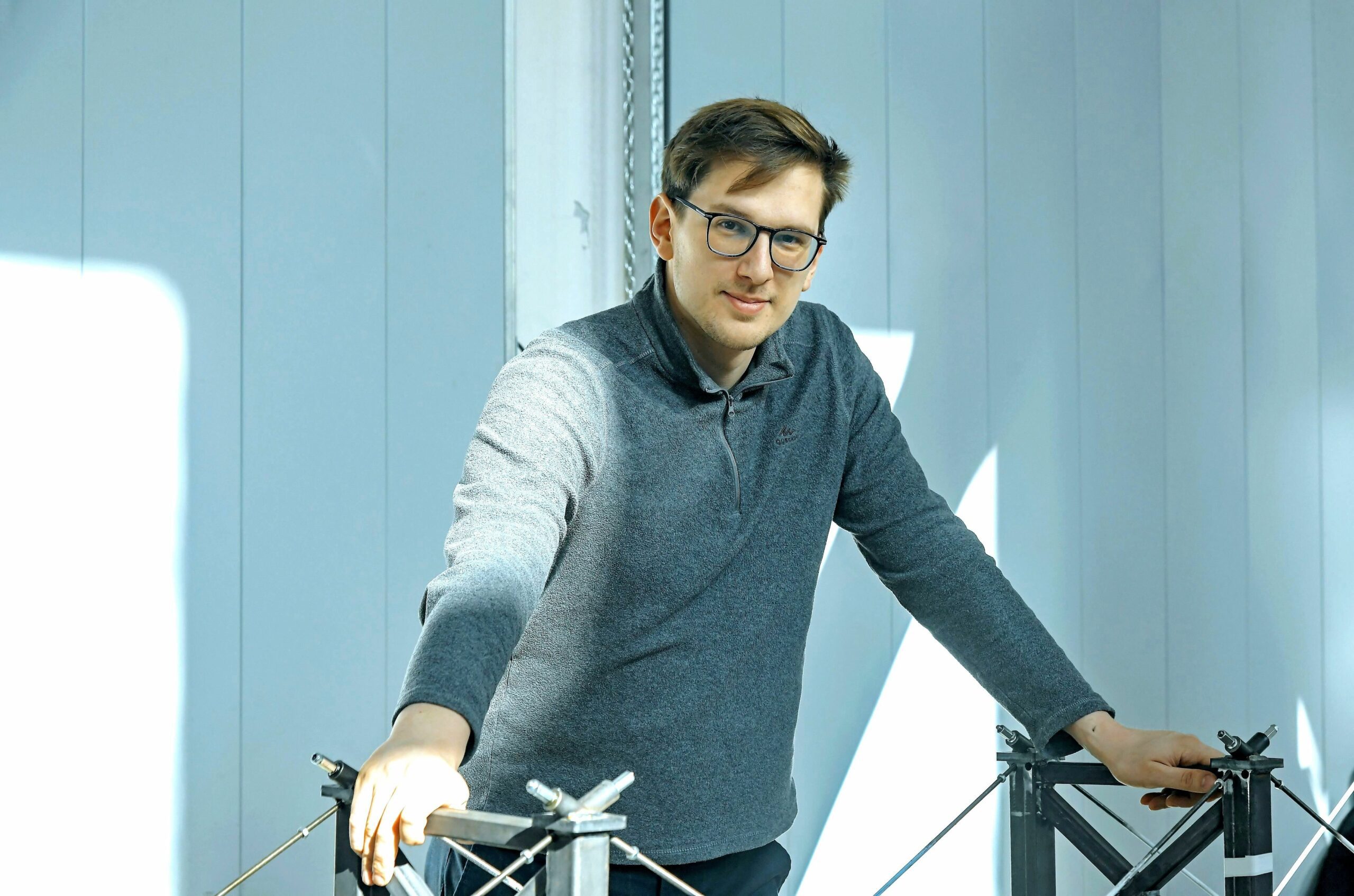
This summer, Povilas Dabrila successfully defended his PhD dissertation at VILNIUS TECH, titled "Analysis of Innovative Cable-Stayed Steel Bridge Structures." The young researcher not only explored the complex properties of such structures but also proposed a practically applicable calculation methodology that, in the future, could help engineers and architects design aesthetically pleasing and reliable new types of bridges.
 
Cable-stayed bridges are known for their distinct architectural expression – the deck is suspended by cables (called stays) arranged in a fan-like pattern and anchored to pylons. However, beneath their elegant appearance lies a complex interplay of forces. It was precisely the desire to improve such structures that led Dr. Dabrila to develop the idea of an innovative cross-stay cable bridge.

“This is a new type of bridge – only a few of them have been built in the world. Personally, I find them very aesthetically appealing, and they offer certain advantages,” says Dr. Dabrila. “But because there are so few of them, there's a lack of research and calculation methodologies. Even the engineers who designed these bridges admit in their papers that they lacked clear guidelines. My goal was to develop a methodology that would help designers save time and better understand how such a structure responds to loads.”

Experiments and Unexpected Discoveries
 

In addition to numerical and analytical analysis, the researcher also conducted physical experiments – a five-meter-long steel bridge model was specially built and tested for the study.
 
It was these practical experiments that led to one of the most interesting discoveries. “Typically, we expect the greatest deflections in a structure to occur at its center. But in the system we studied, the largest deflections appeared at the edges, near the supports. This is an unusual and important result that future designers will need to take into account,” explains the young PhD.
 
The journey to these findings required not only complex calculations but also creative problem-solving. Dr. Dabrila recalls with a smile how he faced an unexpected challenge when looking for someone to manufacture his unique model. “I reached out to structural steel manufacturers, but they found my model too small and unusually shaped. So I turned to metal furniture producers. When they saw the model, they said, ‘No problem at all!’ This shows that sometimes, the answers lie outside your own field,” he shares.

Advice for Future PhD Students: Routine, Rest, and Hobbies
 

When asked for advice for future PhD students, Dr. Dabrila emphasizes the importance of balancing academic and personal life. According to him, a dissertation shouldn't feel like a separate project—it should become part of a daily routine. At the same time, it’s crucial to find ways to “clear your head.”
 
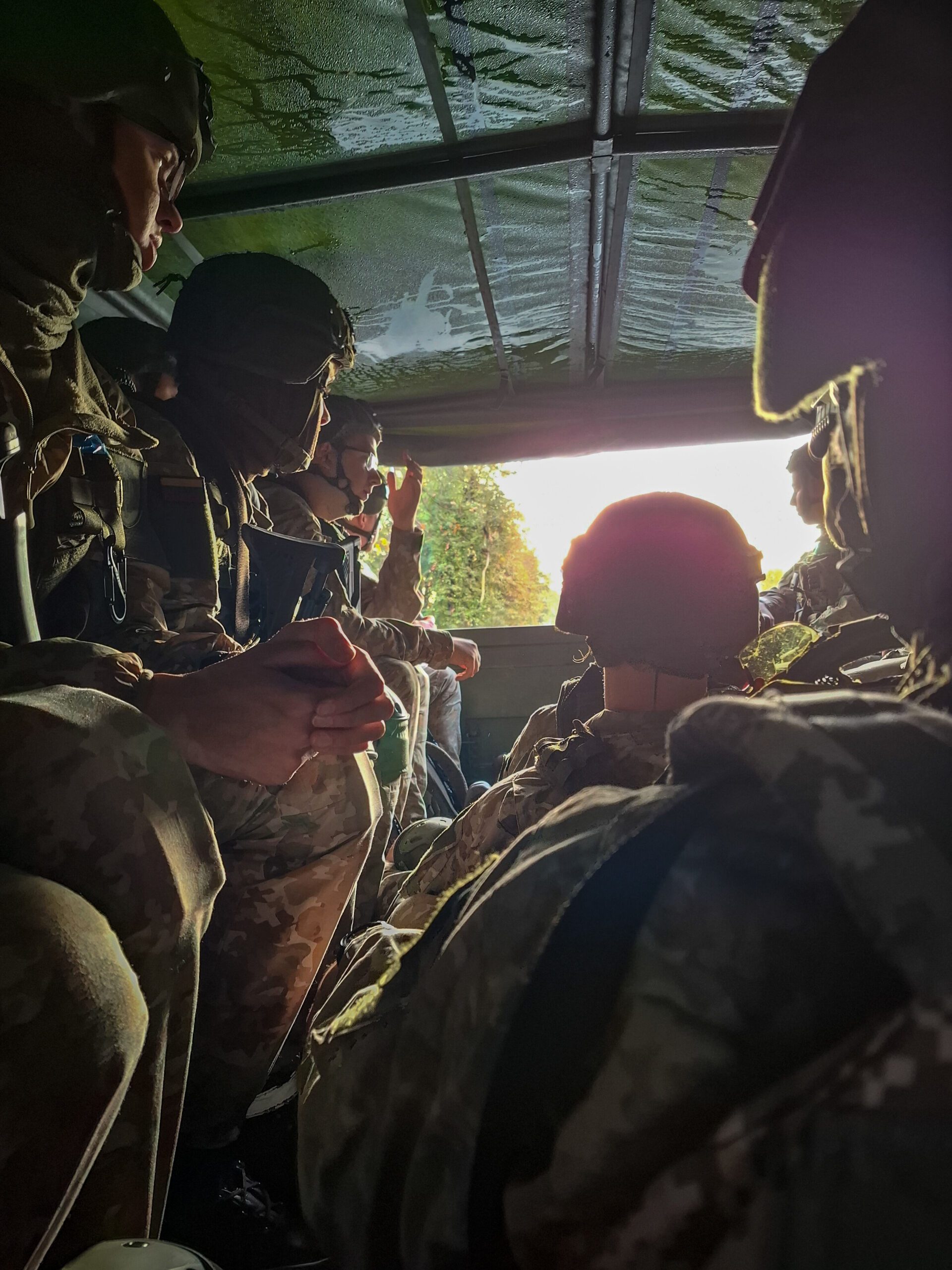
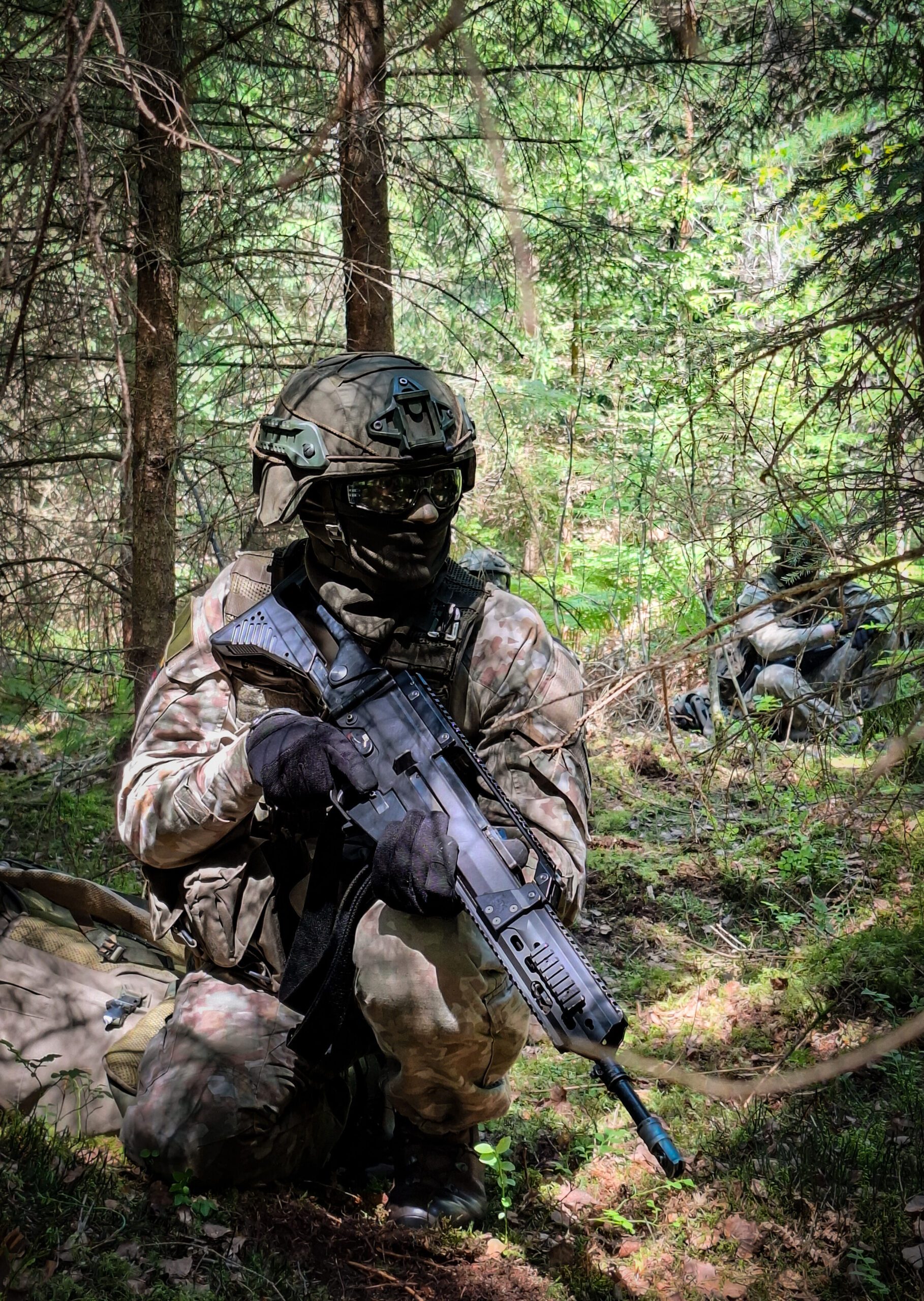
“For me, sports and the Junior Officers Command Course (JKVM) helped a lot. Weekends spent not thinking about the dissertation, but instead guarding a sector or watching over a sleeping teammate, were a great mental reset. Sometimes after such breaks, the solutions come naturally—just like when learning to play a new instrument. After a break, you improve,” he says.
 
Another piece of advice he shares is to never hesitate to ask other researchers questions when something is unclear. Presenting your results at various conferences is also extremely valuable—other experts may offer questions or insights that are helpful for your research.
 
Equally important is documenting all calculations and their explanations as you go—don’t postpone writing. “If you delay the writing, it becomes difficult to recover your thoughts later. And there's a reason why doctoral studies last four years—if you plan your work wisely, it becomes easier to integrate different sections and complete the dissertation smoothly.”
 
Dr. Dabrila describes his PhD journey as a meaningful period. Participating in conferences in Lithuania and abroad helped him establish valuable contacts, learn from the work of other researchers, gain insights into how international universities organize research studies, and share his own experience.
 
After successfully defending his dissertation, the young scientist plans to continue his academic career at VILNIUS TECH. He already has new articles and future research ideas in mind.
 
The dissertation, prepared between 2020–2025, was supervised by Prof. Dr. Algirdas Juozapaitis.

Interested in PhD Studies at VILNIUS TECH?
 

Currently, additional applications for PhD studies are open at VILNIUS TECH.
 
Have questions?
 
Contact the VILNIUS TECH Doctoral School:
More information is available on the university’s website.
Press release by: Milda Mockūnaitė-Vitkienė, Vilnius Gediminas Technical University

Galerija
Related news

New doctoral dissertation
VILNIUS TECH Library invites you to follow the published new dissertations. The dissertation „Analysis and modeling of deformations induced by the extrusion of fiber-reinforced polymers“ prepared at VILNIUS TECH by Mahmoud Samy Mahmoud Mohammed Farh. The dissertation was prepared in 2021–2026. Scientific consultant – Prof. Dr Viktor Gribniak. The dissertation was defended at the public meeting of the Dissertation Defense Council of the Scientific Field of Materials Engineering in the Aula Doctoralis Meeting Hall of Vilnius Gediminas Technical University at 2 p.m. on 10 June 2026. Additive manufacturing via fused filament fabrication (FFF) enables the creation of geometrically complex components. Yet, its use in structural and semi‑structural applications remains limited by anisotropic mechanical response, defect sensitivity, and fabrication‑induced residual stresses that cause warpage and geometric inaccuracy. This dissertation investigates polylactic acid (PLA)- based materials manufactured by FFF, including neat and partially recycled PLA, continuously reinforced PLA, and short-fiber-reinforced composites, to develop an integrated experimental-computational methodology for evaluating mechanical efficiency and predicting process-induced distortion. The research object comprises the mechanical, thermal, viscoelastic, microstructural, and thermo‑mechanical characteristics of these materials. The dissertation develops a unified approach linking reinforcement strategy, material structure, thermal history, mechanical performance, and warpage behavior. The adopted methodology combines quasi‑static tensile and flexural testing, thermomechanical characterization, scanning electron microscopy, and finite-element simulations. Continuous aramid reinforcement developed in this study for FFF increases the load-bearing capacity of the tension specimens by 67%. Still, reinforcement efficiency was limited by toolpath continuity, interfacial defects, and the absence of in‑process fiber tensioning. Short‑fiber-reinforced composites exhibit distinct fiber‑type‑dependent behavior: carbon‑filled PLA increases stiffness, while wood‑filled PLA enhances crystallinity, stiffness retention near the glass‑transition temperature, toughness, and dimensional fidelity. Wood‑fiber reinforcement reduces edge warpage by 43% and carbon fiber by 14.3% under identical conditions. A staged thermo‑mechanical simulation framework is developed to model printing, cooling, and detachment, transferring residual stress and distortion fields into subsequent mechanical simulations. The ABAQUS model for neat PLA predicts warpage with an average error of 8.2–10.6%, whereas a Digimat workflow captures the deformation in short‑fiber-reinforced PLA with an error of 14.3–17.9%. The latter predictions were obtained for the first time. The dissertation consists of an introduction, three main chapters, general conclusions, and references. The First Chapter provides a literature review of FFF of reinforced polymers, including material combination and modeling strategies. The Second Chapter specifies the chosen materials, test program, and thermo mechanical modeling concept. The Third Chapter evaluates experimental and numerical results, integrating mechanical, thermal, microstructural, and simulation based findings. The General Conclusions summarize the dissertation work, which is supported by four publications, including three articles in Web of Science indexed journals with impact factors, and four conference presentations. Doctoral dissertation readers can search via VILNIUS TECH Virtual Library.    
More
New doctoral dissertation
VILNIUS TECH Library invites you to follow the published new dissertations. The dissertation „Interaction between currency market evolution with monetary policy instruments in the age of digitisation“ („Valiutų rinkos evoliucijos sąveika su monetarinės politikos instrumentais skaitmenizacijos amžiuje“) prepared at VILNIUS TECH by Tomas Pečiuli. The dissertation was prepared in 2020–2026. Scientific consultant – Assoc. Prof. Dr Asta Vasiliauskaitė. The dissertation was defended at the public meeting of the Dissertation Defence Council of the Scientific Field of Economics in the Aula Doctoralis Meeting Hall of Vilnius Gediminas Technical University at 10 a.m. on 10 June 2026. The emergence of decentralised cryptocurrencies has created fundamental challenges for traditional monetary policy systems. Although these digital assets have the potential to increase financial inclusion and efficiency, their volatility and the lack of centralised oversight create systemic risks that cannot be properly managed using classical models. This dissertation presents an integrated hybrid analytical framework designed to quantitatively assess the impact of cryptocurrencies on monetary policy transmission mechanisms, providing policymakers with empirically grounded tools to analyse this evolving financial domain more effectively. The dissertation is divided into three main parts. The First Chapter summarises the theoretical role of cryptocurrencies in modern monetary theory. The Second Chapter presents and substantiates a new methodology that combines machine-learning techniques with advanced econometric modelling, specifically using an Elastic Net machine learning model with ARIMA residuals and MSGARCH specifications to capture regime-dependent behaviour. The Third Chapter empirically validates the framework using data from cryptocurrency markets and central bank policy operations. The empirical results show a significant asymmetric policy transmission effect, with the price of Bitcoin reacting by USD -15,348 to a 1% change in the Federal Reserve interest rate. The analysis also identifies critical volatility thresholds (σ>80%) at which cryptocurrency fluctuations increase inflation risk. These results indicate the growing systemic importance of cryptocurrencies in monetary policy dynamics. The study contributes to the emerging field of digital asset economics. The integrated modelling approach helps overcome the long-standing limitations of analysing nonlinear financial phenomena. Practical applications include real-time financial stability risk monitoring systems and evidence-based guidelines for regulatory interventions. The modular structure of the framework allows for future expansion by incorporating evolving market structures and new digital assets. The dissertation’s results have been presented to the scientific community in eight peer-reviewed publications in scientific journals and conference proceedings. This work provides central banks with essential analytical tools to maintain monetary stability and to promote responsible financial innovation in the digital era. Doctoral dissertation readers can search via VILNIUS TECH Virtual Library.
More