VILNIUS TECH scientists create AI tools adapted for business: future plans for a unique solution

September 17, 2024
Artificial intelligence (AI) technologies have become so entrenched in the market over the past few years that it is hard to imagine the present or future without them. They are transforming and re-shaping education, industry, business, and even daily life. In this technological revolution, scientists from Vilnius Gediminas Technical University (VILNIUS TECH) are playing a crucial role in developing advanced AI tools for the next generation of specialists.
 

AI tools for detecting forgeries and generating 3D models

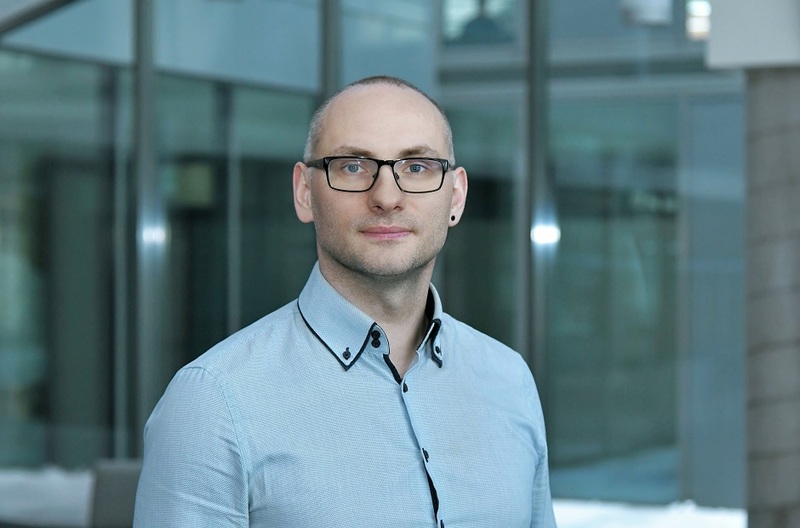
Professor Dr. Arturas Serackis, head of the Department of electronic systems at the VILNIUS TECH Faculty of electronics, along with his team are developing an innovative AI solution enabling  instant identification of image forgeries, particularly those generated by AI.

Currently, for the prototype to detect forgeries, longer video clips featuring human head and facial muscle movements are needed. This somewhat limits the tool's application and requires compromises, but the professor emphasises that creating tools to detect video forgeries is an ongoing, challenging process that demands most up-to-date, intelligent solutions.

“What worked six months ago no longer works today, so we are constantly improving our prototype. We use the latest tools for creating video forgeries to try and ‘trick’ it, then find new ways to avoid being deceived. We monitor how other researchers detect video forgeries and try to enhance our prototype with similar solutions,” shared Prof. Dr. Arturas Serackis.

Soon, he and the team of other VILNIUS TECH scientists and students will begin a research project aimed at creating an AI solution for generating 3D models of eyeglass frames. “We already have the initial concept, but there are still many challenges. Once we overcome them, we’ll be able to present a solution with no analogues in the world,” said Prof. Dr. Serackis.
 

AI solutions established in business


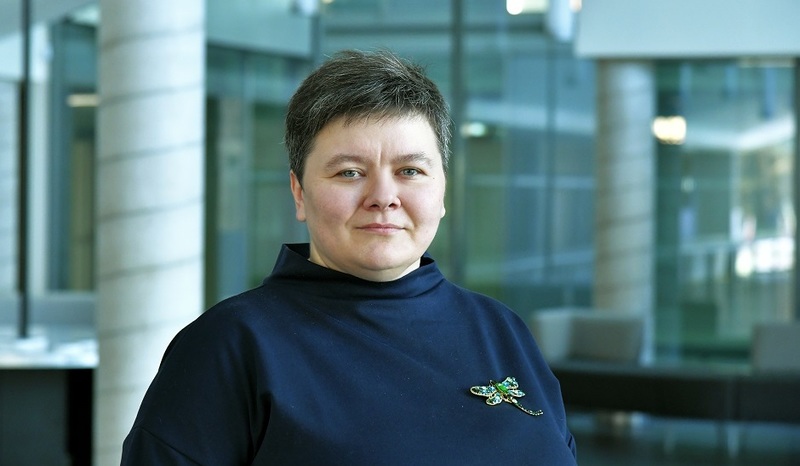
AI technologies developed by VILNIUS TECH scientists have also been applied in business. Dr. Pavel Stefanovic, an associate professor at the Faculty of fundamental sciences (FMF), and Professor Dr. Simona Ramanauskaite have created an AI model that analyses Instagram users' profile pictures and recommends suitable travel destinations, with more than 95% of users agreeing with the suggestions.

Another business-adopted solution is the modernisation of financial accounting systems using AI features. FMF scientists, in collaboration with accounting system developers, implemented several AI functions in one system – including automatic client efficiency evaluation, data forecasting, and others.

“We also developed a tool that can determine whether students wrote answers to questions themselves, generated them using ChatGPT, or paraphrased AI-generated responses. Our solutions can detect this with almost 90% accuracy,” shared Prof. Dr. Simona Ramanauskaite.
 

AI education accessible to students and seniors


VILNIUS TECH currently offers two bachelor's and three master's degree programs related to AI. According to Prof. Dr. Serackis, these programs are more focused on applied AI rather than fundamental research on AI models, but students are also provided a broader perspective with necessary mathematical and computer science foundations.

“This is important because AI is applied in a wide range of fields – energy, manufacturing, the service sector, and cybersecurity,” said Prof. Dr. Serackis. He adds that students in these programs gain not only computer science but also electronic engineering knowledge, expanding their career opportunities. “There are many strong companies in Lithuania that not only produce but also create new, globally competitive electronic devices.”

VILNIUS TECH scientists also share their knowledge beyond the university, educating the public about AI’s capabilities. Associate Prof. Dr. Pavel Stefanovic and Prof. Dr. Simona Ramanauskaite conduct training sessions for people of all ages – teachers, students, company representatives, and seniors – where they introduce the history, principles, and application possibilities of AI.

“I explain AI threats to students and emphasise that they shouldn’t blindly trust AI-generated content, as they can easily be misled. Adults can cope with this, but students often take AI content as pure truth,” warns Dr. Pavel Stefanovic.

“Understanding AI principles is essential for everyone. Throughout technological change, people have always feared the future – there was a time when they were even afraid of steam engines. Educational institutions play a crucial role in teaching the public, giving them the knowledge and skills needed to adapt to new technologies,” said Prof. Dr. Simona Ramanauskaite.

She notes that people react to AI in different ways – some complain that AI cannot perform tasks with 100% accuracy, while others feel safer and prouder, knowing that they can do more than current AI solutions.

Galerija
Related news

New doctoral dissertation
VILNIUS TECH Library invites you to follow the published new dissertations. The dissertation „Research and application of machine learning methods for migraine attack prediction“ prepared at VILNIUS TECH by Viroslava Kapustynska. The dissertation was prepared in 2021–2026. Scientific consultant – Prof. Dr Šarūnas Paulikas. The dissertation was defended at the public meeting of the Dissertation Defense Council of the Scientific Field of Electrical and Electronic Engineering in the Aula Doctoralis Meeting Hall of Vilnius Gediminas Technical University at 2 p.m. on 9 June 2026. Migraine is a complex neurological disorder characterized by strong inter- and intra-individual variability, which makes early forecasting difficult using only clinical observations. Wearable biosensors combined with machine learning offer new opportunities to detect subtle physiological changes that may precede migraine attacks and to develop individualized prediction models. This dissertation investigates migraine analysis and next-day prediction using physiological recordings collected under real-life monitoring conditions. Data were obtained with the Empatica Embrace Plus wearable device and include electrodermal activity, pulse rate, skin temperature, and movement-related signals. The analysis focuses on nocturnal recordings, since the night period provides a more stable physiological context with fewer external disturbances. Nights were standardized using sleep-based contextual selection and consistent night-level rules. The experimental framework is organized in two stages. In the first stage, a window-level binary classification task is used as an exploratory methodological analysis to examine how design choices influence model performance. Night recordings are segmented into analysis frames ranging from 5 to 120 minutes, statistical features are extracted, and the influence of signal preprocessing and feature representation is evaluated across several classifier families, including Random Forest, XGBoost, histogram-based gradient boosting, support vector machines, and k-nearest neighbors. In the second stage, the research evaluates next-day migraine prediction based on whole-night recordings. This stage refines the experimental methodology to obtain more reliable estimates of predictive performance under a stricter validation framework. The analysis focuses on the effect of temporal aggregation while comparing the same classifier families under consistent evaluation conditions. The results demonstrate considerable variability across participants in achievable prediction performance and optimal modeling configurations. Shorter analysis frames generally preserve informative short-term physiological changes, whereas longer windows tend to smooth these variations. Signal preprocessing shows a window-dependent effect and does not consistently improve performance. Overall, the results highlight the importance of temporal resolution, rigorous validation, and individualized modeling for wearable-based migraine prediction systems. Doctoral dissertation readers can search via VILNIUS TECH Virtual Library.
More
Expert Evaluation: VILNIUS TECH’s Progress Exceeded Expectations
VILNIUS TECH has received a highly positive assessment from international experts. In their recently published conclusions, it is noted that since the 2022 institutional evaluation, the university has achieved significant, evidence-based progress across all four evaluation areas: governance, quality assurance, studies and research activities, and impact on regional and national development. In 2022, VILNIUS TECH was granted a seven-year accreditation. At that time, the expert panel provided the university with 19 recommendations for further improvement. The latest progress review concludes that the university responded to these recommendations responsibly, systematically, and constructively, and that the implemented changes have become part of long-term institutional development. „We are pleased that external experts have highly evaluated the progress achieved by VILNIUS TECH across all four assessment areas. It was noted that the university demonstrates a mature quality culture, a strategic vision, and the ability to consistently sustain growth and increase its impact on society. This ensures that we are entering the next institutional evaluation period with a strong position,“ says Nora Skaburskienė, Director of the Studies Directorate. International experts particularly highlighted the consistently strengthened system of strategic management, the quality culture, active collaboration with business and alumni, leadership within the ATHENA European Universities Alliance, the development of new interdisciplinary study programmes, and significant progress in innovation and technology transfer. The rapid expansion of lifelong learning activities was also noted — VILNIUS TECH has broadened its micro-credential offerings, strengthened partnerships with social and business partners, and is creating favourable conditions for knowledge commercialization and startup development. According to the expert panel, the university has already moved beyond the stage of merely responding to recommendations and is now ready to purposefully leverage its accumulated potential to achieve even higher performance results. In summarizing the evaluation, the experts concluded that VILNIUS TECH is entering the next phase of institutional assessment with a solid foundation for continued successful development.
More