• University
  • News and events

VILNIUS TECH studies led to million-dollar projects: a construction engineer is now creating impressive facades all over the world

March 24, 2026

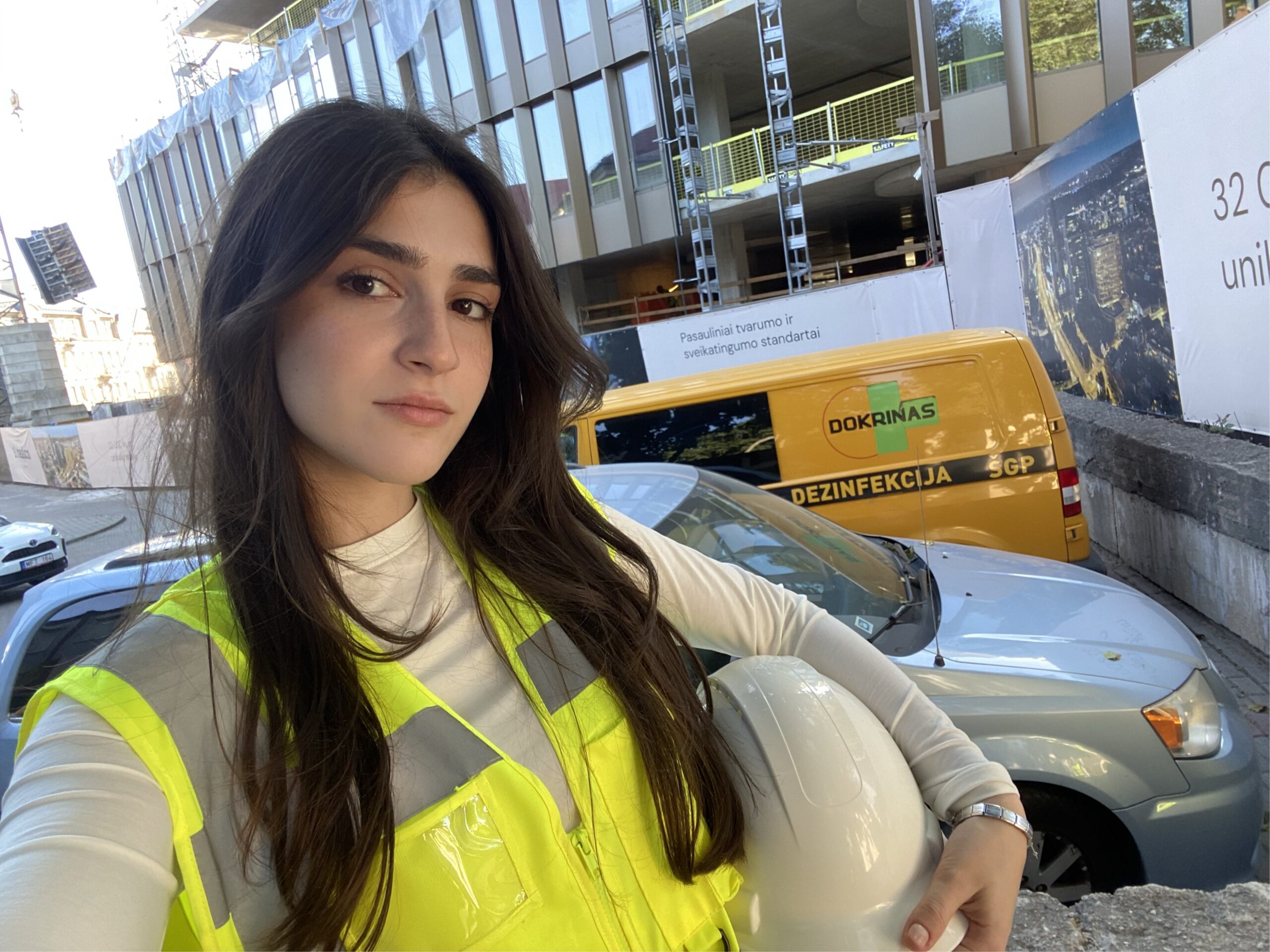
Before moving to Lithuania from Sakartvelo, Shorena Gudzhabidze already had a clear vision of what a modern study environment should look like. That vision was influenced by listening to the stories of students from universities across Europe, whom she met while participating in her school’s STEM academy. The Civil Engineering programme at Vilnius TECH ticked all the boxes, and it didn’t take long for her to decide and move abroad. This is a story about one young engineer who discovered her passion at the crossroads of architecture and engineering. 

The road to Vilnius

As a high school student, Shorena participated in international engineering competitions—including Intel ISEF and ECUSYS—where she met students from universities all over Europe. “Hearing firsthand about their labs, courses, and research environments genuinely raised my expectations for what a university experience could be,” she recalls. 

When it was time to decide where to study, Vilnius TECH emerged through her school’s Alumni network. The Civil Engineering programme met all her requirements. Shorena applied, received a scholarship, and made the move. “At that point, it felt like a straightforward decision,” she says.

Learning to think like an engineer

Soon, Shorena realised that Civil Engineering is larger than most people think. “What surprised me most wasn’t the difficulty — it was the scope,” she explains. “A bachelor’s degree is about training your mind to think in a certain way. For me, that was engineering thinking — learning how to approach problems, break them down, and develop solutions.”

Two experiences had the greatest impact on her. The first was her thesis project: “It was the moment when four years of knowledge finally came together into something clear. You don’t fully realise how much you’ve learned until you have to use it all at once.” 

The second was her mentor, Dean Dr Remigijus Šalna. “What I learned from him was professionalism in the truest sense — deep expertise and a genuine attention to detail. In engineering, and in any technical field, the difference between good work and great work often lies in the details. That’s something I carry with me.”

Living in dormitories, adapting to a new country, and overcoming the challenges of starting an independent life also left their mark. “There were moments that felt truly overwhelming,” Shorena admits. “But looking back, that’s just part of starting an independent life, and those moments shaped me as much as anything else.”

Between studies and early career 

By her third year, Shorena’s curriculum required a professional internship. She chose Staticus — one of Europe’s largest façade contractors — despite façade engineering not being part of her career plans. It didn’t take long for that to change. “You’re exactly at the crossroads of architecture and engineering,” she says. “And it turned out to be more compelling than I expected.” 

Shorena was employed before she finished her studies. Balancing her final-year coursework with a professional role was challenging, but Shorena sees it practically: “That’s where you learn real-time management, not just the theoretical kind. You quickly figure out your priorities because you have no choice. I wouldn’t call it easy, but I would say it’s worth it.”

Joining the Staticus team initially meant having limited domain knowledge. However, engineering education provided her with the essential tools to fill that gap. “What my studies truly gave me — and what mattered more in that scenario — was an engineering mindset. The ability to examine something unfamiliar and work through it methodically.”  

The moment of pride: the Landspitali project

 Shorena spent her first three years at Staticus as a 3D Design Engineer specialising in Building Information Modelling (BIM). She developed complex façade models in Revit and created parametric building components used directly in manufacturing and installation. Her project portfolio expanded to include the Oxford Life and Mind Building Campus, Høsnord Hospital in Denmark, and the Hero project in Lithuania.

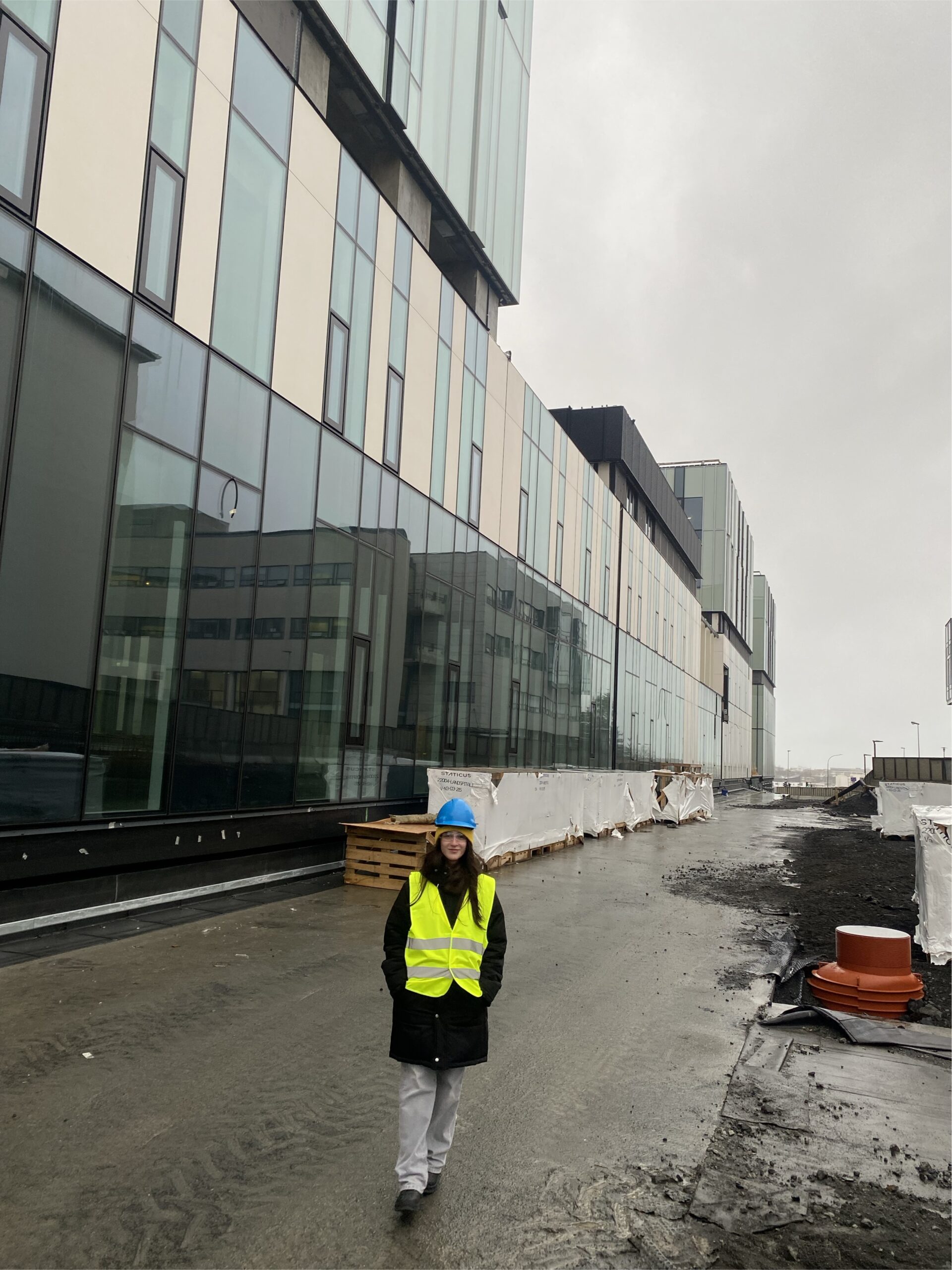
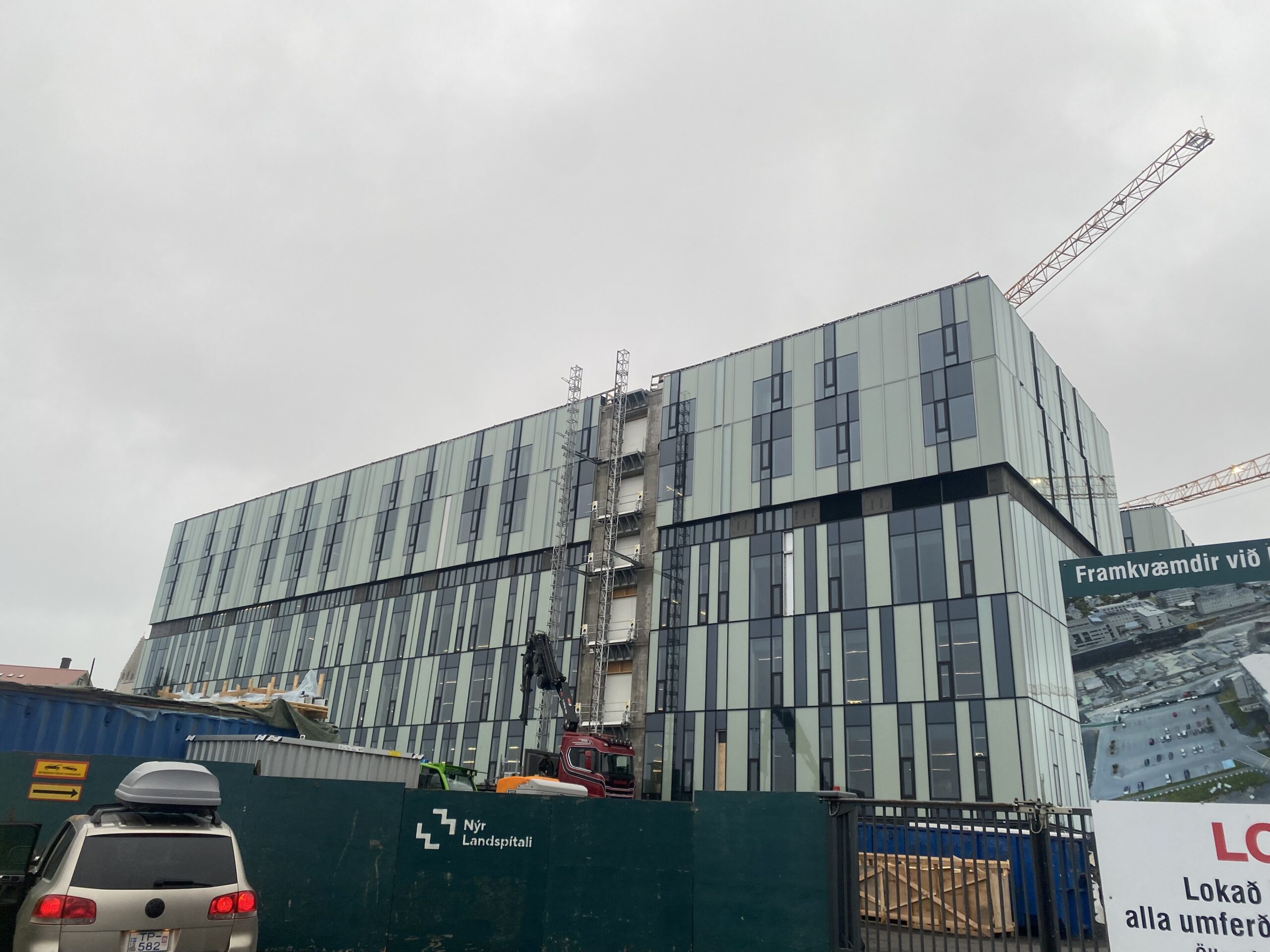
 But one project stands out the most: Landspitali, a 30,000 m² hospital in Reykjavik, Iceland. “The challenges it posed were on a whole different level,” Shorena says. “Beyond the massive scale, Iceland’s extreme weather and seismic activity added layers of engineering complexity that most projects don’t face.” The façade alone included static seismic testing to meet American AAMA standards — a first for Staticus. “Seeing how a project of that complexity gets coordinated and delivered across different disciplines teaches you things that smaller projects simply can’t.” 

Taking a fresh direction

After three years, Shorena experienced a surprising career shift. She took on the role of Product Manager at Staticus XD — the company’s all-in-one, cloud-based façade project management platform designed to offer full project visibility and seamless collaboration from bid to handover. 

“Construction and façade engineering, in particular, remains a rather traditional industry — many processes could be smarter, more connected, and more transparent, but they still aren’t,” she explains. “That gap is actually exciting when you’re in a product role because the potential is huge.”

What motivates her is seeing real impact: when something the team produces genuinely changes how someone in design, production, or project management performs their role. She also mentions that the role draws on everything she has developed. “It’s not a role where you can fake one or the other — the engineering background or the product thinking. I find that combination truly interesting to work in.” 

The right call

If you ask Shorena where she sees herself in five years, she’ll answer honestly. “If you had asked me the same questions three to five years ago, my reply would have been completely different from where I actually ended up. I didn’t picture myself in product management or façade engineering, and yet here I am, and it all makes perfect sense now.”

The advice she would share with her younger self — and any student facing similar challenges — is grounded in that hard-won self-awareness: “I believe the one thing that carried me through was always trusting myself and my abilities. Not that there weren’t difficult moments — there were many — but I never truly lost that core confidence that I’d figure it out. Trust yourself sooner and more often than you might feel natural. The rest usually falls into place.” 

For students from Sakartvelo or elsewhere considering the leap to study abroad, her message serves as both a warning and an invitation: “It’s probably the hardest decision you’ll ever make — and also the best one. Both can be true at the same time. There will be moments when you’re homesick and question everything. But you’ll stay — because deep down, you’ll know it’s the right call.” 

Galerija

Related news

New doctoral dissertation
VILNIUS TECH Library invites you to follow the published new dissertations. The dissertation „Analysis and modeling of deformations induced by the extrusion of fiber-reinforced polymers“ prepared at VILNIUS TECH by Mahmoud Samy Mahmoud Mohammed Farh. The dissertation was prepared in 2021–2026. Scientific consultant – Prof. Dr Viktor Gribniak. The dissertation was defended at the public meeting of the Dissertation Defense Council of the Scientific Field of Materials Engineering in the Aula Doctoralis Meeting Hall of Vilnius Gediminas Technical University at 2 p.m. on 10 June 2026. Additive manufacturing via fused filament fabrication (FFF) enables the creation of geometrically complex components. Yet, its use in structural and semi‑structural applications remains limited by anisotropic mechanical response, defect sensitivity, and fabrication‑induced residual stresses that cause warpage and geometric inaccuracy. This dissertation investigates polylactic acid (PLA)- based materials manufactured by FFF, including neat and partially recycled PLA, continuously reinforced PLA, and short-fiber-reinforced composites, to develop an integrated experimental-computational methodology for evaluating mechanical efficiency and predicting process-induced distortion. The research object comprises the mechanical, thermal, viscoelastic, microstructural, and thermo‑mechanical characteristics of these materials. The dissertation develops a unified approach linking reinforcement strategy, material structure, thermal history, mechanical performance, and warpage behavior. The adopted methodology combines quasi‑static tensile and flexural testing, thermomechanical characterization, scanning electron microscopy, and finite-element simulations. Continuous aramid reinforcement developed in this study for FFF increases the load-bearing capacity of the tension specimens by 67%. Still, reinforcement efficiency was limited by toolpath continuity, interfacial defects, and the absence of in‑process fiber tensioning. Short‑fiber-reinforced composites exhibit distinct fiber‑type‑dependent behavior: carbon‑filled PLA increases stiffness, while wood‑filled PLA enhances crystallinity, stiffness retention near the glass‑transition temperature, toughness, and dimensional fidelity. Wood‑fiber reinforcement reduces edge warpage by 43% and carbon fiber by 14.3% under identical conditions. A staged thermo‑mechanical simulation framework is developed to model printing, cooling, and detachment, transferring residual stress and distortion fields into subsequent mechanical simulations. The ABAQUS model for neat PLA predicts warpage with an average error of 8.2–10.6%, whereas a Digimat workflow captures the deformation in short‑fiber-reinforced PLA with an error of 14.3–17.9%. The latter predictions were obtained for the first time. The dissertation consists of an introduction, three main chapters, general conclusions, and references. The First Chapter provides a literature review of FFF of reinforced polymers, including material combination and modeling strategies. The Second Chapter specifies the chosen materials, test program, and thermo mechanical modeling concept. The Third Chapter evaluates experimental and numerical results, integrating mechanical, thermal, microstructural, and simulation based findings. The General Conclusions summarize the dissertation work, which is supported by four publications, including three articles in Web of Science indexed journals with impact factors, and four conference presentations. Doctoral dissertation readers can search via VILNIUS TECH Virtual Library.    
More
New doctoral dissertation
VILNIUS TECH Library invites you to follow the published new dissertations. The dissertation „Interaction between currency market evolution with monetary policy instruments in the age of digitisation“ („Valiutų rinkos evoliucijos sąveika su monetarinės politikos instrumentais skaitmenizacijos amžiuje“) prepared at VILNIUS TECH by Tomas Pečiuli. The dissertation was prepared in 2020–2026. Scientific consultant – Assoc. Prof. Dr Asta Vasiliauskaitė. The dissertation was defended at the public meeting of the Dissertation Defence Council of the Scientific Field of Economics in the Aula Doctoralis Meeting Hall of Vilnius Gediminas Technical University at 10 a.m. on 10 June 2026. The emergence of decentralised cryptocurrencies has created fundamental challenges for traditional monetary policy systems. Although these digital assets have the potential to increase financial inclusion and efficiency, their volatility and the lack of centralised oversight create systemic risks that cannot be properly managed using classical models. This dissertation presents an integrated hybrid analytical framework designed to quantitatively assess the impact of cryptocurrencies on monetary policy transmission mechanisms, providing policymakers with empirically grounded tools to analyse this evolving financial domain more effectively. The dissertation is divided into three main parts. The First Chapter summarises the theoretical role of cryptocurrencies in modern monetary theory. The Second Chapter presents and substantiates a new methodology that combines machine-learning techniques with advanced econometric modelling, specifically using an Elastic Net machine learning model with ARIMA residuals and MSGARCH specifications to capture regime-dependent behaviour. The Third Chapter empirically validates the framework using data from cryptocurrency markets and central bank policy operations. The empirical results show a significant asymmetric policy transmission effect, with the price of Bitcoin reacting by USD -15,348 to a 1% change in the Federal Reserve interest rate. The analysis also identifies critical volatility thresholds (σ>80%) at which cryptocurrency fluctuations increase inflation risk. These results indicate the growing systemic importance of cryptocurrencies in monetary policy dynamics. The study contributes to the emerging field of digital asset economics. The integrated modelling approach helps overcome the long-standing limitations of analysing nonlinear financial phenomena. Practical applications include real-time financial stability risk monitoring systems and evidence-based guidelines for regulatory interventions. The modular structure of the framework allows for future expansion by incorporating evolving market structures and new digital assets. The dissertation’s results have been presented to the scientific community in eight peer-reviewed publications in scientific journals and conference proceedings. This work provides central banks with essential analytical tools to maintain monetary stability and to promote responsible financial innovation in the digital era. Doctoral dissertation readers can search via VILNIUS TECH Virtual Library.
More